
Featured CE-Certified Industrial Heating Solutions
Explore our precision-manufactured heating elements and integrated thermal architectures engineered for extrusion lines, injection barrels, chemical autoclaves, and process air infrastructure.

High-Quality Portable Ceramic Heaters for Industry - Efficient Heating Solutions
Technical Specifications
CE Certification Nano infrared electric band heater Manufacturer, Manufacturers
Technical Specifications
High-Quality Portable Ceramic Heaters for Industry - Reliable Temperature Control
Technical Specifications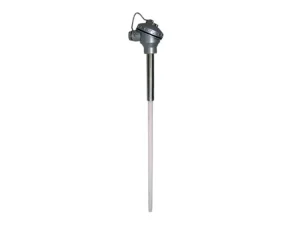
High-Quality Thermocouple Exporter, Factory
Technical Specifications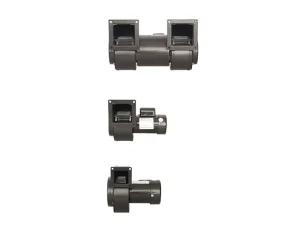
CE Certification Fan Manufacturer, Factory
Technical Specifications
CE Certification Ovens Manufacturer, Exporter
Technical Specifications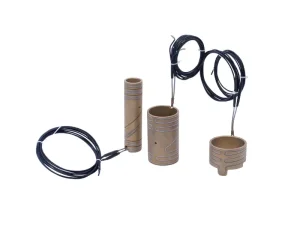
High-Quality (Hot-runner) Spring Heater / Coil Heater Manufacturers, Factory
Technical Specifications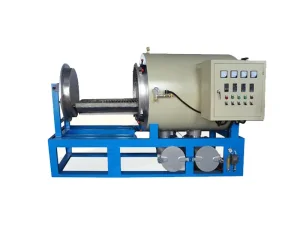
High-Quality Cleaning Furnace Manufacturer, Exporter
Technical SpecificationsThe Strategic Shift to High-Frequency Industrial Induction Heating
Evaluating electromagnetic induction conversion against legacy fossil-fired combustion and resistive conduction under global Scope 1 & Scope 2 decarbonization mandates.
Across modern continuous-process industries, thermal energy generation accounts for more than 68% of total plant energy consumption. Heavy industrial sectors—such as polymer compounding, non-ferrous extrusion, petro-refining, and high-pressure steam utility generation—are undergoing an unprecedented transition driven by energy price volatility, regional carbon tax frameworks (including the EU Carbon Border Adjustment Mechanism, CBAM), and aggressive net-zero commitments. In this landscape, industrial electromagnetic induction heating has moved from an auxiliary alternative to the definitive core infrastructure technology for tier-1 OEMs and automated processing facilities worldwide.
Founded in 1986, Yancheng Laier Heating Technology Co., Ltd. (operating globally under the Kangpu brand) has spearheaded electrical heating innovation for four decades. While legacy resistive elements (such as traditional mica bands and basic ceramic bands) rely fundamentally on surface-contact conduction—a mechanism plagued by thermal resistance barriers, air gaps, ambient heat leakage, and long ramp-up latencies—industrial electromagnetic induction creates thermal energy directly inside the metallic mass of the target vessel or extruder barrel via eddy currents (Foucault currents) and magnetic hysteresis losses.
Why Global Procurement Officers Require CE-Certified Induction Systems
For industrial engineering teams, plant directors, and global EPC contractors, procuring an industrial induction heater factory partner requires far more than comparing initial nameplate price. A heating failure on a continuous polymer extrusion line or automated chemical pipeline produces cataclysmic downtime losses—often exceeding $15,000 to $50,000 per hour. Consequently, institutional buyers evaluate suppliers using strict Total Cost of Ownership (TCO) matrices and rigorous CE compliance verifications.
A certified CE mark on industrial induction systems is not merely an export label; it represents complete adherence to the European Union's Low Voltage Directive (LVD 2014/35/EU), the Electromagnetic Compatibility Directive (EMC 2014/30/EU), and the Machinery Directive (2006/42/EC). Under industrial induction loads ranging from 10kW to multiple megawatts, stray electromagnetic fields (EMF) and high-frequency harmonics can wreak havoc on sensitive programmable logic controllers (PLCs), distributed control systems (DCS), optical sensors, and communications networks if not properly attenuated via resonant circuit design and active shielding.
Technical Anatomy: CE Compliance & Harmonic Control
A granular breakdown of Kangpu's technical topologies, electromagnetic mitigation, and international safety compliance protocols.
Resonant Inverter Topologies (IGBT)
Kangpu systems utilize zero-voltage switching (ZVS) and zero-current switching (ZCS) half-bridge and full-bridge quasi-resonant inverters powered by third-generation Infineon IGBT power modules. This architecture maintains electrical conversion efficiency above 96.5% across varying ferromagnetic Curie transitions.
- Operating frequency window: 10 kHz to 45 kHz auto-tracking
- Dynamic phase-locked loop (PLL) tracking load shifts
- Power Factor (PF) ≥ 0.98 across all output bands
EMC & Immunity Validation (2014/30/EU)
To prevent plant-wide electronic interference, each induction control unit incorporates dual-stage differential and common-mode line filters alongside patented magnetic leakage containment barriers built into the induction coil sleeves.
- Full EN 61000-6-4 industrial emissions certification
- EN 61000-6-2 high-level industrial immunity compliance
- Stray EMF below ICNIRP public & occupational exposure thresholds
Thermal & Dielectric Safety Standards
Adhering to EN 60519-1 (Safety in electroheating installations) and EN 60204-1 (Electrical equipment of machines), Kangpu induction systems implement multi-tier galvanic isolation and fail-safe hardware interlocks.
- Dielectric breakdown testing up to 2,500V AC / 60 seconds
- Integrated aerogel / microporous ceramic thermal blankets
- Automatic over-temperature, short-circuit, and open-coil trips
| Heating Technology Metric | Conventional Mica / Ceramic Bands | Cast-In Aluminum / Copper Elements | Kangpu CE Induction Heating System |
|---|---|---|---|
| Heat Transfer Method | Thermal Conduction across mechanical air interface | Thermal Conduction via cast metallic contact | Direct Eddy-Current Generation inside metallic wall |
| Energy Conversion Efficiency | 55% - 70% (Significant radiant atmospheric loss) | 65% - 75% (Medium loss from casing radiation) | 93% - 98% (Virtually zero radiant energy loss) |
| Preheat Ramp-Up Time | Slow (45 - 90 minutes depending on mass) | Moderate (35 - 60 minutes) | Ultra-Rapid (12 - 25 minutes) |
| Outer Shell Temperature | 180°C - 350°C (Burn hazard, increases HVAC load) | 150°C - 300°C (Requires heavy secondary guards) | 35°C - 55°C (Touch-safe, drastically cuts AC load) |
| Temperature Control Accuracy | ± 5°C to ± 8°C (High thermal inertia & overshoot) | ± 3°C to ± 5°C (Moderate thermal inertia) | ± 1°C (Zero thermal inertia; instant start/stop) |
| Typical Component Service Life | 8,000 - 15,000 operating hours | 15,000 - 25,000 operating hours | 50,000+ operating hours (Induction coil runs cold) |
Engineered Solutions Across Industrial Verticals
Kangpu custom-engineered thermal architectures serve demanding process environments across Europe, the Americas, the Middle East, and Asia-Pacific.
Plastics, Rubber & Polymer Extrusion
Extrusion lines processing HDPE, PP, PVC, and engineering resins require stable melt viscosity and instantaneous thermal correction. Kangpu's patented combined heating and cooling systems eliminate thermal overshoot on extruder cylinders, increasing line speed and preventing polymer thermal degradation.
Continuous Fluid, Oil & Pipeline Heating
For chemical transport, bitumen transfer, and food-grade fluid handling, our high-density pipeline heaters and electromagnetic steam generators provide uniform boundary heating without hot-spot coking, fluid cracking, or tube fouling commonly found in immersion resistance bundles.
Molecularly Oriented PVC-O Processing Ovens
Manufacturing ultra-high toughness PVC-O pipes relies on strictly controlled bi-axial orientation temperature zones. Our dedicated multi-zone convection and electromagnetic heating ovens deliver uniform radiant and ambient thermal saturation, guaranteeing continuous burst-pressure ratings.
Looking to Retrofit Existing Production Lines?
Our engineering division develops custom split-type induction barrel jackets that match your exact frame envelope and existing PLC signals with zero structural cutting.
The 7-Stage Customization Protocol Behind Our 5-Year Warranty
Operating directly as a manufacturer rather than an export brokerage, Yancheng Laier enforces uncompromising traceability across all production stages.
1. Application Engineering & ID Design
Our mechanical and electrical engineers review your equipment geometry, target temperature profile, available electrical service, and mechanical clearance, delivering 3D CAD models and finite element thermal simulations within 48 hours.
2. Specification & Materials Formulation
We match coil wire diameter, Litz wire bundles, core ferrite permeabilities, and high-purity ceramic terminal blocks directly to the specified frequency and thermal environment to eliminate dielectric breakdown risks.
3. Production-Grade Tooling & Mold Casts
Unlike competitors relying on manually shaped prototypes, Kangpu builds custom stamping, winding, and casting dies. This ensures that validation samples match the structural and thermal tolerances of full-scale production runs.
4. Client Commissioning & Field Sign-Off
The sample unit is installed on your production line to evaluate thermal rise velocity, mechanical clamping clearance, lead termination ergonomics, and field controller integration.
5. Iterative Engineering Refinement
Field feedback—such as adjusting terminal angle, reinforcing terminal leads against heavy vibration, or tuning watt density—is integrated into updated technical drawings before freezing the bill of materials.
6. Full-Load Electrical & Hipot Testing
Before batch release, every assembly undergoes insulation resistance testing (>100MΩ at 1000V DC), high-potential dielectric breakdown testing, and automated burn-in cycles under maximum thermal load.
7. Serial Production Governed by Batch Traceability
Scalable serial production takes place under ISO 9001:2015 certified conditions. Every single heater assembly is stamped with a serialized batch code linked to raw material heats, winding operator logs, and test chamber records, enabling our comprehensive 5-year warranty protection.
Technology Roadmap: Digital Twins & Wide-Bandgap Semiconductors
Leading the transition toward self-optimizing thermal systems through Silicon Carbide (SiC) switching and predictive cloud telemetry.
Third-Gen Silicon IGBT Topologies
High-efficiency conversion up to 45 kHz, automated load matching, integrated Modbus RTU/Profinet industrial interfaces, and comprehensive CE LVD/EMC compliance across all current standard ratings.
SiC & GaN Wide-Bandgap Switching
Transitioning to Silicon Carbide (SiC) power electronics enables operating frequencies above 100 kHz with an 80% reduction in switching losses, cutting cabinet cooling footprints by more than half.
Edge AI Thermal Profiling & Digital Twins
Deploying edge microcontrollers that run physics-informed neural network (PINN) models. These calculate barrel core temperatures without invasive drilled thermocouple wells, dynamically adjusting power to eliminate thermal lag.
Closed-Loop Industrial Microgrids
Direct DC bus integration paired with industrial rooftop solar and battery storage systems, bypassing AC-to-DC conversion losses for near-zero-emission factory operation.
Serving 100+ Countries with Localized Compliance
Proven export compliance, international logistics frameworks, and dedicated technical service engineering teams across six continents.
With an active export footprint spanning more than 100 countries and over 5,000 corporate clients, Kangpu maintains robust compliance frameworks for international trade. In addition to European CE certification (LVD, EMC, MD), our product platforms are engineered to conform with UL 499 standards for North American industrial electric heating appliances, RoHS 3 (EU 2015/863) environmental directives, and ATEX / IECEx standards for specialized explosion-proof environments.
Every shipment is packaged in export-compliant, moisture-barrier vacuum packaging housed in ISPM-15 certified heat-treated wooden crates. Complete compliance packets—including Declaration of Conformity (DoC), original dielectric test logs, detailed terminal connection diagrams, and multilingual installation manuals—are delivered with every order to ensure seamless customs clearance and commissioning.
Frequently Asked Technical & Purchasing Questions
Clear, engineering-backed answers addressing installation, economics, electromagnetic interference, and manufacturing validation.
How does an induction retrofit pay for itself on existing extruder barrels?
Induction heating delivers direct energy savings of 30% to 45% by eliminating ambient heat dissipation. Additionally, heating ramp-up time drops by over 60%, and outer barrel insulation maintains exterior surface temperatures below 50°C. This significantly cuts factory air-conditioning and HVAC loads, typically delivering full capital payback within 8 to 14 months of continuous operation.
Will industrial induction heating interfere with PLCs and temperature sensors?
Not when using Kangpu CE-certified induction systems. Our hardware is engineered to meet EN 61000-6-4 industrial emissions and EN 61000-6-2 immunity requirements. Double-shielded Litz coil architecture and high-frequency common-mode line chokes confine electromagnetic flux entirely within the barrel wall, protecting PLCs, thermocouples, and automation systems from signal noise.
What documentation accompanies Kangpu CE-certified shipments?
Each delivery includes an official EU Declaration of Conformity (DoC), certified factory acceptance test (FAT) reports, dielectric and insulation resistance logs, serialized material batch certificates, dimensional schematics, and English user manuals detailing electrical connections and torque specifications.
Can Kangpu manufacture heaters to custom OEM dimensions and voltages?
Yes. Customization is the core of our business model. We routinely manufacture systems for global industrial voltages (including 208V, 380V, 400V, 415V, 480V, and 690V, 50/60Hz) and build tailor-made mechanical geometries designed around thermocouple ports, barrel vents, pressure transducers, and machine frame clearances.
How does your 5-year warranty policy work for international buyers?
Our 5-year warranty is backed by complete serialized batch traceability. In the rare event of a component failure, our technical support engineers evaluate operational logs and system data to identify the root cause, and replacement parts or assemblies are air-freighted within 24 to 48 hours to minimize plant downtime.
What is the typical prototype-to-production turnaround time?
Following drawing sign-off, production-grade validation samples are completed and ready for testing within 7 to 10 working days. Upon sample confirmation, full-scale batch orders are manufactured, tested, and dispatched within 15 to 25 working days depending on order volume.
Specialized Industrial Elements & Thermal Systems
Explore our broader industrial heating lineup, including high-density cartridge elements, pipeline heating vessels, explosion-proof systems, and energy-saving thermal blankets.
High-Quality Portable Ceramic Heaters for Industry - Reliable Heating Solutions
Technical Specifications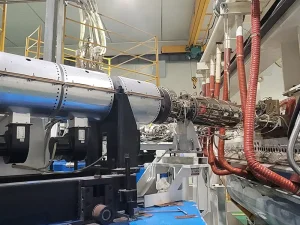
CE Certification Electromagnetic Induction Heater Manufacturer, Exporter
Technical Specifications
China High Density Heating Element Manufacturers, Factories
Technical Specifications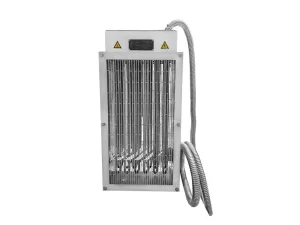
CE Certification Efficient Air Duct Heaters for HVAC Manufacturer, Factory
Technical Specifications
CE Certification Precise Cooling and Heating System Manufacturers, Exporters
Technical Specifications
Best Pipeline Heater Manufacturers, Factory
Technical Specifications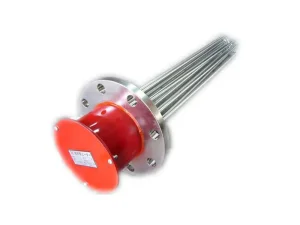
CE Certification Explosion Proof Electric Heater Exporter, Factory
Technical Specifications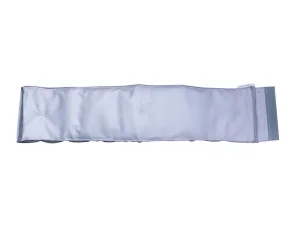
Best Durable Heat Insulation Covers Manufacturer, Exporters
Technical SpecificationsPartner Directly with a Certified OEM/ODM Heating Factory
Work with Kangpu's technical team to customize heating solutions to your technical drawings, optimize energy use, and lower total operating costs.