

Primary Thermal Hardware
Precision Industrial Heating Products & Components
Engineered for harsh industrial envelopes, ultra-low radiant loss, and strict CE safety conformity.

CE Certification Flexible Heaters for Custom Applications Manufacturer, Exporter
View Specifications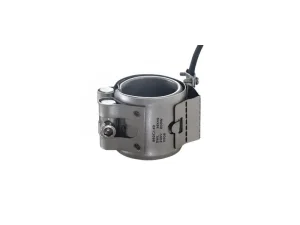
China Safe and Durable Mica Heaters Factory, Factories
View Specifications
China Efficient Portable Ceramic Heaters for Industry | China Suppliers & Factory Exporters, Factories
View Specifications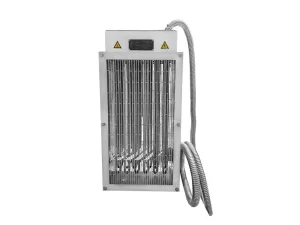
CE Certification Efficient Air Duct Heaters for HVAC Manufacturer, Factory
View Specifications
CE Certification Fan Manufacturer, Factory
View Specifications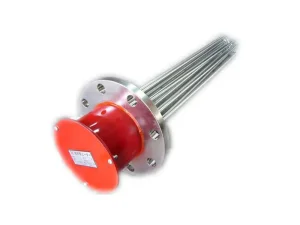
CE Certification Explosion Proof Electric Heater Exporter, Factory
View Specifications
China Portable Ceramic Heaters for Industry Manufacturers, Exporter
View Specifications
Rigorous Conformity Analysis
Decoding CE Certification Architecture in Infrared Furnace Engineering
Evaluating electromagnetic compatibility, dielectric containment, and thermal safety under EU Directives.
Low Voltage Directive (2014/35/EU) Compliance
High-power infrared industrial furnaces operate at voltages from 220V single-phase up to 690V three-phase. In Kangpu engineering protocols, electrical insulation resistance exceeds standard parameters through high-purity fused quartz isolation sleeves and multi-layer compressed mica matrices, ensuring dielectric strength capable of withstanding >2500V AC testing without breakdown.
EMC Directive (2014/30/EU) Shielding
Fast-switching SCR (Silicon Controlled Rectifier) thyristors and PID phase-angle pulse firing systems can induce electromagnetic harmonics back into facility grids. Our CE-compliant control cabinets feature military-grade RFI/EMI suppressors, copper mesh grounding conduits, and isolated control loops to prevent industrial telemetry noise.
Machinery Directive (2006/42/EC) Integration
Thermal safety requires complete structural fail-safes. Each infrared furnace features dual-redundant Type-K thermocouple over-temperature cut-offs, dynamic forced-draft chimney venting, and air-cooled outer skins that maintain surface contact temperatures below 60°C under full 800°C continuous core thermal operations.
Manufacturing Ecosystem Superiority
Why Global Tier-1 Brands Source from China's Thermal Hub
Combining 40 years of continuous supply-chain maturation in Yancheng with advanced robotics and raw material control.
Complete Upstream Clustering
Situated in Yancheng, Jiangsu, Kangpu accesses regional refiners of high-temperature Cr20Ni80 Nichrome wiring, high-purity aluminum oxide ceramics, and optical-grade quartz tubes within a 50km radius. This eliminates upstream logistics delays and ensures batch homogeneity.
Sub-Millimeter Rapid Tooling
Unlike trading houses that rely on catalog specs, our facility executes the 7-stage custom toolpath in-house. CNC wire EDM machining, custom extrusion dies, and vacuum sintering chambers operate 24/7, enabling turnaround of bespoke industrial molds in 72 to 96 hours.
Unrivaled Scale & TCO
Delivering heavy machinery builders high-reliability products at an optimized Total Cost of Ownership (TCO). Automated spiral winding, robotic brazing, and lean manufacturing pipelines keep capital investment lower than European competitors without sacrificing build longevity.
5-Year Traceable Warranty
Every batch produced in our Yancheng factory is laser-etched with a discrete QR code tying the assembly to its original melt chemistry, ceramic dielectric test record, and furnace vacuum bake-out log, validating our full 5-year replacement backing.
Future-Ready Engineering
Technological Evolutions Shaping the Infrared Furnace Industry
Transitioning from conventional resistive conduction to high-efficiency selective radiant emission.
Molecular Absorption Band Matching
Modern infrared furnaces utilize nano-scale carbon and rare-earth ceramic emitters formulated to radiate precisely at medium wavelengths (2.0 to 4.0 µm). This spectrum aligns with the fundamental C-H and C-O absorption bands of industrial polymers, transferring thermal energy straight to core polymer backbones without surface scorching.
AIoT Dynamic Zonal Modulation
Moving away from single-point feedback, smart furnaces deploy multi-channel infrared pyrometer arrays coupled with machine-learning PID algorithms. These continuously adjust power density across segmented furnace zones, achieving longitudinal thermal consistency within ±0.5°C under varying line speeds.
Scope-1 Decarbonization Directives
With the European Carbon Border Adjustment Mechanism (CBAM) taking hold, manufacturing plants are eliminating open-flame gas kilns. Electromagnetic and clean infrared furnaces achieve 98%+ thermodynamic electro-thermal conversion, helping global plants hit strict net-zero benchmarks.
Application Engineering
Localized Deployment Scenarios & Heavy Industry Solutions
Proven across complex production lines, from high-pressure pipe manufacturing to high-temperature coating drying.
PVC-O Molecular Orientation Lines
Biaxially oriented PVC (PVC-O) pipes require heating within an extremely narrow rubbery state window (between 90°C and 115°C depending on blend chemistry). Kangpu's CE-certified infrared orientation furnaces deliver uniform volumetric radiation through cylindrical multi-bank arrays, eliminating wall thickness variation and yielding Class 500 pipe strength profiles.
Textile & Non-Woven Heat Setting
In synthetic spunbond and composite nonwoven operations, conventional convection ovens can cause fiber flutter and surface pilling. Our infrared tunnel furnaces transfer uniform thermal energy non-contact, drying technical emulsions, cross-linking binders, and stabilizing thermal webs at production line speeds exceeding 120 m/min.
Lithium-ion Battery Anode/Cathode Baking
Battery electrode slurries require solvent evaporation without "skinning" or blistering. Kangpu medium-wave infrared systems heat coatings from the substrate outward, enabling NMP solvent drying cycles that are up to 45% faster than forced hot-air towers while reducing footprinted cleanroom area.
Technical Specification Reference
Engineering Selector Matrix: Industrial Heating Configurations
Direct comparative parameters to streamline engineering specifications and line procurement.
| Thermal Technology | Radiant Spectrum / Type | Operating Temp Range | Energy Transfer Mode | Key Industrial Application | CE Safety Priority |
|---|---|---|---|---|---|
| Nano Infrared Furnace | Medium-Wave (2.0–4.0 µm) | Up to 850°C | Direct Radiant Resonance | PVC-O Ovens, Extrusion Barrels | EN 60519-1 (Thermal Containment) |
| Ceramic Band Heaters | Long-Wave Infrared / Conduction | Up to 650°C | Conduction + Cavity Radiant | Plastic Extrusion, Blown Film | EN 60335-1 (Dielectric Mica Isolation) |
| Cast-In Aluminum / Copper | Solid Metal Conduction | Al: 350°C / Cu: 650°C | High Thermal Mass Conduction | Liquid-Cooled Barrels, Die Heads | Pressure Equipment Directive (PED cooling) |
| Mica Band Heaters | Contact Conduction | Up to 320°C | Fast Transient Conduction | Injection Nozzles, Small Cylinders | EN 60204-1 (Electrical Terminals) |
| Air Duct Heaters | Forced Convection | Ambient to 400°C | Convective Air Mass Flow | Cleanroom Drying, Drying Ovens | EN 60079-0 (Airflow Interlock Safety) |
Sourcing Protocol
Global Procurement Demands & Technical Validation Protocol
Key engineering milestones required by procurement directors when validating Chinese direct manufacturing contracts.
1. Complete CAD/CAM Drawing Review
Prior to toolpath generation, internal engineering teams scrutinize 3D STEP files, terminal lead clear spaces, clamping radius, and watt density profiles to prevent hot spots and mechanical interference during machine maintenance cycles.
2. Material Mill Test Reports (MTR)
Raw resistance wiring must deliver verified chemical spectroscopy confirming Ni80/Cr20 elemental ratio. Castings must undergo ultrasonic density scans to confirm absence of voids and air pockets along internal heating elements.
3. Electrical Hi-Pot & Cold Insulation
Every commercial production batch undergoes 100% factory stress testing: 1500V to 2500V Hi-Pot leakage assessment (<0.5mA threshold) and 500V DC megohmmeter verification demonstrating dry insulation >100 MΩ.
4. Custom Export Packaging Standards
Industrial ceramic elements and infrared lamps are secured in IP65 desiccated, vacuum-sealed barrier membranes and nestled into form-milled shock-absorbing high-density EVA foam inside IPPC ISPM-15 compliant export crates.
Specialized Thermal Equipment
Industrial Process Heating & Thermal Machinery
Complete process heating hardware, pipe manufacturing ovens, and control accessories.

CE Certification Cast Aluminum/Copper Heater Manufacturer, Exporter
View Specifications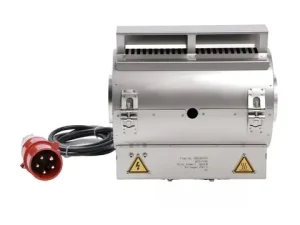
CE Certification Precise Cooling and Heating System Manufacturers, Exporters
View Specifications
CE Certification PVC-O Ovens for Precision Heating Manufacturer, Manufacturers
View Specifications
High-Quality Portable Ceramic Heaters for Industry - Efficient Heating Solutions from China Suppliers and Factory Exporter, Exporters
View Specifications
China Portable Ceramic Heaters from China Suppliers: Efficient Heating Solutions for Factories and Industries Manufacturer, Exporters
View Specifications
CE Certification Ovens Manufacturer, Exporter
View Specifications
High-Quality Thermocouple Exporter, Factory
View Specifications
Best Pipeline Heater Manufacturers, Factory
View Specifications
Direct Engineering FAQ
Frequently Asked Technical & Sourcing Questions
Direct answers to the most common questions raised by factory managers, OEM builders, and procurement teams.
How does Kangpu verify CE electrical safety on custom voltage designs?
Whether your project requires 110V, 220V, 380V, 480V, or 690V, every custom design conforms to EN 60519-1 safety standards for electro-heat installations. We run pre-shipment dielectric breakdown testing up to 2500V, cold insulation resistance verification (>100 MΩ), and leak current validation with certified calibrated instrumentation.
What is the efficiency advantage of nano infrared bands over mica bands?
Conventional mica bands transfer thermal energy primarily via conduction, losing up to 30% of their heat output to surrounding shop air. Kangpu nano infrared heaters convert electrical power into resonant medium-wave radiation with directional gold or ceramic aerogel reflection backing, reducing barrel heat-up times by 25-35% and dropping exterior case touch-temperatures below 50°C.
Can you manufacture infrared ovens to custom dimensional footprints?
Yes. Custom engineered thermal systems represent over 70% of our daily production volume. We build custom infrared curing tunnels and PVC-O molecular orientation ovens to client line heights, internal transit widths, conveyor configurations, and multi-zone thermal recipes—backed by our 7-stage custom manufacturing procedure.
How is the 5-year commercial warranty executed globally?
Every shipment is stamped with unique batch identification codes linking the element to its origin materials, alloy wire melt cert, and quality assurance logs. If an unexpected premature failure arises during normal operational parameters within 5 years, we analyze the operating telemetry, correct the tooling if needed, and dispatch air freight replacement parts directly to your plant.