
CE Certified

Precision-engineered radiant modules, industrial process ovens, and thermal transmission systems built to customer blueprint specifications with five-year after-sales protection and full batch traceability.


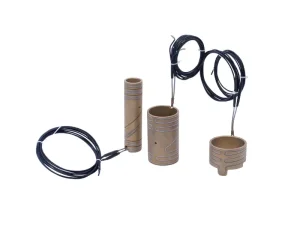
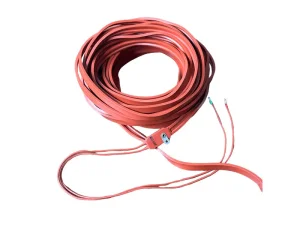
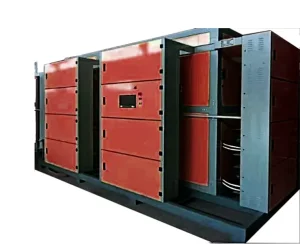
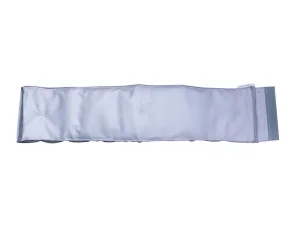

An authoritative engineering assessment of ceramic and quartz infrared panel manufacturing, Stefan-Boltzmann radiative mechanics, and rigorous CE mark compliance protocols for global process industries.
Industrial manufacturing in the post-carbon era demands an uncompromising balance between extreme thermal efficiency, rapid thermodynamic cycling, and stringent regulatory compliance. Yancheng Laier Heating Technology Co., Ltd. (operating globally under the Kangpu Heater brand since 1986) has pioneered industrial electric heating design for four decades. Where traditional convection-based heating systems suffer from massive thermal inertia, convective draft losses, and boundary layer resistance, CE Certified Infrared Heater Panels operate directly on electromagnetic radiation principles governed by Planck's Radiation Law, Wien's Displacement Law, and the Stefan-Boltzmann relationship ($E = \varepsilon \sigma T^4$).
Four uninterrupted decades of precision industrial electric heating R&D and production.
Sovereign nations and manufacturing jurisdictions actively deploying Kangpu thermal systems.
Patented technologies including high-precision extruder heating/cooling integrated architectures.
Full after-sales manufacturing guarantee backed by individual serial batch traceability.
Convective systems lose up to 45% of enthalpy heating intermediate air masses. Kangpu infrared panels emit high-purity electromagnetic waves directly absorbed by target molecular bonds (C-H, O-H, and N-H matrices), yielding up to 96% radiant transfer efficiency without air disruption.
Every infrared panel is manufactured under strict European conformity directives. Fully audited under the Low Voltage Directive (LVD 2014/35/EU) and Electromagnetic Compatibility Directive (EMC 2014/30/EU), satisfying EN 60335-1 safety and insulation resistance thresholds under continuous 750°C thermal stress.
Engineered with embedded precision FeCrAl (Kanthal) resistance alloys cast into high-density cordierite ceramics or encapsulated in micro-engineered quartz glass tubes, guaranteeing maximum face temperature variations within ±2.5°C across the active emitter face.
Strategic advancements transforming electric process heating from static heating elements into dynamic, wavelength-tuned radiant systems.
Contemporary radiant panels have surpassed basic ceramic formulations. By infusing specialized zirconium, titanium, and rare-earth metal oxides into vitreous ceramic surfaces, modern emitters achieve directional emissivity ratings ($\varepsilon$) exceeding 0.94 within targeted mid-wave bands, dramatically accelerating drying rates in web-converting lines.
Industrial processors are shifting from broad-spectrum resistance coils to target-matched infrared profiles. Tuning peak wavelengths precisely to the spectral absorption bands of industrial polymers (2.8–3.4 $\mu$m for polyolefins, 5.8–6.2 $\mu$m for PET/polyesters) yields instantaneous core-heating without blister formation or surface scorching.
Next-generation thermoforming and continuous web production utilizes multi-zone modular arrays with integrated thermocouple feedback loops. Kangpu's segmented panels eliminate edge convective loss by dynamically over-powering boundary perimeter zones via automated thyristor (SCR) power packs.
Key metallurgical, dielectric, and operational parameters evaluating industrial infrared panel reliability for high-volume equipment manufacturers and tier-1 plants.
Factory procurement audits demand zero insulation leakage under peak operating temperatures. Kangpu elements undergo 2,500V AC flash testing between the live resistive alloy and the mounting chassis, with insulation resistance consistently exceeding 100 MΩ at 500V DC under high humidity environments.
Hi-Pot Tested 2.5kVA single line shutdown in an automotive paint oven or extrusion line easily incurs costs exceeding $15,000 per hour. Choosing heaters purely on cheap piece-part price creates massive operational liability. Kangpu builds with vacuum-purified NiCr 80/20 and FeCrAl elements delivering over 25,000 continuous MTBF hours.
25,000+ Hours MTBFIn thermoforming and cycle-stop operations, panels experience repeated cold-start to full-load cycles. Our cordierite-steatite ceramic substrates possess an ultra-low coefficient of thermal expansion ($2.1 \times 10^{-6}/\text{K}$), passing 500 cold-water quench cycles from 700°C with zero micro-fracturing or glaze degradation.
Water-Quench VerifiedReal-world deployment scenarios where Kangpu infrared technologies outperform traditional heating configurations.
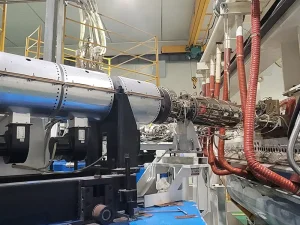
Extruder barrels and molecular orientation ovens require intense thermal inputs without barrel hotspot distortion. Kangpu's patented integrated heating and cooling designs combine nano-infrared emitter shields with targeted air ducts, preventing thermal runaway during high-shear screw operation while cutting energy usage by up to 35% compared to legacy mica heater bands.
Convective airflow in paint finishing runs the persistent risk of entraining airborne dust and inducing solvent boils (pinholing). Medium-wave infrared panel cassettes penetrate wet primer layers from the bottom up, flashing off volatile solvents cleanly before sealing the surface clearcoat, cutting oven line lengths by up to 40%.
Lithium-ion electrode coating requires ultra-rapid, non-turbulent moisture and solvent removal to prevent migration of conductive binders. Kangpu infrared panels deliver high flux uniformity ($\pm 1.5^\circ\text{C}$) under inert atmosphere conditions, preserving particle distribution uniformity across the foil matrix.
Engineered in high-purity quartz enclosures with 316L electropolished stainless frames, our cleanroom infrared panels eliminate particle shedding. Used across wafer bake-out chambers, photovoltaic metallization, and display glass annealing where zero particle contamination is non-negotiable.
Drying non-woven polymers and coated technical fabrics demands rapid reaction times. If the web stops, conventional ovens can ignite the substrate. Kangpu medium-wave quartz emitters cool below ignition temperature within 1.8 seconds of power interruption, ensuring safety without expensive mechanical blast-gates.
Sanitary-grade long-wave ceramic infrared emitter arrays stimulate water molecule vibrational resonance ($2.7\mu\text{m}$ band), driving deep moisture migration while keeping internal textures intact. Stainless steel washdown-safe enclosures meet IP65 ingress protection standards.
Kangpu's formal regulatory matrix ensuring seamless entry into the European Economic Area (EEA), North American UL markets, and global hazardous environments.
| Regulatory Directive | Harmonized Technical Standard | Kangpu Factory Assurance Metric | Audit Proof & Traceability |
|---|---|---|---|
| LVD 2014/35/EU Low Voltage | EN 60335-1 / EN 60335-2-96 | Dielectric withstand > 2500V AC; Creepage > 8.0mm; Leakage < 0.75mA | Routine factory flash test records linked to batch serial number |
| EMC 2014/30/EU Compatibility | EN 61000-6-2 / EN 61000-6-4 | Zero high-frequency parasitic emission; pure resistive load profile | Full spectrum third-party EMC lab chamber verification |
| RoHS 2011/65/EU Restriction | EN IEC 63000:2018 | Zero hexavalent chromium (Cr6+), cadmium, lead, or PBBs in glaze or potting | ICP-OES / XRF annual material screening reports |
| ATEX 2014/34/EU Hazardous | EN IEC 60079-0 / EN 60079-1 | Explosion-proof terminal boxes certified Ex d IIB+H2 T1-T6 Gb | Certified ATEX pressure-tested explosion barrier seals |
| ISO 9001:2015 Quality | Quality Management Systems | Full dimensional CMM inspection; automated resistance tolerance check (±3%) | BSI / TUV audited manufacturing facilities in Yancheng |
From 2D/3D customer concept drawings to volume production, every step requires formal sign-off.
Custom thermal modeling, fixing geometry, and terminal clearance verification.
Tailored voltage, wattage, watt density, and material selection for target temperatures.
Production-grade steel tooling opened directly for the sample, avoiding rough prototypes.
Sample installed on your factory line to confirm mechanical fit and real thermal performance.
Terminal, lead, or clamp adjustments engineered rapidly based on line trial feedback.
Comprehensive dielectric, thermal shock, and emissivity testing prior to production freeze.
Volume production under ISO 9001 standards, customized export packaging, and 5-year warranty support.
Forward-looking innovations currently in the pilot testing phase inside Kangpu's Yancheng thermal laboratories.
Developing nanostructured surface gratings that suppress unwanted near-infrared scatter while amplifying narrow-band mid-infrared emission, driving radiant transfer efficiencies toward 98.5% with near-zero chassis casing losses.
Lab Efficiency: 98.5%Integrating optical fiber Bragg grating (FBG) temperature sensors directly within ceramic cast matrices. Unlike discrete thermocouples, FBG provides distributed continuous temperature mapping along the entire resistance track in real time.
Continuous Array SensingSmart power regulation modules analyze micro-ohmic resistance drift and thermal oscillation signatures over time, calculating exact remaining element operational life and scheduling maintenance hundreds of hours before open-circuit failure.
Zero Unplanned DowntimePractical answers addressing the direct concerns of process engineers, OEM designers, and international procurement managers.
Yes. Custom engineering is our primary focus. Kangpu builds directly from client 2D/3D CAD models, physical samples, or machine specifications. Our engineers confirm outer envelope dimensions, watt-density ratings, operating voltage (from 12V DC up to 690V 3-phase AC), lead terminal configurations (ceramic bead, high-temp silicone leads, or terminal blocks), and clamping mechanisms. We open dedicated tooling molds for samples to ensure the prototype matches mass-production quality exactly.
Kangpu panels comply with the European Low Voltage Directive (LVD 2014/35/EU) and Electromagnetic Compatibility Directive (EMC 2014/30/EU). Every production unit undergoes 100% automated quality checks: 2,500V dielectric breakdown testing for 1 minute without arc or flashover, cold-resistance testing held within ±3% tolerance, and hot-insulation resistance verification exceeding 20 MΩ under maximum operating temperature. Comprehensive test documentation is archived for each batch.
Our five-year warranty is backed by internal batch traceability. Every unit is laser-etched with a unique serial number that tracks back to its resistance wire batch, ceramic raw material blend, sintering kiln run, and final inspection technician. In the rare event of an unexpected field failure, our engineering team conducts root-cause metallurgical and operational analyses to resolve the issue at the source, offering immediate replacement dispatch and technical corrective action.
Ceramic panels emit long-wave infrared radiation (2.0–10.0 $\mu$m). They offer substantial structural durability, high thermal mass, and steady heat retention, making them ideal for thermoforming heavy-gauge plastics, curing paints, and constant-speed continuous ovens. Quartz panels emit fast-response medium-wave radiation (1.5–3.5 $\mu$m) with very low thermal inertia, reaching operating temperature in seconds. Quartz is ideal for web printing, automated cycle-stops, and operations requiring rapid temperature ramp-down to prevent material scorching.
Standard ceramic infrared panels operate reliably between 1.5 W/cm² and 6.0 W/cm² depending on the emitter geometry and cooling environment, yielding surface temperatures from 300°C up to 750°C. For specialized high-intensity installations, our quartz and nano-infrared configurations support surface watt densities up to 10.0 W/cm² when backed by forced air cooling or reflective parabolic enclosures.
Kangpu exports to over 100 countries across Europe, North America, Southeast Asia, South America, and the Middle East, serving more than 5,000 customers. Standard tooling and prototype production typically takes 7 to 10 business days. Standard volume orders are completed within 15 to 25 business days, packaged in certified sea/air freight wooden crates with corrosion-preventative moisture barriers.
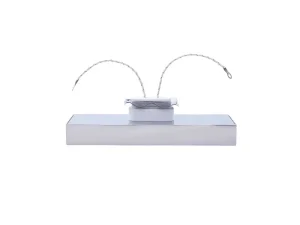
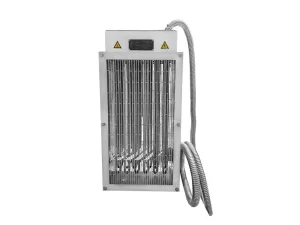
Explore our full line of specialized ceramic emitters, duct heaters, portable heating equipment, and integrated temperature solutions manufactured to global ISO and CE specifications.



Submit your operational parameters, process temperatures, and dimensional drawings to our engineering team. We deliver custom 3D thermal profiles and rapid sample evaluation for global projects.