Certified Thermal Systems & Core Assemblies (Part I)
Engineered with premium Nichrome resistance architectures for industrial heat-treatment setups, plastics machinery, and heavy industrial plant infrastructure.

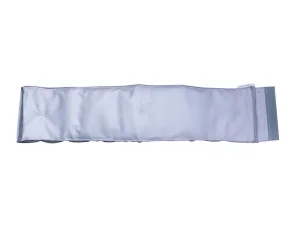
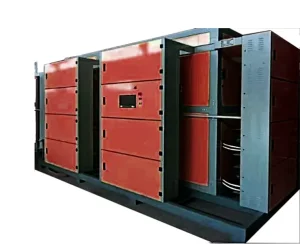

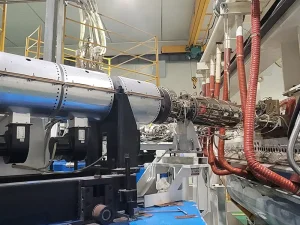
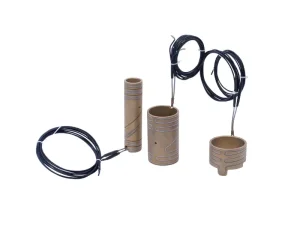

Evolution of High-Grade Nichrome Alloys in Clean Electrification
How strict carbon accounting, precision metallurgical tolerances, and severe thermal-cycling demands are reshaping industrial electrothermal manufacturing globally.
Microstructural Stability & Creep Resistance
Modern industrial heating demands elements that resist structural sagging and hot-embrittlement during continuous exposure up to 1200°C. Refined vacuum-melted NiCr 80/20 formulations optimize grain boundary pinning using trace rare-earth additives (Y, Ce, Zr), significantly extending thermal cycle lifespans.
Rapid Dynamic Thermal Response
Driven by closed-loop PID control architectures, automated extrusion and hot-runner systems require minimal thermal hysteresis. Nichrome's exceptionally flat temperature coefficient of resistance ensures predictable energy throughput across broad thermal bands.
Decarbonization of Industrial Thermal Loads
As multinational manufacturing hubs eliminate fossil-gas burn-off chambers, direct-electric immersion boilers, ceramic band arrays, and duct heaters utilize certified CE Nichrome elements to convert renewable grid power with >98% thermodynamic efficiency.
| Alloy Grade | Nominal Composition | Max Continuous Temp | Resistivity (20°C, μΩ·m) | Key Industrial Deployment |
|---|---|---|---|---|
| NiCr 80/20 (Nikrothal 80) | 78-80% Ni, 20-22% Cr, Bal. Fe | 1200°C / 2192°F | 1.09 ± 0.05 | Extrusion barrel heaters, vacuum furnaces, hot runners |
| NiCr 60/15 (Nikrothal 60) | 57-61% Ni, 15-18% Cr, Bal. Fe | 1150°C / 2102°F | 1.12 ± 0.05 | Packaging seal bars, domestic drying ovens, tubular elements |
| NiCr 30/20 (Nikrothal 30) | 30-34% Ni, 18-21% Cr, Bal. Fe | 1050°C / 1922°F | 1.04 ± 0.05 | HVAC duct elements, industrial convective fan coils |
| FeCrAl (Kanthal A-1 Class) | 72% Fe, 22% Cr, 5.8% Al | 1400°C / 2550°F | 1.45 ± 0.07 | High-temp ceramic kilns, continuous sintering furnaces |
Enterprise Sourcing Needs in Tier-1 Industrial Supply Chains
Purchasing managers and plant engineers demand verifiable material traceability, dimensional accuracy, and supply chain resilience from direct manufacturer partners.
Full Heat-Batch Traceability
Mill test certificates (EN 10204 3.1) accompanying every master spool guarantee spectral purity, negligible carbon contaminants, and tight electrical resistance spreads (±3%).
Custom Cross-Section Geometries
From micro-fine wires (0.05 mm) for medical diagnostic elements to heavy-gauge flat ribbons (0.5 mm × 8.0 mm) for industrial extruder bands, precision draw-die lines satisfy complex geometric constraints.
Total Cost of Downtime (TCD) Mitigation
A single blown heater loop can cost tens of thousands of dollars per hour in stalled plastics production lines. Sourcing factory-direct from vetted Chinese exporters ensures optimal operational margins.
CE, RoHS & REACH Compliance
Verified chemical analysis guarantees zero hazardous elements (lead, cadmium, mercury, hexavalent chromium), supporting frictionless customs clearance across the EU, UK, and North America.
Integrated Thermal Solutions Across Strategic Industries
Nichrome heating wire serves as the fundamental thermodynamic core across high-stakes industrial manufacturing applications.
Polymer Extrusion & Blow Molding
Seamlessly coiled inside ceramic band blocks or cast within molten copper/aluminum shells, Nichrome delivers uniform radial flux along the extruder barrel. This prevents localized shear degradation, assuring stable melt viscosity in high-throughput polyolefin and engineering polymer processing.
Biaxial Molecular Pipe Orientation (PVC-O)
Producing ultra-high-pressure Class 500 PVC-O pipe requires sub-degree temperature consistency in multi-zone conditioning ovens. Precision-wound Nichrome ribbon elements maintain the strict thermal envelope required to initiate radial and axial molecular chain stretching.
Zero-Emission Steam & Clean Thermal Fluid
Heavy duty immersion bundles made with premium NiCr 80/20 cores power clean electromagnetic and resistive steam boilers, replacing heavy fuel oil installations in pharmaceutical manufacturing, food processing, and chemical synthesis reactors.
Localization Support, CE Quality Assurance & Regulatory Protection
Ensuring frictionless global deployment through rigorous adherence to European and international electrical equipment standards.
Low Voltage Directive (LVD 2014/35/EU)
Every batch of Nichrome resistance wire assemblies and finished heating components undergoes dielectrical breakdown testing, hot-insulation resistance verification (>100 MΩ at 1000V DC), and leakage current auditing to ensure operator safety.
Electromagnetic Compatibility (EMC 2014/30/EU)
Engineered non-inductive windings (reverse-pitch winding geometry) neutralize parasitic inductance, preventing harmonic electrical noise from interfering with nearby PLC automation channels and sensitive sensor lines.
Multilingual Engineering Documentation
Export packages include localized operation datasheets, precise resistance-versus-temperature tables, CAD terminal schematics, and bilingual metallurgical test reports in English, German, French, and Spanish.
Engineering Roadmap: Next-Gen Electrothermal Metallurgy (2026–2030)
Our R&D team continuously advances alloy formulations to meet the evolving demands of hydrogen energy, additive manufacturing, and ultra-high-vacuum applications.
Rare-Earth Doped Formulations
Implementing micro-alloyed cerium and yttrium within NiCr 80/20 matrices to form self-healing Cr₂O₃ oxide layers that resist sulfidation and carburization.
AI-Driven Cold Drawing
Integrating real-time laser micrometer inspection into multi-pass diamond drawing benches, restricting wire gauge tolerances to ±0.001 mm across 10,000-meter continuous reels.
Hydrogen Combustion Retrofits
Developing specialized high-temp oxidation-resistant alloys engineered to function in humid, high-steam hydrogen firing atmospheres without embrittlement.
Embedded Sensor Filaments
Fabricating co-drawn resistance elements featuring integrated temperature-sensing cores for true real-time distributed temperature monitoring along extruder barrels.
Frequently Asked Questions: Nichrome Heating Wire & Systems
In-depth answers covering metallurgical composition, thermodynamic calculations, and international export certifications.
What distinguishes NiCr 80/20 from cheaper FeCrAl (Iron-Chromium-Aluminum) alloys?
While FeCrAl alloys offer higher theoretical continuous temperatures, they become brittle after initial heating and are prone to sagging. NiCr 80/20 retains exceptional hot-strength, high ductility after prolonged use, superior non-magnetic properties, and superior corrosion resistance in cyclic industrial heating environments.
Why is CE certification critical for Nichrome heating elements and systems?
CE marking confirms compliance with the EU Low Voltage Directive (LVD) and EMC Directive. For electrical heaters, this verifies safe insulation distances, safe breakdown voltage withstand capacity, non-hazardous material composition under RoHS, and reliable operation without fire hazards or electromagnetic interference.
How does Kangpu Heater ensure batch-to-batch resistance consistency?
Every production run begins with vacuum induction melting (VIM) followed by precision cold drawing through polycrystalline diamond dies. Automated laser-gauge monitoring coupled with continuous electrical resistance testing ensures electrical resistivity variance remains strictly within ±3% of nominal specifications.
Can you provide custom wire profiles (flat ribbon vs. round wire)?
Yes. We manufacture both round wire (diameters from 0.05 mm to 12.0 mm) and precision-rolled flat ribbon (thicknesses from 0.1 mm, widths up to 10.0 mm). Ribbons maximize surface contact area in mica band heaters and high-density nozzle heaters, significantly enhancing heat transfer efficiency.
What is the standard procedure from technical drawing to mass export?
We execute a 7-stage quality protocol: ID Design verification, customization review (power, voltage, watt-density), real-mold prototyping, customer sample confirmation, modifications, rigorous electrical/thermal load testing, and batch manufacturing with full trace documentation.
What warranty and post-sale assurances are provided for international buyers?
Kangpu Heater provides a 5-year after-sales warranty on industrial heating assemblies. Every shipment features laser-etched batch identifiers linked to raw material melt reports, ensuring full accountability and traceable support throughout the equipment lifecycle.
Industrial Heating Systems & Thermal Processing Units (Part II)
Heavy-duty heating furnaces, orientation ovens, flexible thermal elements, and high-efficiency convective components engineered for extreme industrial duty.