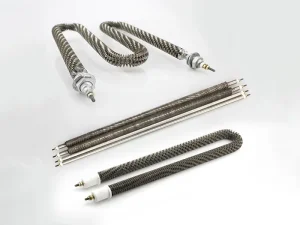
Featured Precision Thermal Processing Systems
Engineered for maximum thermal conductivity, rapid heat transfer dynamics, and tight temperature containment across continuous extrusion lines and heavy processing machinery.
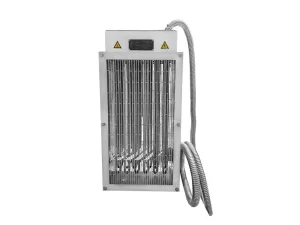

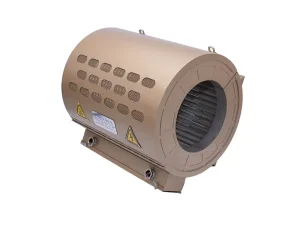




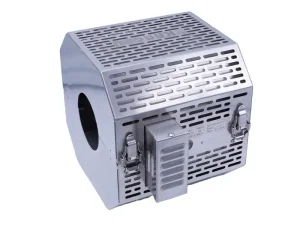
Thermodynamic Precision in Industrial Heating & Cooling
Modern polymer extrusion, high-speed profile shaping, and specialized thermal processes demand continuous thermodynamic equilibrium. Below is an engineering overview of closed-loop thermal control.
Thermal Inertia Neutralization
Extruder barrels generate significant mechanical shear heat under high shear rates, turning the barrel into a heat source. Our integrated systems employ calibrated air jackets or embedded liquid circulation channels to immediately counter thermal overshoot, keeping resin within a razor-thin melt window of ±0.5°C without degradation.
Dual-Phase Heat Flux Optimization
By pairing high-density resistance elements (cast aluminum alloy or copper matrices) with aerodynamic forced-convection cowlings, our systems achieve up to 35 W/in² watt densities while providing rapid heat dissipation rates exceeding 15°C per minute during dynamic cooling stages.
Full CE Regulatory Compliance
All assemblies adhere strictly to European Machinery Directive 2006/42/EC, Low Voltage Directive (LVD) 2014/35/EU, and Electromagnetic Compatibility (EMC) 2014/30/EU. Built with high-grade mica, compressed MgO dielectric cores, and double-insulated wiring to ensure operational safety under heavy industrial loads.
Why Global Tier-1 Machine Builders Source from Our Yancheng Facility
From raw alloy smelting and precision CNC casting to certified automated dielectric testing, our manufacturing plant delivers dependable performance and competitive pricing for global OEMs.
End-to-End Vertical Integration
We control the complete lifecycle: alloy casting foundry, precision CNC tooling, high-purity MgO swaging, winding of NiCr 80/20 resistance coils, sheet metal shroud stamping, and final assembly under ISO 9001:2015 management.
Stringent 7-Stage Quality Control
Every cooling and heating jacket undergoes real-mold physical testing, high-pot dielectric withstand tests (up to 2500V/1mA), insulation resistance inspection (>100MΩ), and thermal cycling before export dispatch.
Strategic Supply Chain Cost Agility
Located in the Yangtze River Delta industrial belt, our plant benefits from immediate access to specialized alloy suppliers and certified electronic component producers, giving partners a 25%–40% total procurement cost advantage.
Tailored OEM Engineering Support
Our bilingual design engineering team analyzes your mechanical drawings, CAD models, thermal flow simulations, and electrical constraints, delivering functional prototypes in as few as 10 business days.
The Future of Precision Thermal Control: Smart & Low-Carbon
As international energy standards tighten and high-performance engineering plastics become more common, industrial thermal equipment is moving toward predictive, digitally monitored configurations.
Digital Smart Temperature Monitoring
Embedded multichannel RTDs and K/J-type thermocouples communicate directly with edge PLCs via Modbus-RTU, IO-Link, and PROFINET. Predictive heating analytics warn operators of localized resistance degradation weeks before failure, preventing costly unplanned shutdowns.
Infrared Radiant Heat Containment
Traditional barrel heating loses up to 40% of its thermal energy to ambient shop floor air. Modern nano-infrared band heaters and micro-porous silica aerogel insulation shrouds drop external surface temperatures from 300°C down to under 55°C, saving up to 30% on electricity.
Combustion-Free Pure Electric Steam
Electromagnetic induction steam boilers provide localized, on-demand high-pressure steam without fuel lines or carbon emissions. This delivers clean, quiet, high-pressure thermal delivery tailored to food packaging, pharmaceutical processing, and sterile environments.
| Thermal Technology | Operating Temp Range | Heat Transfer Mode | Cooling Mechanism | Target Machine Application |
|---|---|---|---|---|
| Integrated Cast-in Dual Band | Ambient to 450°C (Alloy) / 650°C (Bronze) | Direct Solid Conduction | Incoloy liquid cooling tube or air fins | Heavy-duty twin screw extruders, masterbatch compounding |
| Nano-Infrared Radiation Shroud | Ambient to 500°C | Electromagnetic Radiant (IR) | Aerodynamic forced air blower cowling | Blown film extrusion lines, energy retrofit projects |
| Engineered Ceramic Band System | Ambient to 700°C | Conduction + Cavity Radiation | Externally ducted centrifugal blowers | High-temperature PEEK, PTFE, and nylon extrusion |
| Precision Air-Cooled Barrel Assembly | Ambient to 400°C | Resistive heating + forced convective air | High-static pressure multi-vane fan system | PVC-O orientation ovens, pipe and sheet profiling lines |
Engineered Across Demanding Industrial Environments
From high-speed masterbatch lines to micro-tubing medical extrusion, our precision heating and cooling systems are deployed across diverse sectors worldwide.
PVC-O Molecular Orientation Lines
Biaxially oriented PVC requires tight temperature uniformity along the heating tunnel and sizing mandrels. Our custom heating chambers maintain precise, zone-by-zone equilibrium to keep pipe tensile strength and impact performance within tight tolerance limits.
Lithium Battery Separator Extrusion
Wet-process battery separator films rely on high-temperature polymer-oil blends. Cast copper heating jackets paired with liquid cooling coils deliver smooth, ripple-free thermal profiles across continuous cast-roll extrusion feeds.
Medical Cleanroom Tubing Extrusion
Medical catheter lines need clean operation with zero particulate shed. Our sealed, electropolished stainless steel duct heaters and cast aluminum barrel collars prevent airborne fiber dispersion in ISO Class 7 and Class 8 cleanrooms.
High-Throughput Twin-Screw Extruders
Compounding engineering resins with glass fibers generates severe localized friction. Segmented heating and cooling assemblies provide localized cooling on demand to stop resin degradation and resin burn.
Chemical Reactors & Oil Jackets
Industrial thermal oil furnaces provide safe, indirect heating for polymerizing jackets, reaction vessels, and heat exchangers up to 350°C, offering a reliable alternative to pressurized steam boilers.
Automotive Multi-Cavity Injection Nozzles
Precision mica and sealed brass band heaters fit narrow tool pockets and hot runner systems, heating quickly and standing up to molten resin drool and high clamping forces.
System-Level Thermal Balance: From Concept to Integration
We deliver complete thermal subsystems designed to integrate smoothly with your control cabinets, barrel geometries, and local electrical codes.
1. Finite Element Thermal Modeling
We build full CAD models of your barrel layout and run FEA heat transfer simulations to size watt densities, cooling channels, and air volumes before production begins.
2. Custom Machined Tooling
Our dedicated mold and pattern shop machines matching casting dies and metal stamping tools directly, keeping production parts true to the approved prototype.
3. Factory Runoff & Electrical Validation
Every completed system undergoes dielectric strength, insulation resistance, and pressure decay testing on internal cooling channels, shipping with complete CE documentation.
Global Buyer Evaluation Criteria: FAQ & Technical Support
Common questions from plant directors, procurement managers, and OEM design engineers sourcing industrial heating and cooling systems.
What CE directives do your heating and cooling systems comply with?
Our heating assemblies carry CE declarations covering the Low Voltage Directive (LVD) 2014/35/EU, Machinery Directive 2006/42/EC, and Electromagnetic Compatibility (EMC) Directive 2014/30/EU. We can provide full test reports and certificates upon request.
How do you choose between forced air cooling and liquid tube cooling?
Forced air cooling suits temperatures up to 350°C with moderate cooling needs, offering lower maintenance with no scale buildup. Cast-in stainless steel liquid cooling tubes are best for high-shear compounding extruders where fast heat removal is critical.
Can you build drop-in replacements for obsolete European or American bands?
Yes. Send us your original drawings, dimensional sketches, or sample parts. Our engineering team can replicate the internal diameter, outside width, wattage, voltage, thermocouple relief pockets, and clamping mechanisms to fit your existing setup.
What is the typical prototype lead time and MOQ for custom orders?
We support sample orders with an MOQ of 1 piece for evaluation. Standard prototype turnarounds range from 7 to 12 working days depending on casting patterns. Repeat batch shipments typically depart within 15 to 25 calendar days.
What makes your 5-year warranty possible?
We trace every unit back to its raw material batch and operator log. Using high-purity electrical-grade magnesium oxide, automated swaging machines, and German nickel-chromium element wire keeps element failure rates below 0.08% over five years of continuous production.
How do nano-infrared band heaters achieve up to 30% electrical energy savings?
Unlike standard band heaters that rely primarily on direct contact conduction, nano-infrared elements transfer heat directly into the barrel steel through directed radiant wavelength emission, protected by aerogel insulation jackets that minimize heat loss to the surrounding plant.
Industrial Process Heating & Thermal Systems Portfolio
Explore our full line of cast heaters, cleaning furnaces, thermal fluid boilers, and high-density cartridge elements engineered for modern manufacturing plants.