Featured Industrial Heating & Sensor Solutions
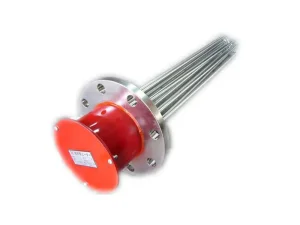
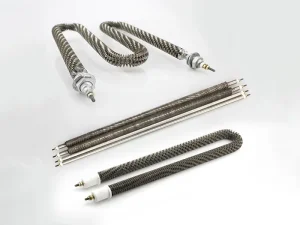
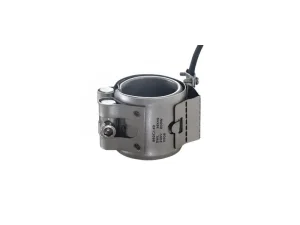
Direct from our manufacturing floor: High-density thermal elements, process heating jackets, and precision instrumentation built for demanding extrusion cycles.




Technical White Paper: Precision Heating in PVC-O Processing
Analyzing the pivotal engineering role of CE-marked thermal orientation ovens in modern biaxially oriented polyvinyl chloride pipe production.
Molecular Restructuring Mechanics
Polyvinyl chloride pipe extrusion reaches peak mechanical tenacity through biaxial orientation. Heating extruded preforms into the exact viscoelastic glass transition regime (typically 95°C–115°C) uncoils amorphous polymer chains, aligning them circumferentially and axially. This molecular restructuring transforms brittle polymer into an ultra-tough matrix resistant to rapid crack propagation.
Criticality of Thermal Uniformity
Even a ±1.5°C delta along the circumferential wall profile leads to localized thinning, wall instability, and immediate bursting during subsequent expansion mandrels or pressurized water/air molding. Our CE-certified PVC-O ovens incorporate multi-zone closed-loop PID control loops and high-velocity laminar air conditioning, sustaining an ultra-narrow tolerance of ±0.5°C throughout long profiles.
Rigorous CE Compliance Mandates
Global export demands compliance with the European Union's Machinery Directive (2006/42/EC), Low Voltage Directive (2014/35/EU), and EMC Directive (2014/30/EU). Our industrial PVC-O oven builds feature dual-channel safety interlocks, SIL-rated overtemperature shutdown devices, thermal explosion reliefs, and certified low-emission structural containment systems.
Global Procurement Demands & Industrial Trends
How international water utility modernization, infrastructure investments, and decarbonization pressures are shifting capital expenditure toward oriented PVC technology.
Global Water Infrastructure Upgrades
Aging ductile iron and concrete pipeline networks across Europe, North America, and the Middle East suffer from corrosion, severe pressure loss, and high failure rates. PVC-O pipes provide twice the tensile strength of conventional PVC-U and heightened hydraulic performance, fueling unprecedented procurement demand for specialized orientation heating lines.
Material Decarbonization Mandates
By orienting polymer molecules, PVC-O pipe walls are thinned by up to 40% while preserving pressure classes (up to PN25). This massive drop in raw resin usage lowers embedded carbon footprints, freight emissions, and post-installation life cycle costs—aligning pipe producers with global Net Zero 2050 directives.
Total Lifecycle Cost (LCC) Prioritization
Global procurement teams prioritize energy-efficient thermal ovens over bare-bones capital machinery. Unplanned thermal drift halts entire continuous extrusion lines, leading to hundreds of kilograms of scrap PVC. Advanced insulated oven shells and ceramic radiant backups significantly mitigate downtime risks.
China Factory 4.0: Supply Chain Resilience & Export Precision
Combining 40 years of heating element craftsmanship with state-of-the-art automated manufacturing, digital testing loops, and robust global logistics.
Industrial Cluster Advantage
Headquartered in Yancheng, Jiangsu, Kangpu operates inside one of the world's most concentrated precision electrical and mechanical fabrication ecosystems. From high-grade nickel-chromium resistance wiring and technical ceramics to laser-cut structural steel frames, raw material sourcing is immediate, insulating export schedules from global supply shocks.
IoT-Enabled Digital Twin Quality Assurance
Every industrial oven is assembled and pre-tested with simulated pipe payloads under fully recorded digital thermography. Infrared thermal sensors, batch-tracked thermocouples, and continuous data-logging systems confirm temperature balance across every zone before factory dispatch, accompanied by verified CE test reports.
Rapid Customization Engineering Loop
With an in-house engineering desk running continuous thermal simulation, we modify inner oven geometry, air-knife positioning, conveying tracks, and wattage density to match client extruder speeds, pipe ODs (up to 1200 mm), and line elevations within a condensed 14-day CAD turnaround cycle.
Industrial Application Matrix & Technology Benchmark
Comparative analysis of thermal conditioning mechanisms across high-capacity pipe production configurations.
| Heating Technology Architecture | Thermal Distribution Efficiency | Response Time / Ramp-up | Energy Loss Mitigation | Ideal Application Scenario |
|---|---|---|---|---|
| Kangpu Forced Convection Hot Air + Radiant Ceramic System | Extreme (±0.5°C across radial wall profile) | Rapid (Dynamic PID closed-loop compensation) | High-density ceramic & aerogel multi-layer insulation | High-speed continuous inline & offline PVC-O pipe orientation lines |
| Conventional Water Bath Conditioning | Moderate (Risk of temperature stratification) | Slow (Large thermal inertia of heated water bodies) | High thermal loss due to open tank surface evaporation | Batch-type pipe processing; limited line speeds |
| Standard Direct Infrared Heating Tunnel | Uneven (Surface overheating risk without convection) | Extremely Fast (Surface-dominant radiation) | Moderate (Excessive peripheral radiant heat dissipation) | Thin-wall profile heating; non-critical pipe applications |
| Oil-Jacketted Conduction Cylinder Ovens | Good (Uniform conduction through heavy tooling) | Very Slow (Extended oil circulation warm-up cycles) | Maintenance-heavy (Risk of leaks and seal degradation) | Specialty mandrel-guided internal orientation chambers |
Technical & Procurement FAQ
Engineered answers to essential questions regarding thermal system selection, certifications, and operational warranties.
Our PVC-O thermal ovens adhere to the European Machinery Directive 2006/42/EC, Low Voltage Directive (LVD) 2014/35/EU, and Electromagnetic Compatibility (EMC) 2014/30/EU. Every build integrates certified circuit breakers, SIL-rated fail-safe thermal limiters, and complete earth bonding test validation.
We employ a hybrid thermal architecture that pairs radiant ceramic heating blocks with balanced circulating hot air knives. This ensures heat penetrates into the pipe core without degrading or scorching outer polymer skin layers, preserving molecular integrity for orientation.
Yes. Our control systems support Profinet, Ethernet/IP, and Modbus TCP architectures. The oven can slave its speed, zone temperature targets, and alarms directly to the master line PLC (Siemens, Beckhoff, Omron, or Mitsubishi), allowing seamless closed-loop management.
Kangpu offers a 5-year after-sales warranty on structural heating sub-assemblies. Every unit has full batch traceability linking back to raw heater components. Global clients receive remote telemetry diagnostic assistance and expedited air shipment for critical spare parts.
Our modular oven tunnels handle diameters ranging from DN 90 mm up to DN 1200 mm. Multi-zone modular designs allow production line extensions to match line speeds exceeding 400 kg/h to 1500 kg/h without compromising temperature uniformity.
Complete Industrial Thermal Equipment Catalog
Explore our certified precision ovens, high-density elements, explosion-proof units, and industrial air handling equipment.