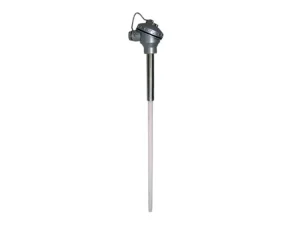
Featured Pipe Heating & Industrial Thermal Systems
Engineered to strict CE standards for precision pipe thermoforming, rapid conduit bending, and heavy-duty plastics extrusion processing.
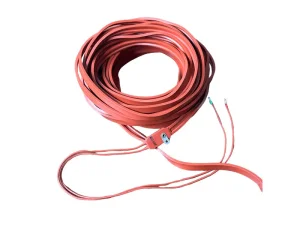
CE Certification Flexible Heaters for Custom Applications
Explore Specification
China Portable Ceramic Heaters for Industry
Explore Specification
High-Quality Portable Ceramic Heaters - Reliable Temp Control
Explore Specification
CE Certification Industrial Pipe & PVC-O Ovens
Explore Specification
China Portable Ceramic Heaters Efficient Heating Solutions
Explore Specification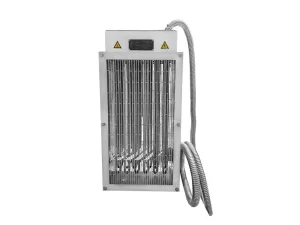
CE Certification Efficient Air Duct Heaters for Process Air
Explore Specification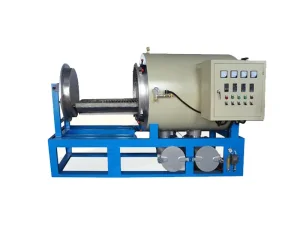
High-Quality Thermal Cleaning Furnace
Explore Specification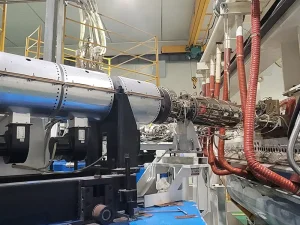
CE Certification Electromagnetic Induction Heater
Explore SpecificationThe Engineering Dynamics of PVC Conduit Thermoforming
Mastering viscoelastic polymer transitions, eliminating cross-sectional ovalization, and standardizing industrial thermal stability.
Polyvinyl Chloride (PVC) and chlorinated polyvinyl chloride (CPVC) electrical conduits, utility pipes, and molecularly oriented PVC-O profiles require uncompromising heat uniformity to achieve permanent plastic deformation without sacrificing structural hoop strength.
When solid PVC reaches its glass transition temperature (Tg) between 80°C and 85°C (176°F - 185°F), the amorphous polymer chains transition from a rigid glassy state into a flexible, leathery, and rubbery state. For flawless field and factory bending, the conduit substrate must be homogeneously heated throughout its entire radial wall thickness to approximately 105°C to 135°C (221°F - 275°F). If the pipe is subjected to uneven radiant flux, localized hot spots exceed 155°C, triggering thermal degradation, surface scorch, hydrogen chloride (HCl) dehydrochlorination, and irreversible embrittlement. Conversely, cold spots below 95°C induce severe internal hoop stresses, resulting in mechanical micro-fractures, springback deformation, and ovalization across the bend radius.
Information Gain Insight: Kangpu Heater's CE-certified PVC pipe bending systems deploy multi-zone circumferential infrared radiation matched with micro-air convection chambers. This prevents cross-sectional kinking and guarantees an ovality deviation of less than 3%, fully satisfying UL 651, ASTM D1785, and EN 61386-1 conduit integrity mandates.
Circumferential Heat Flux
Embedded Ni80Cr20 alloy heating ribbons encapsulated within ceramic matrix blankets provide 360-degree radial heat penetration, guaranteeing uniform core wall saturation without localized scorch marks.
Intelligent PID Thermal Gates
High-precision dual thermocouple inputs paired with solid-state relays (SSR) prevent thermal overshoot, holding target soak temperatures to within ±1.5°C across continuous production cycles.
Flame-Retardant Aerogel Core
Multi-layer nano-microporous silica aerogel insulation blankets retain up to 92% of generated radiant energy, lowering external chassis touch temperatures below 45°C for superior operator safety.
China Factory Supply Chain & Engineering Excellence
Harnessing four decades of vertical manufacturing integration in Yancheng's premier industrial electric heating equipment cluster.
Founded in 1986 in Yancheng, Jiangsu Province, Yancheng Laier Heating Technology Co., Ltd. (Kangpu Heater) has operated at the center of the world's most concentrated precision industrial heating manufacturing cluster. Over forty years of specialized focus has established a vertically integrated industrial supply chain that provides global engineering purchasers with unmatched economies of scale, rigorous material vetting, and rapid prototype turnarounds.
Unlike trading intermediaries, our factory controls the entire metallurgical and assembly lifecycle. We source virgin Nichrome wire, high-purity electrical-grade magnesium oxide (MgO) powder, and custom steatite ceramics directly from audited domestic producers. Sheet metal laser forming, deep drawing, automated coil-winding, induction brazing, and high-voltage dielectric testing are conducted entirely in-house. This operational depth insulates our clients from international supply chain shocks, ensures strict batch-to-batch traceability, and reduces OEM tooling lead times from industry averages of eight weeks down to twelve days.
Direct Upstream Material Control
High-purity austenitic nickel-chromium resistance elements and precision extruded aluminum/copper alloys are batch-tested via X-ray fluorescence (XRF) to eliminate thermal fatigue and oxidation premature failure.
Precision Real-Mold Prototyping
Our 7-stage custom manufacturing procedure builds full-scale production molds for evaluation prototypes, guaranteeing that sample thermal behavior identically mirrors final high-volume production performance.
Rigorous 100% Dielectric Audits
Every heating unit leaves our facility only after passing 1500V to 3000V AC high-potential breakdown tests, insulation resistance checks exceeding 100MΩ, and thermal leakage current verifications.
Localization Support & International CE Compliance
Seamless engineering integration with North American, European, and Asia-Pacific grid voltages and industrial safety mandates.
Navigating the regulatory landscape of cross-border industrial equipment procurement is a major hurdle for global infrastructure contractors, machine builders, and utility operators. Kangpu Heater eliminates compliance friction by designing all PVC conduit thermoforming heaters and pipe heating blankets to comply strictly with the European Union's Low Voltage Directive (LVD) 2014/35/EU and Electromagnetic Compatibility Directive (EMC) 2014/30/EU, backed by harmonized EN standards including EN 60335-1, EN 60335-2-45, and EN 62233.
| Compliance Category | Standard Harmonization | Technical Verification Criteria | Procurement Value Advantage |
|---|---|---|---|
| Electrical Safety (LVD) | EN 60335-1, EN 60335-2-45 | Dielectric withstand @ 2500V/min, creepage distance > 5.0mm | Eliminates risk of electrical shock and factory ground leakage faults |
| Electromagnetic (EMC) | EN 55014-1, EN 55014-2 | Zero harmonic line distortion, radiated emission suppression | Prevents radio/data interference with nearby industrial PLC controllers |
| Hazardous Substances | EU RoHS Directive 2011/65/EU | Lead, Mercury, Cadmium, Hexavalent Chromium compliance | Guarantees clean environmental footprint across public municipal works |
| Grid Voltage Adaptation | Global Multi-Voltage Configuration | 110V/120V (60Hz North America), 220V/240V/380V/415V (50-60Hz) | Ready-to-operate field plug-and-play without costly step-down transformers |
| Moisture Ingress Rating | IEC 60529 (IP54 / IP65 Waterproof) | Silicone vulcanized terminal junctions, moisture-sealed leads | Permits exterior infrastructure duct bank and trench installation |
To accommodate localized job-site power variations across North America, the UK, Europe, Latin America, and Southeast Asia, our engineering team custom-winds the internal resistance ribbons to match target amperage draws precisely. Whether your field crews run portable generator sets at 120V 15A on highway utility projects, or your permanent pipe extruding factory utilizes 480V 3-phase bus lines, each heater operates within optimal watt density boundaries (typically 2.0 to 4.5 W/cm²), preventing premature element burn-out while maintaining rapid 3-minute warm-up times.
Global Procurement Criteria & Technical Industry Trends
Aligning engineering specifications with total cost of ownership (TCO) and advanced thermodynamic advancements.
Procurement managers and lead electrical engineers at Fortune 500 engineering, procurement, and construction (EPC) firms increasingly reject throw-away, low-tier pipe heating coils. The operational downtime caused by a failed heating element during critical trench backfilling or automated PVC-O extrusion easily exceeds the unit cost of the heater by several orders of magnitude. Industrial procurement teams consistently evaluate heating systems on four mission-critical performance metrics:
Thermal Ramp-Up & Recovery Rate
Rapid cycle times are critical. Industrial contractors require heating blankets that reach thermoforming soak temperatures within 180 seconds, maintaining steady core saturation under cold outdoor ambient conditions.
Mechanical Flexural Durability
Field bending heaters experience thousands of opening and clamping cycles. Multi-filament high-flex wiring and aramid-reinforced outer silicone envelopes prevent conductor fatigue cracking.
Total Cost of Ownership (TCO)
By cutting heat dispersion by up to 40% using nano-infrared and microporous ceramic layers, operational power consumption drops dramatically over continuous multi-shift production regimes.
Next-Gen Industry Development Trends: The pipe thermoforming sector is transitioning from dumb resistance blankets toward smart, connected heating tools. Key innovations include integrated micro-PID digital controllers with optical sensor feedback, composite carbon-nanotube thin-film heating elements that flex down to 25mm radii, and electromagnetic induction heating collars for heavy-wall schedule 80 PVC and CPVC pipes that slash heating cycles by up to 60%.
Industrial Application Environments & Use Scenarios
Precision thermal solutions tailored for tough field installations and 24/7 continuous pipe manufacturing lines.
Commercial Electrical Conduit Routing
Used extensively by electrical contractors for bending Schedule 40 and Schedule 80 PVC conduits on site. Enables custom offsets, saddle bends, and 90-degree sweeps without structural collapsing, satisfying National Electrical Code (NEC) and IEC conduit standards.
Underground Power & Fiber Utility Duct Banks
In municipal telecom and high-voltage grid trenching, multi-diameter flexible silicone bending heaters handle wide DB-120 and EB-35 utility pipes, producing sweeping, sweep-free bends that permit long cable pulling runs without line snagging.
Continuous PVC-O Pipe Orientation Ovens
Inside factory pipe extrusion plants, our high-density ceramic heating jackets and precision ovens soften thick PVC preforms precisely prior to biaxial mechanical orientation, drastically boosting impact resistance and hydrostatic burst ratings.
Frequently Asked Questions for Industrial Buyers
In-depth answers addressing thermal calculations, CE documentation, material compatibility, and global export procedures.
How do your bending heaters prevent PVC pipe wall collapse and ovalization during bending?
What official documentation is supplied to verify CE compliance for European imports?
Can one bending heater accommodate multiple pipe schedules and diameters?
What is the expected operating lifespan and warranty coverage of Kangpu heaters?
How do you handle custom prototype development for machinery OEMs?
Industrial Process Heating & Precision Temperature Control
Explore our full line of ceramic, high-density, infrared, and explosion-proof heating equipment built for international process plants.
China Efficient Portable Ceramic Heaters for Industry
Explore Specification
High-Quality Portable Ceramic Heaters - Reliable Heating
Explore Specification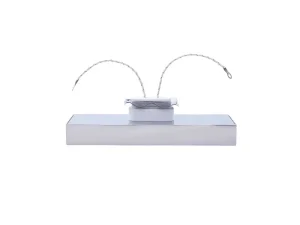
Best Infrared Ceramic Heaters for Efficient Heating
Explore Specification
High-Quality Portable Ceramic Heaters - Factory Direct
Explore Specification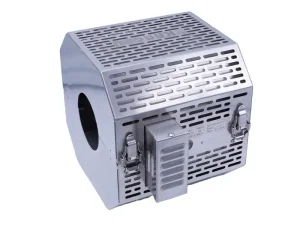
Best Heating/Cooling Integrated Barrel Extrusion System
Explore Specification
China High Density Cartridge & Tubular Heating Elements
Explore Specification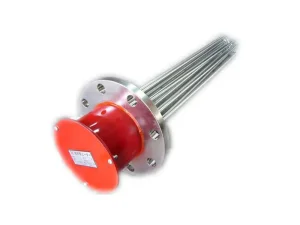
CE Certification Explosion Proof Electric Industrial Heater
Explore Specification