
Standard & Heavy-Duty Certified Drum Heating Assemblies
Direct-from-factory silicone rubber drum bands and complementary industrial heating modules engineered with multi-stranded nickel-chromium alloy conductors and reinforced fiberglass laminates.

High-Quality Cleaning furnace Manufacturer, Exporter
View Specifications
High-Quality Portable Ceramic Heaters for Industry - Reliable Heating Solutions
View Specifications
Best Durable Heat Insulation Covers Manufacturer, Exporters
View Specifications
CE Certification Flexible Heaters for Custom Applications Manufacturer
View Specifications
China Portable Ceramic Heaters for Industry Manufacturers, Exporter
View Specifications
China Efficient Portable Ceramic Heaters for Industry | Suppliers & Factory
View Specifications
China Portable Ceramic Heaters: Efficient Heating Solutions for Industry
View Specifications
CE Certification Ovens Manufacturer, Exporter
View SpecificationsGlobal Chemical, Viscous Fluids & Process Material Landscape
Addressing thermal degradation, viscosity spikes, and decanting crystallization bottlenecks across worldwide industrial supply chains.
Viscosity & Fluid Rheology Control
Industrial liquids such as heavy fuel oils, polymers, asphalt emulsions, adhesives, honey, and resins undergo exponential viscosity surges when ambient temperatures drop below their crystallization thresholds. Non-uniform or uncontrolled heating creates severe hot spots, inducing polymer breakdown or scorching. CE-certified silicone rubber surface heaters distribute calibrated watt densities (0.4 to 0.8 W/cm²) across metallic and HDPE container walls, stabilizing shear stress without altering product chemistry.
Cold Chain Integrity & Freeze Protection
Across Nordic Europe, North America, and high-altitude logistic corridors, water-borne chemical solutions, biocides, coatings, and specialized foodstuffs risk irreversible freezing within intermediate storage vessels (200L steel drums and 1000L IBCs). Unplanned crystallization costs processing plants millions in downtime and scrapped cargo. Band and blanket silicone heaters offer autonomous, thermostat-regulated freeze prevention down to -40°C ambient temperatures.
Residual Product Loss Mitigation
Unheated drum evacuation frequently leaves 8% to 15% of high-viscosity media (like polyols, greases, and gelatin) clinging to drum walls as unrecoverable waste. By raising container skin temperature to optimal pumping windows (typically 40°C to 80°C), residual hold-up is driven down to sub-1.5%. For bulk pharmaceutical and fine chemical manufacturing, this operational efficiency yields direct ROI on heater capital expenditure within weeks of deployment.
European CE Certification & International Compliance Architecture
A comprehensive breakdown of safety, dielectric insulation, and electromagnetic standards implemented across all Kangpu / Laier Heating industrial production lines.
CE Low Voltage Directive (LVD 2014/35/EU)
Every silicone rubber drum heater engineered in our Yancheng facility undergoes strict compliance verification against EN 60335-1 (Safety of household and similar electrical appliances - General requirements) and EN 60335-2-96 (Flexible sheet heating elements for room and surface heating). Testing protocols demand high-potential dielectric withstand verification at 1500V AC minimum for 60 seconds between the energized heating element and the grounded outer metallic braid. Leakage current is systematically constrained below 0.75 mA under peak thermal saturation.
EMC & RoHS Directives (2014/30/EU & 2011/65/EU)
Our integrated digital electronic controllers and precision bimetal thermostats adhere to rigorous emission and immunity criteria (EN 55014-1, EN 55014-2). They will not cause harmonic distortion on plant power grids or interfere with nearby SCADA sensors and programmable logic controllers (PLCs). Material chemical analysis guarantees absolute compliance with RoHS hazardous substance thresholds (lead, cadmium, mercury, hexavalent chromium, PBBs, and PBDEs), verified by accredited third-party laboratory testing dossiers.
| Standard / Regulation | Test Parameters & Thresholds | Operational Safety Objective | Compliance Verification Protocol |
|---|---|---|---|
| EN 60335-1:2012+A15 | Dielectric strength: 1,500V - 2,000V AC breakdown test | Prevents electrical flashover & protects line operators | 100% Routine Factory Batch Hi-Pot |
| EN 60335-2-96 | Surface flex fatigue, localized burn-through resistance | Maintains mechanical integrity under repeated cylinder flexing | 5,000+ Drum Latching Cycles Tested |
| IEC 60529 (IP65) | Dust-tight hermetic seal & pressurized water spray resistance | Withstands chemical spillages and plant washdown protocols | Vulcanized Edge Encapsulation |
| UL94 V-0 Flammability | Vertical burn testing; flame self-extinguishing < 10 seconds | Eliminates risk of self-propagating flame on drum exteriors | Flame-Retardant Silicone Compound |
| RoHS 2.0 / REACH | Heavy metals < 0.1%, SVHC substances monitored under ECHA | Environmentally sustainable and food/cosmetic safe handling | Certified Raw Materials Batch Control |
Engineered Scenarios across Continental Industrial Verticals
Customized thermal profiling tailored for distinct container geomorphologies, chemical sensitivities, and regional production protocols.
55-Gallon (200L) Steel Drum Heating
Standardized steel drums tolerate higher heat flux due to metal's superior thermal conductivity. Our high-power 1000W to 2000W bands (230V/120V) operate via adjustable thermostats (30°C to 150°C), facilitating rapid de-crystallization of paint primers, lubricating oils, and epoxies prior to automated blending operations.
Plastic / HDPE Drum & Pail Safe Bands
High-density polyethylene (HDPE) barrels deform or melt if exposed to standard metal-drum watt densities. We calibrate watt output strictly between 0.15 and 0.25 W/cm² with an integrated secondary limiting sensor locked at 70°C, ensuring uniform heat soaking without compromising plastic vessel structural integrity.
Food Grade, Dairy & Sugar Syrups
Corn syrup, molasses, glucose, and honey caramelize and spoil when subjected to thermal spikes. Our multi-zone drum blankets feature PID algorithm interfaces with external thermowells to hold tolerances within ±1°C, maintaining organoleptic purity and FDA/EU food contact hygiene standards.
Outdoor Chemical Decanting & Freeze Halting
Designed for chemical tank farms and bulk storage docks exposed to driving rain, snow, and salt mist. Utilizing sulfur-cured, tear-resistant silicone outer jackets, heavy-duty hook-and-spring closure systems, and sealed Neoprene cord exits to achieve continuous 24/7 all-weather resilience.
Silicone Matrix Chemistry & Precision Etched Foil Topology
The underlying material science that separates industrial-grade drum heaters from commercial hobby wraps.
Etched Foil vs. Wire Wound Design
While wire-wound elements rely on spiraled resistance wire wound over fiberglass cores, our precision etched foil elements utilize computer-designed, chemically etched nickel alloy sheets (0.025 mm to 0.1 mm thickness). This design increases surface heat dissipation area up to 82% higher than wire, eliminating hot spots, drastically reducing thermal lag, and providing virtually flat heat distribution across the drum wall.
High-Density Calendered Fiberglass
Structural reliability stems from high-tensile woven fiberglass fabric coated on both sides with high-purity polydimethylsiloxane (silicone rubber). High-pressure hydraulic calendering under cleanroom conditions prevents microscopic air bubbles, establishing a void-free dielectric barrier capable of continuous service at 200°C (with peak spikes up to 250°C) without thermal oxidation or delamination.
Full Surface Grounding Braid
Unlike budget heating belts lacking personal shock protection, our CE-compliant silicone drum wraps incorporate a continuous inner or outer woven tinned copper grounding grid. In the event of mechanical puncture by sharp industrial tools, fault currents immediately trip GFCI/RCD circuit breakers within 30 milliseconds, protecting operators and flammable factory environments.
Technological Horizon: Smart IoT & Sustainable Thermal Optimization
How Kangpu / Laier Heating is transforming drum heating from static resistive belts into connected, energy-optimizing cyber-physical process nodes.
PID Micro-Sensor Integration
Replacing mechanical bimetal thermostats with surface-laminated PT100 and NTC thermistors linked to microprocessor-driven digital displays, eliminating thermal hysteresis and overshoot.
Wireless Modbus & IIoT Telemetry
Deployment of low-power Bluetooth and LoRaWAN communication nodules enabling real-time liquid temperature logging directly into central plant SCADA systems for pharma compliance tracking.
Multi-Layer Aerogel Insulation
Hybrid silicone jackets featuring 10mm silica aerogel outer shells, cutting exterior touch-temperatures below 45°C while driving heating power consumption down by 38%.
Predictive AI Viscosity Tuning
Self-learning heating loops that deduce fluid level and viscosity curves based on transient surface heat absorption rates, automatically optimizing ramp cycles without manual input.
Frequently Addressed Procurement & Technical Queries
Essential technical insights compiled by our senior heating system application engineers.
Can a standard 55-gallon steel drum heater be safely utilized on a plastic HDPE drum?
No. Steel drum heaters typically operate at higher watt densities (0.6 to 0.8 W/cm²) and surface temperatures that can quickly exceed the 80°C glass transition point of HDPE, causing severe cylinder softening, warping, or chemical leakage. For plastic containers, our specifically calibrated HDPE-safe heaters with 0.18 W/cm² density and an internal 70°C mechanical thermal limiter must be specified.
What specific CE documentation does Kangpu provide for European customs clearance?
Every commercial export consignment is accompanied by a formal EU Declaration of Conformity (DoC) signed by our managing director, referencing standard EN 60335-1, EN 60335-2-96, and EMC directives. We supply complete Technical Construction Files (TCF) including third-party laboratory test reports, insulation resistance data, and RoHS chemical composition certifications on demand.
How does an etched foil silicone heater compare with an immersion heater?
Immersion heaters require direct contact with the process fluid via bung openings, which introduces contamination risks, requires extensive cleaning between batches, and scorches heat-sensitive compounds. Surface-mounted silicone rubber heaters provide indirect, non-invasive thermal transfer through the vessel wall, preserving medium purity and eliminating vessel corrosion.
How long does it take a silicone band to bring a 200L drum from 10°C to 50°C?
Thermal ramp time depends on fluid volume, specific heat capacity (Cp), latent heat, and drum material. For a standard water-based or light oil fluid (Cp approx. 2.0 kJ/kg·K) in an uninsulated 55-gallon steel drum using a single 1500W heater band, the temperature rises at approximately 3°C to 5°C per hour. Adding two bands or a secondary insulation jacket accelerates heating to 8°C - 12°C/hr.
What mechanical closure options are available for irregular drum and pail sizes?
We configure three primary fastening formats: high-tensile stainless steel expansion springs connected to vulcanized metal eyelets (industry standard for cylindrical drums), heavy-duty adjustable Velcro cinch straps (ideal for quick-release plastic pails), and full-length silicone zipper closures for total enclosure blankets.
What is the expected operating life and standard warranty period?
Thanks to multi-strand flexed conductors and vulcanized edge encapsulation, our industrial heaters routinely exceed 8 to 10 years in heavy plant duty cycles. Kangpu backs all standard and custom-engineered units with our industry-leading five-year factory after-sales warranty, with complete batch serialization for quality assurance.
Comprehensive Industrial Process & System Catalog
Beyond flexible drum blankets: explore our full range of heavy-duty electromagnetic boilers, extrusion cooling/heating jackets, and industrial process ovens.

High-Quality Electromagnetic steam boiler Manufacturers, Factories
View Specifications
CE Certification Precise Cooling and Heating System Manufacturers
View Specifications
CE Certification Explosion Proof Electric Heater Exporter, Factory
View Specifications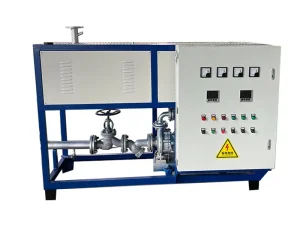
High-Quality Heat-conducting oil furnace Manufacturer, Exporter
View Specifications
Best Heating/Cooling Integrated System Exporter, Exporters
View Specifications
Best Infrared Ceramic Heaters for Efficient Heating Manufacturers
View Specifications
CE Certification Electromagnetic induction heater Manufacturer, Exporter
View Specifications