
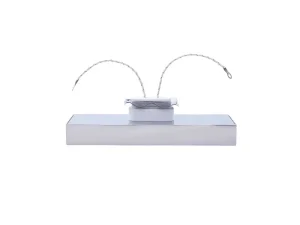
Infrared Ceramic Heating Units
High-radiance emitters designed for non-contact polymer preheating, thermoforming, and rapid curing lines.
Best Infrared Ceramic Heaters for Efficient Heating Manufacturers, ExportersBrowse our high-performance heating and heat exchange modules deployed across high-specification extrusion, injection molding, chemical synthesis, and metallurgy operations globally.
High-radiance emitters designed for non-contact polymer preheating, thermoforming, and rapid curing lines.
Best Infrared Ceramic Heaters for Efficient Heating Manufacturers, Exporters
Dual-circuit dynamic thermal regulation providing fine-tuned heating and rapid cooling suppression.
CE Certification Precise Cooling and Heating System Manufacturers, Exporters
Mobile thermal units for flexible maintenance, localized stress relieving, and auxiliary heating.
China Portable Ceramic Heaters for Industry Manufacturers, Exporter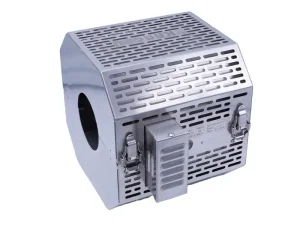
Integrated cooling and heating tubular matrices ensuring zero thermal shock on heavy-duty extruders.
Best Heating/Cooling Integrated System Exporter, Exporters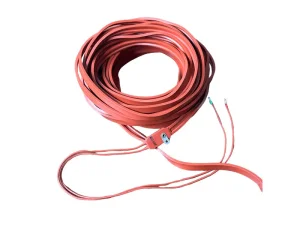
Engineered for geometrically complex pipes, cylindrical vessels, and contoured shell enclosures.
CE Certification Flexible Heaters for Custom Applications Manufacturer, Exporter
Multi-stage convective air recirculating ovens calibrated for uniform thermal stabilization.
CE Certification Ovens Manufacturer, Exporter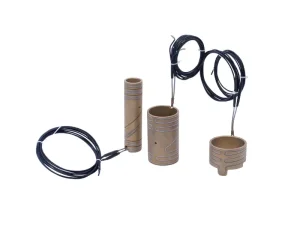
High-density swaged miniature tubular assemblies engineered for tight-tolerance mold cavities.
High-Quality (Hot-runner)Spring heater/Coil heater Manufacturers, Factory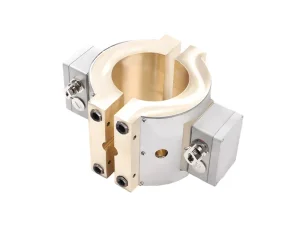
Heavy cast-in alloy plates with embedded liquid passages for superior thermal distribution.
CE Certification Cast Aluminum/Copper Heater Manufacturer, ExporterIn modern thermodynamic engineering, tubular heat exchangers represent the gold standard for thermal durability, fluid isolation, and high-pressure operational safety.
For global EPC contractors, plant managers, and procurement leaders, acquiring certified tubular heat exchangers is a fundamental legal and operational prerequisite. Under the European Union's Pressure Equipment Directive (PED 2014/68/EU) and the Low Voltage Directive (LVD 2014/35/EU), our equipment undergoes rigorous Conformity Assessment Modules. From hydrostatic test pressures reaching 1.5× design ratings to non-destructive testing (NDT) encompassing ultrasonic, radiographic, and dye-penetrant inspections of orbital tube-to-tubesheet joints, our CE certification confirms every shell, tube bundle, baffle, and nozzle flange adheres to European standards.
Our Yancheng Laier Heating Technology (Kangpu Heater) engineering division integrates finite element thermal analysis (FEA) and computational fluid dynamics (CFD) into the structural design of every heat exchanger. Designing according to Tubular Exchanger Manufacturers Association (TEMA) standards (Class R, C, and B), we optimize baffle spacing, nozzle velocities, and cross-flow velocities. This balances heat transfer coefficients ($U$-values) while mitigating acoustic vibration, vortex shedding, and accelerated erosion-corrosion phenomena across diverse operating viscosity gradients.
Optimizing Total Cost of Ownership (TCO) across enterprise thermal infrastructure through advanced metallurgy, integrated manufacturing, and comprehensive component traceability.
Operating in Yancheng, Jiangsu—the epicenter of industrial thermal manufacturing—our facility maintains end-to-end control from raw tube stock draw down to final helium leak testing. Direct sourcing of certified seamless and welded tubing in 316L, 304, Duplex 2205, Hastelloy C-276, Titanium, and Cu-Ni alloys insulates international buyers from intermediate margin stacking and raw material lead time surges.
Unlike trading brokers, Kangpu Heater enforces an immutable batch-level serialization framework. Every mill test report (EN 10204 3.1 certification), weld log, and thermal cycle test record is tied directly to the unit's serial register. Our comprehensive 5-year after-sales warranty reflects rigorous thermal cycling verification that eradicates early field failures.
From industrial ID engineering to functional prototypes, our 7-stage custom manufacturing procedure cuts sample turnaround times by 45%. We utilize real-mold sampling rather than loose handmade mockups, ensuring that preliminary validation units duplicate identical grain structures and heat dissipation vectors realized in continuous volume production runs.
Engineered parameters comparing standard industrial configurations across single-phase and multi-phase thermal processing duties.
| Designation Metric | Fixed Tubesheet (TEMA BEM / AEM) | U-Tube Bundle (TEMA BEU / CFU) | Floating Head (TEMA AES / AET) |
|---|---|---|---|
| Operating Pressure Limits | Vacuum to 160 Bar (16.0 MPa) | Full Vacuum to 320 Bar (32.0 MPa) | Vacuum to 100 Bar (10.0 MPa) |
| Operating Temperature Range | -40°C to +450°C | -196°C (Cryogenic) to +650°C | -20°C to +380°C |
| Thermal Expansion Accommodation | Requires expansion bellows in shell | Inherent via free-floating U-bend loops | Floating rear tubesheet absorbs expansion |
| Tube-Side Cleaning Capability | Mechanical or chemical scouring | Chemical CIP flush; mechanical limited | Full mechanical rod/brush pulling |
| Primary Application Envelope | Clean thermal oil, low ΔT fluid systems | High pressure superheated steam, HTF loops | Fouling hydrocarbons, refinery distillation |
How advanced heat exchanger units operate across industrial domains, and how micro-channel surface treatments and electrification are driving the next decade of thermal engineering.
Molecularly oriented PVC (PVC-O) production requires strict temperature tolerance controls (±1.5°C) to induce longitudinal and circumferential polymer alignment without degradation. Our heating and cooling integrated tubular systems maintain stable melt viscosities and optimize barrel heat rejection under intensive shear heating conditions.
High-temperature heat transfer oil (HTF) closed-loop systems use tubular heat exchangers for indirect thermal transfer to reactor jackets, calendar rolls, and drying tunnels. By avoiding direct open-flame exposure, these units prevent oil carbonization, fluid decomposition, and localized hot-spot tube failures.
The transition from fossil-fuel boilers to zero-emission infrastructure has increased demand for electromagnetic induction steam boilers and electric tubular exchangers. Operating without chimney flue gas ducting or on-site combustion permits, these clean steam systems support global industrial decarbonization initiatives.
Answers to common engineering, procurement, and regulatory compliance questions regarding our industrial tubular heat exchangers and heating elements.
Engineered for cleanroom processing, high-throughput manufacturing, high-temperature thermal oil heating, and specialized plastics transformation.
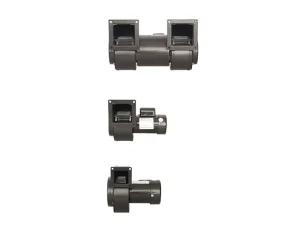
High-static-pressure aerodynamic forced-air cooling blowers integrated into extruder barrel shroud systems.
CE Certification Fan Manufacturer, Factory
Interlocking steatite ceramic knuckle assemblies providing uniform thermal radiation across demanding zones.
High-Quality Portable Ceramic Heaters for Industry - Efficient Heating Solutions from China Suppliers and Factory Exporter, Exporters
Cost-effective heating elements designed for rapid field replacement on global manufacturing lines.
China Portable Ceramic Heaters from China Suppliers: Efficient Heating Solutions for Factories and Industries Manufacturer, Exporters
Engineered for energy-conscious injection molding barrels with built-in ceramic fiber insulation blankets.
China Efficient Portable Ceramic Heaters for Industry | China Suppliers & Factory Exporters, Factories
Advanced aerogel insulation shielding high-temperature quartz infrared emitters to cut outer surface temps below 50°C.
CE Certification Nano infrared electric band heater Manufacturer, Manufacturers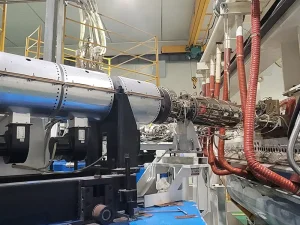
Direct eddy-current heating technology delivering rapid thermal ramp rates for large-diameter barrel processing.
CE Certification Electromagnetic induction heater Manufacturer, Exporter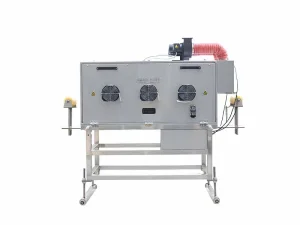
Controlled multi-zone air and radiant heating tunnels ensuring consistent circumferential pipe expansion.
CE Certification PVC-O Ovens for Precision Heating Manufacturer, Manufacturers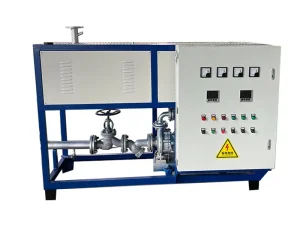
Skid-mounted closed-loop electrical thermal fluid boilers fitted with integral expansion tanks and circulation pumps.
High-Quality Heat-conducting oil furnace Manufacturer, Exporter