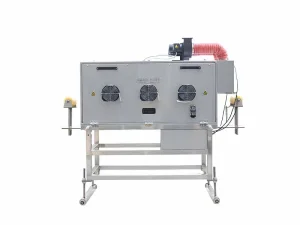
Featured Pipeline & Process Heating Systems
Custom-engineered thermal management products built under certified standards, offering seamless integration for process pipe loops, boilers, and continuous fluid heating lines.
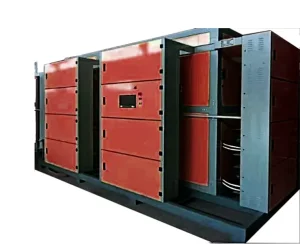
High-Quality Electromagnetic steam boiler Manufacturers, Factories
Explore Product Specs
Best Pipeline Heater Manufacturers, Factory
Explore Product Specs
CE Certification Nano infrared electric band heater Manufacturer, Manufacturers
Explore Product Specs
High-Quality Portable Ceramic Heaters for Industry - Efficient Heating Solutions from China Suppliers and Factory Exporter, Exporters
Explore Product Specs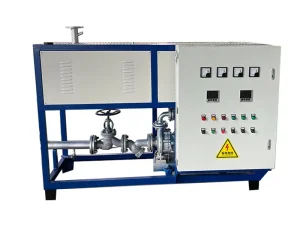
High-Quality Heat-conducting oil furnace Manufacturer, Exporter
Explore Product Specs
China High density heating element Manufacturers, Factories
Explore Product Specs
High-Quality Portable Ceramic Heaters for Industry - Reliable Heating Solutions from China Suppliers and Factory Manufacturers, Factory
Explore Product Specs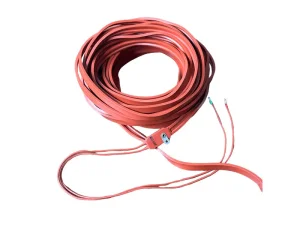
CE Certification Flexible Heaters for Custom Applications Manufacturer, Exporter
Explore Product SpecsGlobal Commercial & Industrial Landscape
Strategic analysis of dynamic thermal fluid maintenance, flow stabilization, and freeze-mitigation across global engineering corridors.
Across North America, Northern Europe, Central Asia, and East Asia, maintaining uninterrupted flow velocity and target temperatures in hydraulic infrastructure is essential for plant productivity. Industrial electric heating for water pipelines represents an engineered intersection of Ohmic heating resistance, conductive thermodynamics, and closed-loop algorithmic control. As petrochemical complexes, municipal clean-water distribution networks, mining operations, and pharmaceutical factories face fluctuating temperatures, traditional steam-tracing methods are systematically replaced by high-precision electric trace heating and inline circulation vessels.
According to current engineering assessments, the shift toward electric tracing and direct pipeline immersion units is driven by decarbonization targets, higher mechanical efficiency, and low life-cycle upkeep. Traditional trace systems experience thermal degradation, joint leakage, and uneven temperature profiles. Engineered industrial electric heating eliminates spatial heat flux imbalances, protecting systems against catastrophic freeze-ups down to -50°C and ensuring tight fluid stabilization up to 600°C for chemical processing streams.
Cold Region Freeze Prevention
Critical infrastructure protection in sub-zero mining, oil extraction, and municipal supply networks, preventing hydro-static blockages and thermal stress fracturing.
Continuous Flow Stabilization
Maintains required viscosity parameters and Reynolds numbers in water-slurry mixtures, chemical handling conduits, and food/beverage processing loops.
Decarbonized Infrastructure
Enables green transitions by replacing carbon-intensive combustion boilers with high-efficiency direct electrical elements, yielding near-unity thermal transfer rates.
China Factory Efficiency & Supply Chain Resilience
Combining four decades of specialized metallurgical mastery, component verticalization, and rigorous ISO quality control.
Headquartered in Yancheng, Jiangsu Province, Yancheng Laier Heating Technology Co., Ltd. (Kangpu Heater) has operated at the center of China's advanced thermal heating manufacturing sector since 1986. China's industrial manufacturing ecosystem provides an unmatched combination of raw material availability, refined nickel-chromium (NiCr 80/20) and iron-chromium-aluminum (FeCrAl) resistive alloys, high-purity fused magnesium oxide (MgO) insulation powders, and fully automated CNC forming systems.
This concentrated supply chain lets our production hubs achieve shorter prototype turnaround and strong unit cost efficiencies without compromising engineering tolerances. From custom-cast aluminum/bronze blocks to pressurized circulation heating vessels, our manufacturing protocols operate under strict automated oversight, providing international procurement teams with predictable delivery schedules and factory-direct technical alignment.
Direct Metallurgical Control
Incoming inspection of Incoloy 800/840, SUS316L, and Hastelloy guarantees corrosion-resistant jackets built to withstand harsh chemical water lines.
Advanced Automated Filling
Computerized high-density MgO vibration filling and multi-stage roll-reducing machines produce uniform dielectric strength and heat transfer.
Batch-Level Traceability
Every industrial heating element is laser-marked and cataloged with specific resistance, insulation breakdown ratings, and factory production dates.
Agile Tooling & Prototyping
From technical CAD submission to production molds, functional prototypes are deployed rapidly to support complex retrofit programs.
Localized Application Scenarios
Engineered heating adaptations tailored across diverse climatic requirements and mechanical setups.
Municipal Potable Water Networks
Above-ground river-crossing aqueducts and municipal distribution pipelines exposed to arctic climates utilize self-limiting parallel heating cables and armored heating blankets. These configurations balance operational expenditure by adjusting output according to local ambient temperatures.
Chemical & Refinery Firewater Rings
Safety-critical fire suppression pipelines must maintain absolute availability in heavy industrial facilities. Stainless steel braided, explosion-proof heat tracing cables certified for hazardous locations safeguard water delivery under emergency demands.
High-Purity Pharma & Food Process
Sanitary circulation water loops require consistent temperature maintenance (typically 80°C+) to inhibit microbial growth. High-density flange immersion heaters with electro-polished sheaths ensure seamless sanitation without creating stagnant zones.
Industry Trends & Next-Generation Engineering
The transition toward intelligent thermal management, distributed IoT telemetry, and high-efficiency materials.
Industrial heating for water lines is transforming from passive thermal maintenance to smart, closed-loop thermal regulation networks. Traditional electro-mechanical thermostats are being replaced by solid-state relays (SSRs) and thyristor power controllers (SCRs) integrated with multi-point RTD sensors and industrial protocols (Modbus, Profinet). This setup balances heat profiles continuously along extensive pipe networks.
Advancements in nano-structured coatings and mineral-insulated constructions have increased heat-transfer coefficients while reducing exterior radiant dissipation. This allows operators to lower overall baseline electrical loads by up to 28% compared to legacy setups. Below is an engineering overview of heating architectures across industrial pipeline environments:
| Thermal Technology Type | Primary Operational Range | Typical Pipeline Applications | Key Performance Advantages |
|---|---|---|---|
| Self-Regulating Trace Cables | Up to 85°C (Maintain) | Freeze prevention, long branch runs | Cannot self-destruct from overlap; self-adjusting thermal output. |
| Mineral Insulated (MI) Cables | Up to 600°C+ (Continuous) | High-temperature process water, steam | High physical durability, extreme watt-density tolerance. |
| Direct In-Line Circulation Heaters | Rapid rise, up to 250°C | Process water boosting, boiler loops | Compact footprint, near 100% direct energy transfer. |
| Formed Cast-In Elements | Up to 450°C (Controlled) | Extrusion cooling/heating, rigid jackets | Exceptional heat distribution, custom geometry profiles. |
Global Procurement Specifications & Design Criteria
Comprehensive engineering criteria to support RFQ generation, quality assurance, and project alignment.
Thermodynamic Sizing Metrics
RFQs should state minimum ambient temperatures, wind-shear velocity (typically evaluated at 20 m/s), pipe schedule, nominal bore diameter, insulation chemistry (calcium silicate, rockwool, cellular glass), and targeted Delta T maintenance targets.
Electrical & Code Compliance
Heaters must be specified according to target power grids (380V/480V 3-phase or 110V/230V single-phase), ATEX/IECEx hazardous-zone approvals, and CE/UL compliance for continuous operation.
End-to-End Service Lifecycle
Prioritizing manufacturers with verified longevity, comprehensive warranty protections (like our 5-year guarantee), and established international spare-parts networks minimizes downtime risk.
Frequently Asked Questions (FAQ)
Clear, technical explanations answering common questions from project engineers and procurement professionals.
Can Kangpu design and produce electric pipeline heating systems directly to engineering drawings?
Yes. Custom engineering is the foundation of our manufacturing work. By submitting piping and instrumentation diagrams (P&IDs), structural envelopes, available electrical supplies, and operating parameters, our technical team confirms dimensions, watt-densities, flange drillings, terminal enclosures, and sensor placements. We deliver approved shop drawings and sample validations prior to mass manufacture.
What warranty protection accompanies our exported industrial heaters?
Every commercial and industrial heating element supplied by Kangpu Heater includes our standard 5-year warranty. All manufactured units are tracked to their production batch, material heats, and testing records. Should an anomaly occur, our engineers review root-cause data to deliver corrective measures alongside part replacements.
What are the primary differences between Mineral Insulated (MI) cables and Self-Regulating cables for pipelines?
Self-regulating heating cables utilize a conductive carbon polymer core that adjusts output automatically based on ambient variations. They are easy to cut to length in the field and ideal for standard freeze protection below 85°C. In contrast, Mineral Insulated (MI) cables feature seamless metallic sheaths (copper, cupronickel, or stainless steel) packed with MgO insulation around alloy conductors. MI cables withstand elevated continuous exposure (up to 600°C), offer higher watt densities, and deliver strong mechanical crush resistance for heavy industrial environments.
How does our 7-stage quality and prototyping lifecycle operate?
Our quality control process advances through seven stages: ID design review, technical specification customization, production-grade mold creation, sample confirmation, adjustments based on customer feedback, full-scale thermal/dielectric validation, and monitored mass production. This structured sequence ensures every exported unit operates reliably within design parameters before installation.
Which global regions and customer sectors do our export services support?
We export to more than 100 countries across Europe, North America, South America, the Middle East, Southeast Asia, and Australasia. We support over 5,000 corporate clients, ranging from machinery OEMs and plastics extrusion developers to civil infrastructure managers, marine plants, and process heating contractors.
Complete Industrial Element Range & Auxiliary Systems
Reliable thermal hardware designed to optimize performance across industrial pipelines and demanding manufacturing plants.
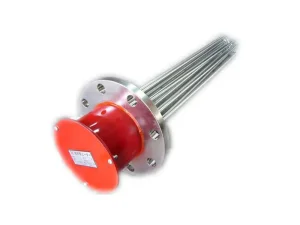
CE Certification Explosion Proof Electric Heater Exporter, Factory
Explore Product Specs
China Portable Ceramic Heaters from China Suppliers: Efficient Heating Solutions for Factories and Industries Manufacturer, Exporters
Explore Product Specs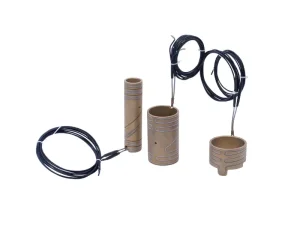
High-Quality (Hot-runner)Spring heater/Coil heater Manufacturers, Factory
Explore Product Specs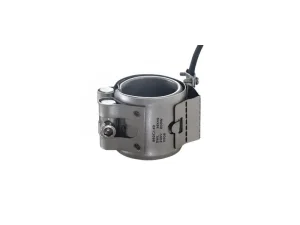
China Safe and Durable Mica Heaters Factory, Factories
Explore Product Specs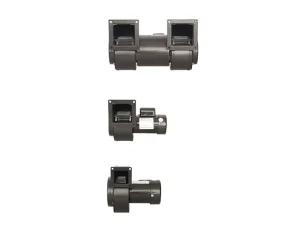
CE Certification Fan Manufacturer, Factory
Explore Product Specs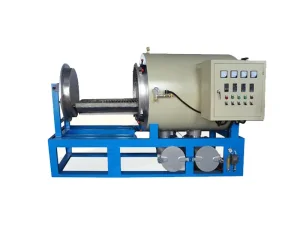
High-Quality Cleaning furnace Manufacturer, Exporter
Explore Product Specs
China Portable Ceramic Heaters for Industry Manufacturers, Exporter
Explore Product Specs