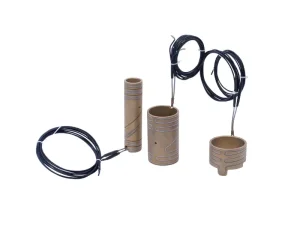
Precision High-Efficiency Industrial Heaters
Engineered for extreme operating environments, delivering uniform heat flux, fast thermal ramp-up, and measurable reduction in factory kilowatt-hour overhead.

CE Certification Precise Cooling and Heating System Manufacturers, Exporters
View Engineering Specs
Best Heating/Cooling Integrated System Exporter, Exporters
View Engineering Specs
Best Pipeline Heater Manufacturers, Factory
View Engineering Specs
High-Quality Electromagnetic steam boiler Manufacturers, Factories
View Engineering Specs
CE Certification Nano infrared electric band heater Manufacturer, Manufacturers
View Engineering Specs
China Safe and Durable Mica Heaters Factory, Factories
View Engineering Specs
China Efficient Portable Ceramic Heaters for Industry | China Suppliers & Factory Exporters, Factories
View Engineering Specs
China Portable Ceramic Heaters from China Suppliers: Efficient Heating Solutions for Factories and Industries Manufacturer, Exporters
View Engineering SpecsThe Global Decarbonization Paradigm in Thermal Processing
Evaluating the direct shift from carbon-intensive fossil fuel process heating to precision, digitally managed electric element architectures across Tier-1 manufacturing hubs.
Grid-Parity & Operational Kilowatt-Hour Costs
Industrial manufacturing accounts for over 32% of global primary energy consumption, with thermal processing constituting almost two-thirds of that footprint. As electricity grids modernize and penalties on localized combustion escalate, processing facilities demand higher thermodynamic conversion efficiency. Modern high-density ceramic, mica, and nano-infrared elements replace archaic boiler-steam heat lines, achieving direct convective and radiative transfer efficiencies above 96% with sub-second thermal hysteresis.
Thermal Hysteresis & Melt Viscosity Regulation
In polymer extrusion, blow molding, and continuous chemical synthesis, temperature variance greater than ±1.5°C alters shear stresses and causes catastrophic melt rupture. Traditional heating jackets suffer from significant thermal mass overshoot. Kangpu's patented dual-circuit air-cooling and cast-in resistance matrix provide an integrated feedback response, neutralizing excessive shear-induced heat in high-output screw barrels while mitigating localized scorching.
Elimination of Direct Plant Carbon Emissions
Global regulatory pressures, such as the EU Carbon Border Adjustment Mechanism (CBAM) and strict localized VOC/NOx standards, make decentralized electric heating a prerequisite for Tier-1 supply chains. By utilizing localized electromagnetic steam boilers and high-density infrared band arrays, processors eradicate boiler room flues, high-pressure steam distribution leaks, and toxic condensate losses entirely from factory footprints.
Localized Application Scenarios & Technical Integration
Field deployment architectures optimized for continuous processing environments, high-temperature thermal stabilization, and zero-defect output.
Continuous Polymer Extrusion & Injection Molding
High-throughput polyolefin and engineering polymer processing lines (such as PEEK, PTFE, and PA66) require tightly controlled barrel temperature profiles. Kangpu cast aluminum and cast copper heaters feature customized embedded cooling tubes alongside nickel-chromium 80/20 heating coils, guaranteeing isothermal heat conduction across high-wear bimetallic barrels up to 650°C without mechanical degradation.
Molecularly Oriented PVC-O Pipe Processing
Biaxial orientation of PVC pipes demands pinpoint temperature uniformity during the continuous drawing phase. Kangpu high-precision PVC-O ovens implement balanced multi-zone aerodynamic heating channels. By circulating process air heated through low surface-load stainless elements, wall thickness consistency and circumferential hoop tensile strength are significantly boosted compared to steam jacket heating.
Chemical Fluidics & Hazardous Pipeline Media
Petrochemical and fluid transport networks encounter high viscosities and phase separation when exposed to freezing or unstable ambient environments. Our high-density pipeline heaters and explosion-proof circulation heaters provide rapid indirect thermal transfer to process oils, glycols, and corrosive media using titanium and Incoloy 840 sheathings that resist galvanic corrosion under continuous duty.
China Factory Supply Chain Resilience & Production Agility
How Yancheng Laier Heating Technology leverages 40 years of vertical integration, automated metallurgy, and strategic industrial clustering.
Upstream Raw Material Metallurgy
Operating in Yancheng, Jiangsu—the premier electric heating industrial cluster of China—our direct supply chains source high-purity electrical-grade fused MgO (99.8% pure), premium Cr20Ni80 wire, and Swedish Kanthal alloys directly from primary mills, eliminating intermediary quality fluctuations.
Full In-House Tooling & Casting
Unlike assembly traders, Kangpu controls the foundry, CNC die-casting, ceramic molding, and mica sheet shearing on-site. Real-mold sample creation takes days rather than weeks, guaranteeing identical thermal characteristics between prototype qualification and container-load mass delivery.
Rigorous Electrical Quality Gates
Every element leaving our production floor undergoes a multi-point inspection sequence: 100% cold-state electrical resistance checking, high-voltage breakdown dielectric withstand testing (up to 2500V/0.5mA/1s), leakage current verification, and dynamic thermal imaging under full rated power.
Rapid Global Turnaround Logistics
Positioned adjacent to major Shanghai maritime and air freight corridors, our logistics framework supports rapid prototyping within 72–96 hours and scheduled container fulfillment within 12–18 business days, fully backed by international customs export documentation and HS classification support.
Technical Comparison of Industrial Heater Constructions
Empirical engineering benchmarks to guide plant managers, OEM design teams, and procurement directors in selecting optimal heating hardware.
| Heating Topology | Max Temp (°C) | Watt Density (W/cm²) | Energy Transfer Mode | Thermal Efficiency | Prime Industrial Application |
|---|---|---|---|---|---|
| Mica Band Heaters | Up to 350°C | 2.5 – 4.0 W/cm² | Conduction / Limited Convection | 78% – 82% | Injection molding nozzles, small extruders |
| Ceramic Band Heaters | Up to 650°C | 4.5 – 8.0 W/cm² | Conduction + Radiative Ceramic | 85% – 90% | High-output twin-screw extruder barrels |
| Cast-in Aluminum / Copper | 400°C (Al) / 650°C (Cu) | 3.5 – 7.0 W/cm² | Solid Metal Contact Conduction | 88% – 92% | Blown film dies, liquid cooling integrations |
| Nano-Infrared Band Heaters | Up to 450°C | 3.0 – 6.5 W/cm² | Direct Directional IR Radiation | 95% – 98% | Green factory retrofits, energy audit upgrades |
| Pipeline / Duct Heaters | Up to 750°C | 1.5 – 3.0 W/cm² | Forced Air / Liquid Convection | 92% – 96% | HVAC drying, volatile chemical circulation |
| Electromagnetic Induction Steam | Up to 300°C+ | Magnetic Eddy Current | Instant Magnetic Excitation | 97% – 99% | Zero-emission steam generation, food/pharma |
The Next Decade of Electro-Thermal Processing Technology
Strategic directions driving our ongoing R&D investments, advanced material sciences, and digital edge-controller integrations.
Aerogel & Multi-Layer Vacuum Insulation
Traditional mineral wool and ceramic fiber insulation blankets exhibit thermal dissipation over prolonged duty cycles. Kangpu is pioneering ultra-thin aerogel composites within band casing architectures. By cutting casing outer temperatures to under 45°C in a 300°C process, ambient machine room HVAC burden drops by over 25%, drastically enhancing human operator safety and reducing gross factory cooling demands.
Embedded Micro-Sensor Arrays & Edge Diagnostics
The convergence of Industry 4.0 and heating elements introduces embedded micro-thermocouples and current sensor chips located directly on the element core. Real-time data feeds track microscopic degradation in insulation resistance (IR) and resistance drift before open-circuit failure occurs, alerting maintenance teams through Modbus/EtherCAT protocols during planned changeovers.
High-Frequency Induction Hybridization
By blending electromagnetic induction coils directly with precision high-density resistance heaters, next-generation systems achieve instantaneous 0-to-200°C warm-ups within minutes without drawing excessive peak grid surge currents. This hybrid topology reduces idle pre-heating time on large-tonnage extrusion lines, allowing converters to eliminate unproductive startup power consumption.
Worldwide Compliance Standards & Localized Engineering Support
Facilitating frictionless global deployment across North America, the European Union, Southeast Asia, and Latin American industrial jurisdictions.
International Electrical Safety Directives
All Kangpu heating systems and components are engineered in compliance with international harmonized codes. Products carry verified CE certification under the Low Voltage Directive (LVD 2014/35/EU) and Electromagnetic Compatibility (EMC 2014/30/EU), while mica and ceramic element assemblies conform to RoHS material purity and REACH chemical hazard limits.
Tailored Electrical Phase & Voltage Customization
Navigating global grid disparities is standard procedure. We engineer resistance matrices optimized for specific regional utility feeds: 480V 3-phase delta for North American setups, 400V 3-phase star for European grids, 380V for East Asia, and dual-voltage switchable designs for mobile processing skids, preventing uneven phase loading and harmonic distortions.
5-Year Traceable Warranty & Lifetime Field Support
Every industrial heater batch is laser-etched with unique alphanumeric serial tracking. Our engineering office provides complete digital archive drawings, step-by-step CAD fitment modeling, thermal finite element analysis (FEA) reports, and prompt technical field advice via multilingual engineers, eliminating costly operational misalignments.
Industrial Heating Technology & Procurement Q&A
Comprehensive engineering guidance addressing key design, operational, and commercial parameters.
How do Nano-Infrared Band Heaters achieve 30% or more energy savings over standard mica bands?
Standard mica band heaters rely predominantly on direct thermal conduction across metal interfaces, suffering from interface air gaps and substantial outward radiant losses into the ambient shop environment. Nano-infrared band heaters utilize high-efficiency silicon carbide or specialized alloy radiant resistance elements paired with an integrated aerospace-grade aerogel reflective insulation jacket. Thermal energy is focused directionally inward via targeted short-to-medium infrared wavelengths directly into the plasticizing barrel, while outer jacket surface temperatures remain below 50°C, drastically curbing both direct kilowatt consumption and ambient air conditioning requirements.
When should an extruder barrel specify Cast Aluminum/Copper over Ceramic Band Heaters?
Ceramic band heaters are ideal for processes operating up to 650°C where heating-only and moderate watt densities (up to 8 W/cm²) are sufficient, such as standard compounding and profile lines. However, when an exothermic polymer processing reaction occurs (such as high-shear PVC, fluoropolymers, or foaming operations), excessive frictional heat must be dissipated immediately. Cast aluminum (up to 400°C) or cast copper (up to 650°C) heaters allow precision embedding of stainless steel cooling tubes alongside heating elements in a solid metal block. This structural matrix provides unmatched mechanical durability, uniform heat flux, and instantaneous fluid/air cooling capabilities that ceramic bands cannot replicate.
How does Kangpu handle custom drawing design and prototype verification?
Our OEM onboarding follows a rigorous 7-stage workflow: Industrial Design (ID) extraction from 2D/3D customer machine assemblies, element electrical parameter verification (watt density vs. ambient cycle), real-mold prototype production, physical sample validation on client machinery, mechanical/thermal modification if required, exhaustive dielectric breakdown and thermal endurance stress testing, followed by ISO-governed batch production. This ensures full functional alignment prior to capital commitment.
What causes premature failure in industrial high-density cartridge and band elements, and how is it prevented?
The two primary failure mechanisms in industrial electric elements are thermal dielectric breakdown (MgO contamination/moisture absorption) and localized hot-spot burnouts resulting from air voids between the heater and machine barrel. Kangpu prevents these failures by utilizing hermetic silicone/epoxy terminal seals, high-grade fused electrical MgO compressed under multi-axis hydraulic swaging, and precision CNC-machined split-band clamping bands that maintain uniform circumferential tension throughout broad thermal expansion cycles.
Industrial Process Heating & Custom Assemblies
Heavy-duty replacement and factory OEM installations, built to order and shipped worldwide with complete CE compliance and documentation.
Best Efficient Portable Ceramic Heaters from China Suppliers - Ideal for Industrial Heating in Factories Manufacturers, Exporters
View Engineering Specs
CE Certification PVC-O Ovens for Precision Heating Manufacturer, Manufacturers
View Engineering Specs
CE Certification Cast Aluminum/Copper Heater Manufacturer, Exporter
View Engineering Specs
China High density heating element Manufacturers, Factories
View Engineering Specs
High-Quality Portable Ceramic Heaters for Industry - Efficient Heating Solutions from China Suppliers and Factory Exporter, Exporters
View Engineering Specs
High-Quality Portable Ceramic Heaters for Industry - Reliable Heating Solutions from China Suppliers and Factory Manufacturers, Factory
View Engineering Specs
High-Quality Portable Ceramic Heaters for Industry - Reliable Temperature Control from China Suppliers and Factory Exporter, Factory
View Engineering Specs