
Featured Heating & Thermal Insulation Systems
Direct-from-factory certified heating configurations and heat preservation equipment optimized for extreme process repeatability and maximum thermal retention.




Engineering Architecture of Industrial Heat Preservation Covers
An authoritative analysis of multi-layered thermal boundary control, radiant dissipation containment, and energy conservation across heavy processing machinery.
Outer Cladding Layer
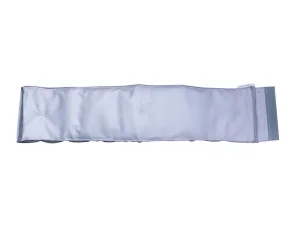
Fabricated using heavy-duty PTFE-impregnated or silicone-coated high-silica fiberglass cloth (ranging from 450 g/m² to 850 g/m²). Engineered to withstand corrosive chemical vapors, intense UV exposure, continuous mechanical abrasion, and oil contamination while maintaining hydrophobic repellence.
Core Thermal Insulation
Composed of nanoporous silica aerogels paired with needle-punched high-purity ceramic fiber blankets (rated up to 1260°C). Delivers ultra-low thermal conduction coefficients, preventing thermal leakage through continuous thermal resistance matching.
Inner Substrate & Reinforcement
Reinforced with 304/316 stainless steel knitted wire mesh or high-temp woven basalt textiles. Prevents ceramic fiber erosion during rapid maintenance disassemblies and prevents direct contact wear against hot metal machine barrels.
Global Procurement Demand & Industrial Trends
Evaluating carbon accountability, decarbonization roadmaps, and plant safety mandates forcing tier-one procurement transformations.
Decarbonization & Scope 1/2 Audits
Global petrochemical, compounding, and extrusion processors utilize factory-fitted heat preservation covers to directly slash electric kilowatt-hour consumption. Reduced baseline electricity draws translate directly into lower Scope 2 greenhouse gas emissions per ton of polymer converted.
Removable & Reusable Mechanics
Traditional rigid fiberglass-and-aluminum sheet claddings require destructive removal during routine heater maintenance or thermocouple replacements. Removable jackets feature industrial-grade Kevlar/Nomex ties, stainless D-rings, and quick-snap buckles, facilitating 5-minute tool-free removal and zero waste regeneration.
Plant HVAC & Ergonomic Optimization
Uncontrolled radiant thermal dump inside injection molding and extrusion workshops places massive electrical stress on HVAC and chillers. Installing heat preservation blankets drops ambient factory temperature by 5°C to 12°C, simultaneously improving worker safety and mitigating machine heat exhaustion.
| Evaluation Parameter | Bare Uninsulated Barrel / Piping | Rigid Metal Cladding | Kangpu Nanoporous Removable Covers |
|---|---|---|---|
| Outer Touch Surface Temp | 220°C – 380°C (Extreme burn hazard) | 85°C – 120°C (Requires warning signs) | ≤ 40°C – 48°C (Safe human contact) |
| Installation / Removal Time | N/A | 3 – 6 hours (Specialized insulation crew) | 3 – 5 minutes (Tool-free by line operator) |
| Thermal Conductivity (λ) | Air convection loss (>50 W/m²·K) | 0.045 – 0.065 W/m·K | 0.016 – 0.024 W/m·K (Aerogel core) |
| Vibration & Fatigue Life | N/A | Prone to rivet shear & denting | Flexible, self-dampening, resilient |
| Return on Investment (ROI) | Zero return (Continuous loss) | 14 – 24 months | 3 – 6 months across 24/7 lines |
Macro-Industry Solutions & Application Matrices
Engineered deployment across heavy manufacturing, extrusion lines, chemical synthesis, and clean industrial environments.
Plastics Extrusion & Injection Molding Barrel Systems
Thermal stability across the feed, compression, and metering zones is mandatory for homogeneous melt viscosity. In combination with our cast-in heaters, mica band heaters, and ceramic heaters, Kangpu's precision-fitted heat preservation jackets provide uniform circumferential heat containment. This eliminates ambient cross-draft disturbances from factory ventilation fans, curbing polymer degradation and ensuring consistent melt flow index (MFI).
PVC-O Molecular Orientation Ovens & Pipe Lines
In high-performance bi-axially oriented PVC (PVC-O) pipe production, precision ovens must maintain micro-zone temperature uniformity within ±1°C to guarantee exact molecular orientation without brittle fracturing. Custom high-temperature heat preservation covers encapsulate oven manifolds, recirculation ductwork, and delivery flanges, eliminating cold spots and thermal drift.
Valves, Pumps, Flanges & Complex Pipe Work
Steam lines, thermal oil circuits, and chemical reactor ports exhibit complex three-dimensional contours. Traditional insulation leaves these nodes completely bare. Our digital 3D-cut heat preservation covers encapsulate gate valves, Y-strainers, steam traps, and pipe elbows with tailored cut-outs for valve stems and measurement sensors.
Thermal Cleaning Furnaces & High-Density Elements
Thermal vacuum cleaning furnaces burn off resin residues at temperatures reaching 450°C to 550°C. Custom high-density insulated enclosure covers retain core radiative energy inside the chamber, shortening cycle run-times by up to 28% and preserving vacuum chamber structural longevity.
Chinese Factory Infrastructure & Rigorous Quality Control
40 years of engineering integrity under Yancheng Laier Heating Technology Co., Ltd. (Founded 1986).
3D Optical Scanning & CAD Prototyping
For complex industrial geometry, our application engineers utilize high-resolution portable 3D laser scanners or exact OEM technical drawings. We build 3D virtual CAD models to configure internal reliefs, thermocouple openings, and terminal box clearances before physical material shearing.
Kevlar & Inconel Wire Sewing
Standard stitching fails under thermal fatigue. We stitch all seams using multi-ply Kevlar thread reinforced with continuous Inconel/316 stainless micro-wire filaments. Seams remain chemically inert and mechanically sound under continuous 600°C exposure without embrittlement.
Batch Traceability & 5-Year Warranty
Every heat preservation cover leaving our factory is laser-etched or metal-tagged with a unique identification serial code tied to material lot numbers, testing reports, and sewer operator signatures. We proudly stand behind our equipment with an industry-leading 5-year warranty.
Localized Support & Global Compliance Framework
Overcoming regulatory barriers, cross-border shipping parameters, and international trade verification.
Standardization & Certifications
Manufactured strictly in alignment with CE directives, RoHS environmental regulations, REACH chemical controls, and ASTM C1055 (Standard Guide for Heated System Surface Conditions that Produce Contact Burn Injuries). Full material test certificates (MTC) accompany every container.
Export Logistics & DDP Terms
Exporting to more than 100 countries requires adaptable logistics. Whether shipping ocean containers to Rotterdam, air-freighting urgently required sample molds to Chicago, or providing full Delivered Duty Paid (DDP) clearance across ASEAN regions, our dedicated trade teams guarantee seamless supply chain execution.
Multilingual Engineering Assistance
Our sales engineering division operates in fluent English and Mandarin, providing technical documentation, calculation sheets, thermal loss simulations, and video-assisted installation consultations across European, American, and Asian time zones.
Technology Roadmap & Next-Gen Thermal Enclosures
Pioneering smart telemetry, hybrid phase-change buffers, and ultra-thin vacuum insulation panels.
IoT-Embedded Smart Sensory Jackets
Integration of flexible thin-film RTD arrays and RFID wireless temperature transmitters embedded directly inside the jacket layers. Enables real-time thermal leakage alerts, predictive heater failure warnings, and direct telemetry into industrial SCADA and Industry 4.0 factory management systems.
Vacuum Insulation Panels (VIP) Integration
Next-generation R&D combines flexible VIP technology to achieve thermal conductivities as low as 0.005 W/m·K. This enables extreme 70% thickness reduction, providing unparalleled insulation performance in tight machinery footprints where space clearance is restricted.
Phase-Change Material (PCM) Thermal Buffers
Hybrid covers utilizing encapsulated micro-PCM matrices absorb excess heat during exothermic compounding spikes and release energy during barrel idle periods, dramatically dampening temperature swings and stabilizing high-viscosity extrusion lines.
Frequently Asked Technical Questions (FAQ)
Authoritative answers to critical procurement, engineering, and thermodynamic operational inquiries.
ROI is determined by calculating uninsulated radiative heat loss ($Q = \varepsilon \cdot \sigma \cdot A \cdot (T_s^4 - T_a^4)$) plus convective losses ($Q_c = h_c \cdot A \cdot (T_s - T_a)$), comparing this against the insulated heat transfer profile. With electric tariffs averaging $0.10 to $0.22 per kWh, insulating a continuous 70 kW extruder barrel yielding a conservative 30% reduction saves approximately 21 kW/h. Operating 7,000 hours annually, direct energy savings total over $14,700 to $32,300, amortizing capital procurement costs in under 3 to 6 months.
No, when engineered correctly. Modern ceramic and cast-in heaters transfer energy conductively and radiatively directly toward the cylinder barrel. When an external insulation cover is installed, thermal losses to ambient air decrease dramatically. Consequently, the temperature controller powers the heater duty cycle down (e.g., duty cycle drops from 75% to 45%). The heating coils actually run significantly cooler on average, extending element lifespan by 200% to 300%.
Our engineering team needs: (1) Target surface dimensions (outer diameter, axial width, or 2D/3D CAD drawings), (2) Operating process temperature and ambient conditions, (3) Positions of sensor ports, terminal boxes, mounting brackets, and air-cooling blowers, and (4) Environmental factors such as chemical exposure, outdoor UV, or cleanroom fire requirements.
We manufacture patented hybrid cooling-heating covers that integrate directional louvers, stainless steel duct spigots, and air-flow plenum cavities. When the extruder barrel requires air-cooling to counteract shear heat generation, automated blower dampers open, allowing forced air circulation without compromising baseline thermal insulation.
Specialized Process Heating & Insulation Catalog
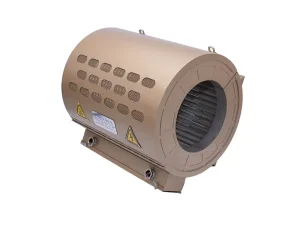
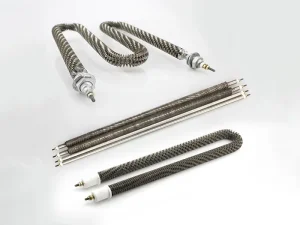
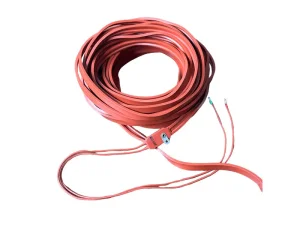
Complete your plant energy ecosystem with our high-density ceramic elements, nano-infrared band heaters, and explosion-proof solutions.


Request Custom Insulation Jacket Engineering & Factory Pricing
Direct technical engineering consultations with Yancheng Laier Heating Technology Co., Ltd. Send machine CAD models, 2D drawings, or equipment parameters for immediate thermal ROI analysis.
Global Hotline
Direct telephone consultation with senior thermal system engineers: +86-17751561023
Factory Headquarters
No.118, Xinyuan Road, Economic Development Zone, Yancheng, Jiangsu, China