

Primary Lineup
High-Density Heating Systems & Thermal Engineering Assemblies
Engineered to execute uniform linear elongation in high-stress stud tensioning, power generation turbine housings, and large plastic extrusion equipment.

High-Quality Cleaning furnace Manufacturer, Exporter
Technical Specifications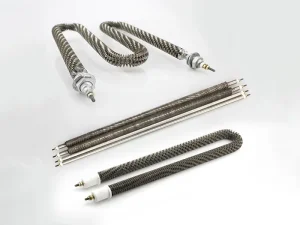
China High density heating element Manufacturers, Factories
Technical Specifications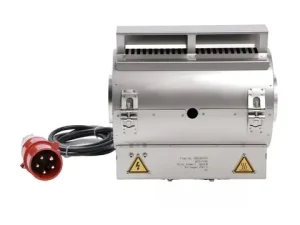
CE Certification Precise Cooling and Heating System Manufacturers, Exporters
Technical Specifications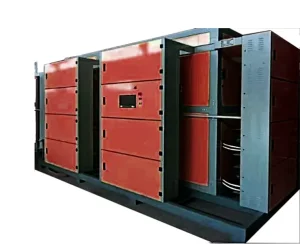
High-Quality Electromagnetic steam boiler Manufacturers, Factories
Technical Specifications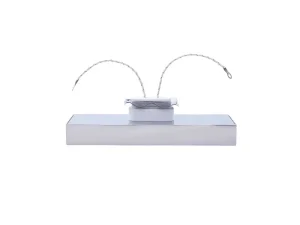
Best Infrared Ceramic Heaters for Efficient Heating Manufacturers, Exporters
Technical Specifications
CE Certification Explosion Proof Electric Heater Exporter, Factory
Technical Specifications
High-Quality Portable Ceramic Heaters for Industry - Reliable Heating Solutions from China Suppliers
Technical Specifications
White Paper Section 01
Precision High-Density Bolt Heating: Mechanics & Thermodynamic Elongation
Analyzing thermal dissipation, Swaged Magnesium Oxide compaction, and yield strength mechanics during heavy turbomachinery stud tensioning.
Swaged MgO Dielectric Compaction
Hi-density bolt heaters operate at watt densities exceeding 20–35 W/cm² (130–225 W/in²). Using ultra-high purity electro-fused MgO powder compacted through multi-stage swaging, the air voids inside the Incoloy 800/840 sheath are removed, enabling instantaneous thermal conduction to the hollow bolt core.
Controlled Hooke's Law Expansion
By heating the hollow centerline of turbine or reactor studs to 260°C–340°C, linear thermal expansion (ΔL = α × L × ΔT) extends the stud without torsional stress. Once nuts are hand-tightened or seated to predetermined clearances, the heater is de-energized, locking clamping loads without thread galling.
Differential Sheath Expansion Resistance
Standard tubular elements fail in hollow bolts due to unmitigated heat reflection. Our heavy-wall seamless Incoloy 800/825 sheathing withstands skin temperatures up to 870°C without localized ballooning, allowing drop-in insertion and removal without seizing inside tight blind bores.
| Parameter / Metric | Standard Commercial Grade | Kangpu Hi-Density Swaged Grade | Strategic Advantage |
|---|---|---|---|
| Watt Density Range | 8 – 15 W/cm² | 20 – 35 W/cm² (Custom up to 40 W/cm²) | Reduces stud expansion time from 45 min down to 12 min. |
| Dielectric Strength (Cold/Hot) | 1500 V / 10 MΩ | 2500 V AC / > 500 MΩ @ 500V DC | Prevents ground fault tripping under humid plant conditions. |
| Sheath Alloy | SS304 / SS321 | Seamless Incoloy 800 / Incoloy 840 | Eliminates outer diameter deformation and hot-corrosion seizing. |
| Internal Heating Core | Random helicoil winding | Centerless ground NiCr 80/20 with dual returns | Ensures identical watt distribution across total insertion length. |
| Lead Insulation Architecture | Fiberglass braided wire | Solid brass quick-disconnect handles + PTFE/Silicone | Withstands mechanical extraction shock during turnaround. |
White Paper Section 02
China Industrial Manufacturing & Supply Chain Cluster Competencies
How four decades of thermal manufacturing evolution in Yancheng, Jiangsu delivers structural supply chain resilience, engineering customization, and cost stabilization.
Upstream Material Integration
Direct supply contracts with domestic aerospace-grade nickel alloy draws and purity-controlled fused MgO refiners guarantee batch-to-batch chemical stability, insulated from international commodity fluctuations.
Automated Swaging & Testing
Our manufacturing floor utilizes computer-controlled 12-station rotary swaging equipment coupled with computerized X-ray digital radiography (DR) testing to inspect coil pitch and concentricity before final sealing.
In-House Tooling & Quick Response
Unlike resellers, Kangpu operates its own tool & die fabrication center. Custom diameters (e.g., 9.5mm, 11mm, 12.7mm, 16mm, 19mm, 25.4mm) and non-standard heated lengths are engineered within 72 hours of approval.
Global Export Footprint
Exporting to over 100 industrial territories, we align packaging, customs documentation, hazardous electrical freight protocols, and multi-currency billing for international procurement networks.
1986
Founding Engineering Heritage
100+
Countries Supplied Worldwide
5,000+
Satisfied Industrial Clients
5 YRS
Uncompromising Quality Warranty
White Paper Section 03
Localization Support, Industrial Scenarios & Rigorous Compliance
Addressing international procurement criteria, plant safety compliance, and regional operational demands across diverse heavy-industry environments.
Turbine Shell & Rotor Maintenance
Applied during scheduled shutdowns in thermal, nuclear, and combined-cycle gas turbine plants. Swift thermal expansion of casing studs avoids hydraulic wrench galling and speeds up scheduled maintenance critical path tasks.
High-Pressure Hydrocracker Flanges
Chemical processing pressure vessels and reactor heads feature multi-stud arrays under severe pressure. Kangpu multi-element control consoles allow parallel heating of 8 to 24 studs for even perimeter decompression.
Hydraulic Press Tie-Rod Pre-Stressing
Forging and metal-stamping equipment relies on pre-stressed tie-rods to absorb dynamic cyclic fatigue. Hi-density elements allow controlled initial elongation during equipment commissioning and re-torquing.
CE, Low Voltage Directive & RoHS
All heating units comply with European Directives 2014/35/EU (LVD) and 2014/30/EU (EMC), utilizing non-hazardous materials verified by full RoHS screening for lead, cadmium, and hexavalent chromium.
Batch Traceability Protocols
Each unit is laser-etched with order, date, and batch identifiers tied to an archived material test report (MTR) covering chemical composition, dielectric leakage values, and final resistance records.
Localized Field Service Architecture
Kangpu provides engineering liaison support, technical video verifications, and custom plug-and-receptacle interfaces (Hubbell, Harting, Marechal) for direct compatibility with client electrical systems.
Expanded Catalog
Engineered Heating Solutions & Thermal Systems
Custom-built thermal equipment designed for polymers, fluids, and critical industrial process environments worldwide.
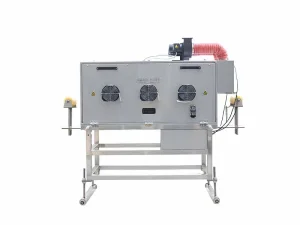
CE Certification PVC-O Ovens for Precision Heating Manufacturer, Manufacturers
Technical Specifications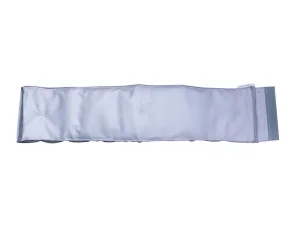
Best Durable Heat Insulation Covers Manufacturer, Exporters
Technical Specifications
China Efficient Portable Ceramic Heaters for Industry | China Suppliers & Factory Exporters
Technical Specifications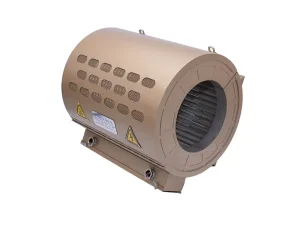
CE Certification Nano infrared electric band heater Manufacturer, Manufacturers
Technical Specifications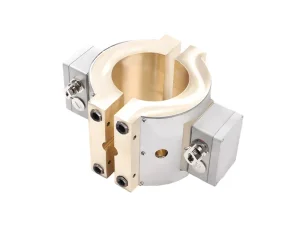
CE Certification Cast Aluminum/Copper Heater Manufacturer, Exporter
Technical Specifications
High-Quality Thermocouple Exporter, Factory
Technical Specifications
China Portable Ceramic Heaters from China Suppliers: Efficient Heating Solutions for Factories
Technical Specifications
CE Certification Electromagnetic induction heater Manufacturer, Exporter
Technical Specifications
White Paper Section 04
Future Trajectories & Kangpu's 7-Stage Customization Protocol
The convergence of Industry 4.0 data logging, composite sheath materials, and our structured design-to-production engineering methodology.
IoT-Enabled Thermal Monitoring
Modern bolt heating operations incorporate multi-point internal thermocouples (Type K or J) embedded into the heater sheath. Combined with digital power controllers, this setup monitors temperature gradient profiles in real time, preventing stud core overheating and metallurgic degradation.
Advanced Ceramic-Coated Sheaths
High-temperature ceramic diffusion coatings resist galling and oxidation at 700°C+ operations. This enables seamless clearance fits within tight turbine studs and prevents mechanical binding during removal.
Rapid Turnaround Duty Cycles
Next-generation mineral compacts allow fast cycling without internal thermal shock fractures. Power plants can ramp heaters instantly, shortening cooling phases and reducing critical-path downtime during outages.
The Kangpu 7-Stage Engineering & Quality Verification Pipeline
STAGE 01
ID Design
Application study, dimensional modeling, clearance tolerance, and terminal configuration.
STAGE 02
Specification Matching
Voltage, wattage, watt density, and metallurgy calculated for optimal expansion speed.
STAGE 03
Real-Mold Tooling
Samples are fabricated via production-grade swaging dies, avoiding hand-built prototypes.
STAGE 04
Fitment Sign-Off
The client verifies physical dimensions, lead orientation, and bore clearance on the job site.
STAGE 05
Engineering Adjustments
Rapid iteration adjusts cold zones, flexible leads, or watt densities based on initial trial results.
STAGE 06
Testing & Validation
Full dielectric testing, Megohm insulation checks at temperature, and X-ray concentricity audits.
STAGE 07
Full Batch Production & 5-Year Traceability
Automated volume runs using sealed packaging. Backed by our five-year warranty and complete batch archiving.
Technical Clarifications
Frequently Asked Questions: Industrial Procurement & Engineering
In-depth responses covering mechanical tolerances, electrical safety, duty cycles, and international procurement logistics.
What specific clearance tolerance is required between the heater sheath and the hollow bolt bore?
For optimal thermal transfer and to prevent mechanical jamming from thermal expansion, the recommended diametrical clearance is 0.75 mm to 1.25 mm (0.030" to 0.050"). An oversized clearance creates an insulating air gap that increases heater sheath temperature, risking premature element failure. Conversely, a clearance under 0.5 mm risks binding during thermal expansion. Kangpu manufactures sheath outer diameters with tight centerless-ground tolerances within ±0.05 mm to match your drill bore.
Can Kangpu design and manufacture custom heaters according to technical drawings or physical samples?
Yes. Customization is our core engineering capability. Provide your bolt drawings, bore dimensions, operating voltage (e.g., 110V, 220V, 240V, 380V, 415V, 480V), available current capacity, and target heating times. Our engineering team will determine the heated length, unheated cold zones (matching nut heights), lead exit configurations (straight, 90-degree elbow, flexible stainless braid), and provide comprehensive CAD drawings for sign-off prior to production.
What warranty protection covers high-watt-density industrial heating equipment?
Kangpu heaters include a five-year after-sales warranty covering manufacturing and material defects. Each production batch has an archived traceability file containing raw material heats, dielectric insulation values, and swaging operator logs. If an unexpected failure occurs under standard operating parameters, we run a metallurgical analysis to identify the root cause, provide a replacement, and adjust the design if operating conditions require it.
How does high-density internal bolt heating compare with hydraulic tensioning nuts?
While hydraulic tensioners pull the bolt mechanically, they require expensive specialized heads, generous radial clearance around the nut, and subject threads to sheer tension. Bolt heaters apply no mechanical pulling force; thermal elongation lets you turn the nut down by hand with zero thread friction. This approach is well suited for tight turbine casings and confined hydrocracker flanges where hydraulic heads cannot fit. It also avoids thread galling, extending stud service life.
How do you prevent terminal connection failures caused by operator handling during maintenance shutdowns?
Field failures often occur when technicians pull on the electrical supply cords to extract hot heaters. Kangpu addresses this by integrating heavy-duty stainless steel or cast brass pull handles with strain-relieved flex conduits. The internal heating-element pins terminate into a rigid, insulated ceramic block housed within the cool-zone handle, isolating the electrical leads from both pulling forces and high sheath temperatures.
Which international markets does Kangpu supply, and what documentation accompanies shipments?
Kangpu supplies industrial clients across Europe, North America, Southeast Asia, the Middle East, and South America—spanning more than 100 countries. Every industrial export shipment includes a Certificate of Conformance (CoC), an internal electrical test report (covering cold resistance, high-pot insulation, and leakage checks), a CE declaration of conformity, and heat-treated wooden pallet packaging suited for air and sea freight.