
High-Efficiency Energy Saving Heaters (Batch 1)
Explore our core low-power heating elements, intelligent temperature control modules, and dynamic insulation technologies tailored for heavy industrial continuous operations.

CE Certification Electromagnetic Induction Heater
Configure Specs
Best Durable Heat Insulation Covers
Configure Specs
China Portable Ceramic Heaters for Industry
Configure Specs
CE Certification Cooling Fan Units for Heating Systems
Configure Specs
CE Certification Flexible Heaters for Custom Shapes
Configure Specs
Best Low-Loss Pipeline Heater Systems
Configure Specs
High-Quality Hot-Runner Spring Coil Heaters
Configure Specs
Best High-Radiation Infrared Ceramic Heaters
Configure SpecsThe Global Shift Toward Low Electric Use Heating Architectures
Rising industrial electricity tariffs, corporate ESG frameworks, and stringent carbon boundary taxes are forcing modern manufacturing facilities to abandon inefficient thermal resistance systems.
Across European, North American, and Asian industrial clusters, electricity consumed by process heating represents between 35% and 65% of total plant overhead in extrusion, blow molding, injection processing, and drying corridors. Historically, facilities tolerated substantial thermal dissipation—frequently exceeding 40% ambient surface heat loss—from outdated cast-iron bands and standard mica resistance wraps. Today, the rapid implementation of the EU Carbon Border Adjustment Mechanism (CBAM) and regional peak-demand surcharges make inefficient industrial heating economically unsustainable.
Grid Volatility & Peak Shaving
Industrial processors operate under stringent maximum kilowatt demand caps. Upgrading to rapid-ramp, low-watt-density heating reduces factory peak draw, directly eliminating high-tier capacity fines from regional power providers.
Micro-Thermal Insulation Physics
By engineering high-density aerogel barriers and stepped ceramic interlocking structures, Kangpu low electric use elements redirect over 96% of thermal energy toward the barrel or medium, maintaining exterior sheath levels below 65°C.
Full Life-Cycle ROI Metrics
While traditional resistive bands compete solely on baseline acquisition cost, an engineered low-electric heating assembly recovers its capital expenditure within 4 to 9 months through direct power bill reductions and extended element life.
Macro-Level Industrial Heating Solutions & Process Electrification
Transforming complex multi-zone manufacturing equipment into closed-loop, thermally optimized systems that consume fewer kilowatt-hours while maximizing hourly throughput.
| Heating Technology Architecture | Electro-Thermal Conversion | Surface Heat Loss (%) | Average kWh Reduction | Target Industrial Utility |
|---|---|---|---|---|
| Kangpu High-Frequency Electromagnetic Induction | 98.2% - 99.4% | < 3.5% | 35% - 50% Savings | Extrusion Barrels, Injection Cylinders, Continuous Boilers |
| Nano-Infrared Radiation Band Heaters | 95.8% - 98.0% | < 6.0% | 30% - 42% Savings | Plastics Machinery Retrofits, Film Blowing Dies |
| Aerogel-Insulated Ceramic Band Heaters | 91.0% - 94.5% | < 10.0% | 20% - 28% Savings | High-Temperature Polymer Processing, Rubber Vulcanization |
| Cast Aluminum / Copper Integrated Zones | 88.0% - 92.0% | 12.0% - 16.0% | 15% - 22% Savings | Precision Extrusion Requiring Combined Air/Liquid Cooling |
| Standard Non-Insulated Mica Band (Legacy) | 72.0% - 78.0% | 35.0% - 48.0% | Baseline Reference | Commodity Low-Temp Ineffective Tooling |
Engineering Insight: Industrial electricity reduction is fundamentally a thermodynamics problem. Heat flux must be directed unilaterally into the process boundary. Every watt dissipated outward into ambient workshop air not only inflates production costs but also forces facility chiller and HVAC systems to run harder, doubling the total parasitic energy penalty.
Localized Engineering Application Scenarios
Custom-engineered thermal systems optimized for specialized chemical, mechanical, and material forming machinery around the world.
Twin-Screw Polymer Extruders
High-output compounding requires rapid heat dissipation during screw shearing combined with ultra-low power holding states. Our patented precise heating/cooling integrated jackets deliver +/-1°C barrel stability while trimming motor and heating line amperage by up to 38%.
HVAC Duct Air & Process Drying
Direct fluid-to-air energy transfer demands aerodynamic finned tubular elements. Designed with balanced multi-bank staging, Kangpu industrial duct heaters cycle load automatically, avoiding unnecessary full-load draw during steady-state recirculation cycles.
Molecularly Oriented PVC-O Ovens
Continuous bi-axial orientation of PVC pipe demands absolute thermal uniformity across the outer circumference without hotspots. Our dedicated PVC-O multi-stage radiant ovens integrate zoned low-loss ceramic emitters with convective air recirculation.
Localized Engineering Support & International Compliance
Decouple your supply chain risks with a Chinese manufacturing partner adhering strictly to Western engineering, safety, and operational standards.
CE Mark Compliance
Certified under the Low Voltage Directive (LVD 2014/35/EU) and Electromagnetic Compatibility Directive (EMC 2014/30/EU), guaranteeing effortless OEM machine integration across all European single-market territories.
UL 499 & NFPA Standards
Engineered with high-dielectric continuous MGO insulation, mica barriers, and high-temp lead wiring fully compliant with North American industrial safety thresholds and electrical panel inspection guidelines.
ATEX / IECEx Explosion-Proof
Specialized flameproof terminal enclosures and encapsulated heating cartridges engineered specifically for chemical distilleries, offshore platforms, and hazardous environments with flammable gases.
Batch Lot Traceability
Each individual heater undergoes strict dielectric breakdown (hipot 1500V/min), cold insulation resistance (>50MΩ), and dimensional CMM testing, linked directly to material certificates for raw alloys and ceramics.
Technology Roadmap: The Future of Industrial Electric Heating (2026–2035)
How Kangpu R&D is redefining efficiency boundaries through smart materials, IoT micro-diagnostics, and electromagnetic frequency matching.
Nano-Infrared Emitters
Widespread replacement of Nichrome wire with multi-element alloy coatings yielding 99% infrared conversion in the 2–10 μm absorption band of industrial plastics.
Embedded Edge IoT Sensors
Micro-thermocouple arrays embedded directly into the heating grid communicating via IO-Link to detect dry-firing, degradation, and local hotspots before element failure occurs.
Graphene Hybrid Thin Films
Flexible sub-millimeter thermal membranes providing completely uniform surface watt density with instantaneous ramp speeds, eliminating all dead spots in complex molds.
Self-Resonant Inductive Fields
AI-driven variable frequency induction controllers that dynamically match resonant frequencies to workpiece ferrous metallurgies for near-zero reactive power waste.
Specialized Thermal & Fluid Process Systems (Batch 2)
Complete the thermal loop with our high-density elements, explosion-proof units, electromagnetic boilers, and high-temperature thermal fluid heaters.
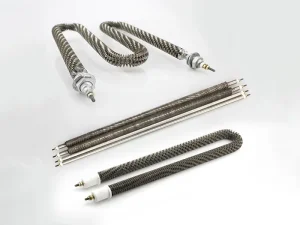
China High Density Swaged Heating Element
Configure Specs
High-Quality Portable Ceramic Heaters for Industry
Configure Specs
CE Certification Industrial Heat Treatment Ovens
Configure Specs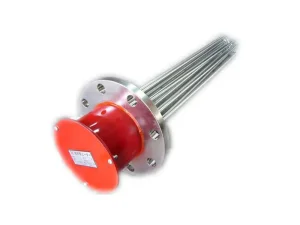
CE Certification Explosion-Proof Electric Heater
Configure Specs
High-Quality Clean Electromagnetic Steam Boiler
Configure Specs
High-Quality Precision Control Portable Ceramic Heater
Configure Specs
High-Quality Heat-Conducting Thermal Oil Furnace
Configure Specs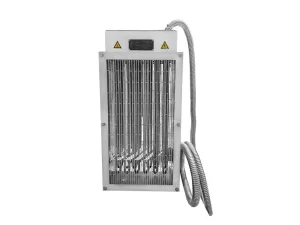
CE Certification Efficient Air Duct Heaters for HVAC
Configure SpecsFrequently Asked Questions: Industrial Low Electric Use Heaters
Comprehensive engineering insights for procurement managers, plant directors, and OEM designers.
Energy efficiency in industrial heating is governed by the First Law of Thermodynamics: electrical input equals thermal output. "Low electric use" does not imply under-powering your process. Instead, it eliminates parasitic losses. Conventional heaters dissipate 30% to 50% of generated BTUs radially into the plant atmosphere due to poor conductive coupling and inadequate back-insulation. Kangpu low-electric heaters integrate multi-layered ceramic fiber, aerogel barriers, and targeted infrared/induction flux to ensure >95% of generated energy enters the barrel, pipe, or medium. Consequently, the machine reaches setpoint with significantly fewer kilowatt-hours and cycles off for longer intervals.
For continuous extrusion production (24/7 operating schedules at 6,000+ operational hours annually), retrofitting standard cast-iron or basic mica bands with Kangpu Nano-Infrared or Electromagnetic Induction Heaters consistently yields a 30% to 45% reduction in heating power consumption. Under typical European, American, or Asian commercial electrical tariffs ($0.12 to $0.28 per kWh), retrofitting a standard 90mm to 120mm extruder pays for the entire hardware cost within 4 to 8 months. Additional indirect savings include lower ambient workshop temperatures, reducing factory cooling/chiller load.
Yes. Custom design and built-to-print engineering represents over 75% of our daily production in our Yancheng facility. We accommodate any inner diameter, axial width, radial cutout for thermocouples or pressure transducers, clamping mechanism (spring-loaded, barrel-bolt, or wedge-latch), terminal enclosure (IP65 terminal boxes, high-temp ceramic plugs, or braided leads), and supply voltage from 110V single-phase up to 690V three-phase delta/wye systems.
Electromagnetic induction directly excites the eddy currents inside the ferromagnetic metallic barrel itself via alternating magnetic flux; the heater coil stays relatively cool while the barrel turns into the heat generator (achieving near 98% efficiency with minimal thermal lag). Nano-infrared heaters use an advanced radiant resistance ribbon that emits targeted mid-to-far infrared waves through high-purity quartz surfaces. Induction offers higher speeds and peak efficiency for heavy continuous extrusion barrels, whereas nano-infrared offers simpler drop-in installation and lower upfront capital cost.
We maintain an uncompromising design philosophy: low internal watt density across resistance cores, premium high-purity fused magnesium oxide (MgO) insulation, high-grade nickel-chromium (NiCr 80/20) alloys, and laser-welded hermetic casings. Every single heater produced in our facility is stamped with a batch tracking QR code. In the rare event of premature degradation, our quality assurance team investigates the root cause—such as localized polymer leakage or power surge—and provides immediate engineered replacements.
Standard prototype and engineering sample validation is completed within 5 to 7 business days following formal drawing approval. For volume production orders (from 100 to 5,000 units), standard factory turnaround ranges from 15 to 22 working days. Expedited air freight and sea freight container packing (utilizing fumigated solid wood crating with moisture-proof vacuum barriers) ensure parts arrive ready for immediate installation anywhere worldwide.