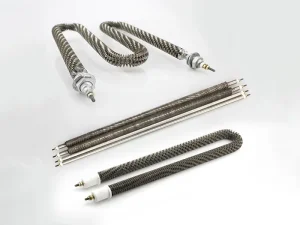
Engineered Heating Elements & Process Assemblies
Browse our standard and custom-configured heating systems built with high-stability Nichrome resistance cores.
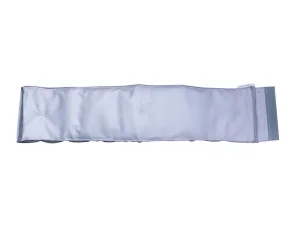
Best Durable Heat Insulation Covers Manufacturer, Exporters
Configure & Inquire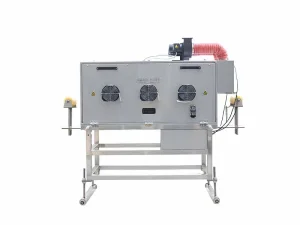
CE Certification PVC-O Ovens for Precision Heating Manufacturer, Manufacturers
Configure & Inquire
China Portable Ceramic Heaters for Industry Manufacturers, Exporter
Configure & Inquire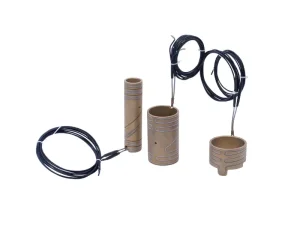
High-Quality (Hot-runner)Spring heater/Coil heater Manufacturers, Factory
Configure & Inquire
High-Quality Heat-conducting oil furnace Manufacturer, Exporter
Configure & Inquire
China Efficient Portable Ceramic Heaters for Industry | China Suppliers & Factory
Configure & Inquire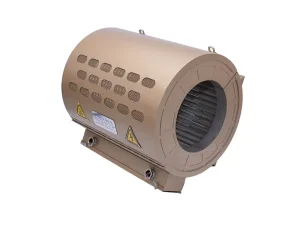
CE Certification Nano infrared electric band heater Manufacturer, Manufacturers
Configure & Inquire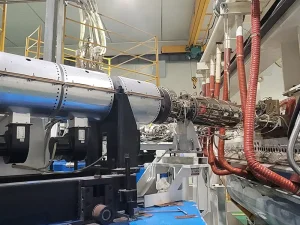
CE Certification Electromagnetic induction heater Manufacturer, Exporter
Configure & InquireThe Global Commercial & Metallurgical Landscape of Nichrome Resistance Wire
In modern electrical thermal engineering, Nickel-Chromium (NiCr) resistance alloys form the bedrock of electric thermal conversion. As heavy industries, advanced polymer extrusion, aerospace processing, and microelectronics transition away from fossil-fueled combustion toward comprehensive electrification, the global demand for ultra-consistent, metallurgically pure nichrome wire has reached historic levels. Nichrome resistance wire functions under a fundamental principle: Joule heating governed by an extraordinarily stable electrical resistivity across thermal ramping cycles, supported by the spontaneous formation of an adherent, self-healing chromium(III) oxide (Cr2O3) surface scale.
Globally, the two primary commercial grades dominating procurement specifications are NiCr 80/20 (UNS N06003 / Werkstoff 2.4869) and NiCr 60/15 (UNS N06004 / Werkstoff 2.4867):
- NiCr 80/20 (Nikrothal 80 Equivalent): Composed of approximately 80% Nickel and 20% Chromium, this grade offers the highest operating threshold, resisting continuous core temperatures up to 1200°C (2192°F). The absence of iron in its composition prevents catastrophic internal oxidation, granting superior creep strength, non-magnetic properties, and freedom from post-heating embrittlement during intermittent cyclic switching.
- NiCr 60/15 (Nikrothal 60 Equivalent): Containing 60% Nickel, 15% Chromium, and approximately 25% Iron balance, this formulation provides an economical, high-resistance alternative for applications operating below 1150°C (2100°F). Its slightly higher specific electrical resistance (1.12 μΩ·m vs 1.09 μΩ·m) makes it ideal for compact domestic appliances, oil-immersion systems, and commercial defrosting networks.
In contemporary manufacturing ecosystems, the critical bottleneck for tier-one engineering firms is not merely procuring raw wire, but ensuring unyielding dimensional uniformities (±0.005 mm on micro-diameters) and homogeneous ohmic distribution. Slight variations in ingot carbon segregation or grain boundary carbide precipitates lead to localized resistance spikes—otherwise known as "hot spots"—which accelerate thermal runaway and premature element rupture. As a consequence, high-end global procurement protocols require vacuum induction melting (VIM) and strict electro-slag remelting (ESR) refine protocols, standards that our state-of-the-art Chinese manufacturing facilities have institutionalized over four decades of thermal metallurgical engineering.
Chinese Manufacturing Scale: Metallurgical Consistency & Supply Chain Resilience
How advanced vertical integration and automated drawing technologies deliver unbeatable unit stability and global export responsiveness.
VIM & ESR Ingot Purity
Utilizing high-vacuum induction melting followed by secondary electro-slag refining minimizes sulfur, phosphorus, and non-metallic inclusion content below 0.005%, preventing grain boundary tearing during wire drawing.
Continuous Diamond Die Drawing
Our multi-station submerged wire drawing lines employ polycrystalline diamond (PCD) dies with automated laser diameter telemetry, guaranteeing continuous ovality errors under 0.002 mm across thousands of spooled meters.
Hydrogen Bright Annealing
Continuous inline strand annealing in a pure dry-hydrogen atmosphere prevents surface discoloration and decarbonization, ensuring mirror-smooth, oxidation-free finishes ready for immediate spiraling or core-winding.
Precision Resistance Sorting
Every batch undergoes non-contact eddy current testing and dynamic four-point Kelvin probe continuous resistance profiling, certifying resistance spreads within a tight ±1.5% band versus the broad ±5% industry norm.
Automated Tension Spooling
Zero-snag spooling on DIN 100 to DIN 355 spools with precise servo-controlled tension wraps. This eliminates overlapping coils, ensuring flawless feed rates into automated CNC coil winding and braiding machinery.
Direct Export Logistics Integration
Situated within the industrial manufacturing hub of Yancheng, Jiangsu, direct port routing through Shanghai enables frictionless global export with standardized containerization, desiccant sealing, and EN 10204 3.1 certification.
Industrial Grade Nichrome Resistance Alloys: Engineering Benchmark
Direct physical, electrical, and thermal properties comparison to assist procurement and thermal design engineers.
| Alloy Classification | Nominal Chemical Composition | Max Element Temp (°C) | Resistivity @ 20°C (μΩ·m) | Density (g/cm³) | Elongation (%) | Magnetic Character | Recommended Industrial Scope |
|---|---|---|---|---|---|---|---|
| Cr20Ni80 (NiCr 80/20) DIN 17470 / ASTM B344 |
Ni Bal, Cr 20.0-23.0, Fe <1.0, Si 0.7-1.5, Mn <0.7 | 1200°C (2192°F) | 1.09 ±0.05 | 8.40 | ≥ 20% | Non-magnetic | Extruder ceramic bands, high-temp industrial furnaces, hot runner systems |
| Cr15Ni60 (NiCr 60/15) Werkstoff 2.4867 |
Ni 57.0-63.0, Cr 15.0-18.0, Fe Bal, Si 0.7-1.5 | 1150°C (2102°F) | 1.12 ±0.05 | 8.20 | ≥ 20% | Slightly magnetic | Industrial drying ovens, mica band heaters, tubular heating elements |
| Cr20Ni35 (NiCr 35/20) Werkstoff 2.4864 |
Ni 34.0-37.0, Cr 19.0-21.0, Fe Bal, Si 1.0-2.0 | 1100°C (2012°F) | 1.04 ±0.05 | 7.90 | ≥ 20% | Magnetic | Storage heaters, night-storage bricks, lower-stress convection equipment |
| Cr20Ni30 (NiCr 30/20) Industrial Standard |
Ni 29.0-33.0, Cr 18.0-21.0, Fe Bal, Si 0.8-1.5 | 1050°C (1922°F) | 1.04 ±0.05 | 7.90 | ≥ 18% | Magnetic | Air duct heaters, commercial immersion rods, standard heat trace cables |
Mission-Critical Applications of Nichrome Resistance Assemblies
From extreme plastics extrusion to semiconductor wafer fabrication, explore where our resistance solutions operate daily.
Plastics & Polymer Extrusion
Coiled Ni80Cr20 resistance wires provide rapid, responsive heat transfer inside ceramic band heaters, cast-in aluminum cylinders, and blow-molding nozzles, maintaining polymer melt viscosity within 1°C setpoint bands.
Metallurgical Heat Treating
Heavy-gauge NiCr flat ribbon and corrugated rod elements power atmosphere annealing kilns, carburizing lines, and sintering furnaces, offering exceptional resistance to sag and creep over multi-year operational runs.
Petrochemical & Flow Lines
Engineered into mineral-insulated (MI) heating cables, explosion-proof pipeline heaters, and heavy crude circulation loops to prevent wax formation, freeze-up, and viscosity spikes in hazardous Zone 1/Zone 2 areas.
Semiconductor Thermal Processing
High-purity micro-wire elements integrated into quartz-shielded chambers, diffusion furnaces, and vacuum wafer bake platens requiring ultra-low particulate outgassing and absolute thermal uniformity.
Future Industry Trends: Decarbonization & Advanced Micro-Alloying
The electric heating sector is experiencing a paradigm shift driven by stringent carbon mitigation mandates worldwide. Across Europe, North America, and East Asia, industrial plants are aggressively replacing natural gas-fired burners with electric resistance arrays. This transition demands a significant increase in watt-density capabilities and service longevity from Nichrome heating elements.
To meet these emerging operating environments, next-generation Nichrome manufacturing integrates rare-earth micro-alloying (REMA). By infusing trace amounts of active elements—such as Cerium (Ce), Yttrium (Y), and Zirconium (Zr)—into the NiCr 80/20 matrix, the adherence of the passivating chromia film is augmented exponentially. The rare-earth atoms concentrate at alloy grain boundaries, effectively blocking inward oxygen diffusion while preventing the oxide scale from spalling during severe cyclic thermal shock. This innovation elevates element service life by up to 250% compared to conventional un-doped nickel-chromium alloys.
Global Corporate Procurement Standards & Quality Verification
Corporate engineering buyers and supply chain managers require rigorous quality assurances when sourcing Nichrome wire and finished assemblies from overseas manufacturers. Reliability failure in an industrial setting carries heavy downtime penalties: a failed heating coil inside an automated extrusion line or a heat-treatment conveyor can generate thousands of dollars in lost hourly output. Consequently, institutional procurement managers mandate verifiable adherence to four critical quality pillars:
- ASTM B344 & DIN 17470 Compliance: Verification of precise chemical bounds, standard grain sizing, uniform mechanical tensile properties, and minimal impurity ceilings.
- Four-Terminal Kelvin Resistance Profiling: Absolute resistance per meter must fall strictly within negotiated engineering envelopes (standard ±3%, high-precision ±1.5%).
- Continuous High-Frequency Eddy Current Inspection: 100% online scanning of drawn wire to intercept sub-surface inclusions, cracks, seams, or slivers prior to reeling.
- Complete Traceability & Material Certification: Issuance of mill test certificates per EN 10204 type 3.1 detailing heat analysis, melt method, tensile yield, elongation, and batch-linked QA numbers.
Frequently Asked Questions: Nichrome Resistance Wire Procurement
Definitive engineering answers to critical search queries regarding alloy selection, thermal calculations, and OEM fabrication.
What is the primary difference between NiCr 80/20 and FeCrAl (Kanthal) heating wire?
While Iron-Chromium-Aluminum (FeCrAl) alloys can attain higher peak temperatures (up to 1400°C) and have higher electrical resistivity, they suffer from structural embrittlement after heating, high deformation sagging, and magnetic vulnerability. NiCr 80/20 retains superior hot strength, high ductility even after long exposure, remains non-magnetic, and does not crack when coils are unmounted, serviced, or re-shaped during maintenance cycles.
Why is dry hydrogen bright annealing critical for Nichrome resistance wire?
Hydrogen annealing acts as a powerful reducing atmosphere that scavenges residual oxygen and prevents the formation of an irregular, non-conductive native oxide layer during drawing. This yields a clean, metallurgical surface with predictable electrical contact properties, which is vital when crimping, ultrasonic welding, or laser-welding lead wires in high-speed automated production environments.
How do you calculate the correct wire diameter and length for a target wattage?
Using Ohm's Law and the Joule heating relation, calculate total target resistance: R = V² / P. Next, account for the temperature-dependent resistance factor (Ct) of Ni80Cr20 (e.g., ~1.05 at 800°C), giving Cold Resistance R20 = R / Ct. Match this to wire cross-sectional area and specific resistance: R20 = (ρ × L) / A. Finally, evaluate the element surface watt density (W/cm²) to verify that heat dissipation into the surrounding medium preserves the alloy within safe operating boundaries.
Can you provide custom-profile flat ribbons and pre-wound heating coils?
Yes. Beyond standard spooled round wire (0.015 mm to 8.0 mm), our precision rolling mills fabricate flat ribbons with controlled edge radii (aspect ratios up to 20:1). We also offer turnkey CNC coiling, wave-shaping, ceramic-core threading, and custom termination with nickel leads, threaded terminals, or high-temp ceramic blocks for immediate OEM integration.
What is the standard tolerance on resistance and dimensional diameters?
Standard industrial tolerance for diameter is ±0.01 mm, and resistance is ±5%. However, our automated production lines routinely achieve high-precision tolerances: diameter within ±0.003 mm and resistance within ±1.5%. Custom tight-tolerance runs can be specified according to individual customer engineering prints and QA thresholds.
What documentation and test reports are supplied with each export shipment?
Every shipment includes an EN 10204 3.1 Inspection Certificate certifying chemical composition via optical emission spectrometry, cold tensile strength, percentage elongation, four-point probe electrical resistivity at 20°C, continuous laser diameter inspection records, and ROHS/REACH compliance verification.
Precision Heaters & Industrial Processing Equipment
Explore our high-performance heating lines engineered for rigorous manufacturing environments worldwide.
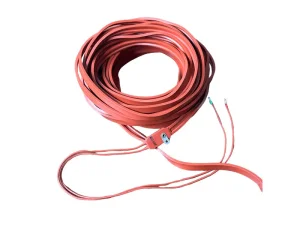
CE Certification Flexible Heaters for Custom Applications Manufacturer, Exporter
Configure & Inquire
High-Quality Portable Ceramic Heaters for Industry - Reliable Heating Solutions
Configure & Inquire
China Portable Ceramic Heaters from China Suppliers: Efficient Heating Solutions
Configure & Inquire
CE Certification Explosion Proof Electric Heater Exporter, Factory
Configure & Inquire
High-Quality Cleaning furnace Manufacturer, Exporter
Configure & Inquire
Best Pipeline Heater Manufacturers, Factory
Configure & Inquire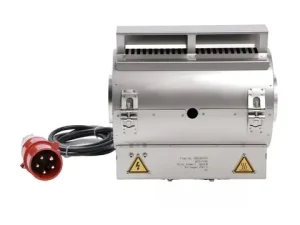
CE Certification Precise Cooling and Heating System Manufacturers, Exporters
Configure & Inquire