

Precision Engineering Selection
High-Efficiency Industrial Heating & Thermal Processing Units
Explore our export-certified thermal execution modules designed for polymer processing, extrusion barrels, clean steam generation, and industrial ovens.
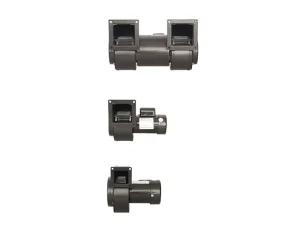
CE Certification High-Velocity Industrial Cooling Fan
View Specifications
Best Efficient Portable Ceramic Heaters
View Specifications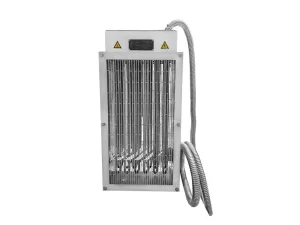
CE Certification Efficient Air Duct Heaters for HVAC
View Specifications
Industrial Portable High-Duty Ceramic Heaters
View Specifications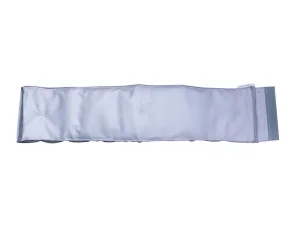
Durable Custom Heat Insulation Covers
View Specifications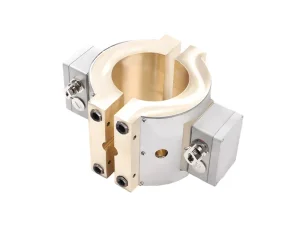
CE Certification Cast Aluminum/Copper Heater
View Specifications
Heating & Cooling Integrated Barrel System
View Specifications
Industry 4.0 Manufacturing Whitepaper
China Factory 4.0: Supply Chain Resilience & Process Precision
How state-level metallurgical clustering, digital twin simulation, and strict thermodynamic controls enable Kangpu Heater (Yancheng Laier Heating Technology) to set international standards in oven and heater manufacturing.
Full-Scale Vertical Integration
Unlike simple assembling workshops, our Yancheng manufacturing base maintains end-to-end control from raw ceramic compounding, high-purity nickel-chrome element coiling, casting foundry, to robotic CNC bending. This eliminates supply chain latency and prevents sub-tier variance.
- Tier-1 Material: High-grade NiCr 80/20 & FeCrAl alloys
- Foundry Control: Degassed copper and aluminum billets
Total Cost of Ownership (TCO)
A single premature heater failure halts multimillion-dollar production runs. Kangpu implements an integrated thermodynamics approach: low surface watt-density matching, multi-layer aerogel insulation, and finite element heat dissipation to extend operational lifespans beyond 5 years.
- Efficiency Gain: Up to 35% radiant thermal retention
- Warranty: Five-year comprehensive batch protection
7-Stage Controlled Customization
Every industrial oven, heating plate, and custom heater follows our rigorous validation pipeline: ID design, thermodynamic calibration, real-mold sample fabrication, on-site line integration, client approval, load stress validation, and automated mass-scale delivery.
- Sampling: Production-mold representative testing
- Inspection: 100% dielectric & insulation resistance tests
1986
Established Pioneer
100+
Export Destinations
5,000+
Enterprise Partners
5-Year
Traceable Warranty
Macro Industry Solutions
Specialized Thermal Execution Across High-Stakes Sectors
From molecular orientation of bi-axial polymers to chemical reactor heating, discover how our custom-engineered thermal enclosures and heating components satisfy rigorous engineering standards.
Molecularly Oriented PVC-O Ovens
Biaxial orientation of PVC pipes demands pinpoint circumferential heat uniformity within ±0.5°C. Our PVC-O continuous circulation ovens leverage multi-stage forced air stratification and infrared equalization zones, enabling maximum burst-pressure resistance and material reduction in modern pipe extrusion.
- Thermal Uniformity: Precise multi-zone PID modulation
- Application: Class 500 PVC-O infrastructure piping
Polymer Cleaning Furnaces & Pyrolysis Ovens
Thermal degradation of residual polymers on blown-film dies, breaker plates, and extruder screws requires non-destructive thermal environments. Our vacuum cleaning furnaces eliminate risk of thermal warping or nitrided layer destruction through calibrated oxygen-starved vacuum pyrolysis.
- Protection: Zero flame impingement, zero metallurgical damage
- Emission Control: Integrated catalytic secondary afterburner
Clean Steam & Induction Thermal Boilers
Replacing fossil fuel combustion with ultra-responsive electromagnetic induction steam boilers and indirect heat exchangers. Ideal for cleanrooms, sterile food packaging, and chemical synthesis that mandate high pressure, zero flue exhaust, and instantaneous thermal ramp rates.
- Efficiency: >98% electromagnetic thermal conversion
- Maintenance: Water/electricity physical decoupling design
Roadmap & Certification
Engineering Roadmap, IoT Architecture & Global Compliance
Ensuring borderless commissioning through international certification protocols and modern industrial IoT edge integration.
IoT Predictive Telemetry
Transitioning from reactive heater replacement to proactive analytics. Next-gen systems integrate RTD embedded micro-sensors monitoring localized hot spots and current leakage via Modbus/OPC-UA architectures.
International Compliance
Engineered for global deployment. Complete electrical builds satisfy CE Low Voltage (LVD) 2014/35/EU, EMC Directive 2014/30/EU, RoHS heavy metal restrictions, and optional UL 499 compliance for North American plants.
Nano Infrared Materials
Active R&D on aerogel-shielded carbon nanothread heating filaments. Delivering 99.2% spectral emissivity in the mid-to-far infrared spectrum, reducing cold-start ramp cycles by over 45% compared to legacy mica bands.
Worldwide Localization
Standardized export logistics with sea-worthy fumigated plywood casing, vacuum-sealed desiccants, comprehensive wiring schematics, and bilingual engineering support available 24/7 across multiple time zones.
Catalog Portfolio
Comprehensive Industrial Heating & Furnace Technologies
Direct supply line from our Yancheng manufacturing facilities. Standardized replacements or customized OEM projects delivered with full five-year coverage.

High-Quality Polymer Vacuum Cleaning Furnace
View Specifications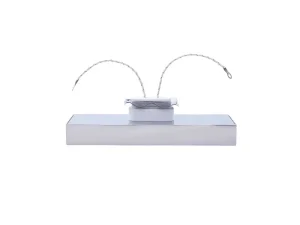
Best Infrared Ceramic Heaters for Industrial Systems
View Specifications
Factory Efficient Portable Ceramic Heating Modules
View Specifications
Heavy-Duty Industrial In-Line Pipeline Heater
View Specifications
Precise Temperature Controlled Ceramic Core Heaters
View Specifications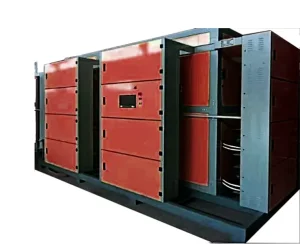
Clean Industrial Electromagnetic Steam Boiler
View Specifications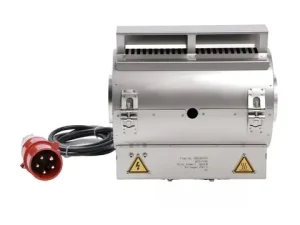
CE Certification Precise Cooling & Heating Zone System
View Specifications
Rugged Industrial Portable Ceramic Heater Assembly
View Specifications
Procurement Engineering FAQ
Frequently Asked Questions by Industrial Importers & Plant Engineers
Key technical criteria, lead times, batch testing standards, and thermal performance differences explained.
What engineering variables are required to quote custom industrial ovens or extruder heating zones?
For custom industrial ovens or barrel heating/cooling zones, we require the operational and continuous operating temperature, target ramp-up time (e.g., ambient to 300°C within 45 minutes), dimensional boundary limits (internal chamber volume or barrel outer diameter and length), electrical specs (voltage, phase, power tolerance), clamping mechanisms, and process environment (such as moisture, corrosive fumes, or volatile plasticizers). If available, 3D CAD models (STEP/DWG) expedite thermal simulation.
How do PVC-O ovens achieve the narrow thermal window required for molecular orientation?
Molecular orientation of polyvinyl chloride (PVC-O) requires precise heating within a narrow viscoelastic temperature boundary (typically 95°C to 115°C depending on formulation). Our continuous PVC-O ovens implement high-volume turbulent air circulation combined with PID zone modulation, minimizing boundary layer stagnation and ensuring the pipe circumference remains balanced within ±0.5°C to prevent wall thinning and eccentric failures during hydrostatic expansion.
Mica vs. Ceramic vs. Cast Aluminum/Copper: Which heating element technology suits our lines?
Mica Band Heaters: Economical, low profile, and rapid in response, best suited for injection molding nozzles and small diameter barrels up to 300°C.
Ceramic Band Heaters: Encased in steatite ceramic blocks with built-in insulation, tolerating up to 650°C and delivering lower heat loss to the shop floor.
Cast Aluminum / Copper: Tubular elements cast solid into metal alloys. Aluminum operates reliably up to 350°C; copper up to 650°C. These offer maximum mechanical shock resistance, completely uniform heat conduction, and can incorporate internal liquid or airflow cooling tubes for tight exothermic reaction control.
What quality verification and electrical testing occur before international dispatch?
Every single heating component and thermal system undergoes a 100% dielectric strength (Hi-Pot) test at 1500V or 2000V for 1 minute, cold and hot insulation resistance tests exceeding 100MΩ (500V DC Megger), resistance tolerance verification within ±5%, and dimensional tolerance checks against approved drawings. Pressure-bearing equipment (such as pipeline heaters and induction steam boilers) undergoes hydrostatic pressure testing up to 1.5x design pressure.
How does Kangpu Heater enforce its 5-year warranty for overseas industrial clients?
Each unit is laser-engraved or stamped with a unique traceability code tied to the production shift, raw material batch (foundry heat number and resistance alloy reel), and QC sign-off. If a component exhibits anomalous degradation within 5 years under normal operating conditions, our technical team conducts a root-cause forensic analysis via high-resolution imagery/video and immediately dispatches air-freighted replacements while adjusting future formulations.