
Featured Precision Heating & Thermal Processing Units
Export-grade heating systems engineered under certified ISO9001 and CE frameworks. Designed for seamless mechanical retrofit and high-reliability continuous operations across global facilities.
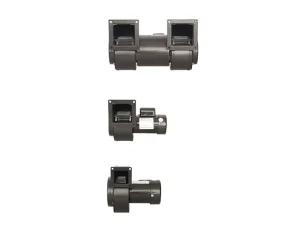
CE Certification Fan Manufacturer, Factory
View Product Detail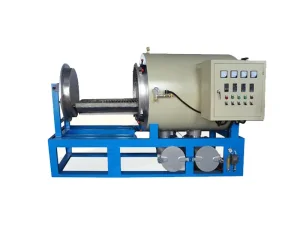
High-Quality Cleaning furnace Manufacturer, Exporter
View Product Detail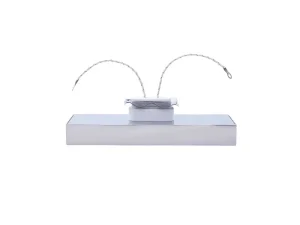
Best Infrared Ceramic Heaters for Efficient Heating
View Product Detail
High-Quality Portable Ceramic Heaters for Industry
View Product Detail
Portable Ceramic Heaters - High-Yield Industrial Efficiency
View Product Detail
CE Certification Thermal Industrial Ovens
View Product Detail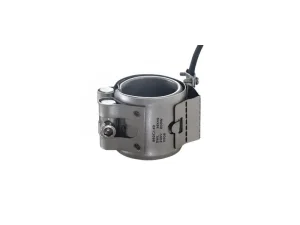
China Safe and Durable Mica Industrial Heaters
View Product Detail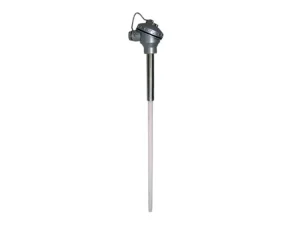
High-Precision Industrial Thermocouples
View Product DetailThe Engineering Evolution of Self-Contained Immersion Heaters
In modern thermodynamics, self-contained immersion heaters represent a quantum leap from decoupled element-and-panel configurations. By consolidating electric heating elements, high-dielectric insulation, thermostatic process regulation, and liquid-tight enclosures into a unified assembly, these systems eliminate boundary thermal resistances, reduce field wiring vulnerabilities, and optimize operational heat flux.
Microsecond Thermal Response
Integrated solid-state control architecture monitors sheath surface temps directly via internal capillary bulb or Pt100 RTD sensors, preempting coking, scaling, and fluid thermal breakdown under fluctuating flow regimes.
Hermetic Isolation (IP66/IP68)
Terminal enclosures feature precision O-ring compression seals, ceramic terminal barriers, and moisture-resistant vulcanized silicon backfills, safeguarding operations across corrosive chemical baths and outdoor washdowns.
Zero-Footprint Integration
Eliminating auxiliary external switchgear panels, self-contained immersion units screw or bolt directly into tank nozzles, pressure vessels, and circulating loops via standard NPT, BSP, or ANSI/DIN flanges.
Strategic Manufacturing Advantages of Chinese Exporters
Chinese high-tech thermal equipment manufacturers have evolved beyond cost arbitrage. Through dense supply chain clusters, complete metallurgy-to-assembly integration, and sophisticated automated production lines, Chinese factories provide unprecedented technical precision and supply chain resilience.
Upstream Metallurgy Control
Direct domestic sourcing of ultra-pure austenitic alloys (SUS304, SUS316L, SUS321), Incoloy (800/840), and pure Titanium tubes ensures consistent grain uniformity and zero raw material supply bottlenecks.
Fully Automated Compaction
CNC multi-axis coil winding and ultra-high-density MgO rolling machines compact internal dielectric powder to >3.0 g/cm³, achieving thermal conductivity values exceeding 38 W/m·K inside the tube core.
Traceable Quality Gateways
Every immersion unit undergoes non-destructive X-ray examination for concentricity, automated helium-mass spectrometer leak detection, and 2500V dielectric breakdown qualification before factory sign-off.
Rapid Prototype-to-Mass Cycle
Internal tool shops and rapid sample centers reduce design-to-sample lead times to 7–10 days, allowing international plant operators to validate custom geometries before scaling high-volume production orders.
Engineered Immersion Systems Across Global Heavy Industries
Immersion heating dynamics vary dramatically across process media. From non-viscous aqueous cleaning baths to sensitive thermal fluid loops and aggressive petrochemical derivatives, thermal watt-density selection dictates unit lifespan and operating safety.
| Target Media | Recommended Sheath Alloy | Max Watt Density (W/cm²) | Operational Temperature | Target Industrial Sector |
|---|---|---|---|---|
| Clean Industrial Water / Deionized Water | Incoloy 800 / SUS316L Passivated | 8.0 – 12.0 | Up to 100°C | Electronics, Food Processing, Sterilization |
| Light Mineral Oils / Heat Transfer Fluids | Carbon Steel / Seamless SUS321 | 2.5 – 3.8 | Up to 300°C | Plastics Injection, Hydraulic Systems, Asphalt |
| Heavy Bunker Fuel Oil / Crude Bitumen | Seamless Heavy-Wall Steel / 304 | 1.0 – 1.8 | Up to 160°C | Marine Terminals, Power Plants, Storage Depots |
| Caustic Soda / Corrosive Plating Solutions | Pure Titanium Gr.2 / PTFE Sleeve | 3.0 – 5.0 | Up to 120°C | Electroplating, Chemical Pickling, Anodizing |
| Bio-Pharmaceutical Solutions & CIP Fluids | SUS316L (Ra < 0.4µm Electro-polished) | 5.0 – 7.5 | Up to 140°C | API Synthesis, Breweries, Dairy Processing |
Global Enterprise Sourcing Audit: Key Validation Factors
Purchasing self-contained immersion units requires evaluating mechanical, electrical, and control interfaces. Procuring low-grade alternatives risks catastrophic dry-firing, insulation shorting, and fluid degradation.
1. Watt Density Matching
High watt-density applied to thermal oil generates carbon cracking and layer deposition over elements, triggering localized runaway sheath overheating. Chinese engineering exporters verify chemical viscosity charts prior to element sizing.
2. Cold Zone Dimensional Integrity
Unheated length (cold section) must extend completely past the mounting collar or vessel nozzle neck. Elements situated within stagnant neck geometry cause stagnant overheating and localized gland thermal failure.
3. Fail-Safe Dual Cutouts
Self-contained units must integrate independent primary process thermostats (e.g., 30–110°C adjustable) paired with a manual-reset high-limit snap-action switch to satisfy international CE, UL, and ATEX fire standards.
Specialized Thermal Solutions, Pipeline Elements & High-Yield Heaters
Explore our complete export line, spanning high-temperature duct heaters, explosion-proof vessels, energy-saving nano-infrared wraps, and flexible heating architectures manufactured to precise mechanical tolerances.

Best Pipeline Circulation Process Heaters
View Product Detail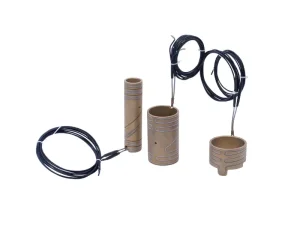
Hot-Runner Spring & Coil Heaters
View Product Detail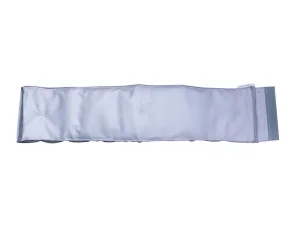
Durable Custom Heat Insulation Covers
View Product Detail
CE Certification Nano Infrared Band Heaters
View Product Detail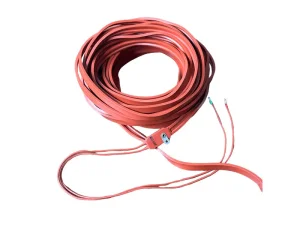
Flexible Surface Heaters for Custom Profiles
View Product Detail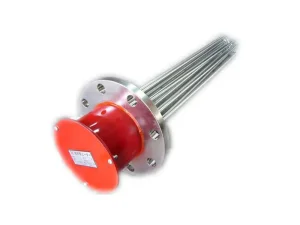
Explosion-Proof Hazardous Location Electric Heaters
View Product Detail
Portable Ceramic Heaters with Thermal Regulation
View Product Detail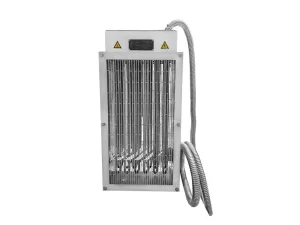
CE Efficient Air Duct Process Heaters for HVAC
View Product DetailEngineering Questions & Technical Consultation
Comprehensive technical responses directly from our electro-thermal R&D engineering division regarding manufacturing parameters, installation tolerances, and long-term durability maintenance.
What distinguishes a "Self-Contained" immersion heater from standard screw-plug elements?
Standard screw-plug elements consist solely of the sheath, terminal pins, and mounting thread, necessitating external contactors, external thermostat housing, and secondary sensory drilling. A self-contained unit integrates the sensing bulb, dial or digital thermostat, high-limit fail-safe sensor, terminal wiring blocks, and electrical conduit enclosure directly onto the mounting hub, resulting in a turnkey drop-in module requiring only primary power wiring.
How does sheath watt-density impact thermal fluid longevity?
Thermal oils experience irreversible hydrocarbon chain cracking when exposed to localized sheath temperatures above their specific bulk boiling points. If the watt density is too high (exceeding 3.0–3.5 W/cm² for circulating oil, or 1.5 W/cm² for stagnant oil), a boundary carbon layer precipitates onto the sheath. This carbon layer acts as thermal insulation, forcing core temperatures higher until the heating element burns out.
What testing procedures are mandatory for CE and export compliance?
Our facility conducts a multi-phase test sequence: 1) Cold insulation resistance (>100MΩ at 1000V DC), 2) Dielectric withstand testing (2000V–2500V AC for 60 seconds without arcing), 3) Hydrostatic pressure testing of brazed or TIG welded joints up to 1.5× operational vessel pressure rating, and 4) Helium mass spectrometry for hermetic micro-fracture detection across critical joints.
Can Chinese manufacturers configure units to North American and EU voltage standards?
Yes. Production runs accommodate standard worldwide voltages including 110V/120V single-phase, 220V/230V/240V single-phase, and 380V, 415V, 480V, and 600V three-phase delta or wye wiring architectures. Terminations incorporate standard metric, NPT, or imperial threaded connection conduits according to destination electrical codes.
How are sheath materials matched to aggressive chemical immersion applications?
Material matching depends strictly on chemistry and operating temperatures: Incoloy 800/840 performs exceptionally well in high-temperature oxidation and water heating; SUS316L is selected for organic acids and food processing; pure Titanium Grade 2 is selected for chlorine compounds, saline environments, and electroplating baths; and fluoropolymer (PTFE/PFA) sleeved elements are mandatory for concentrated nitric, hydrofluoric, and sulfuric acids.
What is the typical sampling, mold opening, and production lead timeline?
Initial technical drawings and 3D CAD modeling are completed within 24–48 hours. Custom tooling or flange mold-making requires 5–7 working days, followed by sample verification within 3–5 days. Once the engineering sample is customer-validated, bulk container-load manufacturing typically completes within 15 to 25 business days depending on order volume.