Featured Thermal Systems & Industrial Electric Heating Equipment
Precision-machined, high-watt-density industrial heating assemblies customized for heavy process industries, plastics extrusion, chemical processing, and closed-loop thermal oil loops.








Global Landscape of Thermal Fluid Heaters: The Shift to Electric & Indirect Heating
Thermal fluid heating systems—widely known as hot oil heaters or thermal oil boilers—are the lifeblood of high-temperature modern manufacturing. In processes requiring temperatures between 150°C and 350°C, thermal fluid loops have systematically replaced traditional high-pressure steam boilers across chemical synthesis, polymer extrusion, composite forming, and pharmaceutical refining.
Low-Pressure, High-Temperature Thermodynamics
Unlike steam boilers that demand extreme mechanical pressures exceeding 100 bar to sustain 300°C, thermal fluid heaters operate virtually pressure-free in a closed-loop configuration (typically under 10 bar or atmospheric head). This eliminates boiler room explosion risks, bypasses restrictive local pressure vessel operating licenses, and eliminates scaling, rust, and water chemistry maintenance.
Decarbonization & Electric Heat Transfer
With international net-zero mandates, corporate Scope 1 emission taxes, and volatile gas pricing, global engineering teams are rapidly adopting electric thermal fluid heaters and electromagnetic induction heaters. Converting electrical energy directly into thermal fluid loops achieves 98%+ thermodynamic efficiency without point-of-use flue gas loss, chimneys, or NOx/SOx emissions.
Isothermal Uniformity Across Process Boundaries
Process consistency requires precise delta-T management. Liquid-phase thermal fluids deliver uniform surface heat transfer across large-format calenders, multi-zone plastic extrusion barrels, chemical jacketed reactors, and PVC-O molecular orientation ovens. This temperature control window (±1°C) eliminates hot spots, polymer degradation, and uneven product curing.
| Evaluation Parameter | Electric Thermal Fluid Systems | High-Pressure Steam Systems | Direct Gas-Fired Furnaces |
|---|---|---|---|
| Operating Pressure at 300°C | Atmospheric to 3-6 bar (Pump Head) | 85.9 bar (Extremely Hazardous) | Atmospheric |
| Net Thermal Efficiency | 96% - 99.5% (Direct Immersion / Induction) | 60% - 78% (Blowdown & Condensate Losses) | 72% - 82% (Exhaust Stack Heat Loss) |
| Corrosion & Scale Formation | Zero (Non-corrosive heat transfer fluids) | High (Requires ongoing water treatment) | Localized oxidation on heat exchanger tubes |
| Precision Temperature Control | PID SCR Multi-zone Modulating (±0.5°C) | Modulating pressure valve (±5°C to ±10°C) | Flame modulation lag (±5°C to ±12°C) |
| Preventive Maintenance Scope | Fluid sampling & electrical contactor checks | Deaerator, water softener, trap maintenance | Burner overhaul, refractory repair, flue cleaning |
Why Tier-1 Global Procurement Directs Capital to Chinese Heating Factories
China's industrial thermal manufacturing hub—anchored in industrial heartlands like Yancheng, Jiangsu—has matured from discrete component supply into complete system integration. Driven by continuous R&D, vertical supply chain clustering, and heavy capital investments in robotic CNC machining, casting, and vacuum furnace brazing, Chinese manufacturers deliver structural cost and timeline benefits.
Vertical Supply Chain Co-location
Within a 30-kilometer manufacturing radius in Jiangsu, our facilities source aerospace-grade Nichrome 80/20 resistance alloy wire, electrical-grade high-purity magnesium oxide (MgO) powder, 304/316/321 stainless tube extrusions, and heavy copper casting foundries. This density eliminates international logistics delays for sub-components.
Rapid Real-Mold Prototyping
Rather than relying on generic soft-tool prototypes that fail under prolonged thermal expansion cycles, our engineering framework deploys real-mold tooling within 7–10 working days. Every prototype band heater, cast-in cooling unit, or skid-mounted thermal circulation manifold undergoes finite element thermal analysis (FEA) before casting.
Traceable QA & 5-Year Warranty
While Western suppliers frequently cap thermal component warranties at 12 months, advanced Chinese factories like Yancheng Laier Heating Technology provide 5-year after-sales warranties backed by complete laser-etched batch QR-code tracking, helium mass spectrometer leak detection, and high-voltage dielectric isolation testing.
TCO Competitiveness
Industrial end-users achieve 35% to 55% reductions in Total Cost of Ownership (TCO). This financial gain is driven by reduced assembly labor overhead, economies of scale on raw alloy procurements, and streamlined direct-from-factory air/sea dispatch without multi-tier broker markups.
Demanding Industrial Environments Powered by Thermal Fluid Heaters
Thermal fluid circulation skids and matched electric elements serve operations where standard direct-contact heating either creates localized scorching or fails to dissipate process-induced exothermic heat. Below are key industrial installations engineered by Kangpu Heater (Yancheng Laier Heating Technology).
1. Plastics Extrusion & PVC-O Orientation
Continuous extrusion barrels processing engineering polymers (PEEK, PTFE, PVC-O, Polyamide) demand synchronized zone heating and liquid cooling channels. Thermal fluid circulation inside cast aluminum or bronze jackets extracts excess frictional shear heat while holding melt temperature stability within 0.75°C across 48-hour continuous runs.
2. Chemical Synthesis & Jacketed Reactors
Fine chemical synthesis and polymerization vessels rely on electric thermal oil skids to ramp reactants through multi-stage endothermic curves up to 320°C. Indirect thermal oil circulation eliminates open flames from explosion-hazard ATEX/IECEx Zone 1/2 environments while preventing hot-spot charring on reactor walls.
3. Calenders, Laminators & Non-Wovens
Roll heating in textile coating, paper finishing, and rubber sheet calendering requires balanced internal thermal fluid fluid-dynamics. Rotary joint fluid injection delivers uniform roll surface heating edge-to-edge, preventing thermal crowning and uneven gauge thickness in finished membranes.
4. Food, Edible Oils & Sanitary Processing
In deodorization of edible oils, industrial frying lines, and spray drying, electric thermal fluid systems isolate food products from combustion exhaust. Food-grade synthetic thermal oils circulate through sanitary stainless heat exchangers, complying with FDA and USDA safety regulations.
5. Asphalt Storage & Roofing Membranes
Bitumen and modified asphalt terminals require sustained temperatures of 160°C–190°C to maintain pumping viscosity. Thermal oil heating bundles immersed in bulk storage tanks deliver low watt-density heating (under 1.5 W/cm²), preventing fluid cracking and carbon build-up on tube surfaces.
6. Composite Autoclaves & Aerospace Tooling
Carbon-fiber prepreg consolidation and aerospace component curing require multi-ramp thermal profiling. Thermal fluid-jacketed press platens deliver balanced heat across 6-meter press beds, preventing resin starvation and laminate void formation.
Next-Generation Engineering Trends in Industrial Thermal Fluid Generation
Thermal fluid technology is advancing through the convergence of solid-state power electronics, smart industrial telemetry, and low-viscosity synthetic heat transfer fluids. Leading Chinese manufacturers are driving this transformation through high-efficiency designs.
Electromagnetic Induction Direct-Fluid Heating
Rather than transferring heat through resistive element sheaths into thermal oil via conduction, high-frequency electromagnetic induction energizes the pipe walls directly. This reduces the core-to-surface thermal gradient, eliminates element sheath burnout, and lowers internal oil degradation during start-up.
Integrated IoT & Predictive Film Temperature Modeling
Smart control cabinets now feature multi-channel RTD arrays linked via Modbus TCP/IP or PROFINET to plant SCADA systems. Advanced algorithms calculate real-time fluid film temperatures at the heater sheath, adjusting SCR thyristor firing to prevent the thermal fluid from exceeding its bulk degradation threshold.
Hybrid Thermal Storage & Peak Shaving
Modern continuous processing plants combine electric thermal oil skids with high-capacity molten-salt or phase-change thermal storage buffers. By charging thermal reserves during off-peak power tariffs and discharging during peak billing windows, facilities reduce operating costs while maintaining continuous plant heating.
Global Enterprise Sourcing Criteria: Evaluating a Chinese Thermal Heater Factory
Procuring industrial thermal equipment overseas requires strict engineering due diligence. Plant managers and EPC contractors must evaluate suppliers across safety, manufacturing standards, and metallurgical controls:
Pressure Vessel Certifications
Verify that pressure boundaries, manifolds, and expansion vessels comply with ASME Boiler and Pressure Vessel Code (BPVC Section I or VIII) and the European Pressure Equipment Directive (PED 2014/68/EU), supported by authorized third-party inspection (TUV, SGS, Lloyd's).
Watt-Density Engineering
Examine the supplier's sheath watt-density design calculations. High watt-densities (e.g., >4.0 W/cm²) cause thermal oil cracking and premature element burnout. Demanding applications require conservative densities between 1.2 and 2.5 W/cm² based on Reynolds numbers and fluid velocities.
Electrical Insulation & Creepage
Confirm terminal housing explosion-proof classifications (ATEX Ex d IIB/IIC T1-T6, IECEx, or UL 1203). High-temperature ceramics, stand-off terminal enclosures, and moisture-resistant silicon seals prevent dielectric breakdown caused by ambient humidity.
End-of-Line Quality Testing
Demand non-destructive testing reports: radiographic weld inspections (X-ray NDT), hydrostatic pressure tests at 1.5x design pressure, insulation resistance tests (>100 MΩ at 1000V DC), and full functional PID SCR staging tests under simulated loads prior to crate dispatch.
Frequently Asked Questions: Industrial Heating & Thermal Fluid Systems
Expert answers on system selection, custom fabrication, maintenance lifecycles, and export standards from Kangpu Heater's engineering team.
Complete Thermal Process Assemblies & Ancillary Components
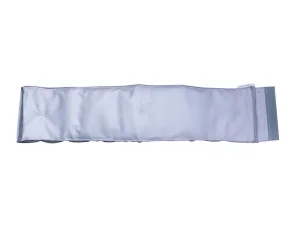
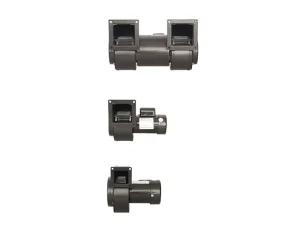
Explore our specialized heating elements, high-temperature thermocouples, precision cooling manifolds, and thermal insulation jackets engineered for modern plants.