
Integrated Thermal Systems & Core Heating Elements (Phase I)
Engineered thermal management hardware directly integrated with precision thermistor feedback and fail-safe thermostat cutoffs for plastics extrusion, chemical processing, and industrial manufacturing lines.

CE Certification Precise Cooling and Heating System Manufacturers, Exporters
Explore Specification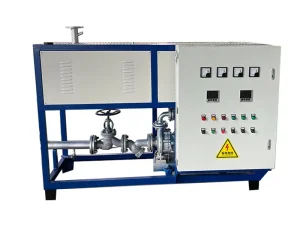
High-Quality Heat-conducting oil furnace Manufacturer, Exporter
Explore Specification
High-Quality Portable Ceramic Heaters for Industry - Efficient Heating Solutions from China Suppliers and Factory Exporter, Exporters
Explore Specification
Best Durable Heat Insulation Covers Manufacturer, Exporters
Explore Specification
China Safe and Durable Mica Heaters Factory, Factories
Explore Specification
China High density heating element Manufacturers, Factories
Explore Specification
China Portable Ceramic Heaters from China Suppliers: Efficient Heating Solutions for Factories and Industries Manufacturer, Exporters
Explore Specification
Best Pipeline Heater Manufacturers, Factory
Explore SpecificationExecutive Whitepaper: Industrial Temperature Sensing vs. Closed-Loop Regulation
In modern thermodynamic process engineering, the selection between a Thermistor (Negative or Positive Temperature Coefficient passive semiconductor sensor) and a Thermostat (mechanical or digital electromechanical autonomous switching controller) determines equipment efficiency, thermal inertia damping, and line longevity.
Thermistors: Continuous Parametric Output
Thermistors (typically ceramic metal-oxide semiconductors such as manganese, nickel, and cobalt oxides) exhibit dramatic changes in electrical resistance proportional to temperature variations. Negative Temperature Coefficient (NTC) devices reduce internal resistance logarithmically as temperature climbs, providing analog or digital microcontrollers with granular, millivolt-level telemetry.
They do not break or switch power lines directly. Instead, they operate as the critical neural input for sophisticated programmable logic controllers (PLCs), hot runner PID modules, and digital process regulators.
Measurement & Telemetry LayerThermostats: Autonomous Circuit Breakers
Thermostats are self-contained, mechanical, hydraulic, or electronic switches designed to autonomously make or break an electrical connection at a designated threshold temperature. Utilising differential thermal expansion between dissimilar metals (bimetallic snap-action discs) or liquid-expansion capillary tubes, they physically interrupt current flow to industrial band, cast, or duct heaters.
They are vital for over-temperature limit safety, anti-scald protection, fire mitigation, and standalone temperature maintenance where external software control is unfeasible.
Direct Actuation & Interruption LayerSystemic Synergy in Plant Architectures
World-class industrial heating systems do not treat thermistors and thermostats as mutually exclusive technologies. Rather, high-reliability machinery combines high-precision NTC or RTD thermistors for constant PID modulation alongside secondary electromechanical bimetal thermostats operating as hardware-level thermal cutoffs (TCO).
This layered redundancy ensures process consistency while guaranteeing explosion-proof and fail-safe certification under rigorous international safety directives (CE, UL, IECEx).
Redundant Safety & PID IntegrationEngineering Comparison: Thermistor vs. Thermostat Systems
A multi-vector engineering breakdown comparing resistance-temperature detectors, NTC/PTC semiconductors, and electromechanical bimetallic/capillary thermostats for industrial procurement teams.
| Performance Dimension | Industrial Thermistor (NTC / PTC) | Bimetallic Snap-Disc Thermostat | Capillary / Fluid Expansion Thermostat | Digital Electronic Thermostat Module |
|---|---|---|---|---|
| Operating Principle | Ceramic semiconductor material changing bulk resistance via electron excitation. | Differential thermal expansion of laminated dual-metal strip causing rapid snap deflection. | Liquid/gas volumetric expansion transmitting pressure down capillary to bellows switch. | Microprocessor calculating sensor input to drive solid-state relays (SSR) or electromechanical contacts. |
| Measurement Accuracy | ±0.05°C to ±0.5°C (exceptionally high repeatability). | ±3.0°C to ±7.0°C (subject to mechanical tolerance). | ±1.5°C to ±4.0°C. | ±0.1°C to ±1.0°C (governed by probe linearity). |
| Direct Switching Capacity | Zero direct switching power (signal current ≤ 1mA to avoid self-heating). | High: direct interruption up to 16A–25A at 250VAC. | High: direct switching up to 16A–30A at 400VAC. | Governed by onboard output relay (typically 10A–30A contact rating). |
| Thermal Hysteresis (Deadband) | Negligible / continuous analog drift (< 0.02°C). | Significant: 10°C to 25°C differential between trip and reset points. | Moderate: 3°C to 12°C differential. | Programmable deadband from 0.1°C to 20.0°C via firmware parameter. |
| Thermal Response Constant (τ) | Rapid: 0.1 to 2.5 seconds (miniature probe immersion). | Moderate to slow: 15 to 45 seconds due to housing thermal mass. | Moderate: 10 to 30 seconds depending on bulb immersion length. | Instantaneous processor calculation; probe-dependent physical response. |
| Typical Process Applications | Extrusion die zones, hot runner manifolds, medical heaters, Li-ion battery packs. | Electric duct heaters, water boilers, motor winding safety, domestic appliances. | Thermal oil furnaces, industrial ovens, large fluid heat exchangers, commercial fryers. | Climate control rooms, precise heating/cooling extruder barrels, lab incubators. |
| Failure Mode Profile | Resistance drift, open-circuit, short-circuit (detected immediately by PLC). | Contact welding under inductive arcing, fatigue of bimetal disc over cycles. | Capillary puncture causing total loss of hydraulic charge and system shutoff. | Relay contact erosion, internal PCB power supply component degradation. |
China Factory Efficiency, Supply Clusters & Export Scale
How China's integrated industrial supply chain in Jiangsu, Zhejiang, and Guangdong has transformed precision temperature instrumentation from artisanal assembly into automated, highly reliable, and cost-competitive thermal systems.
Yancheng Thermal Cluster Synergy
Operating since 1986, our primary manufacturing facilities in Yancheng, Jiangsu benefit from a hyper-dense industrial base specializing in nickel-chromium resistance wire drawing, high-purity fused magnesium oxide (MgO) processing, and specialized stainless steel / Incoloy alloy tubing.
This concentrated ecosystem slashes raw material replenishment cycles from months to hours, enabling accelerated production of complex cast-in heaters, band heaters, and integrated thermal oil boilers.
Hyper-Localized Supply ChainAutomated Sintering & Calibration
China's premier thermistor factories incorporate automated atmospheric sintering furnaces, continuous laser trimming, and computer-controlled liquid bath sorting stations.
By controlling ceramic grain boundaries under cleanroom environments, factory yield rates for NTC thermistors with B-value tolerances under ±0.5% have risen exponentially, offering Tier-1 global instrument builders access to precision devices without European or Japanese boutique pricing premiums.
Automated Precision ManufacturingAgile Tooling & Real-Mold Prototyping
Western manufacturers often require 12 to 16 weeks to tool custom heating bands or mechanical thermostat brackets. Chinese industrial facilities utilize in-house CNC wire EDM, high-speed stamping, and aluminum casting tooling to transition from 3D CAD models to real-mold samples in 7 to 10 working days.
This agility cuts project lead times in half for global machine builders executing seasonal plant retrofits and rapid tooling updates.
7-Stage Sampling MethodologyLocalized Heavy-Industry Application Engineering
Bridging theoretical electronics with heavy machinery. Examine how thermistor feedback architectures and thermostat cutoffs perform inside high-stress factory environments.
Plastic Extruder Barrels
Polymer melt consistency demands tight thermal boundaries. Extruders utilize deep-well NTC thermistor probes or mineral-insulated thermocouples nestled directly beside the barrel liner, communicating with multi-loop PID controllers.
Simultaneously, mechanical snap-disc thermostats are integrated directly onto cast aluminum and ceramic band heaters as physical over-temperature failsafes to avert catastrophic resin thermal degradation during runaways.
Extrusion & InjectionIndustrial HVAC Duct Heaters
High-volume airflow heating units present severe fire hazards if blower air circulation stalls. Our duct heating assemblies incorporate continuous NTC airflow temperature profiling to dynamically step electric bank stages.
In series with the power contactor, a dual manual-and-automatic reset bimetal thermostat monitors outer sheathing temperatures, immediately isolating power if temperatures surpass 115°C due to static pressure loss.
HVAC & Air ProcessingThermal Oil Furnaces
Heat-conducting oil furnaces circulate flammable synthetic or mineral thermal fluids up to 350°C. System architecture utilizes high-temperature precision glass-encapsulated thermistors for precise expansion tank telemetry.
Liquid capillary safety thermostats are immersed directly into the heater bundle manifolds to execute immediate emergency circuit interlocks if fluid stagnation causes surface heat flux to exceed critical safety thresholds.
Thermal Fluid SystemsPVC-O Orientation Ovens
Biaxially oriented PVC-O pipe manufacturing relies on exceptionally uniform thermal conditioning across pipe circumference prior to hydro-expansion.
Multi-point NTC arrays continuously track radial temperature consistency within ±0.5°C, while redundant capillary mechanical cutoffs prevent ambient heating elements from blistering sensitive PVC molecular formations.
Pipe & Profile ProcessingEmerging Technology Trends: The Shift to Smart Thermal Management
The industrial thermal regulation landscape is undergoing a systemic paradigm shift driven by Industry 4.0 automation, electrification, and intelligent telemetry.
Thin-Film & Printed Ceramic NTCs
Traditional bulky bead thermistors are yielding to ultra-thin, flexible polyimide-encapsulated ceramic thin-film sensors. These low-profile devices can be laminated directly between the heater sheath and barrel insulation.
This zero-clearance integration eradicates thermal contact resistance, decreasing sensing lag from seconds to sub-100 milliseconds and completely eliminating thermal overshoot during cold starts.
Ultra-Low Thermal InertiaEdge-Computing Solid-State Thermostats
Mechanical thermostats are increasingly supplemented by edge-microcontroller solid-state switches equipped with IO-Link, Modbus RTU, and MQTT protocols.
Instead of dumb bi-metal on/off cycling, modern thermostats continuously compute heater element degradation, line voltage fluctuations, and thermal degradation curves, predicting heater burnout up to 300 operating hours prior to failure.
Predictive Maintenance AlgorithmsNano-Infrared & Induction Decarbonization
Global manufacturing mandates to achieve net-zero carbon footprints are driving machine builders to phase out inefficient bare-wire heating elements.
Next-generation nano-infrared band heaters and electromagnetic steam boilers utilize targeted radiation frequencies that transfer thermal energy directly to process targets, yielding 30% to 45% measurable energy reductions when paired with precision closed-loop control.
Decarbonized Thermal EfficiencyGlobal Procurement Checklist: Auditing Chinese Exporters
How international original equipment manufacturers (OEMs) and process plant directors can mitigate quality risk, ensure compliance, and verify factory technical claims.
Raw Material Purity Verification
Verify that your Chinese heater factory utilizes traceable NiCr 80/20 resistance alloy wire and high-temperature electrical-grade MgO compacted to ≥ 3.0 g/cm³ density to guarantee dielectric strength under thermal peak stresses.
Temperature Calibration Standards
Ensure thermistor export batches undergo minimum 5-point liquid calibration testing traceable to NIST / CNAS standards, with B-value beta curves documented in factory inspection certificates across the complete operating spectrum.
Electromechanical Endurance Rigor
For thermostats, demand certified endurance test data under full rated inductive load. Premium bimetal snap discs must demonstrate a minimum of 100,000 continuous switching operations without contact pitting or hysteresis drift.
Batch Traceability & 5-Year Terms
Verify that every heating element and control sensor carries laser-etched serial numbering linked to raw material heat numbers and QC records, backed by extended 5-year warranty protection against thermal fatigue failure.
Engineering FAQ: High-Intent Technical Clarifications
Practical engineering answers addressing sensor integration, thermostat wiring, safety certification, and customization parameters.
Can an NTC thermistor replace a thermostat directly in a heater circuit?
No. An NTC thermistor is purely a passive resistance sensor with an operating signal current of ≤ 1mA to prevent self-heating errors. Passing heater operating currents (such as 10A to 30A) through a thermistor will instantly vaporize the semiconductor bead. An external controller (such as a PID regulator or PLC) must interpret the thermistor's resistance signal and switch power using a solid-state relay (SSR) or magnetic contactor.
Why do high-temp extruders use thermocouples over thermistors?
Standard NTC thermistors operate reliably up to 150°C to 300°C. While specialized glass-encapsulated thermistors reach 400°C, extreme plastic engineering resins (such as PEEK, PEI, or fluoropolymers) process above 380°C to 450°C. In these ranges, mineral-insulated Type J/K thermocouples or Pt100 RTD platinum sensors are preferred due to material stability.
What causes premature failure in mechanical bimetal thermostats?
The two most common failure modes are inductive contact arcing and continuous thermal overshoot. Switching heavy inductive heating elements without RC snubber suppression causes silver-cadmium contacts to pit and eventually weld shut. Secondly, cycling beyond the design spring-rate elasticity fatigues the bimetal disc, causing broad deadband drift.
What is the standard sampling and approval lead time for China OEM heaters?
At our Yancheng facility, custom industrial band, cast aluminum, and duct heater samples follow a 7-stage engineering protocol: industrial design review, 3D parameterization, real-mold sample fabrication, client bench testing, iteration, electrical/dielectric safety verification, and mass ramp. Real-mold samples typically ship within 7 to 10 working days.
How does Kangpu Heater guarantee batch consistency across exports?
We implement automated resistance measurement, high-voltage flash dielectric testing (1500V to 2500V AC), insulation resistance testing (> 50MΩ at 500V DC), and full immersion helium leak detection for pressurized assemblies. Every finished heating element is laser-etched with its individual quality tracking batch code before export clearance.
What international safety certifications accompany your export products?
Our heating elements and complete thermal control skids are manufactured under ISO 9001:2015 quality management systems and conform to European Union CE Low Voltage Directive (LVD 2014/35/EU), Electromagnetic Compatibility Directive (EMC 2014/30/EU), RoHS 2011/65/EU, and ATEX / IECEx guidelines for hazardous atmosphere explosion-proof designs.
Specialized Process Heating & Thermal Machinery (Phase II)
Heavy-duty industrial heaters, explosion-proof units, and specialized ovens engineered for seamless field integration with remote thermistor monitors and electromechanical cutoffs.

CE Certification Efficient Air Duct Heaters for HVAC Manufacturer, Factory
Explore Specification
CE Certification Explosion Proof Electric Heater Exporter, Factory
Explore Specification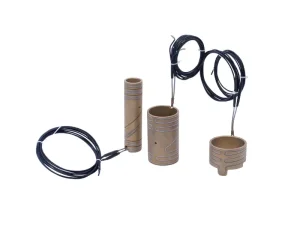
High-Quality (Hot-runner)Spring heater/Coil heater Manufacturers, Factory
Explore Specification
Best Infrared Ceramic Heaters for Efficient Heating Manufacturers, Exporters
Explore Specification
CE Certification PVC-O Ovens for Precision Heating Manufacturer, Manufacturers
Explore Specification
Best Efficient Portable Ceramic Heaters from China Suppliers - Ideal for Industrial Heating in Factories Manufacturers, Exporters
Explore Specification
High-Quality Electromagnetic steam boiler Manufacturers, Factories
Explore Specification