
High-Density Tubular, Ceramic & Clean-Process Heating Systems
Explore our foundational range of heavy-duty industrial electric heating elements, engineered to deliver ultra-precise thermostatic control, maximum dielectric strength, and minimal thermal degradation under round-the-clock continuous production.
-
 China Portable Ceramic Heaters for Industry Manufacturers, ExporterInquire Specifications
-
 High-Quality Cleaning furnace Manufacturer, ExporterInquire Specifications
-
China Efficient Portable Ceramic Heaters for Industry | China Suppliers & Factory Exporters, FactoriesInquire Specifications
-
 CE Certification Nano infrared electric band heater Manufacturer, ManufacturersInquire Specifications
-
China Portable Ceramic Heaters from China Suppliers: Efficient Heating Solutions for Factories and Industries Manufacturer, ExportersInquire Specifications
-
 China High density heating element Manufacturers, FactoriesInquire Specifications
-
 CE Certification Fan Manufacturer, FactoryInquire Specifications
-
 Best Infrared Ceramic Heaters for Efficient Heating Manufacturers, ExportersInquire Specifications
Decoupling Thermal Cost: Strategic Global Sourcing Requirements
In modern industrial facilities, tube heating elements are never mere commodities. When unexpected dielectric failure or sheath stress corrosion shuts down a chemical cracking reactor or an automated polymer extrusion line, unplanned downtime quickly exceeds the heater purchase cost by a factor of 100x. International tier-1 engineering teams evaluate Chinese manufacturing partners across five rigorous criteria:
Continuous thermal R&D manufacturing since 1986 under Yancheng Laier.
Direct industrial export across North America, EU, APAC, and Middle East.
Full batch metallurgical and thermal performance traceability protocol.
99.8% high-purity electro-fused MgO insulation resisting moisture ingress.
Metallurgical Sheath Integrity
Global procurement requires precise sheath metallurgical certification. Operating environments range from mildly corrosive tap water to aggressive chemical hydrocarbons, nitric acid streams, and supercritical fluids. Tube heating elements require certified AISI 304, 316L, 321, Incoloy 800, Incoloy 840, or Grade 2 Titanium.
Each alloy must undergo continuous optical spectrometry and hydrostatic tube bursting tests to prevent stress-corrosion micro-cracks under high watt densities up to 35 W/cm².
Compacted MgO Dielectric Stability
A primary failure mode in generic heating tubes is low-grade Magnesium Oxide (MgO) powder experiencing dielectric breakdown during cold starts or in humid climates. Industrial procurement mandates crystalline, electro-fused, high-temperature MgO compacted to a bulk density exceeding 3.05 g/cm³.
This delivers cold insulation resistance >1000 MΩ and hot dielectric withstand up to 2,000V AC, completely eliminating catastrophic arc flash-overs.
Digital Traceability & Life Expectancy
Modern engineering contracts require complete heat-batch traceability. From coil winding concentricity measured under digital radiography to laser-etched serial numbers logging raw wire melt sources, each industrial element is tied to a computerized QC pedigree.
This structural consistency guarantees repeatable heating kinetics across thousands of replacement cycles, lowering Total Cost of Ownership (TCO) across 5-year operating frameworks.
Deep Process Integration Across Advanced Global Industries
Industrial tube heating elements function as the core thermal drivers across petrochemical refinement, polymer extrusion, battery material synthesis, clean steam power, and industrial HVAC. Kangpu / Yancheng Laier provides bespoke thermodynamic assemblies customized to specialized fluid dynamic conditions:
Polymer & Plastics Processing
Extrusion barrels, blown film dies, and injection nozzles demand uniform circumferential heat distribution without localized cold zones. We integrate tubular elements directly into cast-in aluminum, copper, or bronze bands, pairing them with patented blower jackets to balance aggressive shear heating and precise melt viscosities.
Clean Steam & Fluid Circulation
In high-pressure boilers and thermal oil loops, tubular bundles welded into heavy-duty ASME/ANSI forged flanges provide zero-emission thermal energy. Replacing gas combustion with electromagnetic and high-density flanged immersion tube banks eliminates local NOx emissions and simplifies environmental compliance.
Semiconductor & Cleanroom Gas
Semiconductor wafer fabrication, photolithography venting, and pharmaceutical cleanroom drying demand ultra-clean gas circulation. Electropolished tubular elements with Ra < 0.4 µm surface finish eliminate micro-particle shedding and prevent ionic contamination in ultra-pure inert gas streams.
Renewable Power-to-Heat & ESS
As global grids integrate intermittent solar and wind capacity, industrial facilities utilize megawatt-scale flanged tubular banks to convert surplus power into thermal energy stored in molten salts or pressurized water loops, decoupling factory heating from fossil fuel dependencies.
Thermodynamic Engineering Matrix: Alloy Sheath Selection
A mismatch between sheath chemistry and process media is the root cause of 92% of premature heater failures. Our metallurgy lab formulates tubular heating elements tailored to mechanical stress, operating temperature, and corrosive atmospheric chemistry:
| Sheath Metallurgy | Max Continuous Temp | Typical Watt Density | Optimized Operating Media | Key Mechanical Advantages |
|---|---|---|---|---|
| AISI 304 Stainless Steel | 650°C (1200°F) | 15 – 25 W/cm² | Deionized water, forced air, hydraulic oils | General corrosion resistance; cost-effective for standard OEM machinery. |
| AISI 316L / 321 Stainless | 750°C (1380°F) | 20 – 30 W/cm² | Chemical solutions, mildly acidic baths, food syrup | Molybdenum stabilization inhibits chloride pitting; superior grain stability under cycling. |
| Incoloy 800 (Nickel-Iron-Cr) | 870°C (1600°F) | 25 – 35 W/cm² | High-temperature oxidizing atmospheres, steam cracking | Exceptional resistance to carburization, oxidation, and rupture at extreme temperatures. |
| Incoloy 840 (Low-Carbon Ni-Cr) | 800°C (1470°F) | 20 – 30 W/cm² | Appliance defrost, air duct banks, extrusion barrels | Engineered specifically to counter localized stress cracking in high-humidity zones. |
| Grade 2 Titanium (Commercially Pure) | 450°C (842°F) | 10 – 18 W/cm² | Electroplating tanks, seawater desalination, brine loops | Virtually impervious to wet chlorine, chlorides, and strong inorganic salt solutions. |
Macro Dynamics: Why Global OEMs Consolidate in China's Yancheng Cluster
The global industrial heating element market is undergoing rapid geographic realignment. Historically reliant on localized European or domestic American machine shops, international enterprises now partner with consolidated industrial clusters in Jiangsu, China, benefiting from deep supply chains and unmatched engineering flexibility.
Supply Chain Cluster Synergy
Yancheng is China's premier cluster for electric thermal technology. Within a 30km radius, our factory directly sources precision-drawn seamless tubing, metallurgical resistance wire (Ni80Cr20), electro-melted refractory ceramics, and CNC machined mounting collars.
This geographic concentration shortens raw material lead times by up to 70% compared to fragmented Western supply bases.
Custom Engineering vs. Off-the-Shelf
Generic distributors carry standard catalog lengths that force plant engineers to compromise on terminal pin geometry, cold zone offsets, or watt density matching. Kangpu operates an engineer-to-engineer custom pipeline.
We build precisely to customer blueprints or sample geometry, producing exact 3D models and real-mold prototypes prior to scale manufacture.
Rapid Delivery & Resilience
With fully automated multi-axis CNC bending machines, hydraulic tube-reducing mills, and nitrogen-purged bright annealing furnaces, we scale prototype approval into 10,000-unit monthly production runs within 14 working days, ensuring plant overhauls hit target turnaround deadlines.
Strict Global Quality Protocols: From Drawing to Mass Shipment
Exporting heating elements into heavily regulated European and North American markets requires rigorous compliance with electrical, mechanical, and safety mandates. Every batch manufactured in our facility meets stringent international certifications: CE LVD/EMC, UL 499, RoHS 3, REACH, and ISO 9001:2015.
Stage 1 – 2: Thermal Engineering & Custom Sizing
Our thermodynamics team validates sheath surface temperature, heat transfer coefficient, watt density limits, and cold-pin boundary layers using finite element analysis (FEA) to eliminate internal hot spots.
Stage 3 – 5: Real-Mold Tooling & On-Site Validation
Rather than handmade prototypes that skew production tolerances, we produce production-mold samples. The client installs and operates the element on active equipment to confirm mechanical clearance and ramp-up rate.
Stage 6 – 7: 100% Dielectric Screen & Volume Export
Every single unit undergoes automated Hi-Pot testing (1,800V – 2,500V AC), insulation resistance testing (>1,000MΩ at 500V DC), and helium mass-spectrometer leak checks before nitrogen-sealed export packaging.
Factory Warranty & Traceability Commitment
We back all industrial heating elements with a comprehensive 5-Year Manufacturer Warranty. Because each element carries an individual laser-engraved lot code, our QC database can retrieve the exact coil resistance, compaction density, and operator sign-off within seconds—providing unparalleled accountability for global EPC contractors.
Frequently Asked Engineering & Procurement Questions
Comprehensive answers compiled by our chief thermal engineers to assist plant operators, machine builders, and purchasing directors in making informed heating choices.
What are the key technical differences between ceramic band heaters and tubular heating elements?
How do you prevent dielectric breakdown and moisture absorption during marine shipping?
What watt density calculation formula should be used for heating heavy industrial oils vs. water?
Can Kangpu replace obsolete European or American heating elements from mechanical blueprints?
What international quality certifications do your electric tube heating elements carry?
High-Efficiency Industrial Heating Systems, Boilers & Custom Assemblies
Explore our specialized industrial heat equipment, including cast-in alloy heaters, coil runners, explosion-proof thermal solutions, and zero-emission induction steam boilers designed for harsh production environments.
-
 CE Certification Electromagnetic induction heater Manufacturer, ExporterInquire Specifications
-
 CE Certification Ovens Manufacturer, ExporterInquire Specifications
-
 CE Certification Explosion Proof Electric Heater Exporter, FactoryInquire Specifications
-
Best Efficient Portable Ceramic Heaters from China Suppliers - Ideal for Industrial Heating in Factories Manufacturers, ExportersInquire Specifications
-
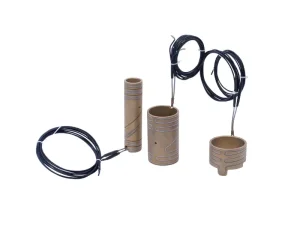 High-Quality (Hot-runner)Spring heater/Coil heater Manufacturers, FactoryInquire Specifications
-
 CE Certification Cast Aluminum/Copper Heater Manufacturer, ExporterInquire Specifications
-
 Best Durable Heat Insulation Covers Manufacturer, ExportersInquire Specifications
-
 High-Quality Electromagnetic steam boiler Manufacturers, FactoriesInquire Specifications
Initiate Your Engineered Heating Element Sizing
Send your machinery blueprints, application specifications, or operating duty-cycle requirements to our thermal engineering group. We provide complete 3D design confirmations, watt density verifications, and real-mold production sampling.