
High-Precision Heating Coils & Integrated Thermal Systems
Field-proven industrial heating components and integrated air-cooling modules engineered for high operational uptime in continuous processing environments.




Engineering Superiority of China's Heating Coil Manufacturing Ecosystem
A rigorous examination of metallurgy supply integration, thermal transfer thermodynamics, and cost-to-performance vectors driving modern production lines.
The global industrial electric heating element industry has experienced a major paradigm shift toward integrated thermal management. Within this capital-intensive manufacturing ecosystem, China has emerged not merely as a high-capacity production hub, but as the benchmark center for thermal design engineering, metallurgic processing, and custom OEM barrel heating systems. Specialized clusters, predominantly centered in Yancheng, Jiangsu Province, house manufacturing infrastructures capable of end-to-end component creation—from the precision drawing of high-grade Nickel-Chromium (Ni80Cr20) and Iron-Chromium-Aluminum (0Cr25Al5 / Kanthal) resistance wires, to advanced CNC automated coil winding, high-purity Magnesium Oxide (MgO) compaction, and automated ceramic slip casting.
Technical Insight: Yancheng Laier Heating Technology Co., Ltd. (Kangpu Heater), established in 1986, exemplifies this specialized industrial cluster. Backed by four decades of continuous R&D and over 100 core proprietary technologies, the facility bridges the gap between raw thermodynamic design and heavy industrial reliability, supplying equipment builders across more than 100 countries.
Complete Material Cluster
Direct geographic access to electrothermal alloy drawing plants, high-temperature steatite/alumina ceramic pressing mills, and certified stainless-steel foundries minimizes raw material procurement lead times to near zero.
Rapid Production Tooling
Unlike regional workshops that rely on soft-tooled prototypes, Chinese tier-1 factories engineer hard-steel production stamping and bending dies within 72 hours, ensuring prototype-to-mass-run dimensional uniformity.
Batch-Traceable QA Protocols
Every industrial heating coil is backed by comprehensive electrical isolation testing: flash dielectric breakdown testing up to 2500V, cold/hot insulation resistance logging, and serialized laser batch markings.
Comprehensive Taxonomy: Types of Industrial Heating Coils
A rigorous comparative analysis of dielectric insulation, maximum surface operating temperatures, watt densities, and mechanical assembly configurations.
Specifying the appropriate heating coil architecture requires balancing operating temperature, heat transfer mechanism (conduction, convection, or radiation), watt density (W/cm²), and mechanical compatibility with the target machine surface. Below is the technical breakdown of the primary heating coil families manufactured in China:
| Heating Coil Type | Dielectric / Core Material | Max Surface Temp | Max Recommended Watt Density | Thermal Transfer Dynamic | Key Industrial Applications |
|---|---|---|---|---|---|
| Ceramic Band Heating Coils | Interlocking Steatite / Alumina Ceramic Blocks | 650°C - 800°C | 6.5 - 8.0 W/cm² | Conduction + Radiative Heat Loss Trapping | Plastic extrusion cylinders, high-temp polymer compounding |
| Mica Band Heating Coils | Phlogopite or Muscovite Natural Mica Plate | 280°C - 350°C | 3.5 - 4.5 W/cm² | Direct Conduction through outer sheath | Injection molding machine nozzles, blow molding barrels |
| Cast-In Aluminum / Copper Coils | Tubular Element Cast in Al-Alloy or Cu-Brass | 400°C (Al) / 650°C (Cu) | 5.0 W/cm² (Al) / 8.5 W/cm² (Cu) | High Thermal Mass Conduction + Liquid Cooling | Heavy-duty twin screw extruders, pelletizing die plates |
| Nano Infrared Band Coils | Aerogel Composite + Infrared Radiant Tube | Up to 600°C | 4.0 - 6.0 W/cm² | Directional Short/Medium Wave Radiant Heat | Factory energy-saving retrofits, low shell-temperature zones |
| Electromagnetic / Induction Coils | High-Frequency Litz Wire with Ferrite Core | Barrel heated to 500°C | 12.0+ W/cm² (Non-contact) | Eddy Current Magnetic Hysteresis Excitation | High-speed pipe lines, electromagnetic steam generators |
| Flexible Silicone / Polyimide Coils | Silicone Rubber / Kapton Polyimide Film | 150°C - 200°C | 0.8 - 1.2 W/cm² | Flexible Conduction on complex geometry | Aerospace, fluid pipeline freeze protection, laboratory tanks |
1. Ceramic Band Heating Coils
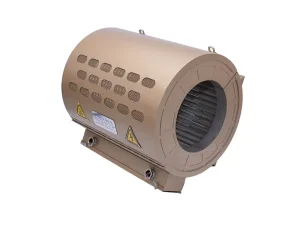
Constructed with a helically coiled Ni80Cr20 alloy wire precisely routed through interlocking high-alumina steatite ceramic bricks. Surrounding the ceramic core is a 1/4-inch ceramic fiber insulation blanket, encased within a corrosion-resistant stainless-steel shroud (SUS304 or SUS316). This configuration reduces ambient shop heat radiation by up to 25% compared to non-insulated heaters and excels in processing technical engineering resins like PEEK, PTFE, and glass-filled Nylon.
2. Mica Band Heating Elements
The workhorse of the global injection molding industry. A precision-wound ribbon of high-resistance alloy is sand-wiched between carefully selected Indian muscovite or phlogopite mica sheets, treated for high dielectric strength under thermal stress, and encased in galvanized or stainless sheet. With rapid thermal response times and an ultra-thin profile, mica coils provide economical, high-precision thermal delivery at nozzle gates.
3. Cast Aluminum and Cast Bronze/Copper Heaters
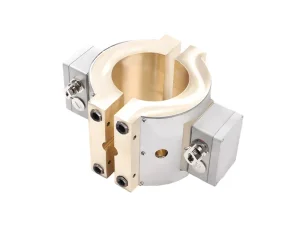
Engineered by positioning heavy-duty Incoloy 800 or 840 tubular heating elements alongside seamless cooling tubes (stainless steel or copper) inside a precision permanent foundry mold. Molten aluminum alloy (LM4 / AlSi9Cu3) or high-conductivity bronze is cast around them. This creates zero thermal boundary resistance, yielding unmatched thermal uniformity (±1.5°C across the perimeter) that stabilizes sensitive extrusion runs.
4. Nano Infrared Electric Heating Bands
Representing modern energy-saving technology, nano-infrared band coils utilize specialized micro-crystalline silicon aerogel insulation outer jackets paired with infrared directional emitter films. By converting electrical power into targeted far-infrared radiation that directly penetrates polymer processing cylinders, surface shell temperatures remain below 50°C, offering measured plant electrical savings of 20% to 35%.
Macro Industry Application Scenarios & Thermal Solutions
Real-world integration of engineered heating coils across polymer manufacturing, pipe orientation, industrial HVAC, and clean steam generation.
Plastics Extrusion Lines
Extruder barrels face continuous mechanical shearing that generates endogenous frictional heat. Modern extrusion zones require our integrated heating/cooling assemblies, which pair ceramic or cast aluminum coils with low-noise centrifugal blowers to counteract thermal runaway and maintain melt viscosity within strict ±1°C windows.
PVC-O Molecular Orientation
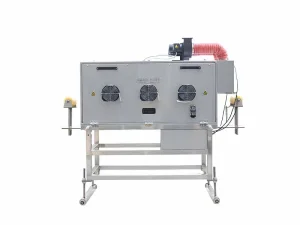
Manufacturing molecularly oriented PVC-O pipes demands extremely uniform heating around the raw hollow preform before mechanical expansion. Kangpu precision PVC-O ovens integrate laminar air-stream duct heaters with non-contact infrared elements, ensuring molecular chain alignment without structural degradation.
Injection Molding Tooling
High-cavity runner blocks and high-speed injection nozzles require tightly packed, high-watt-density mica band coils and brass-sealed nozzle heaters that resist molten resin intrusion and prevent short-circuiting during cycle stalls.
Process Air, HVAC & Drying
For industrial drying ovens, fluid bed dryers, and continuous coating lines, industrial flanged air duct heating coils with SUS321 finned tubular elements provide continuous forced-air temperature elevation up to 450°C with balanced static pressure drop.
Clean Steam Generation
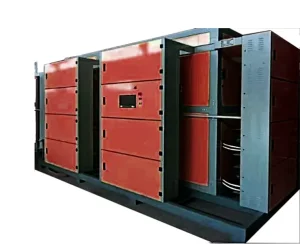
By replacing fossil fuel boilers with electromagnetic induction steam generators, food processing, pharmaceutical, and textile plants achieve emission-free instant steam generation within 60 seconds from cold start, cutting carbon liabilities.
Fluid Circulation & Oil Furnaces
Indirect thermal fluid heating systems deploy heavy-duty immersion heating coil bundles with low watt-density ratings (under 2.2 W/cm²) to eliminate cracking or coking of synthetic thermal fluids inside high-temperature heat exchangers.
Global Enterprise Sourcing Protocols & 7-Stage Customization
How Kangpu Heater eliminates international procurement risks through parametric validation, production mold tooling, and batch-traceable guarantees.
Global original equipment manufacturers (OEMs) and process plant procurement teams operate under zero-tolerance downtime mandates. Procuring heating elements from an overseas factory is an exercise in risk mitigation. A heating coil with a 2mm diameter mismatch or an incorrect watt-density rating can lead to premature sheath oxidation, hot spots, or catastrophic melt stagnation. Kangpu Heater solves this by executing every project through a strict 7-Stage Engineering Workflow:
ID Design & Clearance
Parametric analysis of barrel outer diameter, thermocouple cutouts, wiring box heights, and safety clearances.
Parametric Sizing
Watt density calculation, voltage distribution matching (delta/star), and cold resistance baseline formulation.
Real Production Mold
Production stamping dies and bending jigs are cut immediately, avoiding inaccurate hand-formed prototypes.
Customer Fit Validation
Physical sample delivery to the buyer's line for clamping mechanical fit and barrel contact checks.
Sample Engineering Iteration
Adjustment of terminal orientations, flex leads, or bracket clamping torque based on physical line feedback.
Lab Testing & Signoff
Dielectric withstand testing (2000V/1min), insulation resistance (>100MΩ cold), and thermal imaging signoff.
Batch Mass Production
Serial batch manufacturing under ISO9001 guidelines, reinforced by our industry-exclusive 5-Year Warranty.
Technical Procurement Specification Checklist
- Dielectric Isolation Withstand: Baseline high-pot dielectric test standard of 1800V to 2500V AC for 60 seconds with leakage current threshold < 0.5mA.
- Thermal Sheath Expansion Management: Incorporating spring-loaded clamping bands (barrel band heaters) to absorb thermal radial expansion during high heat-up rates, preventing mechanical air-gap creation.
- Terminal Box Environmental Ingress: Choice between standard galvanized shroud, explosion-proof cast junction boxes (ATEX/IECEx compliant), or moisture-sealed silicone leads.
- Resistance Alloy Tolerances: Strict resistance tolerance within ±5% of nominal values to ensure uniform heating across all independent PID temperature zones.
Engineering FAQ: Heating Coil Design & Sourcing
Detailed engineering explanations answering common procurement, maintenance, and thermodynamic inquiries.
What primary criteria determine whether to choose a Ceramic Band Heater over a Mica Band Heater?
The selection hinges on three core operational variables: continuous process temperature, watt density, and heat conservation. Mica band heaters utilize thin sheet mica insulation with a maximum sheath operating limit of 350°C and a watt density ceiling around 4.0 W/cm². They are cost-efficient, have a low mechanical profile, and deliver rapid heat transfer to small diameters (such as injection nozzle tips). Ceramic band heaters utilize steatite ceramic blocks capable of reaching 700°C–800°C surface temperatures with watt densities up to 8.0 W/cm². Additionally, ceramic bands incorporate a built-in ceramic fiber insulation layer that retains process heat, drastically reducing workshop energy waste on large extruder barrels.
Why do industrial heating coils develop premature hot-spot burnouts, and how does factory design prevent them?
Over 80% of premature coil burnouts stem from improper clamping fit rather than internal electrical failure. When a heater band does not maintain 100% surface contact with the barrel, an air pocket forms. Air has extremely poor thermal conductivity, preventing heat from dissipating out of that zone. The internal resistance wire within that pocket spikes past its critical melting point, leading to thermal runaway and burnout. Kangpu Heater solves this by utilizing laser-cut spring-loaded tension clamps that continuously adjust for cylinder thermal expansion, combined with precision roll-forming dies that ensure circularity down to ±0.2mm.
How does Kangpu Heater back its industrial heating elements with a Five-Year Warranty?
Our five-year warranty is founded on strict metallurgical qualification, complete vertical integration, and serialized batch traceability. We utilize certified Ni80Cr20 resistance wire free from recycled scrap elements, high-purity electrical-grade Magnesium Oxide (99.4% MgO), and surgical-grade annealing practices for tubular elements. Each production batch undergoes comprehensive dielectric high-pot isolation tests, insulation resistance checks, and cold/hot ohm testing. If any coil demonstrates premature failure under recommended operating parameters, the serialized laser code allows us to analyze the exact metallurgical and assembly lot to correct the issue at the source.
Can Kangpu produce custom heating coils according to non-standard OEM machinery drawings?
Yes. Custom OEM and ODM manufacturing represents over 70% of our annual production. Buyers simply supply mechanical drawings (DWG, STEP, PDF) or physical worn-out samples. Our engineering team calculates the required watt density, internal resistance coil distribution, terminal box configurations (axial, radial, European plug, armored cable), and custom thermocouple cutouts (Type J, K, PT100). We manufacture a real-production-mold sample for direct client fit validation prior to mass-run scheduling.
What are the measurable benefits of retrofitting standard extruder bands with Nano Infrared Heating Coils?
Nano infrared electric band heaters replace purely conductive heating with directional infrared radiation coupled with aerogel ceramic insulation. This results in three proven operational benefits: (1) Direct electricity savings between 20% and 35% by eliminating parasitic radiative heat loss; (2) Worker safety enhancement—surface temperatures of the heater outer jacket drop from roughly 180°C to below 50°C; (3) Workshop ambient cooling—the reduction in radiated heat significantly lowers secondary HVAC air-conditioning loads in high-density factory floors.
Precision Cast, Ceramic, and Thermal Process Systems
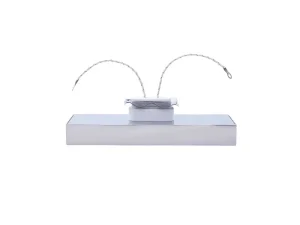
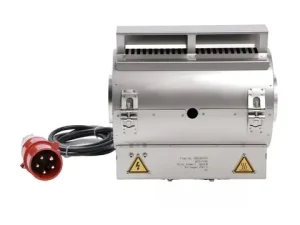
Explore our specialized range of high-mass cast-in heating elements, industrial process ovens, and advanced cleaning equipment.



Next-Generation Heating Coil Technologies & Industry Trends
A strategic overview of industrial decarbonization, direct-barrel induction heating, and digital IoT thermal predictive analytics.
Direct-Barrel Electromagnetic Induction
Electromagnetic induction shifts thermal generation directly into the steel core of the processing barrel through eddy currents, bypassing conductive interface resistance altogether. This technology delivers 95%+ thermal efficiency and rapid warm-up cycles, representing the primary growth vector in modern Chinese heating element manufacture.
IoT-Enabled Predictive Thermal Health
Kangpu Heater is actively integrating embedded miniature RTD sensors and thin-film current-leakage detection strips directly into high-wattage heating coil wraps. Through standard Modbus RS-485 / IO-Link connectivity, smart factory systems can anticipate element degradation weeks before physical burnout, enabling scheduled maintenance.
Decarbonization & Circular Materials
In alignment with global zero-carbon manufacturing requirements, Chinese heating factories are utilizing 100% recyclable austenitic stainless steel jackets, non-hazardous biosoluble ceramic insulation fibers that comply with REACH and RoHS standards, and optimized coil geometries that lower plant energy baselines.
As manufacturing paradigms advance toward Industry 4.0, direct collaboration with veteran engineering factories like Yancheng Laier Heating Technology Co., Ltd. (Kangpu Heater) provides multinational machinery builders with technical certainty. From initial CAD drawing reviews and custom mold creation to fully tested, 5-year warranted thermal systems, Kangpu continues to set the benchmark for high-reliability industrial heating elements worldwide.