
Primary Industrial Thermal & Water Heating Inventory
Precision-manufactured elements configured for process water boilers, pressurized industrial loops, and aggressive aqueous environments.

Best Pipeline Heater Manufacturers, Factory
Product Details
High-Quality Thermocouple Exporter, Factory
Product Details
China Portable Ceramic Heaters from China Suppliers
Product Details
China Portable Ceramic Heaters for Industry Manufacturers
Product Details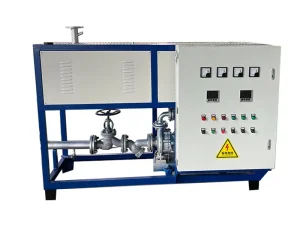
High-Quality Heat-conducting oil furnace Manufacturer
Product Details
Best Durable Heat Insulation Covers Manufacturer
Product Details
Best Efficient Portable Ceramic Heaters Suppliers
Product Details
CE Certification Precise Cooling and Heating System
Product DetailsState of Electric Water Heating: Thermodynamics, Watt Density & Sheath Metallurgy
Evaluating technical design paradigms for industrial immersion heating systems across demanding closed-loop and open-reservoir manufacturing plants.
In modern fluid thermal engineering, the industrial electric heating element for water is undergoing a fundamental transformation driven by decarbonization, high-efficiency requirements, and strict lifecycle cost (LCC) calculations. No longer regarded as simple resistive commodities, advanced water heating elements represent sophisticated thermodynamic components. They are engineered to operate continuously under conditions characterized by scaling, high hydrostatic pressures, and aggressive dissolved chemical compositions.
Watt Density Calibration
Over-specifying watt density (W/cm²) leads to localized boiling film generation, precipitating severe mineral scale accumulation and accelerating sheath failure. Precise boundary-layer profiling maintains steady conductive heat fluxes without premature scaling.
Advanced Sheath Metallurgy
Moving beyond conventional AISI 304 to advanced austenitic matrices like AISI 316L, Incoloy 800/840, and pure Titanium. These materials resist chloride stress-corrosion cracking (SCC) and pinhole pitting caused by micro-galvanic cells.
Dielectric Compaction
High-purity electro-fused Magnesium Oxide (MgO) powder compacted to a density exceeding 3.0 g/cm³. This ensures superior thermal dissipation while maintaining electrical breakdown thresholds exceeding 2,000V AC.
Thermodynamic Stress Profiling & Scaling Kinetics
The failure mechanism in water immersion heating is overwhelmingly driven by the thermal barrier created by calcium carbonate ($CaCO_3$) and magnesium hydroxide ($Mg(OH)_2$) scale. When water is subjected to heat flux at the sheath interface, local equilibrium disruption causes retrograde solubility precipitation. A 1mm scale build-up can increase core resistance wire operating temperatures by up to 300°C due to the poor thermal conductivity of limescale (approximately 0.8–2.5 W/(m·K) compared to copper's ~400 W/(m·K) or stainless steel's ~16 W/(m·K)). This leads directly to internal MgO breakdown and subsequent open-circuit burnout. Kangpu Heater solves this by combining hydrodynamically optimized tube bends with precision-governed lower watt densities tailored to specific regional water hardness indices.
Global Procurement Pain Points vs. Engineering Solutions
Addressing the real operational and supply-chain vulnerabilities faced by industrial EPC contractors, plant managers, and equipment builders worldwide.
| Procurement Vulnerability | Underlying Root Cause | Kangpu Factory Engineering Solution | Operational Impact |
|---|---|---|---|
| Early-Stage Insulation Breakdown | Moisture absorption in MgO during oceanic transit & storage. | Hermetic sealing using high-grade vulcanized silicone, epoxy compounds, or RTV ceramics with pre-shipment helium leak testing. | Eliminates catastrophic trips on initial machine commissioning. |
| Pinhole Sheath Pitting | Chloride-induced stress corrosion in untreated municipal/well water. | Material mapping protocol: Incoloy 800/840 or Titanium sheathing customized to fluid TDS (Total Dissolved Solids) and pH tests. | Element operational life extends from 6 months to over 48 months. |
| Dimensional Mounting Deviations | Inconsistent threading (BSP vs NPT) and loose flange tolerances. | CNC precision-machined forged brass, 304, or 316 stainless steel flanges conforming to DIN, ANSI B16.5, or JIS specs. | Zero site-fitting modifications; plug-and-play assembly. |
| Batch Thermal Variance | Inconsistent NiCr resistance wire winding and loose MgO compaction. | Automated CNC coil-winding machines paired with uniform multi-stage vertical rolling reduction mills for tight element densities. | Uniform heating eliminates cold spots and thermal shock fractures. |
Comprehensive Sheath Metallurgy & Watt Density Matrix
Engineered criteria for configuring water immersion elements according to process fluid composition and temperature regimes.
| Sheath Alloy | Max Sheath Temp | Recommended Watt Density | Primary Fluid Applications | Corrosion & Chemistry Tolerance |
|---|---|---|---|---|
| Copper (Deoxidized) | 180°C (356°F) | 8.0 – 12.0 W/cm² (50–77 W/in²) | Clean potable water, domestic water heaters, humidifiers | Excellent heat transfer; low resistance to acidic or heavily chlorinated water. |
| AISI 304 Stainless | 650°C (1200°F) | 6.0 – 8.5 W/cm² (38–55 W/in²) | Industrial rinse tanks, CIP systems, demineralized water | Good general oxidation resistance; vulnerable to chlorides > 50 ppm. |
| AISI 316L Stainless | 700°C (1292°F) | 5.0 – 7.5 W/cm² (32–48 W/in²) | Food & beverage processing, sanitary loops, mild acidic solutions | Molybdenum content enhances resistance to pitting and organic acids. |
| Incoloy 800 / 840 | 850°C (1560°F) | 4.0 – 6.5 W/cm² (25–42 W/in²) | High-pressure steam boilers, hard water reservoirs, chemical tanks | Superior nickel-chromium matrix resisting stress corrosion cracking and high heat oxidation. |
| Titanium Grade 2 | 400°C (752°F) | 3.0 – 5.0 W/cm² (19–32 W/in²) | Sea water evaporators, electroplating rinse baths, brine solutions | Virtually impervious to seawater, nitric acid, and wet chlorine attacks. |
Export Standards & Factory Verification Framework
How our Yancheng manufacturing hub enforces strict metallurgical, electrical, and international code compliance across every production run.
Dielectric Strength Tests
Every batch undergoes rigorous Hi-Pot testing (1800V–2500V for 1 second) and insulation resistance testing (>1000 MΩ at 500V DC) prior to packing.
Hydrostatic Pressure
Tubular assemblies and welded/brazed flange joints are pressure-tested up to 2.5 MPa (25 bar) to confirm zero seal porosity under severe continuous load.
Full Batch Traceability
From raw NiCr wire spools and fused MgO bags to finished elements, every component carries a batch number linked to our ISO 9001 factory documentation.
International Codes
Elements meet CE (Low Voltage Directive 2014/35/EU), RoHS environmental compliance, and UL-499 electrical heating construction standards for North American export.
Next-Generation Industrial Water Heating Innovations
Pioneering clean-tech solutions: smart sensory elements, advanced thin-film coatings, and hybrid electromagnetic integration.
Hydrophobic Anti-Scaling Coatings
Deploying nano-ceramic sol-gel and PTFE-graphene composite surface layers onto stainless and titanium sheaths. These ultra-smooth, low-surface-energy interfaces deter calcite crystal nucleation, allowing mineral solids to slough off naturally.
Embedded IoT Sensor Arrays
Integrating micro-thin Type-K or Pt100 RTD thermocouple lines inside the internal MgO layer directly adjacent to the resistance spiral. This enables real-time sheath dry-burn alerts and predictive maintenance before failure occurs.
Electromagnetic Hybrid Systems
Integrating electromagnetic induction rapid-steam loops alongside standard resistance heating manifolds. This design delivers millisecond-level dynamic response for zero-emission process heating in pharmaceutical and food facilities.
Frequently Asked Technical Questions
Detailed answers to critical engineering inquiries from mechanical designers, plant operators, and import specialists.
How do you determine the safe watt density for industrial water immersion elements?
Why does insulation resistance (IR) drop during long-distance shipping, and how is this avoided?
Can Kangpu customize flange specifications for OEM equipment replacement?
What is the operational difference between Incoloy 800 and AISI 316L for water heating?
What parameters are needed to request a custom engineering quote?
Specialized Thermal Systems, Boilers & Heating Accessories
Explore our broader industrial heating equipment, from precision electromagnetic steam boilers to heavy-duty cast and duct units.

China Safe and Durable Mica Heaters Factory
Product Details
High-Quality Electromagnetic Steam Boiler
Product Details
High-Quality Cleaning Furnace Manufacturer
Product Details
High-Quality Portable Ceramic Heaters for Industry
Product Details
Best Heating/Cooling Integrated System
Product Details
China Efficient Portable Ceramic Heaters
Product Details
CE Certification Explosion Proof Electric Heater
Product Details