
Industrial Heat Tracing & Pipeline Thermal Solutions
Engineered electric trace heating systems, induction boilers, and ceramic elements certified for international process applications and industrial export.





Executive Overview: Evolution & Architecture of Heat Tracing Systems
How advanced electric trace heating and industrial process thermal delivery engineered by Yancheng Laier Heating Technology Co., Ltd. (Kangpu Heater) are transforming modern liquid flow assurance, freeze protection, and precise temperature regulation globally.
In modern process industries, maintaining process temperatures and protecting fluid transport channels against catastrophic cold-weather freezing or viscosity spikes is essential for continuous operations. An engineered Heat Tracing System plays a vital role in preventing operational bottlenecks across oil & gas refineries, chemical manufacturing units, power generation facilities, plastics processing plants, and food production systems.
Historically, heat tracing relied heavily on inefficient steam tracing lines or primitive, uncalibrated resistance wires. These older methods suffered from high maintenance costs, poor energy efficiency, localized thermal hotspots, and frequent equipment failures. Today's industrial environment demands precise micro-processor-controlled, self-regulating, constant wattage, and electromagnetic thermal architectures capable of maintaining exact holding temperatures under harsh ambient fluctuations.
Core Technological Evolution of Modern Heat Tracing
The transition toward high-density conductive polymers, high-grade ceramic insulations, and mineral-insulated (MI) alloy sheathings has revolutionized electric heat tracing. Modern electric heat tracing systems convert electrical power directly into continuous, highly controllable thermal energy along pipes, valves, tanks, and extruder barrels. By maintaining the dynamic heat balance where Thermal Input ($Q_{in}$) equals Thermal Loss ($Q_{out}$), facilities eliminate fluid coagulation, hydrate formation, and freeze-ups without wasting electrical grid energy.
Global Industry Trends & Commercial Procurement Drivers
Shifting industrial requirements, decarbonization initiatives, and smart factory integration are reshaping global demand for commercial and industrial thermal trace management.
1. Transition from Steam to Electric Tracing
Global industrial processing hubs are replacing steam tracing lines with electric heat tracing networks. Electric systems offer up to 90% higher thermal conversion efficiency, zero direct carbon emissions, and eliminate steam trap maintenance, condensate line freezing, and boilers.
2. Integration with IIoT & Smart Control
Procurement engineers in North America, Europe, and Asia-Pacific require smart heat tracing controllers with MODBUS, BACnet, and IoT connectivity. Real-time temperature monitoring, automated ground-fault detection, and dynamic current adjusting prevent unplanned plant downtime.
3. Stringent Explosive & Hazardous Area Compliance
With growing safety regulations in oil refining and chemical synthesis, procurement teams demand ATEX, IECEx, and CE certified explosion-proof heat tracing products. High resistance to corrosive atmospheres, chemical exposure, and mechanical impact is a baseline requirement.
China Industry 4.0: Supply Chain Resilience & Manufacturing Synergy
How Yancheng Laier Heating Technology leverages advanced manufacturing infrastructure, raw material integration, and rigorous quality verification to supply world-class thermal equipment globally.
Precision Automated Production & Rapid OEM Customization
Located in Jiangsu's industrial manufacturing hub, our facility integrates automated CNC ribbon coiling, ultra-pure MGO insulation compaction, laser-welded stainless steel and Incoloy alloy sheathing, and 100% automated high-voltage dielectric testing. This automated setup allows custom engineering from technical drawing to mass production within accelerated turnaround windows.
End-to-End Vertical Integration & Cost Optimization
By controlling every tier of production—from raw alloy sourcing, ceramic formulation, and mica substrate pressing to fully assembled thermal-cooling integrated systems—we eliminate intermediary markups. Global procurement buyers gain tier-1 price competitiveness paired with zero compromise on thermal longevity and mechanical build quality.
Localized Application Scenarios Across Process Industries
Tailored heating architectures installed in harsh operating environments, heavy industrial infrastructure, and high-precision production processes.
Petrochemical & Heavy Oil Refineries
Maintenance of heavy crude oil, bitumen, and sulfur line viscosity. High-watt density explosion-proof pipeline heaters and constant-wattage heat tracing keep heavy hydrocarbons flowing above paraffin gel points without localized coking or thermal degradation.
Plastics Extrusion & Polymer Machinery
Precision melt heating on injection nozzles, die heads, and extruder barrels using ceramic band heaters, cast aluminum/copper heaters, and patented heating/cooling integrated systems that hold melt temperatures within strict tolerances.
Food, Beverage & Sanitary Processing
Indirect thermal fluid furnaces and electric steam generators maintaining liquid chocolate, edible oils, fats, and syrups at pumpable temperatures across stainless steel transfer lines while preserving strict hygiene standard compliance.
Engineering Matrix: Heat Tracing & Process Heating Technologies
Comparative analysis of industrial electric heating elements, thermal operating ranges, structural builds, and optimal deployment targets.
| Heating System Technology | Max Temperature Range | Core Thermal Mechanism | Primary Industrial Use Case | Efficiency Rating |
|---|---|---|---|---|
| Pipeline Electric Tracing Cables | Up to 260°C (500°F) | Self-regulating polymer / Constant wattage resistance | Freeze protection, long-distance pipe flow maintenance | 92% - 96% |
| Mineral Insulated (MI) Heating Cables | Up to 600°C - 800°C | Magnesium oxide insulated alloy resistance wires in steel/Incoloy sheath | Extreme temperature process lines, corrosive chemical lines | 94% - 98% |
| Ceramic Band & Portable Heaters | Up to 500°C - 700°C | Steatite ceramic blocks with NiCr 80/20 resistance wire coils | Extrusion barrels, blow molding dies, high-temp barrel processing | 90% - 95% |
| Cast Aluminum / Copper Cast-In Heaters | Al: 350°C / Cu: 650°C | Tubular heating elements cast directly into molten metal alloy matrix | Heavy plastic machinery, liquid cooling channel integration | 88% - 93% |
| Electromagnetic Induction Heaters | Up to 400°C+ Rapid | High-frequency electromagnetic eddy current heating directly in vessel wall | Clean steam generation, zero-contact reactor & barrel heating | 96% - 98% |
| Heat-Conducting Thermal Oil Furnaces | Up to 350°C Fluid temp | Closed-loop liquid-phase forced thermal fluid recirculation | Indirect heating for large reactors, laminators, jacketed vessels | 89% - 94% |
Heat Tracing System Design Framework: Thermal Loss & Wattage Calculations
How engineering procurement officers evaluate pipeline heat loss to specify correct wattage density, cable routing, and safety margins.
To design a robust, trouble-free heat tracing system, process engineers must calculate the total thermal loss of the piping network under worst-case ambient conditions ($T_{ambient, min}$) while maintaining the target maintenance temperature ($T_{maintain}$). Heat loss from an insulated pipe is governed by Fourier's law of thermal conduction through cylindrical layers:
Where:
- $Q_{loss}$ = Heat loss per unit length of pipe (Watts/meter or Watts/foot).
- $k_{ins}$ = Thermal conductivity of the insulation material at mean operating temperature (W/m·K).
- $T_{maintain}$ = Required fluid holding temperature inside the pipe (°C).
- $T_{ambient}$ = Minimum expected outdoor operational temperature including wind chill factor (°C).
- $D_{outer}$ = Outer diameter over thermal insulation layer (mm).
- $D_{inner}$ = Outer diameter of the bare steel pipe or vessel (mm).
- $S.F.$ = Safety Factor multiplier (typically 1.10 to 1.25 to account for valve heat sinks, pipe supports, and voltage fluctuations).
Component Heat Loss Additions (Valves, Flanges, and Supports)
A common engineering mistake during procurement is failing to account for localized heat sinks. Uninsulated or partially insulated pipe components radiate significantly more heat than straight pipe sections. Standard engineering rules of thumb require allocating additional heating cable lengths during installation:
- Gate / Globe Valves: Requires 1.0x to 3.0x pipe diameter equivalent in trace cable length wrapped around the valve body.
- Pair of Line Flanges: Requires 0.5x to 1.0x pipe diameter equivalent in trace cable length.
- Pipe Hangers & Metallic Supports: Requires 0.3x to 0.5x meter of extra cable per support shoe to offset conductive losses to structural steelwork.
Precision Heating Systems, Ovens & Auxiliary Thermal Components
Comprehensive auxiliary equipment, explosion-proof units, PVC-O orientation ovens, integrated heating/cooling assemblies, and custom density heating elements.





Frequently Asked Questions (FAQ) & Technical Insights
Detailed answers to technical procurement questions regarding industrial heat tracing systems, custom OEM manufacturing, warranties, and international compliance standards.
What is the operational difference between self-regulating and constant wattage heat tracing systems?
Self-regulating heat tracing cables utilize a conductive semi-polymer core extruded between two parallel bus wires. As ambient temperature decreases, microscopic electrical paths open within the core, automatically increasing heat output. Conversely, as temperature rises, the matrix shrinks, reducing wattage. This inherent self-limitation prevents cable burnout even if overlapping occurs.
Constant wattage heat tracing systems, by contrast, deliver a fixed power output (Watts/meter) regardless of temperature fluctuations. They are ideal for high-temperature process maintenance applications requiring high heat density, but must be regulated by precise PID controllers and capillary thermostats to avoid thermal damage.
How does Yancheng Laier Heating Technology guarantee product longevity and offer a 5-year warranty?
Our 5-year warranty is backed by 40 years of engineering innovation (since 1986). We enforce rigorous material selection: utilizing 80/20 Nickel-Chrome resistance wire, ultra-pure MGO dielectric insulation powder, high-grade steatite ceramic blocks, and corrosion-resistant Incoloy / Stainless Steel sheathing. Every production batch undergoes 100% automated high-voltage insulation breakdown testing, resistance tolerance testing, and thermal burn-in cycles prior to packaging.
Can Kangpu heat tracing systems be certified for Hazardous Area (Ex-Proof) locations?
Yes. We manufacture CE certified explosion-proof heat tracing elements and heating systems designed specifically for Class I, Division 1 & 2, and ATEX/IECEx Zone 1 & Zone 2 environments. Features include heavy-duty cast explosion-proof terminal enclosure boxes (Ex-d), metallic grounding braids, and fluoropolymer outer jackets resistant to corrosive chemicals and hydrocarbons.
Why should plastics machinery manufacturers choose Ceramic Band or Nano Infrared Heaters over standard Mica heaters?
While mica band heaters are compact and highly economical for low-to-medium temperature injection nozzles, Ceramic Band Heaters feature built-in ceramic fiber insulation blocks that retain radiant heat, operating efficiently up to 700°C while drastically lowering external surface temperatures.
Nano Infrared Band Heaters represent the next generation of energy efficiency. They utilize directional infrared radiation to heat extruder barrels directly, achieving up to 30% to 50% electrical energy savings compared to conventional resistance band heaters, making them popular retrofits for energy-conscious plastic manufacturing lines.
What is the typical OEM sample approval and custom production lead time for export orders?
Our structured 7-stage service process ensures seamless custom engineering: Stage 01 Industrial Design, Stage 02 Custom Specs Confirmation, Stage 03 Sample Mold Creation, Stage 04 Customer Sample Confirmation, Stage 05 Modifications, Stage 06 Full Thermal Testing, and Stage 07 Mass Production. Standard custom samples are ready in 5-7 working days, with full container shipment lead times typically ranging between 15 and 25 days.
How do heat insulation covers complement electric trace heating on industrial pipelines and extruders?
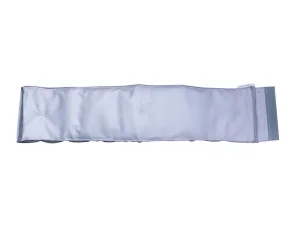
Removable heat insulation covers act as a thermal barrier. When wrapped around electric trace heating lines, valves, or extruder barrels, they reduce convective heat loss to the surrounding workshop atmosphere. This dramatically lowers total kilowatt-hour electrical consumption, improves thermal stabilization along the entire fluid line, protects shop personnel from contact burns, and significantly extends heater lifespan.