

Integrated Thermal Inventory
High Temperature Precision Systems & Core Assemblies
Explore our industrial-grade electric heating solutions engineered for continuous duty, tight temperature uniformity (±1°C), and harsh thermal cycling environments.

High-Quality Portable Ceramic Heaters for Industry - Efficient Heating Solutions
View Specifications
China Efficient Portable Ceramic Heaters for Industry | China Suppliers & Factory
View Specifications
CE Certification PVC-O Ovens for Precision Heating Manufacturer
View Specifications
China Safe and Durable Mica Heaters Factory, Factories
View Specifications
Best Pipeline Heater Manufacturers, Factory Solutions
View Specifications
CE Certification Explosion Proof Electric Heater Exporter, Factory
View Specifications
China Portable Ceramic Heaters: Efficient Heating Solutions for Factories
View Specifications
Material Science & Structural Architecture
High Temperature Ceramic Fiber Heaters: The Thermodynamics of Modern Thermal Processing
Achieving extreme thermal performance in ultra-clean, high-temperature thermal processing demands a fundamental shift away from dense refractory ceramics toward low thermal mass, vacuum-formed ceramic fiber technologies.
Alumina-Silica Matrix Synthesis
Fabricated through controlled vacuum filtration of high-purity polycrystalline mullite and refractory alumina-silica fibers. This delivers volumetric bulk densities ranging from 280 to 450 kg/m³, achieving exceptionally low thermal conductivity (k ≤ 0.12 W/m·K at 800°C) and minimizing heat dissipation losses by over 38% compared to castable refractory systems.
- Operating temperature threshold up to 1350°C continuous
- Inert microcrystalline structure resisting thermal shock
- Zero organic binder burnout during first heat-up cycle
Optimized Resistance Alloys
We integrate precision-formed FeCrAl alloys (Kanthal APM, A-1) and high-grade Nickel-Chromium wire wound in helical or sinuous ribbon geometry. Elements can be fully embedded within the ceramic fiber matrix or semi-exposed via custom ceramic cradles, optimizing direct radiant flux and extending mean time between failures (MTBF).
- Alloy operating range up to 1420°C element temperature
- Self-healing Al₂O₃ protective oxide layer formation
- Low surface watt density (1.2 to 3.5 W/cm²) for longevity
Ultra-Low Thermal Inertia
Traditional dense ceramic brick heaters carry immense thermal mass, resulting in sluggish ramp rates and severe thermal overshoot. Ceramic fiber heaters provide low heat storage (specific heat cp ∼ 1.05 kJ/kg·K), allowing ramp rates exceeding 50°C/min and rapid cool-down profiles essential for high-throughput automated manufacturing.
- Fast ramp-up cycles cut pre-heating energy consumption
- Precise PID loop tracking with minimal settling time
- Immediate mechanical expansion adaptation
| Performance Parameter | Standard Ceramic Fiber (Grade 1260) | High-Alumina Fiber (Grade 1400) | Polycrystalline Mullite Fiber (Grade 1600) |
|---|---|---|---|
| Maximum Working Temperature | 1100°C (2012°F) | 1250°C (2282°F) | 1350°C - 1450°C (2642°F) |
| Al₂O₃ Chemical Content (%) | 45 - 48% | 52 - 55% | 72 - 75% |
| Thermal Conductivity @ 800°C | 0.132 W/m·K | 0.118 W/m·K | 0.095 W/m·K |
| Bulk Density (Vacuum Formed) | 280 - 320 kg/m³ | 320 - 360 kg/m³ | 350 - 420 kg/m³ |
| Permanent Linear Shrinkage (24h) | ≤ 2.5% at 1200°C | ≤ 1.8% at 1350°C | ≤ 0.8% at 1500°C |
| Supported Element Alloys | NiCr 80/20, FeCrAl 0Cr25Al5 | FeCrAl Kanthal A-1, Alkrothal | Kanthal APM, MoSi₂ Embedded Pin |
Industrial Cross-Sector Applications
Macro-Industry Thermal Solutions: Solving Mission-Critical Heat Transfer Challenges
Kangpu Heater designs custom heating architectures tailored to distinct thermodynamic, environmental, and metallurgical criteria across global capital-equipment industries.
Semiconductor & Wafer Processing
In rapid thermal processing (RTP), chemical vapor deposition (CVD), and diffusion furnaces, zero trace-metal contamination is non-negotiable. Our ultra-high-purity ceramic fiber modules use organic-free binders and encapsulated quartz or silicon carbide heating tubes to achieve class-100 cleanroom compliance while maintaining across-wafer thermal gradients below ±0.5°C.
Advanced Photovoltaics & Solar Ingots
Continuous crystallization and ingot casting stations operate under demanding thermal profiles up to 1300°C. We supply cylindrical multi-zone ceramic fiber heater assemblies with customized axial heat profiles, ensuring homogeneous crystal growth, reducing structural dislocations, and slashing energy overhead in gigawatt-scale cell manufacturing.
Lithium-Ion Battery Cathode Calcination
Rotary calciners and roller hearth kilns synthesizing nickel-cobalt-manganese (NCM) and lithium iron phosphate (LFP) active materials demand resilient resistance against corrosive volatile off-gases. Kangpu utilizes sealed-in ceramic fiber tunnel heaters with heavy-gauge FeCrAl coils that resist volatile lithium attack, increasing campaign life between relining cycles.
Aerospace Autoclave & Composite Curing
High-modulus carbon-fiber matrix consolidation for aerospace structures requires strict ramp soak cycles in pressurized vessels. We design custom flat panel and curved ceramic fiber radiant heaters with embedded multi-point K/N thermocouples to provide uniform radiosity without creating localized resin-boiling hotspots.
Petrochemical & Hydrogen Cracking
Transitioning from fossil-combustion fired heaters to electric process heating in methane reforming and cracking coils requires robust high-voltage, megawatt-level ceramic fiber furnace shells. Our modular interlocking split-tube designs enable modular installation directly over high-alloy process pipelines.
High-Precision Plastics & PVC-O Orientation
In biaxially oriented PVC-O pipe manufacturing and polymer extrusion, melt temperature uniformity dictates pipe burst pressure rating. Our specialized heating/cooling integrated barrel jackets and tunnel ovens provide precise radiant field control, eliminating cold spots and wall-thickness anomalies.
Smart Manufacturing & Supply Resilience
China Smart Factory 4.0: Supply Chain Resilience, Scalability & Cost Efficiency
How Yancheng Laier Heating Technology Co., Ltd. (Kangpu Heater) combines end-to-end vertical integration with digital fabrication to secure delivery schedules and eliminate component failures.
Automated Slurry Filtration
Continuous automated vacuum-forming tanks maintain precise vacuum draw (-0.085 to -0.092 MPa), ensuring uniform fiber density and wall thickness across curved, flat, or cylindrical geometry without density stratification.
5-Axis CNC Element Grooving
Element grooves are machined directly into cured ceramic fiber substrates using high-speed 5-axis CNC routers. This produces element-to-insulation clearances within ±0.1 mm, preventing element bunching and premature burnout.
Batch Thermal Verification
Every production lot undergoes 100% dielectric withstand testing (2500V / 60s), cold insulation resistance checks (>100 MΩ at 500VDC), and full-power thermal imaging verification before packaging and dispatch.
Direct OEM Cost Advantage
By producing raw fiber formulations, resistance windings, and stainless-steel sheet-metal enclosures in-house in Yancheng, Jiangsu, we reduce total procurement costs by 30% to 45% compared to Western competitors.
Procurement & TCO Strategy
Global Enterprise Procurement Framework: Total Cost of Ownership (TCO) vs. Initial Capex
Purchasing directors and chief thermal engineers evaluate electric heating assets through a multi-dimensional risk matrix. Reliability and thermal repeatability outweigh initial unit pricing.
1. Unplanned Downtime Cost Mitigation
For an automated extrusion or annealing line generating $10,000 to $40,000 per hour in production value, saving $200 on an inferior heating element is counterproductive. Kangpu’s heavy-gauge terminal studs, solid lead-wire TIG welds, and five-year warranty eliminate catastrophic open-circuit faults.
2. Thermal Efficiency & Energy Arbitrage
Continuous-operation plants in North America and the EU face aggressive kilowatt-hour electricity rates. Low thermal mass ceramic fiber modules cut furnace heat-up times by up to 60% and limit outer casing skin temperatures below 60°C, lowering facility HVAC loads and total electrical overhead.
3. Plug-and-Play Field Replacement
Our engineered ceramic fiber panels feature integrated high-temperature mounting brackets, labeled ceramic terminal blocks, and custom cable terminations. Modular split-cylinder segments mount around existing process tubes in under 15 minutes without requiring system disassembly.
Quality Engineering Protocol
7-Stage Engineering & Qualification Protocol: From Drawing to Volume Rollout
We eliminate guesswork. Every custom ceramic fiber heating project passes through our structured seven-stage validation pipeline before volume sign-off.
01
ID Design & Thermal Modeling
Reviewing client STEP files, barrel geometries, and thermal dynamics. Finite Element Analysis (FEA) models radiant flux distribution.
02
Electrical Sizing & Alloy Spec
Calculating surface watt density, cold resistance tolerances, voltage routing (110V to 690V), and lead terminal positioning.
03
Real-Mold Tooling & Slurry Draw
Producing precision metal tooling for vacuum forming rather than hand-carved mockups, ensuring production-grade structural integrity.
04
Client Fit & Functional Review
Deploying working prototypes directly to the customer facility for physical mounting, dimensional verification, and terminal check.
05
Design Iteration & Optimization
Refining watt-density balance, clamping hardware, or lead wire metallurgy based on prototype empirical operational feedback.
06
Rigorous Batch Qualification
Hi-pot testing at 2.5kV, megohmmeter insulation resistance checking, and cyclic thermal endurance runs at target temperatures.
07
Volume Run & Batch Traceability
Automated volume manufacturing to frozen print specifications, paired with export sea/air crating and complete lot traceability.
✓
Five-Year Warranty Support
Comprehensive after-sales coverage with direct engineer-to-engineer root-cause analysis and fast replacement dispatch.
Future-Ready Innovation
Technical Roadmap & Future Outlook: Next-Generation Ceramic Fiber Heating
Industrial thermal processing is rapidly evolving toward zero-carbon operations, intelligent process control, and advanced ceramic matrices.
Polycrystalline Mullite Fibers (1600°C)
Kangpu is investing in zero-shot polycrystalline mullite fiber synthesis (72% Al₂O₃, 28% SiO₂), pushing maximum operating thresholds to 1600°C. This eliminates the micro-crystallite phase transitions that cause fiber embrittlement during high-temperature cycles.
Embedded Smart IoT Fiber Sensors
By embedding sapphire-sheathed optical fibers and platinum micro-RTDs directly into the vacuum-formed fiber matrix, our next-gen modules stream real-time internal core temperatures to edge-compute gateways. This enables early detection of element oxidation and local hot-spots.
Digital Twin Heat-Transfer Modeling
Integrating customer operational telemetry with cloud-based digital twin software allows our thermal engineers to virtually simulate 10,000 thermal cycles before cutting metal. This optimizes watt-density gradients and guarantees target temperature uniformity on delivery.
Global Compliance & Certifications
Localized Support & Global Regulatory Compliance: Seamless Cross-Border Integration
Enterprise procurement requires verifiable regulatory documentation, international electrical standard compliance, and risk-free delivery logistics.
CE & Low Voltage Directive
Certified in compliance with EN 60335-1 (Safety of Household and Similar Electrical Appliances) and EN 60519-1 (Safety in Installations for Electroheating). Complete technical files and declarations are supplied with all shipments.
UL 499 & CSA Alignment
Engineered with electrical creepage and clearance distances, high-grade mica insulation barriers, and heavy-duty terminal blocks compliant with UL 499 (Electric Heating Appliances) and CSA C22.2 requirements for North American installations.
RoHS & REACH Environment
Refractory ceramic fiber formulations are carefully managed with verified bio-soluble fiber (low biopersistence alkaline earth silicate) options to meet EU REACH chemical safety directives and RoHS heavy metal bans.
DDP Turnkey Logistics
We provide full Delivered Duty Paid (DDP) logistics by air and sea to the United States, Europe, Southeast Asia, and the Middle East, handling all customs clearance, tariff classifications, and door-to-door delivery with zero administrative friction.
Technical Clarity
Frequently Asked Questions: Industrial Ceramic Fiber Heating Engineering
Detailed answers addressing search intent, technical trade-offs, installation protocols, and lifecycle management.
What sets ceramic fiber heaters apart from traditional cast-in or mica band heaters?
Ceramic fiber heaters excel where high temperatures (up to 1350°C) and rapid thermal cycling are required. Mica band heaters max out around 400°C to 450°C, and cast aluminum/copper heaters operate efficiently up to 450°C and 650°C, respectively. Ceramic fiber combines refractory insulation and embedded heating elements in a single lightweight unit. With an ultra-low bulk density (∼300 kg/m³ vs >2700 kg/m³ for cast metal), it cuts warmup times by up to 60%, drastically reduces exterior shell temperatures, and eliminates radiant energy loss.
Can Kangpu customize ceramic fiber heaters to customer blueprints and cad drawings?
Yes. Customization is the foundation of our engineering business. We build to your exact 3D models or mechanical blueprints, configuring chamber diameter, flat-panel dimensions, cutouts for optical pyrometers and thermocouples, terminal stud orientations, and supply voltages ranging from 24V up to 690V 3-phase. Custom tooling is created for sample molding to ensure prototypes match production-run specifications.
How does the five-year warranty work for international export clients?
Every heating unit carries a laser-etched serial code corresponding to its production batch, raw material lot, resistance alloy melt record, and dielectric test report. If an premature open-circuit or insulation failure occurs during standard operation, our engineering team conducts root-cause analysis via photo/video telemetry and operational logs. Validated claims receive immediate expedited replacement components, supported by corrective changes in the factory database.
What are the recommended surface watt densities for ceramic fiber heaters?
To maximize service life, surface watt densities typically range between 1.5 and 4.0 W/cm² (10 to 25 W/in²), depending on operating temperature and internal air movement. In high-temperature soaking applications (above 1100°C), lower watt densities (1.2 to 2.2 W/cm²) are specified to prevent element coil overheating. In forced-convection or vacuum chambers, our thermal modeling balances element life against target ramp-rate requirements.
How do embedded elements compare to semi-exposed element configurations?
Fully embedded elements are protected inside the vacuum-formed ceramic fiber matrix, shielding the resistance wire from mechanical contact, particulate buildup, and turbulent gas flows. This is ideal for clean, high-vibration applications. Semi-exposed configurations position coils within ceramic grooves directly exposed to the chamber, enabling radiant transfer with lower wire-to-chamber temperature differentials and higher ramp rates up to 1300°C+.
What lead times and sample approval stages can international buyers expect?
Standard custom sample prototypes are typically engineered, molded, and qualified within 10 to 14 business days. Volume production orders generally complete in 3 to 4 weeks depending on order volume and metalwork complexity. We follow a strict 7-stage gate process, initiating volume manufacturing only after prototype dimensional and electrical sign-off.
Complete Equipment Catalogue
High Performance Industrial Electric Heaters & Thermal Auxiliaries
Explore our specialized industrial elements, flexible surface blankets, nano-infrared bands, and heavy process heaters engineered in Yancheng since 1986.

CE Certification Flexible Heaters for Custom Applications Manufacturer
View Specifications
Best Infrared Ceramic Heaters for Efficient Heating Manufacturers
View Specifications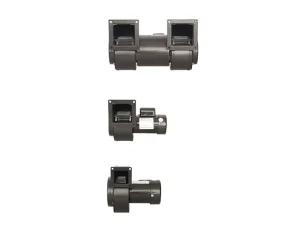
CE Certification Fan Manufacturer, Industrial Forced Air Factory
View Specifications
CE Certification Cast Aluminum/Copper Heater Manufacturer, Exporter
View Specifications
CE Certification Ovens Manufacturer, Precision Industrial Exporter
View Specifications
CE Certification Efficient Air Duct Heaters for HVAC Manufacturer
View Specifications
High-Quality Portable Ceramic Heaters: Reliable Temperature Control
View Specifications
CE Certification Nano Infrared Electric Band Heater Manufacturer
View SpecificationsRequest Custom Ceramic Fiber Heater Engineering & Quotation
Send your 2D/3D drawings, operating temperatures, thermal cycle specs, and target wattages. Our senior thermal systems team will review your application and deliver a full DFM analysis, 3D proposal, and competitive factory quotation within 24 hours.