
Precision Industrial Thermal Systems & Process Assemblies
Engineered for high watt density, exact isothermal performance, and structural endurance under extreme mechanical stress and thermal fatigue.

CE Certification Fan Manufacturer, Factory
Explore Specification
High-Quality Portable Ceramic Heaters for Industry - Reliable Heating Solutions from China Suppliers and Factory Manufacturers, Factory
Explore Specification
Best Efficient Portable Ceramic Heaters from China Suppliers - Ideal for Industrial Heating in Factories Manufacturers, Exporters
Explore Specification
High-Quality Cleaning furnace Manufacturer, Exporter
Explore Specification
Best Durable Heat Insulation Covers Manufacturer, Exporters
Explore Specification
CE Certification Ovens Manufacturer, Exporter
Explore Specification
China High density heating element Manufacturers, Factories
Explore Specification
CE Certification Cast Aluminum/Copper Heater Manufacturer, Exporter
Explore SpecificationMacro Dynamics Driving the Industrial Process Heating Paradigm
From carbon-heavy fuel combustion to hyper-efficient electric resistance and electromagnetic induction: engineering zero carbon footprints across continuous thermal processes.
Industrial thermal processing accounts for approximately 70% of global industrial energy consumption and contributes nearly a fifth of worldwide industrial greenhouse gas emissions. For over a century, legacy facilities across North America, the European Union, and Asia-Pacific relied heavily on low-pressure natural gas fired boilers, steam networks, and heavy fuel-oil furnaces. However, the intersection of aggressive net-zero decarbonization mandates, unpredictable fossil fuel volatility, and stringent safety frameworks (such as ATEX, IECEx, and OSHA standards) has triggered an unprecedented technological transition toward clean electrification and precise, solid-state thermal energy transfer.
Modern process heaters are no longer treated as passive, commoditized resistance loops. In today’s precision-oriented manufacturing environments, industrial heating elements function as active, integrated thermodynamic subsystems. Whether maintaining tight rheological properties of engineering polymers at 380°C, cracking specialized hydrocarbon fractions in high-pressure petrochemical catalytic loops, or providing clean vapor generation for pharmaceutical compounding, thermal deviation as slight as ±1.5°C can result in catastrophic product degradation, cross-linking failures, or massive unplanned batch scrap.
Deep Industrial Decarbonization
Global regulatory bodies (including EU CBAM and US EPA Section 111 rules) are forcing capital equipment operators to eliminate direct stack emissions. Direct electric process heaters deliver up to 99.2% electrical-to-thermal efficiency without localized NOx, SOx, or particulate release.
- Zero on-site emissions profile
- Compatibility with green power grids
- Substantial carbon tax mitigation
Closed-Loop Edge Intelligence
Modern process heaters leverage embedded multi-junction mineral-insulated thermocouples and RTDs coupled with silicon-controlled rectifiers (SCRs) and digital PID controllers, replacing coarse mechanical relays with microsecond-level phase-angle firing.
- Isothermal uniformity within ±1.0°C
- Dynamic cold-resistance compensation
- Predictive element failure telematics
Advanced Metallurgy & Dielectrics
Operating in aggressive corrosive media, ultra-high vacuum, or high-pressure supercritical fluid atmospheres mandates aerospace-grade alloys such as Incoloy 800/840, Hastelloy C-276, Monel, and 99.8% pure ultra-compacted MgO dielectric matrices.
- Resistant to chloride stress corrosion
- Dielectric strength up to 2500VAC
- Extended sheath life exceeding 50,000 hrs
Strategic Procurement Imperatives for Global Engineering Buyers
Deconstructing the Total Cost of Ownership (TCO): How Tier-1 procurement teams evaluate component longevity over purchase unit pricing.
When enterprise procurement engineers source heavy industrial process heating systems across Europe, the Americas, and the Middle East, initial capital expenditure (CAPEX) constitutes merely 8% to 15% of the total life-cycle cost. The remaining 85% to 92% is consumed by operational electricity costs, scheduled preventive maintenance shutdowns, and catastrophic unplanned production stoppages.
For example, in a modern twin-screw extrusion compounding line producing high-value automotive polyamides, a single heater band rupture in Zone 4 that grounds out the PLC and initiates polymer freeze-off incurs an average cost of $12,000 to $28,000 per hour in lost output, barrel purging, screw extraction, and re-thermalization. Consequently, world-class original equipment manufacturers (OEMs) and process plant directors demand stringent performance criteria:
Rigid Sheath Integrity
Zero tolerance for moisture ingress during maritime transit or long warehouse shelf life. Heaters must feature hermetic silicon/epoxy resin seals guaranteeing cold insulation resistance exceeding 1000 Megohms at 500VDC.
Exact Watt Density
Precision coil winding matching the boundary layer heat transfer coefficient of the specific medium—preventing localized hot spots, premature coking of thermal oils, or dielectric breakdown in dry-running conditions.
Full Global Compliance
Universal multi-voltage adaptability (from 110V single-phase up to 690V three-phase industrial deltas/stars) backed by CE, UL, CSA, RoHS, and explosion-proof ATEX/IECEx certifications for worldwide site commissioning.
Supply Chain Speed
Rapid engineering turnaround from CAD design to real-mold functional sampling in under 5 business days, followed by containerized volume production dispatched with full end-to-end batch traceability.
| Heating Technology Architecture | Maximum Sheath Temp | Optimal Watt Density | Primary Industrial Utility | Efficiency Rating |
|---|---|---|---|---|
| Cast-in Aluminum / Copper Bands | Aluminum: 450°C | Copper: 700°C | 4.5 – 9.0 W/cm² | Heavy Extruder Barrels, Blown Film Dies, Blow Molding | 94.8% Direct Thermal |
| Insulated Ceramic Band Heaters | Up to 800°C | 6.0 – 12.0 W/cm² | Engineering Resins (PEEK, PTFE), Barrel Retrofits | 91.5% Ceramic Bound |
| High-Density Swaged Cartridges | Up to 870°C | Up to 50.0 W/cm² | Injection Manifolds, Hot Runner Tooling, Aerospace Molds | 96.2% Contact Bound |
| Direct Electromagnetic Induction | Over 500°C (Non-Contact) | Virtually Unlimited In-Wall | Chemical Steam Reboilers, High-Speed Pipe Calibration | 98.5% Eddy Current |
| Circulation Flanged Process Heaters | Up to 650°C | 1.2 – 4.5 W/cm² (Fluid Dep.) | Heat Transfer Oil Loops, Superheated Steam, Gas Preheating | 99.1% Immersion |
China Smart Factory 4.0: Supply Chain Resilience & Precision Execution
Inside Kangpu Heater (Yancheng Laier Heating Technology): Four decades of integrated metallurgy, automated coil winding, and deep quality assurance.
Founded in 1986 in Yancheng, Jiangsu Province—one of the world's premier clusters for electrical engineering and thermal technology—Kangpu Heater has evolved from a specialized heating element workshop into a benchmark Industry 4.0 manufacturing complex. Unlike conventional trading intermediaries that outsource fragmented operations to disparate machine shops, our fully vertically integrated industrial facility controls every critical processing parameter under one roof.
The production of mission-critical industrial heaters involves complex metallurgical physics and extreme dielectric tolerances. A micro-void in the magnesium oxide dielectric powder, an uneven winding pitch on the nickel-chromium (NiCr 80/20) resistance wire, or an imperceptible porosity defect within a cast-aluminum matrix will cause immediate dielectric puncture under continuous high-temperature thermal cycling. To eliminate these vulnerabilities, our smart plant incorporates full-spectrum automation:
Automated Multi-Axis CNC Winding
Robotic winding lines calculate and tension the helical pitch of Swedish Kanthal and German nickel-chromium resistance coils with micrometer accuracy, ensuring zero hot-spot clustering and flawless linear watt density along the entire element stroke.
Vacuum Die-Casting & Degassing
Our foundry utilizes computerized tilt-pour vacuum die-casting for cast aluminum, brass, and copper barrel heaters. Complete molten metal degassing eliminates subsurface air voids, ensuring 100% molecular contact between sheath tubes and cast envelopes.
Ultra-High Compaction Swaging
Heavy rotary swaging stations compact nuclear-grade electro-fused MgO powder to a theoretical density exceeding 3.2 g/cm³. This maximizes thermal conductivity from the inner resistance coil directly to the outer alloy sheath while guaranteeing dielectric breakdown safety.
Real-Mold Functional Prototyping
Kangpu executes an uncompromising 7-stage customization framework. Rather than hand-bending crude prototypes, our tool room fabricates precision production molds for customer approval samples—verifying true dimensional repeatability prior to mass manufacturing.
Mission-Critical Process Environments & Engineering Deployments
Field-proven engineering performance across high-throughput extrusion lines, automated chemical batch reactors, advanced metallurgy, and clean steam loops.
Polymer Compounding & Twin-Screw Extrusion
Processing advanced engineering thermoplastics (such as PPS, PEEK, and glass-filled PA66) demands rapid heating paired with aggressive cooling when high screw shear generates exothermic heat. Our patented Heating/Cooling Integrated System pairs precision cast-in copper heating bands with internal stainless cooling jackets and high-CFM external blowers, clamping barrel temperatures within ±1.0°C even during sudden load fluctuations.
Molecularly Oriented PVC-O Pipe Calibrators
Biaxial orientation of PVC requires absolute circumambient temperature uniformity. Our specialized PVC-O Ovens and matching pipeline heaters utilize multi-zone convective radiation grids that homogenize the pipe preform wall temperature across hoop and axial vectors, preventing wall thickness variation and guaranteeing burst ratings up to PN25.
Chemical Jacketed Reactors & Thermal Fluid Systems
Where volatile organics or sensitive chemical intermediates require indirect heating, our High-Quality Heat-Conducting Oil Furnaces circulate synthetic thermal oils at up to 350°C under low operating pressures (0.3 to 0.5 MPa). This eliminates the massive wall thickness, water treatment costs, and explosion hazards associated with high-pressure saturated steam vessels.
Hazardous Classified Environments (Zone 1 & Zone 2)
Refineries, offshore FPSOs, and solvent extraction facilities require strict flameproof barriers. Our CE Certification Explosion-Proof Electric Heaters incorporate heavy cast ductile iron or stainless steel Ex d terminal enclosures with certified flamepaths that contain any internal arc flash and prevent ignition of surrounding explosive atmospheres.
Clean-In-Place (CIP) & Polymer Vacuum Pyrolysis
In high-end melt-blown nonwoven and synthetic filament extrusion, spinnerets, dies, and filter packs accumulate degraded polymers. Our High-Quality Cleaning Furnaces utilize controlled electric radiant heat inside deep vacuum chambers to thermally decompose polymers into gaseous monomers without oxidizing or warping precision micro-orifices.
Continuous Industrial Air Handling & Drying
Process drying of textiles, pharmaceuticals, and automotive coating cure ovens requires rapid air volume heating. Our Air Duct Heaters feature open or finned tubular heating elements arranged in staggered matrices to maximize turbulent air scrubbing, ensuring rapid heat transfer with minimal static pressure drop across the duct.
Comprehensive Quality Engineering & Non-Destructive Testing
Zero-defect manufacturing governance ensuring maximum mean time between failures (MTBF) under relentless 24/7 continuous industrial operation.
At Kangpu Heater, product reliability is engineered directly into the process flow rather than inspected at the shipping dock. Every individual element that leaves our factory must pass an exhaustive battery of automated quality gate validations. Our testing laboratory operates in strict adherence to IEC 60335-1, UL 499, and ISO 9001:2015 standards, utilizing calibrated diagnostic equipment:
High-Potential (Hi-Pot) Dielectric Test
100% of finished elements undergo a 2,000V to 2,500VAC test for 60 seconds between the live terminal pins and the metallic outer sheath, verifying zero dielectric breakdown and confirming complete ceramic insulation integrity.
Hot & Cold Insulation Resistance
Testing with mega-ohm meters at 500VDC confirms insulation resistance values exceeding 1,000 Megohms in ambient dry conditions, and remaining above 50 Megohms at maximum saturated operating temperatures.
Precision Resistance & Wattage Verification
Micro-ohmmeter bridge testing ensures electrical resistance falls within a strict ±5% tolerance band of theoretical calculated design values, preventing zone-to-zone power imbalances across three-phase electrical circuits.
Calibrated Radiographic (X-Ray) Inspection
Non-destructive X-ray verification confirms that internal resistance wire coils remain perfectly centered within the compacted MgO matrix, with zero eccentricity or thinning that could create localized hotspots under load.
Frequently Asked Questions: Industrial Process Heaters Sourcing
Actionable technical answers addressing mechanical fit, thermal engineering selections, electrical design, and international logistics.
Customization is our core competency. When you provide an engineering drawing, 3D STEP file, physical sample, or machine model, our thermal engineering department verifies sheath metallurgy, required watt density, clamping geometry, terminal block enclosure clearance, and expansion allowances. We follow a strict 7-stage gate process, fabricating production-tooled samples for customer testing on actual equipment prior to volume manufacturing.
Ceramic band heaters utilize steatite ceramic blocks holding coiled resistance wire with an external blanket of ceramic fiber insulation; they excel at high temperatures up to 800°C and are ideal for high-temperature plasticizing barrels where radiant transfer cuts energy consumption. Cast aluminum/copper heaters completely encapsulate tubular elements in a solid metallic casting, providing superior mechanical ruggedness, perfectly uniform conductive heat distribution, and the ability to integrate liquid cooling channels for simultaneous heating and cooling control.
We provide a benchmark five-year after-sales warranty covering manufacturing defects and premature failure under specified operating parameters. Every single heater assembly is laser-engraved with an individual batch identification matrix that traces its raw material heat lot, winding batch, insulation compaction log, and Hi-Pot test records. In the rare event of a field anomaly, we identify root causes and implement corrective engineering at the source.
Watt density (watts per square centimeter or square inch) determines the temperature gradient across the heater sheath and the medium being heated. If watt density exceeds the boundary layer heat dissipation capability of the process fluid (e.g., thermal oils, stagnant air, heavy bitumen), the fluid will carbonize or decompose, insulating the heater sheath, inducing runaway internal core temperatures, and leading to rapid dielectric failure. We calculate maximum allowable watt densities tailored to your specific process velocity and thermal viscosity curves.
Bare metallic extruder and injection barrels radiate massive amounts of parasitic heat into the workshop. Our multi-layered custom aerogel and ceramic fiber insulation covers reduce surface skin temperatures from 300°C down to below 45°C. This cuts continuous heating energy consumption by 20% to 35%, significantly lowers plant HVAC cooling loads, and protects shop floor operators against accidental burn injuries.
Our products hold full CE compliance under the Low Voltage Directive (LVD) and Electromagnetic Compatibility (EMC) regulations. For hazardous chemical and petrochemical installations, we supply explosion-proof terminal boxes certified under ATEX and IECEx standards. Sheaths and pressure-retaining flanged vessels comply with ASME Section VIII and PED pressure directives, accompanied by full material test reports (EN 10204 3.1 certification).
Comprehensive Industrial Heating & Thermal Control Assemblies
Explore heavy-duty immersion heaters, precision thermocouples, fluid circulators, and electromagnetic thermal boilers built for 24/7 continuous operations.

CE Certification Explosion Proof Electric Heater Exporter, Factory
Explore Specification
CE Certification Precise Cooling and Heating System Manufacturers, Exporters
Explore Specification
Best Infrared Ceramic Heaters for Efficient Heating Manufacturers, Exporters
Explore Specification
CE Certification Electromagnetic induction heater Manufacturer, Exporter
Explore Specification
Best Pipeline Heater Manufacturers, Factory
Explore Specification
High-Quality Thermocouple Exporter, Factory
Explore Specification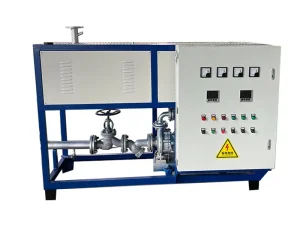
High-Quality Heat-conducting oil furnace Manufacturer, Exporter
Explore Specification