
Engineered Heating Elements & Turnkey Thermal Systems
Precision-crafted industrial heaters manufactured under stringent metallurgical tolerances. Fully compatible with global extrusion extruders, blow molding heads, and process manifolds.





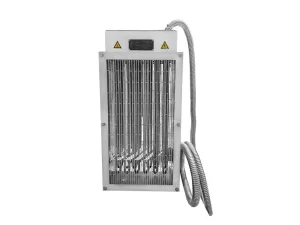
Global Commercial Status: The Paradigm Shift in Thermal Processing
In an era dominated by rigorous carbon tax frameworks, escalating megawatt-hour tariffs, and tight ESG audits, the global polymer processing and chemical manufacturing industries face unprecedented operational hurdles. Extruder barrels and injection molding cylinders have historically relied on conventional mica or cast-in bronze/aluminum resistance bands. However, empirical thermal audits demonstrate that standard conductive heaters squander between 35% and 55% of their total electrical draw directly to ambient factory air, placing an exorbitant auxiliary load on HVAC chillers.
Radiative vs. Conductive Thermodynamics
Traditional band heaters depend completely on physical surface-to-surface mechanical conduction. Over repeated thermal expansion cycles, mechanical tolerances loosen, producing microscopic air gaps that radically spike thermal resistance. In contrast, Nano Infrared Electric Band Heaters utilize special Fe-Cr-Al nano-crystalline alloys coupled with quartz emissivity layers, transmitting directional electromagnetic wavelengths (2.5 to 15 μm) directly into the steel cylinder shell, bypassing conductive air-gap losses.
Nanoscale Aerogel Thermal Barriers
Our heaters incorporate aerospace-grade microporous silica aerogel insulation blankets with a thermal conductivity coefficient lower than static air (≤ 0.018 W/m·K at 200°C). While the internal barrel wall maintains operational setpoints of 350°C to 450°C, the exterior stainless steel housing stays remarkably cool at ≤ 45°C to 55°C. This eliminates severe burn risks for operators and slashes plant ambient heat emission by up to 80%.
Microsecond Thermal Response
Conventional cast-aluminum bands feature massive thermal inertia; they take hours to pre-heat and exhibit extreme temperature overshoot during polymer shear heating. Nano infrared elements boast near-zero thermal mass. They achieve target melt temperatures 40% faster on cold starts and allow instantaneous power cut-offs, achieving PID temperature control stability within an exact ±1.0°C envelope for high-flow engineering resins.
| Performance Dimension | Traditional Mica Band | Cast-Aluminum Band | Kangpu Nano Infrared Band |
|---|---|---|---|
| Primary Heat Transfer Mechanism | Surface Conduction | Surface Conduction | Directional Far-Infrared Radiation |
| Electro-Thermal Conversion Efficiency | ∼ 82% - 85% | ∼ 80% - 86% | ≥ 99.2% (Gold/Ceramic Emissive Coating) |
| Surface Shell Temperature (400°C Barrel) | 220°C - 310°C (Dangerous) | 180°C - 260°C (Heat Loss) | ≤ 48°C - 55°C (Touch-Safe) |
| Verified Energy Conservation Ratio | Baseline (0%) | Baseline (-5% to +2%) | 32.8% to 54.6% Measured Savings |
| Cold-Start Preheating Duration | 50 - 75 minutes | 60 - 90 minutes | 25 - 35 minutes (Fast Line Turnaround) |
| PID Control Accuracy Range | ± 5.0°C | ± 4.0°C (Heavy overshoot) | ± 1.0°C (Zero Molten Degradation) |
| Operational Lifespan Expectancy | 8,000 - 12,000 Hours | 15,000 - 20,000 Hours | > 50,000 Hours MTBF |
The Yancheng Manufacturing Ecosystem: How Kangpu Redefines Global Supply
Heater production is never merely an assembly task—it is an intricate integration of metallurgical sciences, precision sheet-metal stamping, micro-ceramic sintering, and electrical safety engineering. Operating from our specialized industrial complex in Yancheng, Jiangsu, Kangpu Heater (Yancheng Laier Heating Technology Co., Ltd.) leverages four full decades of accumulated tooling intellectual property to engineer high-density thermal products that Western OEMs and distributors rely on continuously.
100% Raw Material Integration
Located in China's foremost industrial corridor, we procure certified high-temperature stainless steel (SS304/SS310S), medical-grade silicon aerogel, and high-purity Cr20Ni80 Nichrome directly from domestic primary smelters, avoiding international logistics premiums and guaranteeing complete chemical traceability.
In-House Real Tooling & Prototyping
Unlike trading intermediaries who outsource sample creation to cottage workshops, Kangpu constructs actual production-grade stamping dies for every customized order. This ensures that every sample rigorously mirrors the dimensional fidelity, clamping resistance, and lead wire strain relief of the final 10,000-unit run.
Rigid Quality Assurance Regimes
Every manufactured unit completes a 1,500V high-pot dielectric strength test, leakage current verification (< 0.5mA at rated load), cold resistance calibration via Kelvin bridges, and a 4-hour dynamic burn-in test before dispatch, certified under stringent CE and ISO compliance frameworks.
Agile Global Export Logistics
Through streamlined container consolidation near Shanghai port, Kangpu routinely delivers complex custom OEM batches to European, North American, and Southeast Asian industrial hubs within 12 to 18 manufacturing days, supported by complete bilingual customs clearance packages.
Heavy-Duty Application Profiles: Where Nano Infrared Excels
Different polymers exhibit distinct melt indexes, specific heat capacities, and thermal decomposition profiles. Below is an engineering overview of how Kangpu Nano Infrared Electric Band Heaters perform in high-demand conversion lines worldwide.
High-Output Twin Screw Compounding
Processing engineering masterbatches (PA66, PEEK, glass-filled compounds) requires continuous operations at 280°C to 380°C. Standard heaters fail prematurely from constant thermal cycling. Kangpu nano infrared bands deliver uniform circumferential infrared radiation that ensures thorough, unblemished polymer core plastification without creating localized scorched resin flecks.
High-Speed Injection Molding Systems
In automotive and precision medical injection units, thermal instability alters shot volume density, driving up scrap rates. Our nano infrared heaters provide ultra-rapid thermal recovery during cycle interruptions, keeping the barrel melt pool homogeneous and drastically lowering gate drool and cosmetic splay marks.
PVC-O Pipe & Profile Extrusion Lines
Molecularly oriented PVC (PVC-O) pipes require extraordinarily stringent barrel and orientation temperature profiles to induce axial and hoop molecular orientation without thermal cracking. Kangpu's integrated heating and cooling controls guarantee repeatable, fault-tolerant processing across 24/7 continuous operations.
Industry Horizons: Decarbonization, ESG Mandates & Smart Thermal IoT
As major industrial regions roll out carbon accounting frameworks (such as the EU Corporate Sustainability Due Diligence Directive and CBAM), electrical conversion equipment must deliver transparent, quantifiable carbon offsets. Heating element manufacturing has consequently evolved from a commodity metal trade into an advanced electrical efficiency industry.
Scope 2 Carbon Abatement
A conventional 120mm extruder equipped with 45 kW of legacy cast band heaters uses approximately 216,000 kWh annually over 6,000 operating hours. Upgrading to Kangpu Nano Infrared elements cuts that demand by 38% on average—saving 82,080 kWh per machine each year, directly offsetting roughly 57 metric tons of CO2 emissions annually.
Smart IoT & Thermocouple Integration
Next-generation Kangpu heaters feature integrated micro-slot thermocouple junctions (Type J/K and PT100 RTDs) combined with RS485 Modbus and IO-Link interfaces. This empowers plant maintenance platforms to track real-time resistance drift, anticipate element burnouts, and implement true predictive maintenance.
Modular Retrofitting Form Factors
Capital expenditure allocations rarely allow whole-machine replacements just to improve energy efficiency. Our engineering group designs custom split-hinge band geometries that directly match the physical dimensions and terminal pinouts of older mica, ceramic, or cast-in heaters, permitting fast, zone-by-zone field retrofits with minimal line downtime.
Procurement Protocols: Specifying Nano Infrared Heaters for Global OEMs
When requesting quotations from Chinese exporters, technical precision avoids dimensional mismatch and field failures. Global EPC contractors, procurement directors, and plant managers should always evaluate these five critical technical checkpoints:
Watt Density Sizing (W/cm²)
Standard mica heaters run at 3.5 to 4.5 W/cm², whereas high-performance nano infrared bands comfortably sustain 6.5 to 9.0 W/cm² without shortening ribbon life. Confirm your processing temperatures and available controller amperage to identify the optimal power envelope for your line.
Barrel Clamping Configurations
Thermal expansion differs between the inner radiator element and the external aerogel shell. Specify stainless steel barrel spring clamps or independent bolt flanges rather than plain sheet screw tabs. This guarantees steady, safe clamping tension across continuous thermal expansion cycles.
Electrical Termination & Leads
Harsh plastics compounding environments expose wires to molten resin splatters, aggressive plasticizers, and high vibration. We offer heavy-duty ceramic terminal blocks, stainless steel braided leads with mica armor, and IP65-rated terminal enclosures designed for safe plant operation.
The Kangpu 7-Stage Controlled Customization Methodology
To guarantee zero-defect field installation, Kangpu adheres strictly to a 7-stage custom manufacturing workflow. Every project advances through rigorous milestone sign-offs before moving to series production:
ID Engineering Design
Review barrel 3D CAD models, cut-outs, thermocouple locations, and physical clearances.
Electrical Optimization
Calculate precise wattage, voltage balancing, resistance wire pitch, and aerogel thickness.
Production-Mold Tooling
Fabricate true production stamping dies for prototypes to mirror exact series-production quality.
Client Sample Evaluation
Clients receive production-ready physical units to test real-world dimensional fit and mechanical mounting.
Refinement & Revision
Engineering modifies clamping tension, lead exit angles, or sensor port bevels to match customer feedback.
Rigorous Bench Testing
Perform dielectric breakdown tests, thermal imaging scans, and leakage audits before design freeze.
Series Mass Production
Automated precision assembly backed by a 5-year traceable batch warranty and export packaging.
Frequently Asked Questions: Technical, Electrical & Commercial
Comprehensive answers to the most common engineering and procurement questions about nano infrared retrofits, factory compatibility, electrical safety, and lead-time guarantees.
How do Nano Infrared Electric Band Heaters achieve 30% to 50% energy savings?
Energy savings stem from two fundamental physical principles: First, directional far-infrared radiant emission. Traditional resistance heaters transfer thermal energy via physical surface conduction, which suffers severe efficiency losses across microscopic surface gaps. Nano infrared elements emit direct electromagnetic radiation (2.5–15 μm) directly matched to the absorption spectrum of industrial barrel alloy steels. Second, nanoporous silica aerogel insulation. The outer sheath incorporates a low-conductivity aerogel layer (≤ 0.018 W/m·K) that acts as an exceptional heat dam. While the inner barrel stays at 300°C–400°C, the exterior shell surface stays under 50°C–55°C, preventing ambient heat loss and keeping factory work areas substantially cooler.
Can Kangpu fabricate heaters directly from custom client drawings or OEM samples?
Yes. Custom manufacturing is the backbone of our operation. When clients share engineering drawings, equipment models, or physical samples, our engineering team validates the inner diameter, axial length, voltage, target wattage, hole cut-outs, clamping style, and terminal exits. We open actual production tooling for sample builds to ensure the test unit perfectly reflects series production standards.
What warranty protection and traceability does Kangpu provide on export shipments?
Every industrial heater manufactured by Kangpu (Yancheng Laier Heating Technology Co., Ltd.) is backed by our comprehensive 5-year factory after-sales warranty. Each individual unit carries a laser-etched serial code that traces back through production lots, assembly operators, raw material metallurgical heats, and electrical test logs. If a defect occurs during normal operation, we analyze the root cause from batch records and replace the element promptly.
How does a Nano Infrared Band compare directly against a Ceramic or Cast-In Band?
While ceramic bands provide solid high-temperature performance up to 500°C, their exterior shell temperatures often exceed 180°C–250°C, wasting substantial energy. Cast-aluminum and cast-bronze heaters feature massive thermal mass, leading to sluggish cold starts (60–90 minutes) and frequent temperature overshoot during high-shear runs. Nano infrared band heaters cut preheating time by 40%, lower exterior shell temperatures below 55°C, and provide near-instant thermal response without excessive thermal inertia.
What is the typical Return on Investment (ROI) payback period for plant retrofits?
Based on hundreds of verified retrofit installations across Europe, Southeast Asia, and North America, typical payback ranges between 3 to 7 months on extrusion and injection equipment running 16 to 24 hours daily. Additional savings accrue from reduced machine-cooling air requirements, lower chiller energy draw, improved plant safety, and longer heater service life (MTBF > 50,000 hours).
Are Kangpu heating elements certified for North American and European industrial standards?
Yes. Our products comply with European Low Voltage Directive (LVD 2014/35/EU) and Electromagnetic Compatibility (EMC 2014/30/EU) standards, carrying legitimate CE markings. Components utilize UL94 V-0 flame-retardant electrical leads, high-dielectric steatite ceramics, and comply fully with EU RoHS and REACH environmental regulations.
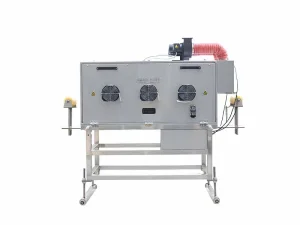
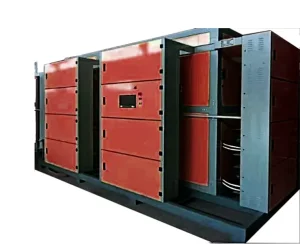
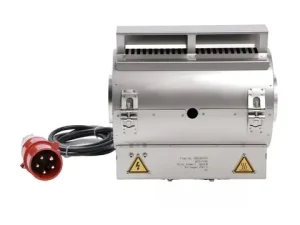
Heavy Industrial Heaters, Ovens & Auxiliary Elements
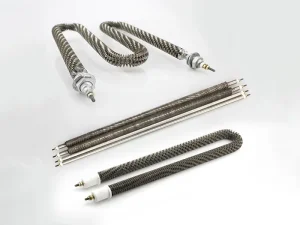
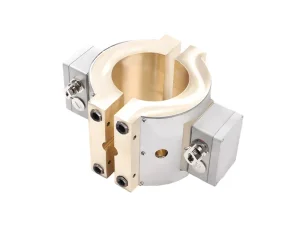
Heavy-duty pipeline heaters, precision orientation ovens, high-density cartridges, and cast-in assemblies built for demanding 24/7 continuous operations.


Request a Rapid Engineering Audit & Custom Quotation
Connect directly with Kangpu's thermal applications engineering team in Yancheng, China. Share your barrel drawings, current operating kilowatt metrics, and target operating temperatures to receive custom CAD designs, a verified ROI estimate, and an official factory quote within 24 hours.