
Featured Industrial Heating & Control Equipment
Every high-precision temperature sensor requires a robust heating counterpart. Our factory builds both precision temperature probes and heavy-duty industrial electric heating arrays to guarantee total thermal equilibrium.
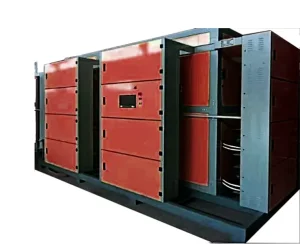
Electromagnetic Steam Boiler System
Explore Product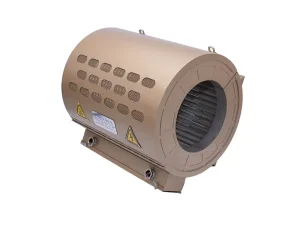
CE Nano Infrared Electric Band Heater
Explore Product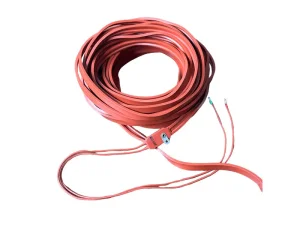
Custom Industrial Flexible Heaters
Explore Product
Portable Ceramic Heaters for Industry
Explore Product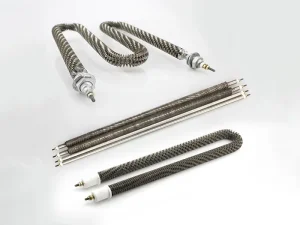
China High Density Heating Elements
Explore Product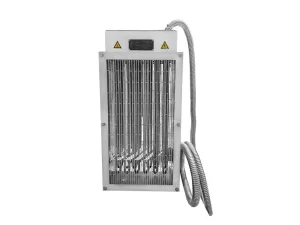
CE Efficient Air Duct Heaters for HVAC
Explore Product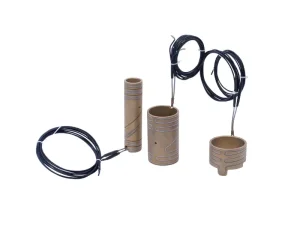
Hot-Runner Spring / Coil Heaters
Explore Product
CE Industrial Orientation & Curing Ovens
Explore ProductGlobal Landscape of Industrial Thermistors & Thermocouples
In modern cyber-physical production networks, thermal measurement is no longer a passive auxiliary metric; it is the deterministic baseline for operational safety, chemical yield, metallurgical phase transformation, and automated carbon reduction.
Semiconductor & Cleanroom Lithography
Wafer chuck thermal uniformity dictates sub-nanometer critical dimension tolerances. Specialized negative temperature coefficient (NTC) glass bead thermistors and calibrated Pt100/Pt1000 RTD elements provide hyper-localized temperature sensing with ultra-low thermal dissipation, minimizing drift across extreme vacuum and plasma deposition cycles.
E-Mobility & Battery Thermal Runaway Detection
Automotive battery packs demand thin-film SMD thermistors and micro-flexible thermocouple harnesses inserted directly between prismatic and pouch cells. High insulation resistance (>100MΩ at 1000V DC) protects battery management systems (BMS) against catastrophic insulation failure and provides microsecond thermal excursion warning.
Heavy Petrochemical & Pyrolysis Crackers
Operating within sulfurous and oxidizing atmospheres at elevated pressures exceeding 15 MPa demands Mineral-Insulated Metal-Sheathed (MIMS) thermocouples. Utilizing Inconel 600, Hastelloy C-276, and Super Duplex alloy sheaths, these sensors withstand severe mechanical erosion, hydrogen embrittlement, and thermal cycling up to 1,300°C.
Thermistor vs. Thermocouple: Physical Principles & Design Criteria
Industrial process instrumentation requires rigorous trade-offs among dynamic range, cold-junction compensation, sensitivity coefficient (alpha), interchangeability, and metallurgical sheath stability.
| Evaluation Parameter | Industrial NTC Thermistors | Industrial PTC Thermistors | Base Metal Thermocouples (K, J, T, N) | Noble Metal Thermocouples (R, S, B) |
|---|---|---|---|---|
| Operating Range | -80°C to +300°C | -40°C to +200°C (Switching point) | -200°C to +1,260°C | 0°C to +1,800°C |
| Underlying Principle | Semiconductor electron transition; exponential resistance decay | Ferroelectric ceramic barrier layer resistance jump | Seebeck Effect (Thermoelectric EMF between dissimilar metals) | Seebeck Effect (Platinum-Rhodium alloy wire junctions) |
| Measurement Accuracy | Ultra-High: ±0.05°C to ±0.2°C | Qualitative threshold switching trigger | Standard: ±1.5°C or 0.75%; Special: ±0.4% | Laboratory Grade: Class 1 (±1.0°C or 0.25%) |
| Sensitivity (dE/dT or dR/dT) | Extremely high (-3% to -6% per °C) | Non-linear step change (>100% per °C at Curie point) | Low (~39 to 41 µV/°C for Type K) | Very low (~10 to 12 µV/°C for Type S/R) |
| Thermal Response Time | Extremely rapid (<100 ms in bead assemblies) | Fast (100 ms to 1.5 s) | Sheath dependent (Exposed: <50ms; Grounded: <500ms) | Moderate (Protected by ceramic thermowells: 2 to 10 s) |
| Typical Factory Applications | Refrigeration, medical autoclaves, 3D printer hotends, battery modules | Motor thermal overload protection, self-regulating heating trace | Plastics extruders, injection molding, heat treatment, boilers | Glass melting furnaces, blast furnaces, semiconductor diffusion |
Cold Junction Compensation (CJC)
Because thermocouples measure the differential thermoelectric voltage generated between the measuring junction (hot junction) and the reference junction (cold junction), factory-grade transmitter integration mandates isothermal terminal blocks equipped with onboard NTC thermistors or precision silicon sensors to establish an accurate real-time reference baseline.
Steinhart-Hart Mathematical Modeling
NTC thermistor resistance exhibits logarithmic non-linearity governed by the Steinhart-Hart equation: 1/T = A + B·ln(R) + C·[ln(R)]³. Our automated calibration ovens compute unique A, B, and C polynomial coefficients for every batch, enabling 16-bit analog-to-digital microcontrollers to achieve absolute accuracy across wide thermal operating spans.
Electromagnetic Compatibility (EMC)
High-power industrial heaters (such as electromagnetic induction boilers and nano-infrared bands) generate substantial electromagnetic fields. Our sensor assemblies integrate braided tinned copper shielding, twisted-pair mineral insulation, and opto-isolated 4–20mA / HART transmitters to ensure noise-free signal transmission over long distances.
Next-Generation Developments in Thermal Metrology
From analog sensor arrays to intelligent, edge-computing cyber-physical thermal nodes: exploring where industrial temperature instrumentation will advance through 2030 and beyond.
Digital IO-Link & HART Transmitters
Transitioning from millivolt and resistive outputs to integrated digital protocols (IO-Link, HART 7, Modbus RTU). Direct on-probe digital signal processing eliminates line resistance drift, minimizes cabling expense, and delivers predictive diagnostics such as wire-breakage and oxidation detection.
Additive Sheathing & Refractory Ceramics
Direct laser metal deposition (LMD) and spark plasma sintering (SPS) are revolutionizing thermocouple protection tubes. Utilizing composite functionally graded materials—such as Molybdenum Disilicide (MoSi2) bonded to Silicon Nitride (Si3N4)—sensors withstand molten aluminum and zinc slag without thermowell failure.
AI Predictive Calibration Drift Models
Thermocouple electromotive force naturally shifts over continuous operation due to grain growth, chromium depletion, and metallurgical contamination. By embedding synthetic physics-informed neural network (PINN) models into factory PLCs, historical operating hours and temperature spectra are cross-referenced to automatically compensate for calibration drift.
Thin-Film Micro-Sensor Printing
Aerosol jet printing allows platinum, nickel, and ceramic thermistor matrices to be patterned directly onto curved tooling surfaces, engine cylinder heads, and aerospace turbine blades. This eliminates the thermal mass penalty of traditional thermowells and yields instantaneous heat flux response rates.
Turnkey Industrial Macro Solutions & Factory Integration
How Kangpu Heater (Yancheng Laier Heating Technology) delivers end-to-end engineered thermal loops—coupling precision thermocouples and thermistors with proprietary heating and cooling assemblies.
Plastics Extrusion & Injection Tooling
System Architecture: Bayonet-lock Type J or Type K grounded thermocouples integrated into cast-in aluminum heaters and nano-infrared barrel bands.
Outcome: Eliminates polymer degradation and melt viscosity fluctuations during high-speed polypropylene (PP), polyethylene (PE), and engineering plastic (PEEK) processing.
Continuous PVC-O Pipe Orientation Ovens
System Architecture: Multi-point thermocouple sensor rakes coupled with modulated electric circulation duct heaters.
Outcome: Ensures circumferentially uniform glass transition temperature (Tg) across pipe walls during longitudinal and radial expansion, directly guaranteeing class-leading burst pressure ratings.
Thermal Oil Furnaces & Explosion-Proof Zones
System Architecture: Duplex Type N mineral-insulated thermocouples housed in flanged barstock thermowells certified to ATEX and IECEx standards.
Outcome: Continuous monitoring of bulk and film oil temperatures prevents thermal cracking of heat transfer fluids and ensures plant explosion safety under 24/7 continuous cycles.
Our 7-Stage Controlled Customization Methodology
Procuring thermal elements for mission-critical industrial plants requires absolute accountability. Since 1986, Kangpu Heater has adhered to a strict zero-defect manufacturing protocol.
Application ID & CAD Modeling
Comprehensive evaluation of thermal gradient maps, insertion depth, mechanical vibration frequency, corrosive media, and dimensional tolerances from client CAD drawings.
Metallurgical & Lead Specification
Selection of thermistor resistance curves (10k, 100k Beta values) or thermocouple alloy conductors (Chromel-Alumel, Nicrosil-Nisil) and sheath materials (SS316L, Inconel 600).
Hard Tooling & Mold Opening
Precision tooling is machined for custom swaging dies, transition junctions, ceramic head molds, and terminal housings rather than relying on manual prototypes.
Prototype Verification Sample
Clients receive physical validation units to verify fit, terminal block alignment, spring-loaded lock engagement, and dynamic response on production machinery.
Engineering Iteration & Tuning
Client feedback on lead flex fatigue, moisture ingress resistance, or junction grounding is incorporated into secondary design freeze adjustments.
Metrology & Dielectric Stress Testing
Multi-point oil and fluidized salt calibration baths verify Seebeck EMF curve fidelity, thermal time constants, and high-pot insulation resistance (>1,500V AC).
Mass Scale Production & Batch Trace
Automated production with laser-engraved batch serial numbers guarantees full traceability under our comprehensive 5-year after-sales factory warranty.
Frequently Asked Technical & Procurement Questions
Everything procurement engineers and thermal specialists need to know when sourcing thermistors, thermocouples, and industrial electric heaters directly from our Chinese manufacturing facilities.
Why choose an NTC thermistor over a Type K thermocouple in low-to-moderate temperature regimes?
NTC thermistors provide exponentially greater sensitivity (typically -3% to -5% change in electrical resistance per degree Celsius) compared to thermocouples, which generate only approximately 41 microvolts per degree Celsius (for Type K). In temperatures between -50°C and +250°C—such as in precision medical equipment, automotive battery modules, hot-melt glue applicators, and laboratory cryostats—an NTC thermistor allows 16-bit analog-to-digital converters to resolve temperature shifts as minute as ±0.01°C without requiring specialized millivolt preamplifiers or cold junction compensation.
What are the critical distinctions between grounded, ungrounded, and exposed thermocouple junctions?
Grounded Junction: The thermoelectric conductor junction is physically welded directly into the protective metallic sheath tip. This yields fast thermal response and robust mechanical integrity, but makes the circuit susceptible to ground loop electrical noise when installed near AC heating elements.
Ungrounded Junction: The measuring junction is fully isolated from the outer metal sheath by densely packed high-purity magnesium oxide (MgO) powder. This provides total electrical isolation and EMI protection, ideal for high-power electric heaters and induction furnaces, with only a slight increase in response time.
Exposed Junction: The thermocouple wires extend outside the protective sheath directly into the process gas. It delivers sub-millisecond response for fast transient air temperature tracking, but must not be used in corrosive, abrasive, or pressurized environments.
How does Kangpu Heater ensure batch repeatability and eliminate calibration drift?
Calibration drift in thermocouples is predominantly caused by metallurgical contamination, grain boundary degradation, and moisture ingress into the insulating mineral powder. Kangpu Heater utilizes premium-grade wire conductors (Class 1 tolerance) and 99.4% purity electro-fused MgO powder compacted under high-tonnage swaging machines to eliminate all internal void space. Every sensor undergoes stress annealing in protective atmosphere furnaces, followed by automated calibration verification against Class A secondary standard reference thermometers.
Can your factory produce integrated heater-sensor assemblies based on client drawings?
Yes. Over 70% of our global export orders are custom engineered. We build integrated assemblies where precision Type J/K thermocouples or PT100/NTC sensors are pre-machined and installed directly into cast-in aluminum heater segments, ceramic band heaters, hot runner coil heaters, or flanged air duct systems. Sourcing an integrated heater and sensor assembly eliminates installation misalignment, prevents sensor detachment, and ensures optimal heat transfer directly to the temperature control loop.
What international certifications and export compliance do your thermal products carry?
Our heating elements, ovens, steam boilers, and sensor instruments carry CE certifications under the Low Voltage Directive (LVD 2014/35/EU) and Electromagnetic Compatibility Directive (EMC 2014/30/EU). In addition, our manufacturing facilities operate under strict ISO 9001:2015 quality management systems. All thermocouple and thermistor leads comply with RoHS and REACH directives, and heavy-duty industrial units for hazardous areas can be engineered to ATEX/IECEx explosion-proof criteria upon order specification.
Industrial Process Heaters, Furnaces & Induction Units
Discover our complementary heavy industrial heating elements and fluid circulation systems designed to interface with factory temperature monitoring loops worldwide.

Heat-Conducting Thermal Oil Furnace
Explore Product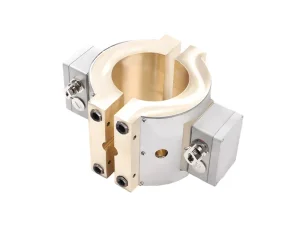
Cast Aluminum / Copper Barrel Heater
Explore Product
High-Efficiency Pipeline Circulation Heater
Explore Product
Industrial Portable Ceramic Heaters
Explore Product
China Heavy-Duty Ceramic Radiant Heater
Explore Product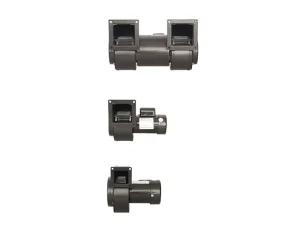
CE Industrial Blower & Cooling Fan Unit
Explore Product
Electromagnetic Induction Heater
Explore Product
Explosion-Proof Electric Process Heater
Explore ProductPartner with an Engineering Factory, Not a Trading Agent
Directly collaborate with our senior thermal instrumentation engineers in Yancheng, Jiangsu, China. Send your mechanical drawings, operating parameters, and batch requirements for an authoritative engineering review within 24 hours.