

Primary Lineup
High-Efficiency Industrial Heating Systems
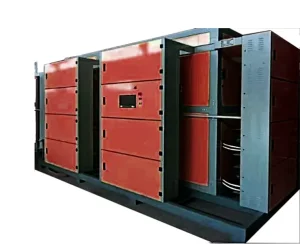
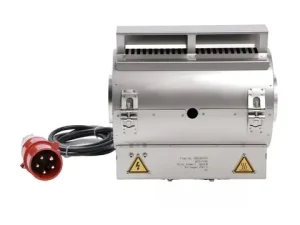
Explore our heavy-duty industrial electric heaters designed for high heat conductivity, minimal thermal inertia, and extreme resistance to mechanical vibration.




Industry Intelligence
Evolution of Industrial Tube & Cylindrical Heating Technologies
The global thermodynamic landscape is undergoing a massive shift towards electric heat electrification, carbon neutralization, and real-time algorithmic thermal balancing.
Electrification & Direct-Emission Reduction
Global carbon taxes and ESG compliance are forcing industrial plants to decommission fossil-fuel burners and unshielded steam jackets. Modern tube heaters provide localized, 98% efficient energy transfer without exhaust flues or on-site combustion emissions.
Advanced Ceramic & Alloy Sheaths
Standard resistive alloys degrade rapidly under persistent cycling above 450°C. Modern tube and band designs incorporate high-purity fused magnesium oxide (MgO) insulation, INCOLOY® sheaths, and steatite ceramic cores for exceptional dielectric strength up to 800°C.
Thermal Inertia Mitigation & AI Control
With smart PID algorithms and integrated multi-point thermocouples, contemporary tube systems eliminate temperature overshoot within ±1°C tolerances, preventing resin degradation during extrusion pauses and drastically trimming cycle waste.
Engineering Evaluation
Overcoming Common Procurement Bottlenecks
Procuring industrial heating elements on unit cost alone regularly results in unscheduled maintenance, premature terminal corrosion, and devastating line downtimes.
Thermal Expansion Mismatches
Low-grade clamp designs create localized air gaps as the barrel expands. This triggers immediate hot-spot development, element oxidation, and localized burnouts. Our custom CAD clamping ensures dynamic, uniform surface tension across the entire temperature gradient.
Dielectric Breakdown Under Moisture
Hydrophobic moisture absorption in porous insulation causes premature earth-leakage tripping. We utilize proprietary hermetic ceramic-to-metal sealing and resin encapsulation that sustains an insulation resistance exceeding 1000 MΩ at 500V DC.
Erratic Watt Density Profiles
Generic elements fail to balance outer radiated losses with barrel contact dynamics. Our CAD-optimized coil winding delivers variable watt density zones, preserving absolute uniformity across critical entry feeds, transition channels, and die extruders.
Incomplete Engineering Documentation
Global supply chains require immediate traceability. We support every component batch with complete mill certificates, dielectric flash test reports, physical dimensional CMM scans, and full CE/RoHS material conformity certificates.
| Heating Technology | Core Composition | Max Operating Temp | Thermal Efficiency | Best Process Application |
|---|---|---|---|---|
| Industrial Ceramic Tube/Band | Steatite Ceramic Blocks & NiCr 80/20 Resistance Core | 700°C (1292°F) | 93% - 96% | Extruder Barrels, Polymer Melting, Granulation Units |
| Cast-in Aluminum/Copper | Tubular Sheaths Cast in LM24 Aluminum / Copper Alloys | 400°C (Al) / 650°C (Cu) | 90% - 94% | Severe Vibration Extrusion, Blown Film, Liquid Chill Channels |
| Nano Infrared Band Element | Aero-grade Ceramic Fiber & Micro-Radiative Silica Glass | 600°C (1112°F) | 96% - 98% | Energy-Saving Retrofits, Low Heat Dissipation Facilities |
| Mineral Insulated (MI) Tube | Compacted MgO Powder in Stainless Steel or Incoloy | 800°C (1472°F) | 92% - 95% | Chemical Reaction Pipelines, High-Pressure Gas Lines |
| Engineered Mica Band | Phlogopite Mica Plates with Micro-Wound Resistance Foil | 350°C (662°F) | 85% - 88% | Injection Nozzles, Low-Profile Small Barrel Sections |
1986
Established Engineering Roots
100+
Export Nations Directly Served
5,000+
Global Industrial Clients
5-Year
Traceable Manufacturing Warranty
Smart Manufacturing Architecture
China Industry 4.0: Supply Chain Agility & Strict Quality Rigor
How Yancheng Laier Heating Technology (Kangpu Heater) bridges high-throughput robotic production with bespoke metallurgical engineering.
Vertically Integrated Raw Sourcing
Situated within the prime manufacturing delta of Yancheng, Jiangsu, our localized ecosystem grants seamless access to certified Nickel-Chromium wire, pure Incoloy sheathing, and high-density steatite. This minimizes raw material supply disruptions, ensuring sub-15-day mass delivery windows.
Real-Mold Customization Process
We reject generic one-size approximations. Our factory operates a 7-stage workflow: Industrial Design (ID), rapid CAD configuration, full real-mold production sampling, client line validation, iterative refinement, electrical & thermal surge verification, and audited production runs.
Traceable QA & 5-Year Warranty
Every individual tube heater and thermal assembly is stamped with a digital production lot code linked directly to our internal ERP. Each unit undergoes strict hipot testing, cold insulation resistance checking, and live watt-density calibration before boxing.
Worldwide Implementation
Tailored Regional Application Scenarios
Industrial thermal requirements vary dramatically based on grid architecture, regulatory demands, and primary local manufacturing industries.
North America & UL Standards
Focused intensely on plastics recycling, extrusion compounding, and petrochemical handling. High demand for custom 480V three-phase tube elements, NEMA 4/7 explosion-proof terminal enclosures, and high-efficiency ceramic band systems configured for rapid OEM replacements.
Europe & CE/RoHS Energy Benchmarks
Driven by aggressive carbon reduction frameworks (Fit for 55) and escalating grid tariffs. European processors prioritize our Nano Infrared Band Heaters and fully insulated cooling/heating combined systems that slash surface heat loss by up to 35% compared to legacy bands.
Asia-Pacific & High-Volume Infrastructure
Robust adoption across pipe manufacturing plants (PVC-O stretching ovens), heavy industrial hot-oil circuits, and electronic packaging lines. Our fast delivery, mold customization speed, and resilience against aggressive humidity establish critical operational continuity.
Extended Thermal Inventory
Precision Assemblies & Specialized Equipment
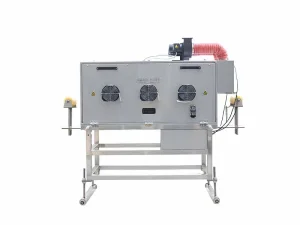
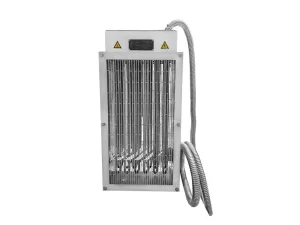
Discover our comprehensive catalog of pipeline heaters, mica modules, custom ovens, and explosion-rated thermal solutions.




Technical Clarifications
Industrial Heating FAQ & Technical Consultation
Comprehensive engineering answers addressing custom fabrication, maintenance protocols, electrical safety, and global export compliance.
Can Kangpu fabricate tube and cylindrical heaters strictly based on our proprietary technical drawings?
Yes, completely. Direct engineering customization has been our foundational operation since 1986. You can submit CAD blueprints (DWG, STEP, PDF), physical barrel samples, or machine serial references. Our senior application engineers evaluate mechanical dimensions, watt density thresholds, voltage compatibility (110V up to 690V), terminal box clearances, and specialized cutouts for thermocouple probes before opening tooling molds.
What specific protocols underpin your 5-year after-sales manufacturing warranty?
Our 5-year warranty is underpinned by individual laser-etched lot traceability. Should an element experience dielectric degradation, open circuiting, or structural fatigue under normal operating conditions, our QA laboratory retrieves the raw material test coupons and production records of that batch. We do not simply replace parts; we conduct root-cause metallographic and thermal reviews to resolve issues at their origin.
How should engineers evaluate ceramic band heaters against mica band heaters for barrel processing?
The choice hinges directly on target operating temperatures and process geometry. Mica band heaters feature an ultra-slim profile, immediate thermal response, and exceptional cost-effectiveness for temperatures below 350°C, making them standard for injection molding nozzles. Ceramic band heaters utilize articulated steatite ceramic blocks surrounded by thermal insulation blankets; they handle operating temperatures up to 700°C and dramatically lower ambient thermal dissipation on massive continuous extrusion barrels.
How does Kangpu control dielectric leakage in humid industrial factory environments?
All tubular and high-density elements undergo high-heat drying ovens followed by instantaneous hermetic termination. We incorporate silicone vulcanization, PTFE lead seals, or glass-to-metal seals depending on process temperatures. Every element is tested to withstand flash hipot testing (typically 1500V to 2000V for 60 seconds) with cold insulation resistance verified above 1000 MΩ.
What is the lead time for custom engineered prototypes versus bulk mass production?
For custom engineered samples requiring new tooling, design reviews and real-mold production sampling are typically finalized within 5 to 7 business days. Following client dimensional and electrical sign-off, volume manufacturing runs (500 to 5,000 units) are fulfilled within 12 to 18 business days, fully packaged in reinforced sea/air crates compliant with international ISPM 15 standards.