
Primary Thermal Heating & Furnace Lineup Serving Chilean Industry
Precision-fabricated thermal oil boilers and electric heating equipment complying with CE Directive 2014/68/EU (PED) and Chilean SEC (Superintendencia de Electricidad y Combustibles) industrial safety standards.
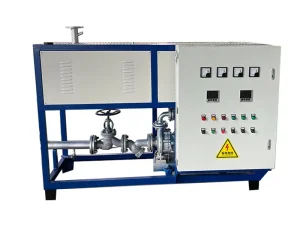
CE-certified closed-loop thermal oil furnace engineered for operating temperatures up to 350°C under low pressure, ideal for solvent extraction and brine crystallization.
View Furnace Specs
Advanced thermal cleaning system for polymer removal from spinnerets, filter packs, and extrusion dies, minimizing downtime in plastics and chemical plants.
View Cleaning System
Electromagnetic induction steam unit delivering rapid thermal response with 98%+ thermal efficiency without local emissions, tailored for Chilean agro-industrial facilities.
View Steam Boiler
Precision-controlled thermal decontamination equipment designed to preserve tooling integrity without chemical solvents or mechanical scratching.
View Pyrolysis TechStrategic Thermal Fluid Dynamics in Chile’s Industrial Ecosystem
As the world's preeminent producer of copper and a vital nexus for lithium brine extraction within the global energy transition, Chile presents one of the most demanding operational environments for industrial thermal energy systems. From the ultra-arid, high-altitude plateaus of the Atacama Desert in the Antofagasta and Tarapacá regions to the maritime pulp, paper, and marine processing clusters in Biobío, Los Lagos, and Magallanes, process heating requirements cannot be solved by conventional, off-the-shelf boiler assemblies. Kangpu Heater (Yancheng Laier Heating Technology Co., Ltd.) brings four decades of manufacturing authority to bear, providing high-efficiency CE-certified heat-conducting oil furnaces, electromagnetic generators, and specialized heating solutions custom-engineered for Chilean commercial, mining, and petrochemical infrastructure.
Modern thermal oil systems (organic heat transfer fluid heaters) represent the gold standard in process heating where thermal stability up to 350°C is required without the immense, dangerous hydraulic pressures associated with saturated or superheated steam. In Chilean copper hydrometallurgy—specifically solvent extraction and electrowinning (SX-EW) circuits—precise thermal regulation of electrolyte and organic wash phases is paramount to maintaining current efficiency and preventing phase separation anomalies. Traditional direct-fired steam boilers operating at 10 to 15 bar face extreme scaling risks due to hard, mineralized process water common across Northern Chile. In contrast, closed-loop thermal oil heaters circulate a synthetic or mineral heat transfer fluid in a closed liquid-phase loop under minimal system pressure (rarely exceeding 3 to 5 bar pump head), virtually eliminating scaling, catastrophic flash-steam explosion hazards, and excessive make-up water consumption.
Andean High-Altitude Combustion & Electrical Derating
Operating process heaters above 2,500 to 4,500 meters above sea level in the Chilean Andes entails a severe drop in ambient atmospheric pressure and air density. In fuel-fired thermal oil heaters, oxygen starvation reduces combustion efficiency, elevates carbon monoxide formation, and leads to flame instability. Kangpu addresses these micro-climates by deploying variable-frequency forced-draft blowers, multi-stage oxygen trim controllers, and derated burner nozzles calibrated specifically to barometric realities. In fully electric and electromagnetic thermal fluid boilers, our engineers apply specialized dielectric clearance calculations and watt-density reductions (below 2.0 W/cm²) to the heating elements. This prevents local thermal stress and thermal fluid cracking caused by reduced convective heat dissipation in low-density ambient environments.
Chilean Seismic Standard Compliance (NCh433 & NCh2369)
Chile is situated squarely on the Pacific Rim's "Ring of Fire," requiring all major capital process machinery to withstand significant lateral dynamic forces. Thermal fluid heaters carry substantial hydraulic mass within their expansion tanks, deaerators, and coiled heat-exchanger shells. Under Chilean seismic design standard NCh2369 for industrial facilities, unreinforced boiler mounts and rigid piping manifolds represent acute failure risks. Kangpu's CE-certified oil furnace skids incorporate reinforced heavy-gauge structural saddles, finite-element-analyzed gusset plates, seismic anchor configurations, and dynamic flexible bellow connections that absorb displacement oscillations without rupturing thermal fluid pressure boundaries.
Global Sourcing Requirements & Decarbonization Pathways
Meeting the rigorous procurement mandates of multinational EPC contractors, Chilean mining conglomerates, and international manufacturing consortia.
Lithium Carbonate & Hydroxide Evaporation Skids
In the Salar de Atacama, lithium extraction facilities require sustained thermal energy to power crystallization evaporators, filter press pre-heaters, and chemical reactors. Kangpu’s thermal oil systems supply continuous 200°C to 280°C heat without requiring chemical water treatment plants. By isolating the heating medium in a closed non-aqueous loop, water loss is zero—a crucial ESG prerequisite for water-stressed Chilean salt basins.
Polymer Extrusion & Tooling Calcination
Chilean plastics convertors producing agricultural drip irrigation lines, industrial geomembranes, and PVC-O pipes demand uniform cylinder heat and rapid die cleaning. Our electric heat-conducting oil heaters and vacuum cleaning furnaces eliminate thermal spots along multi-zone extrusion profiles, preventing polymer chain degradation and ensuring high mechanical tensile ratings in finalized pipe products.
Wood Processing & Fishmeal Dehydration
Southern Chile's massive forestry and marine export sectors rely heavily on indirect heating for veneer presses, resin curing, particleboard drying, and low-temperature fishmeal drying lines. Using thermal oil eliminates the localized scorching common with direct steam tubes, preserving protein digestibility in aquaculture feeds and enhancing structural adhesive bond strength in timber products.
Engineering Information Gain: Preventing Thermal Fluid Oxidation in Chilean Plants
The leading cause of premature thermal oil failure in process plants across South America is thermal cracking caused by excessive film temperature ($\Delta T$) and oxidation inside unsealed expansion tanks. Kangpu oil furnaces implement a double-helical coil configuration with calculated turbulent flow (Reynolds number $Re > 10,000$), ensuring the heat transfer fluid's boundary layer never exceeds maximum film temperature limits ($365^\circ\text{C}$ for synthetic fluids). Furthermore, our Chilean installations feature a standard dry nitrogen blanketing interface on the expansion tank, isolating hot oil from atmospheric oxygen and extending thermal fluid working lifespan from 2 years to beyond 7 years of round-the-clock operation.
Comparative Analysis: Thermal Oil vs. High-Pressure Steam in Chilean Industry
Evaluating thermodynamic metrics, lifecycle CAPEX/OPEX, water footprint, and regulatory obligations under Chilean Supreme Decree DS 10/2013.
| Performance / Engineering Metric | Kangpu CE Thermal Oil Furnace | Traditional High-Pressure Steam Boiler | Direct-Fired Gas / Diesel Systems |
|---|---|---|---|
| Operating Temperature | Up to 350°C (Custom configurations to 400°C) | Typically limited to 180°C - 210°C (Requires high bar) | Up to 500°C+ (Direct flame contact) |
| Operating Working Pressure | Low hydraulic head pressure (<4 to 6 bar) | High pressure (10 bar to 40+ bar for high heat) | Atmospheric |
| Water Consumption & Treatment | Zero water consumption (Closed fluid circuit) | High consumption; constant blowdown & softening | None |
| Chilean SEC DS 10/2013 Burden | Simplified oversight due to low operating pressure | Heavy statutory inspection; registered boiler operators | Burner safety code compliance |
| Thermal Uniformity & Precision | ±1.0°C across all process heat exchangers | Fluctuates with pressure drop and condensate load | High localized hot spots and flame impingement |
| Corrosion & Freezing Resilience | No internal corrosion; fluid protected to -20°C | High risk of oxygen pitting and freeze damage in winter | Dry combustion chamber; potential flue corrosion |
| Decarbonization / Hybrid Capability | Direct coupling with electric/solar thermal grids | Complex electric steam conversions | Pure fossil fuel dependence |
Technological Roadmap 2026-2030: Hybrid Electric Thermal Fluid
Chile boasts some of the highest solar irradiance levels on the planet throughout the Atacama region, leading to historically low daytime wholesale electricity spot prices. Kangpu’s engineering roadmap introduces dual-fuel hybrid thermal systems that combine electric immersion bundles with secondary gas or diesel combustion. During peak solar production hours, the facility runs exclusively on zero-carbon electric immersion heaters; as solar supply drops in the evening, the system seamlessly transitions to modulating burners, maintaining an uninterrupted 320°C delivery profile while cutting industrial fuel operating expenses by up to 60%.
Localized Chilean Regulatory Assurance (SEC & DS 10)
In Chile, the installation and commissioning of industrial thermal fluid plants fall under the legal framework of Decreto Supremo N° 10 (Reglamento de Calderas, Autoclaves y Equipos que utilizan Fluidos Térmicos), overseen by the Superintendencia de Electricidad y Combustibles (SEC) and SEREMI de Salud. Kangpu provides comprehensive technical dossiers, European Pressure Equipment Directive (PED 2014/68/EU Module H/H1) compliance documentation, hydro-test certifications, non-destructive welding test (NDT) radiographs, and bilingual electrical diagrams to ensure swift, unhindered municipal permitting and plant commissioning.
Frequently Asked Engineering Questions for Chilean Procurements
Practical answers addressing thermal fluid degradation, high-altitude burner selection, seismic safeguards, and SEC compliance.
Auxiliary Heaters, Elements & Thermal Control Systems for Chile
Explore Kangpu's full spectrum of precision electric band heaters, thermocouples, ceramic assemblies, and air movement systems serving South American industrial processors.

Infrared radiant band heater cutting energy draw by 30-40% on extrusion barrels in Santiago and Concepción plastics processing facilities.
View Nano Band
Ultra-compact, rapid-response mica insulation bands specifically sized for injection molding nozzles and high-speed packaging machinery.
View Mica Specs
Flexible, durable ceramic element assemblies providing focused spot heating, pre-heating for thick structural welds, and autoclave auxiliary heat.
View Ceramic Unit
Mineral-insulated Type K, J, and PT100 temperature sensors providing micro-volt accuracy for oil furnace loops and extruder barrel controllers.
View Sensors
Long-wave ceramic infrared heating elements providing uniform heat distribution without convection turbulence for sheet thermoforming and drying lines.
View IR Emitters
Patented cast-in or air-cooled barrel jacket modules combining electric heating with blower or liquid cooling for exact extrusion melt control.
View Integrated Tech
Clean industrial steam generation tailored for wine production, canning, dairy processing, and sterile pharmaceutical requirements across Chile.
View Steam Boiler
Heavy-duty centrifugal blowers engineered to overcome high-altitude atmospheric pressure deficits for furnace combustion and barrel cooling in Chile.
View Fan Specs