Industrial Thermal Fluid Systems · Direct Factory Direct

Oil Furnaces Exporters & Factories serving the Hamburg Market

Delivering engineered thermal oil furnaces, electromagnetic vapor generators, and precision high-temperature processing skids compliant with DIN 4754, DIN EN 12953, and EU Pressure Equipment Directive (PED 2014/68/EU) for maritime, refinery, and advanced processing hubs in Northern Germany.

Metropolitan Industry Analysis

Thermal Fluid Engineering Across the Greater Hamburg Maritime & Industrial Basin

As Germany's foremost maritime gateway and the second largest port in Europe, the Free and Hanseatic City of Hamburg constitutes an exceptionally demanding operational environment for industrial process heat, fuel logistics, and high-temperature thermal transfer equipment.

Hamburg Port Liquid Cargo Logistics

The Port of Hamburg (Hafen Hamburg) handles millions of metric tons of viscous liquid cargoes annually, spanning bitumen, heavy fuel oils, lubricants, and bio-feedstocks. At terminals throughout Waltershof, Altenwerder, and Neuhof, our thermal oil furnaces deliver continuous, non-pressurized indirect heat to prevent wax drop-out and maintain precise pumping viscosities.

Harburg-Wilhelmsburg Refining Corridor

The petrochemical and specialty chemical cluster south of the Norderelbe, including facilities around Harburg and the Kattwyk peninsula, demands strict thermal boundary layer management. High-capacity organic heat carrier furnaces supply stable thermal energy up to 350°C for resin synthesis, plasticizer refining, and solvent recovery under German WHG standards.

Green Port Hydrogen & Bio-Refining Transition

Hamburg's Climate Action Plan mandates deep decarbonization of harbor industries. The transition from heavy bunker oil burners to hybrid-electric thermal fluid heaters and electromagnetic boilers allows terminal operators to utilize green offshore wind power while maintaining identical primary thermal circuit infrastructure.

Engineering Takeaway for German Specifiers: Operating thermal fluid heaters in Hamburg requires rigid compliance with the German Water Resources Act (Wasserhaushaltsgesetz - WHG) for secondary containment, alongside ATEX certification (Directive 2014/34/EU) for hazardous zone 1/2 deployment adjacent to bulk hydrocarbons and chemical transshipment terminals.
Field Applications & Case Scenarios

Engineered Application Scenarios for Hamburg's Industrial Infrastructure

Thermal fluid heaters (Wärmeübertragungsanlagen mit organischen Wärmeträgern) replace high-pressure steam boilers across critical Northern German industry segments due to superior safety, non-pressurized operation, and absence of scale or corrosion problems.

1. Marine Bunker Fuel & Tank Farm Thermal Maintenance

In the Port of Hamburg's bunkering stations, high-viscosity VLSFO (Very Low Sulphur Fuel Oil), bio-marine blends, and asphalt must be sustained at temperatures ranging between 60°C and 160°C to guarantee fluidity through transfer piping. Steam systems often create severe local hot spots that lead to coking, while steam tube failure risks dangerous water contamination inside the fuel tanks. Our closed-circuit thermal oil heaters operate at negligible pressure (0.3–0.6 MPa), distributing heat through helical heating coils in storage tanks with temperature control precision within ±1°C.

  • Elimination of condensate return systems and feedwater chemical conditioning.
  • No freezing risks during harsh winter cold snaps along the Lower Elbe.
  • Continuous monitoring of thermal fluid degradation via integrated sampling taps.

2. Polymer Processing, Composites & Extrusion Plants

Across Hamburg-Nord and surrounding industrial districts such as Norderstedt and Geesthacht, high-temperature composite autoclaves, plastics extrusion cylinders, and calender rolls require accurate heating zones up to 320°C. Steam would require prohibitive system pressures exceeding 110 bar to reach such thermal levels, creating major safety and regulatory liabilities under German TÜV oversight. Our thermal oil heaters supply uniform, high-temperature fluid loops with low-watt-density heating elements that prevent fluid cracking and thermal degradation.

  • Low film temperature (<340°C) engineered heat exchangers preventing localized scorching.
  • Direct integration with PLC-driven PID controllers for zero thermal overshoot.
  • Option for dual-circuit heating/cooling skids for exothermic polymer reactions.

3. Vegetable Oil & Oleochemical Deodorization

Hamburg is home to leading European edible oil refining and bio-diesel processing plants located around the Reiherstieg and Spreehafen basins. Refining vegetable oils (rapeseed, sunflower, palm oil) requires high-temperature deodorization and bleaching columns operating between 230°C and 260°C under vacuum. Our electric and hybrid thermal oil furnaces ensure completely leak-free circulation, preventing any trace of steam contamination into edible product batches.

  • High-purity stainless steel (AISI 316L / 1.4404) fluid-wetted passages available.
  • High turbulent flow velocities (Reynolds > 10,000) ensuring superior heat transfer coefficients.
  • Nitrogen inertization blankets on expansion tanks to prevent fluid oxidation.

4. Industrial Cleaning & Pyrolysis of Polymer Tools

Specialized technical manufacturing workshops in Harburg frequently require non-abrasive, non-destructive cleaning of expensive tooling—such as meltblown dies, filter candles, and injection nozzles fouled with polyolefins, PA, or PET. Our high-efficiency thermal cleaning furnaces deploy controlled vacuum thermal breakdown, eliminating toxic salt baths or abrasive mechanical scrubbing and extending tool life by over 300%.

  • Zero distortion of precision micro-orifices in spinnerets and extruders.
  • Integrated afterburner chamber for clean, odor-free flue gas meeting German TA-Luft regulations.
  • Fully automated cleaning cycle with micro-processor temperature profiles.
Next-Generation Technology Roadmap

Engineering Transition: Decarbonization, Electrification & Smart Thermal Loops

The thermal fluid engineering landscape is entering an era driven by stricter carbon taxes (EU ETS), German energy efficiency regulations (EnMS ISO 50001), and the integration of smart IoT telemetry for preventive maintenance.

Phase 1: Full Skid Electrification

Replacing traditional natural gas or heavy oil fired burners with high-density flanged electric immersion heater bundles. Featuring Incoloy 800/840 sheathing, automated multi-stage thyristor (SCR) power modulation, and watt densities optimized below 2.0 W/cm² to completely prevent synthetic oil degradation.

Phase 2: Hybrid Power-to-Heat Systems

Dynamic dual-fuel and hybrid electric-thermal fluid units designed to arbitrage fluctuating German wholesale electricity prices (spot market Day-Ahead pricing). Skids switch automatically between electrical heating during surplus green power windows and auxiliary burners during peak electricity tariff periods.

Phase 3: AI-Driven Predictive Maintenance

Integration of high-precision thermal fluid viscosity, dielectric constant, and pressure-drop sensors embedded into the primary circulation manifold. Transmits real-time fluid health to plant DCS systems via Modbus TCP/IP, predicting oil degradation and tube wall coke accumulation before unplanned outages occur.

98.5%
Thermal Transfer Efficiency (Electric Skids)
0.8 bar
Low System Operating Pressure at 320°C
<2.0 W
Watt Density per cm² (Anti-Coking Standard)
100%
DIN 4754 / PED 2014/68/EU Conformity
Supply Chain Architecture

Chinese Factory Supply Chain Resilience & Manufacturing Depth

Combining over 40 years of precision heating fabrication in Jiangsu's industrial cluster with strict German quality engineering criteria to deliver unbeatable cost efficiency, shortened lead times, and robust equipment reliability.

For European engineering procurement teams, sourcing capital thermal equipment involves balancing tight delivery schedules against rigid mechanical compliance. Our manufacturing facility in Yancheng, Jiangsu operates as a specialized thermal engineering hub, integrating end-to-end capabilities from raw alloy processing and automated CNC coil winding to ASME Section VIII and European Pressure Equipment Directive (PED) certified pressure vessel fabrication.

Unlike regional European manufacturers who frequently encounter lead times of 36 to 52 weeks for custom thermal fluid skids, our vertically integrated supply chain enables turnaround times of 10 to 14 weeks from final approval of engineering drawings to port loading. With dedicated metallurgical testing laboratories, helium leak detection, automated submerged arc welding, and complete radiographical examination (RT), we assure mechanical integrity that satisfies both German TÜV inspection protocols and international standards.

Furthermore, direct direct-from-factory exporting eliminates unnecessary intermediary markups, providing Hamburg procurement directors with a 30% to 45% capital expenditure advantage without compromising metallurgical quality, component traceability, or safety redundancies.


Evaluation Parameter Standard Regional Sourcing Our Integrated Factory Skid
Fabrication Lead Time 32 – 50 Weeks 10 – 14 Weeks
Heating Element Tech Standard Nichrome Elements Incoloy 800/840 Low-Watt Density
Pressure Vessel Welding Manual TIG / Variable Quality Automated SAW + 100% X-ray / NDT
Regulatory Documentation Standard CE Mark Full PED Module H/H1 + TÜV Dossier
Total Cost of Ownership High Initial Capex + Costly Spares Optimized Capex + Modular Spares
Factory Pre-Commissioning Partial Subsystem Testing 100% Full Electrical & Hydrostatic FAT
Norms, Safety & Legal Framework

Localized Compliance & Rigorous German Engineering Standards

Operating thermal fluid installations in Germany requires adherence to a comprehensive web of statutory technical regulations. Every furnace and ancillary heater exported to the Hamburg market is manufactured to satisfy these exact codes.

DIN 4754 Compliance

The foundational standard for heat transfer systems using organic liquids. Our furnaces include required flow monitoring interlocks, dual over-temperature cutoff devices, nitrogen blanket interfaces for expansion vessels, and safety shutoff valves to prevent fluid vaporization or system overheating.

PED 2014/68/EU & AD 2000

Pressure vessels, heat exchanger tubes, and manifolds are engineered in full alignment with the European Pressure Equipment Directive (PED 2014/68/EU) and AD 2000-Merkblatt codes. Delivered with complete Notified Body inspection dossiers (TÜV Rheinland / TÜV NORD) and EN 10204 3.1 material test certificates.

ATEX Directive 2014/34/EU

For operations in explosive atmospheres common to Hamburg Port tank farms and solvent processing plants, we construct flameproof and explosion-protected terminal enclosures (Ex d / Ex e) and certified sensors rated for Zone 1 and Zone 2 gas hazardous zones (Temperature class T1 to T4).

BetrSichV (German Operational Safety Ordinance)

We deliver all technical documentation, risk assessments according to EN ISO 12100, wiring diagrams conforming to DIN EN 60204-1, and operating manuals in professional German. This guarantees smooth initial commissioning audits by authorized inspection bodies (ZÜS - Zugelassene Überwachungsstellen) such as TÜV NORD or DEKRA.

Wasserhaushaltsgesetz (WHG) Water Protection

Given the close proximity of Hamburg industrial plants to the River Elbe, Alster, and connected harbor waterways, our thermal fluid skids can be ordered with integrated secondary catch basins, double-walled pipe penetrations, and leak detection probes compliant with German water protection requirements.

Extended Industrial Catalog

Industrial Heating Elements, Pipeline Heaters & Thermal Accessories

Complementary high-performance heating components, pipeline circulation heaters, thermocouples, and blowers engineered for European industrial integration.

Ceramic China Portable Ceramic Heaters for Industry Manufacturers, Exporter Hamburg

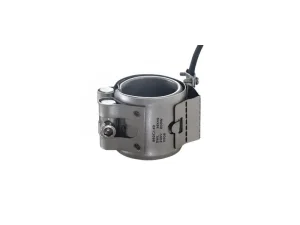
Portable Industrial Ceramic Band Heater

High-temperature segmented ceramic heating band featuring steatite insulating knuckles. Built for rapid retrofitting onto extruder barrels and barrel nozzles across plastics plants in Greater Hamburg.

View Portable Ceramic Spec →
Efficiency China Efficient Portable Ceramic Heaters for Industry | China Suppliers & Factory Exporters

High-Efficiency Ceramic Process Heater

Engineered ceramic heater with ceramic fiber thermal insulation back-cover, reducing outer shell temperatures to under 80°C and cutting radiant thermal energy consumption by up to 25%.

Access Efficiency Metrics →
Circulation Best Pipeline Heater Manufacturers, Factory for Hamburg Terminals

Heavy-Duty In-Line Pipeline Circulation Heater

Flanged in-line pressure vessel heater for direct continuous fluid heating. Ideal for heating fuel oil lines, thermal fluids, and chemical solutions in maritime terminals and processing plants.

Inspect Pipeline Heater →
Sensors High-Quality Thermocouple Exporter, Factory

Precision Mineral Insulated Thermocouple

Class 1 accuracy Type K and Pt100 RTD temperature sensors featuring DIN terminal heads. Designed for high-vibration environments and continuous thermal oil temperature measurement.

Explore Thermocouple Range →
Air Moving CE Certification Fan Manufacturer, Factory

CE-Certified Industrial Air Blower Fan

High-static-pressure centrifugal cooling and circulation fan conforming to CE directives. Essential for barrel air cooling zones, furnace combustion air, and process exhaust removal.

View Blower Specifications →
Rugged High-Quality Portable Ceramic Heaters for Industry

Modular High-Temp Ceramic Band Unit

High watt density ceramic band heater built with corrosion-resistant stainless steel armor and flexible clamping mechanisms for tight cylindrical fit and maximum conductive transfer.

Inspect Modular Ceramic →
Mica China Safe and Durable Mica Heaters Factory, Factories

Safe & Durable Industrial Mica Band Heater

Cost-efficient, ultra-thin mica heating elements providing rapid thermal rise times up to 350°C. Engineered specifically for injection nozzles and moderate-temperature barrel zones.

Access Mica Heater Specs →
Heavy Duty Best Efficient Portable Ceramic Heaters from China Suppliers

Industrial Grade Portable Ceramic Barrel Heater

Heavy-duty industrial ceramic heater engineered for extreme mechanical abuse and continuous 24/7 duty cycles. Equipped with standard European terminal connection options.

Review Ceramic Performance →
Procurement & Engineering FAQ

Frequently Asked Questions: Sourcing & Hamburg Deployment

Direct engineering answers to common technical, regulatory, and logistics queries from German plant managers and procurement professionals.

How do your oil furnaces guarantee compliance with German DIN 4754 standards?

Our thermal fluid systems are built according to DIN 4754-1 (Heat transfer installations working with organic heat transfer fluids). We incorporate all safety-critical features mandated under German law: mechanical minimum-flow differential pressure switches, dual independent over-temperature limiters (STB) wired to safety contactors, low-level alarms in the expansion tank, and automated nitrogen inertization valves. Complete schematics and risk assessments are supplied in German for straightforward inspection by TÜV NORD or DEKRA.

What is the typical shipping transit time and customs clearance route to Hamburg Port?

Orders are packed in export-grade seaworthy steel-framed wooden crates (ISPM 15 compliant) and containerized directly at our Jiangsu factory. Ocean freight ships out of Shanghai or Ningbo directly to the Container Terminal Altenwerder (CTA) or Burchardkai (CTB) in Hamburg, with typical sailing transit of 28 to 34 days. We provide complete commercial documentation, packing lists, bill of lading, and EUR.1 / RCEP documentation, with DDP or CIF Hamburg terms available through established local German freight clearing agents.

Can you manufacture replacement heating bundles to match existing German OEM systems?

Yes. We regularly supply drop-in replacement immersion heater bundles, flanged circulation elements, and ceramic band heaters reverse-engineered to match existing European OEM specifications (including Konus-Kessel, HTT, Babcock Wanson, and others). Simply furnish your mechanical dimensional drawing, flange standard (DIN EN 1092-1 DN150–DN600), voltage, and wattage requirements. We provide full 3D CAD step files for customer verification before commencing manufacturing.

Why choose an electric thermal oil furnace over natural gas or light diesel firing?

Electric thermal oil systems offer decisive advantages for urban and harbor environments like Hamburg: zero localized flue gas emissions (eliminating BImSchG permit hurdles), compact footprint without chimney stacks, near 100% point-of-use electrical efficiency, and precise SCR power modulation. In addition, electric skids future-proof your facility against tightening European carbon taxes (EU ETS) and integrate directly with renewable power purchasing agreements (PPAs).

What warranty and spare parts guarantees do you provide for European buyers?

We stand behind our industrial equipment with a comprehensive 5-year warranty on core heating structures and pressure vessel integrity. Critical operational spares (such as replacement heating elements, gasket sets, RTD probes, and mechanical pump seals) are maintained with rapid dispatch capabilities, ensuring maximum operational uptime for Hamburg manufacturing lines.

Engineering Consultation Available

Request an Engineered Thermal Fluid Quote for Hamburg

Whether you are retrofitting an existing tank terminal heating system in the Port of Hamburg, upgrading a polymer extrusion line, or procuring a turnkey DIN 4754 compliant thermal oil furnace skid—our technical engineering team is ready to assist.

Send Inquiry Now Download Engineering Catalog