
Flagship Process Furnaces for Saudi Arabia
Industrial-grade heat-conducting oil systems, thermal pipeline units, and clean electric heating systems built to operate reliably in GCC petrochemical complexes.
-
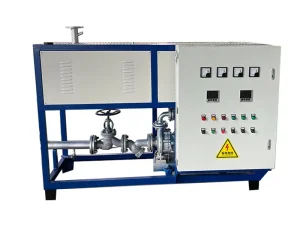
High-Quality Heat-conducting Oil Furnace for Saudi Arabia Plants
High-Quality Heat-conducting oil furnace Manufacturer, Exporter
-

High-Efficiency Thermal Cleaning Furnace for Saudi Polymer Lines
-

Electromagnetic Induction Steam Generator for Jubail & Yanbu
High-Quality Electromagnetic steam boiler Manufacturers, Factories
-

Heavy-Duty In-Line Pipeline Heater for Saudi Hydrocarbon Logistics
Industrial Thermal Operations in Saudi Arabia: The Shift Toward Efficiency
As Saudi Arabia accelerates its downstream industrial diversification under Vision 2030, precision thermal fluid heaters play a critical role across the Kingdom's chemical, extraction, and utility sectors.
Downstream Chemical Expansion
Petrochemical centers across Jubail, Yanbu, and Ras Al-Khair are expanding beyond basic crude refinement into high-value specialty polymers and fine chemical intermediates. These processes require thermal fluid circulation systems capable of sustaining tight temperature tolerances up to 350°C without risking hydrocarbon degradation or thermal cracking within heat transfer loops.
Severe Ambient Operation
Industrial heating hardware deployed across the Arabian Peninsula must withstand summer ambient temperatures exceeding 50°C, high concentrations of airborne dust, and high relative humidity in coastal installations. Standard equipment often suffers terminal burnout and sensor drift unless engineered with rated enclosures, sealed multi-layer insulation, and high-spec alloy metallurgy.
Decarbonization & ESG Standards
Under the Saudi Green Initiative and circular carbon economy frameworks, industrial plants face tighter emissions caps on direct combustion boilers. Plant operators are increasingly switching to high-wattage electric thermal oil heaters and zero-direct-emission electromagnetic induction systems that eliminate flue gas output, meet SEC grid standards, and optimize energy conversion.
Thermal Fluid Furnaces vs. Direct Steam in Arid Environments
In regions where industrial process water requires energy-intensive reverse osmosis and desalination, closed-loop thermal oil heaters deliver distinct thermodynamic and economic benefits.
| Evaluation Parameter | Closed-Loop Thermal Oil Furnace | Conventional Steam Boiler System | Impact on Saudi Industrial Facilities |
|---|---|---|---|
| Operating Pressure | Atmospheric or low line pressure (0.2 – 0.6 MPa) at temperatures up to 350°C. | Requires saturated pressures exceeding 16.5 MPa to achieve 350°C, increasing structural risk. | Eliminates high-pressure vessel explosion hazards and simplifies SASO regulatory compliance. |
| Water Consumption | Zero water loss. Synthetic or mineral thermal fluid continuously recirculates in a closed circuit. | Continuous blowdown and evaporation require substantial demineralized water replenishment. | Removes dependency on treated desalinated water reserves, lowering lifetime utility costs. |
| Corrosion & Scale Deposition | Non-corrosive media circulation with anti-oxidation nitrogen blanket protection. | Constant scaling, pitting, and oxygen corrosion along carbon steel tubes. | Prevents tube wall degradation and unexpected heat exchanger failure under continuous duty. |
| Temperature Uniformity | Liquid-phase forced circulation maintains surface uniformity within ±1°C across large manifolds. | Prone to condensate pooling, latent enthalpy drops, and local surface hot spots. | Crucial for polymer extrusion dies, reactor jackets, and high-grade asphalt blending tanks. |
| Maintenance & Downtime | Annual oil sampling and filtration with long heating element operational lifespans. | Requires regular chemical dosing, water softener re-bedding, deaerator checks, and tube descaling. | Reduces unplanned shutdowns in remote petrochemical zones where technical service access is limited. |
Global Procurement Requirements for Middle Eastern Thermal Equipment
EPC contractors and multinational operators maintain strict procurement criteria for thermal equipment, prioritizing certification compliance, safety interlocks, and lifecycle reliability.
Material Integrity and Weld Diagnostics
Thermal oil furnaces must be manufactured with certified boiler-grade carbon steels (such as SA516 Gr.70 or Q245R) or austenitic stainless steels (316L/321) tailored to the working fluid. Global procurement managers require 100% radiographic weld seam testing, hydrostatic pressure proofing at 1.5 times the design threshold, and full material test report (MTR) traceability back to the base foundry heat number.
Fail-Safe Safety Interlocks & Controls
High-temperature heating units require multiple automated safety safeguards. Systems integrate low-flow differential pressure switches, thermal media over-temperature trips, primary expansion tank level transmitters, and SCR (Silicon Controlled Rectifier) power units linked via Modbus/Profibus to DCS platforms. This multi-layered approach protects both the process fluids and production equipment.
China Industry 4.0: Resilient Production & Precision Quality
Combining four decades of specialized heating R&D with modern automated manufacturing to supply global engineering teams with reliable, custom-engineered equipment.
Automated Production
Modern production facilities utilize automated CNC tube bending, robotic seam welding, and computerized resistance winding cells. This eliminates human assembly variation, keeps internal tube surfaces free from residual slag, and helps heating elements maintain balanced electrical resistance and uniform heat distribution across all phases.
Integrated Industrial Supply Ecosystem
Situated in Jiangsu's advanced industrial equipment cluster, our supply chain maintains direct access to specialty alloy mills, high-grade magnesium oxide suppliers, and certified pump fabricators. This proximity shortens raw material lead times and enables faster build schedules for both standard and custom-dimensioned units.
Full-Cycle Quality Validation
Prior to export packaging, every furnace skid completes a comprehensive testing protocol: helium leak detection, electrical breakdown resistance testing above 2500V, cold-state circulation tests, and simulated sensor calibration checks. This verification process ensures straightforward installation and commissioning on site.
Engineered for Demanding GCC Operating Environments
Proven engineering configurations supporting upstream oil handling, downstream manufacturing, and regional chemical processing plants.
Bitumen & Asphalt Processing
Thermal fluid furnaces maintain uniform temperatures within road-paving asphalt emulsion tanks and modified bitumen blending plants, preventing cold coagulation and localized thermal degradation across large tank batteries.
Polymer, PVC-O & Pipe Extrusion
Plastic tube and profile producers in industrial zones like Dammam 2nd and 3rd rely on precise thermal circulation across molds, calibration units, and barrel jackets to minimize wall-thickness variation and optimize throughput.
Heavy Crude Fluidity & Pipeline Heating
Custom pipeline heater arrays and inline thermal boosters lower viscosity in heavy crude loading manifolds and storage terminals across the Eastern Province, reducing pumping pressure drops during colder desert nights.
Industrial Heating Elements & Auxiliary Units
Explore our full line of industrial heaters, ceramic band elements, thermocouple assemblies, and auxiliary temperature control skids.
-

CE Air Duct Heaters for Commercial & Industrial HVAC
CE Certification Efficient Air Duct Heaters for HVAC Manufacturer, Factory
-

Industrial Electromagnetic Induction Barrel & Tank Heater
CE Certification Electromagnetic induction heater Manufacturer, Exporter
-

Nano Infrared Radiant Band Heater for Plastic Extruders
CE Certification Nano infrared electric band heater Manufacturer, Manufacturers
-

Portable Industrial Ceramic Heaters for Site Maintenance
-

High-Accuracy Thermocouple Sensor Assemblies (Type K/J/Pt100)
-
Zero-Emission Electric Induction Steam Skid for Industrial Plants
High-Quality Electromagnetic steam boiler Manufacturers, Factories
-

Dual-Circuit Precise Cooling and Heating Temperature Unit
CE Certification Precise Cooling and Heating System Manufacturers, Exporters
-
High-Durability Ceramic Element Heating Units for Factories
Frequently Asked Questions: Industrial Furnaces for Saudi Arabia
Clear engineering answers regarding compliance, ambient heat compensation, and electrical integration across the Gulf region.
How do high Saudi summer temperatures affect thermal oil furnace sizing?
Which thermal transfer fluids are recommended for high-temperature desert operations?
Can these heating skids integrate with plant DCS architectures via Modbus or Profibus?
What international manufacturing standards and certifications are supported?
How are replacement heating elements and spare parts supported in Saudi Arabia?
Need an Engineered Thermal Oil Furnace Solution?
Submit your technical specifications—operating temperatures, heating duty (kW), voltage constraints, and hazardous zone ratings. Our engineering team will deliver a comprehensive proposal and dimensional drawings within 24 hours.