
High-Performance Electric Heating & Thermal Control Systems
Engineered for extrusion lines, blow molding, injection barrels, HVAC air systems, and thermal processing facilities worldwide.

High-Quality Portable Ceramic Heaters for Industry
View Product Specs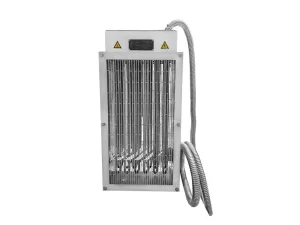
CE Certification Efficient Air Duct Heaters for HVAC
View Product Specs
CE Certification Cast Aluminum/Copper Heater
View Product Specs
High-Quality (Hot-runner) Spring Heater / Coil Heater
View Product Specs
High-Precision Industrial Thermocouples & Temperature Sensors
View Product Specs
High-Efficiency Thermal Vacuum Cleaning Furnaces
View Product Specs
China Portable Ceramic Heaters for Industry Manufacturers
View Product Specs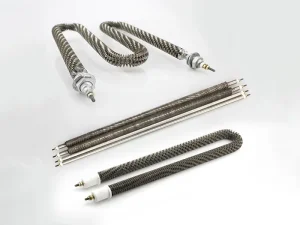
China High-Density Cartridge & Tubular Heating Elements
View Product SpecsMetallurgical Foundations of Cast Copper & Bronze Heating Technology
Why modern high-throughput polymer and composite processing demands cast bronze/brass alloys over traditional aluminum and stamped-mica components.
Thermal Conductivity Matrix
Cast copper and bronze alloys (such as CuCrZr and high-leaded tin bronze) exhibit thermal conductivities ranging from 320 to 380 W/(m·K). In direct contrast, cast aluminum alloys peak around 160-200 W/(m·K). This dramatic delta enables rapid heat spreading across wide radial sections, eliminating hot spots that degrade thermally sensitive resin melts.
700°C Continuous Service
While cast aluminum begins to soften and undergo crystalline creep above 400°C (limiting its safe operational ceiling to 450°C), cast copper elements operate reliably up to 650°C - 700°C (1200°F - 1292°F). This metallurgical ceiling is compulsory when engineering fluoropolymers (PTFE, PFA, FEP) and high-performance polyaryletherketones (PEEK, PEKK).
Structural Integrity & Clamping Force
Cast copper possesses a Young's modulus nearly double that of aluminum, preventing mechanical yield under severe clamp-torque loads. High hoop-stress tolerance maintains continuous intimate contact with the barrel cylinder, ensuring that thermal boundary resistance remains virtually zero during extreme thermal shock transitions.
| Thermal & Structural Property | Cast Copper / Bronze (Kangpu) | Standard Cast Aluminum | Ceramic Insulated Band | Mica Band Construction |
|---|---|---|---|---|
| Maximum Working Temperature | Up to 700°C (1292°F) | 450°C (842°F) | 550°C (1022°F) | 350°C (662°F) |
| Thermal Conductivity (W/m·K) | 320 – 380 | 160 – 205 | 1.2 – 2.5 (Insulator) | 0.3 – 0.5 (Insulator) |
| Allowable Watt Density (W/cm²) | 8.0 – 12.0 W/cm² | 4.0 – 6.5 W/cm² | 5.0 – 8.0 W/cm² | 3.0 – 4.5 W/cm² |
| Integral Cooling Capability | Dual-Cast Stainless Steel Coils | Cast-in Steel/Copper Tubes | External Blower Shrouds | External Air Jackets Only |
| Mechanical Wear & Corrosion Resistance | Extreme (Resists Molten Plastic/Acid) | Moderate (Oxidizes under moisture) | Fragile (Susceptible to shock) | Low (Sensitive to contaminants) |
| Expected Service MTBF | > 60,000 Hours | 25,000 – 35,000 Hours | 15,000 – 25,000 Hours | 8,000 – 15,000 Hours |
China Factory Supply Chain & Jiangsu Industrial Ecosystem
Operating from our integrated Yancheng engineering complex, Yancheng Laier Heating Technology Co., Ltd. (Kangpu Heater) provides end-to-end metallurgical control from raw ingot to multi-axis CNC finishing.
In-House Casting Foundries
We eliminate subcontractor margin stacking and foundry delays by housing independent induction smelting, vacuum die-casting, and sand-gravity casting facilities dedicated exclusively to electrical-grade copper and bronze heating blocks.
5-Axis CNC Precision Bore
Thermal contact efficiency hinges on bore tolerance. Our automated multi-axis milling bays machine cast copper cylinder IDs to Ra ≤ 1.6 μm, preventing micro air gaps that act as thermal insulators and induce premature heater burnout.
Incoloy 840 Swaging
Internal tubular heating circuits leverage high-purity MgO (99.4%) compacted by continuous multi-stage reduction swagers, encased within thick-wall Incoloy 800 or 840 tubing to withstand molten copper pour temperatures exceeding 1085°C.
Yancheng Cluster Synergies
Situated at the heart of Jiangsu's advanced thermal heating manufacturing cluster, our supply lines benefit from instant localized procurement of metallurgical additives, custom terminal junctions, ceramic insulators, and rapid multi-modal logistics.
Navigating Modern Procurement Requirements & Industry Megatrends
How tier-one plastics machinery OEMs, medical catheter producers, and advanced compounders mitigate Total Cost of Ownership (TCO) through engineering-first component sourcing.
Mitigating Total Cost of Ownership (TCO)
While cast copper carries a higher initial ingot cost than aluminum or mica, high-throughput plants experience zero unplanned downtime. An extrusion line stoppage can cost $12,000 to $40,000 per hour in scrap and lost throughput; copper's failure-free operational longevity pays for itself within the initial production quarter.
Rise of Super-Polymers (PEEK, PPS, LCP)
The electrification of mobility and aerospace light-weighting has catalyzed demand for high-heat polymers requiring precise cylinder melt zones between 380°C and 450°C. Standard heaters fail rapidly under continuous elevated loads; cast bronze/copper bands maintain steady watt densities up to 12 W/cm² with zero thermal creep.
Hybrid Heating/Cooling Integration
Exothermic shearing in high-output twin-screw extruders requires immediate thermal extraction. We embed seamless 316L stainless steel cooling loops side-by-side with the heating elements within the dense copper matrix, enabling rapid closed-loop thermal regulation without thermal hysteresis.
Global Certification Framework & Localized Engineering Support
Eliminate import and workplace compliance friction with international certification records, traceable metallurgical batch reporting, and direct factory technical liaison.
CE, RoHS & UL 499 Compliance
All cast heating assemblies fulfill the strict safety mandates of the Low Voltage Directive (LVD 2014/35/EU) and Electromagnetic Compatibility (EMC 2014/30/EU). Every electrical terminal, ceramic insulator block, and mica washer is strictly compliant with hazardous substance directives (RoHS 3 & REACH).
IP65 & ATEX Explosion-Proof Enclosures
For chemical and hazardous petrochemical refining plants, Kangpu supplies cast-in copper assemblies configured with cast brass explosion-proof terminal housings certified for Class I, Division 1 & 2 (Zone 1 / Zone 21) explosive dust and vapor operational conditions.
Comprehensive 5-Year Traceability
We do not merely supply replacement parts; every cast run receives laser-engraved serial tracking linked to factory melt spectroscopic data, insulation resistance tests (>1000MΩ at 1000V DC), and high-pot dielectric test certificates (>2000V AC/1 min).
Mission-Critical Industrial Deployment Scenarios
From high-shear compounding to aerospace tooling, discover where high-density cast copper heaters deliver insurmountable engineering advantages.
Twin-Screw Compounding Barrels
Demanding chemical alloying and masterbatch processing generate massive mechanical friction. Cast copper heater-cooler bands withstand aggressive temperature cycle fluctuations, holding melt stability within ±1°C.
Hot Runner Tooling & Nozzles
Injection molding nozzles experience excessive plastic drool and mechanical impact. Copper casting hermetically seals the heating element, preventing molten resin leakage from causing catastrophic dielectric shorts.
Aerospace Autoclaves & Platens
Advanced carbon-fiber composite curing tools require ultra-uniform thermal platens. Cast copper heating plates distribute thermal energy uniformly across massive dimensional footprints without warping or distortion.
Die-Casting Goosenecks & Spouts
Zinc and magnesium die-casting equipment demands reliable heat retention at injection nozzles to prevent freeze-off. Cast-in bronze heaters deliver resilient localized thermal flux in hostile foundry environments.
Frequently Asked Engineering & Procurement Questions
In-depth insights addressing material science, thermodynamic sizing, electrical safety, and OEM manufacturing customization.
What differentiates cast copper from cast aluminum heaters?
The primary distinctions reside in thermal conductivity, maximum operating temperature, and mechanical yield strength. Cast copper operates reliably up to 700°C (1292°F) with thermal conductivities up to 380 W/(m·K), whereas cast aluminum is capped at 450°C (842°F) and ~180 W/(m·K). Furthermore, copper maintains structural stiffness at elevated temperatures, resisting creep and thermal fatigue under severe bolt tension.
What maximum watt densities are permissible with cast copper?
Because copper conducts heat away from the internal heating element at nearly double the rate of aluminum, the tubular element operates at a lower internal core temperature for equivalent surface watt densities. Consequently, cast copper supports watt densities between 8.0 and 12.0 W/cm² (50 to 77 W/in²), roughly double the safe limits of cast aluminum (4.0 - 6.0 W/cm²).
How do you prevent porosity and air voids during casting?
At Kangpu, molten copper is poured under strict degasification conditions using specialized flux covers and grain refiners. In high-density applications, we implement vacuum-assisted gravity die-casting. Every critical casting undergoes non-destructive ultrasonic and X-ray flaw detection to verify the complete absence of interfacial micro-porosity around the swaged heating elements.
Can cooling tubes be incorporated alongside the electric elements?
Yes. We custom-engineer dual-function heating/cooling bands. Seamless 304 or 316L stainless steel tubing (typically 3/8" or 1/2" OD) is bent into continuous serpentine profiles and cast alongside the heating elements. Stainless steel prevents internal scaling and oxidation from cooling water or recirculating thermal oil.
How does Kangpu guarantee precise barrel fit?
Cast halves or segments are cast with intentional machine allowance, followed by multi-axis CNC internal diameter boring to tolerances within ±0.05 mm (Ra ≤ 1.6 μm). We verify contact fit against calibrated master gauges corresponding to your exact extruder cylinder outer diameter.
What terminal connection configurations are offered?
We provide multiple moisture-resistant and explosion-proof terminal terminations, including heavy-duty threaded stud terminals, ceramic connection blocks, high-temperature stainless steel overbraided lead wire, flexible armor conduit, and certified IP65 / NEMA 4 terminal enclosures.
What is your 7-stage custom sampling and verification protocol?
Our process starts with: 1) Engineering ID & 3D CAD modeling, 2) Thermodynamic and watt-density customization, 3) Real production mold tooling, 4) Physical sample shipping to the client, 5) Client testing and collaborative feedback, 6) Formal laboratory electrical and thermal sign-off, and 7) Full-scale mass production governed by SPC batch records.
How does the 5-year warranty operate for export orders?
Kangpu provides a comprehensive 5-year manufacturer warranty covering internal element continuity, casting integrity, and dielectric breakdown. Every delivered part is linked to a unique production batch ID. In the rare event of a premature failure, root-cause metallurgical and electrical analysis is performed, and replacement units are air-freighted without administrative friction.
Complete Thermal Systems, Furnaces & Advanced Elements
Explore the extended Kangpu thermal engineering portfolio for turnkey extrusion lines, pipe orientation, and high-efficiency fluid heating.
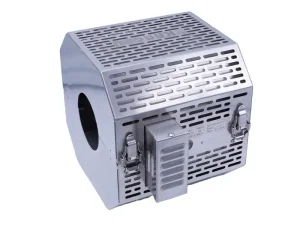
Best Heating/Cooling Integrated System Exporter, Exporters
View Product Specs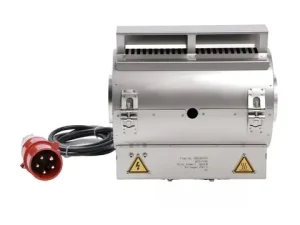
CE Certification Precise Cooling & Heating System Manufacturers
View Product Specs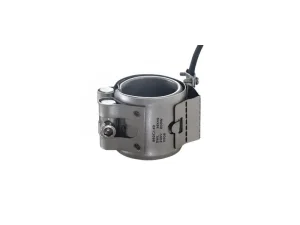
China Safe and Durable Mica Heaters Factory, Factories
View Product Specs
CE Certification Electromagnetic Induction Heater Exporters
View Product Specs
Heavy-Duty Industrial Circulation Pipeline Heater Factory
View Product Specs
CE Certification Precision Industrial Ovens & PVC-O Systems
View Product Specs
China Portable Ceramic Heaters Efficient Heating Solutions
View Product Specs