Engineered Heating Systems & Thermal Solutions
Industrial process elements crafted for maximum thermal conductivity, continuous run-time stability, and extreme mechanical endurance under high clamping pressures.





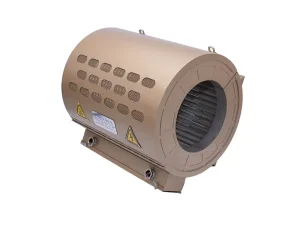
Global Industrial Landscape: Cast-In Aluminum vs. Bronze Platen Die Heaters
Modern polymer extrusion, high-pressure die casting, and aerospace composite curing require unprecedented thermodynamic accuracy. Understanding the metallurgical divergence between aluminum alloy and bronze platens is critical for global OEMs.
Aluminum Alloy (Al-Si) Platens
Featuring superior thermal conductivity (~160-180 W/m·K) and lower specific gravity, cast-in aluminum platens excel in standard operating envelopes up to 400°C (752°F). Rapid heating ramp rates and lightweight structural profiles reduce machine drive loads across high-speed plastic extrusion dies, thermoforming tables, and packaging sealing bars.
Phosphor / Aluminum Bronze Platens
Engineered for extreme operating conditions reaching 700°C (1292°F) and immense clamping tonnage. Cast bronze matrices provide exceptional compressive yield strength, imperviousness to corrosive polymer off-gassing (such as fluoropolymers and PVC degradation), and zero spalling under severe cycling in automotive hot runner die tooling.
Integral Cooling System Dynamics
Modern die heater plates integrate dual-circuit cast-in stainless steel cooling tubes alongside heating coils. By circulating water, heat-transfer fluid, or conditioned air, the system achieves micro-controlled closed-loop thermal stability, preventing exothermic plastic shear runaway and protecting sensitive platen geometry from warpage.
| Performance Parameters | Cast-In Aluminum Alloy (A356 / ZL101) | Cast-In Bronze / Brass (CuZn / CuAl) | Procurement Selection Criteria |
|---|---|---|---|
| Maximum Working Temperature | Up to 400°C (752°F) | Up to 700°C (1292°F) | Process melt temp & thermal resilience requirements |
| Thermal Conductivity | High (~160 W/m·K) - Rapid Distribution | Moderate (~70–110 W/m·K) - High Thermal Mass | Rapid cycle requirements vs. thermal dampening |
| Maximum Watt Density | Up to 35 - 45 W/in² (5.5 - 7.0 W/cm²) | Up to 60 - 80 W/in² (9.3 - 12.4 W/cm²) | Available power footprint and start-up ramp speeds |
| Corrosion & Wear Resistance | Standard (requires protective coating in acidic media) | Extreme (highly inert to reactive compounds & resins) | Corrosive polymer compounds (PVDF, PTFE, Halogens) |
| Structural Density & Porosity | Vacuum Die Cast / Gravity Degassed (Zero Voids) | Centrifugal / Dense Sand Cast with NDT Verification | Prevents local hot spots and sheath oxidation |
China Factory Efficiency & 40-Year Metallurgical Authority
Established in 1986 in Yancheng, Jiangsu, Yancheng Laier Heating Technology Co., Ltd. (Kangpu Heater) bridges raw metallurgical foundry prowess with CNC precision micro-machining, offering international tier-one procurement teams unbeatable lead times and reliability.
Foundry-Integrated Casting
Unlike downstream assemblers who outsource rough casting, our factory runs self-contained melting, degassing, and gravity-pour foundries. Vacuum degassing eliminates interior micro-bubbles, protecting internal Nichrome 80/20 resistance wiring and compressed magnesium oxide (MgO) from localized dielectric puncture.
Precision 5-Axis CNC Milling
Platen flatness dictates heat transfer coefficient across mating molds. Our finishing shops utilize high-rigidity CNC gantry machining centers to mill contact faces to micro-tolerances within ±0.02 mm, eliminating air-gap insulation and guaranteeing uniform surface temperature profiles within ±1.5% across 2000 mm spans.
7-Stage Closed-Loop Traceability
From raw ingot spectral analysis, internal X-ray non-destructive testing (NDT), megohm insulation checks under thermal saturation, to computerized coordinate dimension checks, each platen die heater carries unique laser-etched batch coding supported by a full 5-year warranty.
Application Scenarios & Global Industry Megatrends
Discover where cast-in platen die heaters make decisive cost and operational impacts across global industrial ecosystems—and how energy efficiency mandates are reshaping manufacturing requirements.
Plastic & Rubber Compression Platens
Installed directly within multi-daylight hydraulic presses for rubber vulcanization, conveyor belt curing, and composite molding. Multi-zone cast-in heating elements guarantee edge-to-edge isothermal boundaries, eliminating cure gradients and flash defects in finished elastomeric seals.
Blown Film, Sheet & Profile Extrusion Dies
Extrusion flat dies and co-extrusion feedblocks depend on exact platen die thermal tuning to balance melt viscosity across wide die lips. Cast aluminum heater platens prevent thickness variation in optical-grade polyolefin sheets and barrier film packaging lines.
Semiconductor & Vacuum Chamber Chucks
Custom cast-in aluminum wafer bake platens operating in high-vacuum or cleanroom conditions. Vacuum hermetic feedthroughs, ceramic terminal blocks, and electropolished outer shells reduce outgassing while delivering high-speed thermal cycling in chip testing.
Trend: Carbon Neutrality & Insulation
With escalating industrial electricity costs across Europe and North America, cast-in platens are increasingly paired with integrated nano-aerogel insulation blankets. Reducing peripheral radiant losses by up to 35% reduces carbon taxation loads and improves operator thermal safety on the factory floor.
Trend: Industry 4.0 Smart Diagnostic Embeds
Leading buyers now mandate redundant multi-point Type J/K thermocouples or PT100 RTDs directly cast into the metal matrix adjacent to the heating sheath. This yields predictive sensor telemetry, detecting microscopic thermal resistance shifts before catastrophic element burnout occurs.
Global Sourcing Matrix: What Engineering Buyers Must Specify
To avoid premature platen failure, warpage under hydraulic pressure, or catastrophic downtime, global procurement engineers should mandate the following parameters in RFQ documentation.
Dielectric Sheath Metallurgy
Specify Incoloy 800 or 840 tubular sheathing rather than basic 304 stainless steel when casting into bronze. The high pouring temperature of molten bronze (approx. 1050°C) can cause thermal embrittlement and wall erosion on lower-grade stainless steels.
Terminal Housing Ingress
Select terminal enclosures that match operational environments: NEMA 4 moisture-resistant, explosion-proof, or ceramic standoff posts for high-ambient applications. Terminal connections must prevent polymer fume infiltration.
Surface Coplanarity Tolerances
Specify maximum allowable runout across the bolting pattern. High-precision hot compression dies require platen parallelism under 0.05 mm to prevent uneven hydraulic force transmission, which can stress machine tie bars.
Batch NDT Certification
Insist upon X-ray radiography inspection or ultrasonic non-destructive testing for all critical cast assemblies. Internal voids or cold-shuts near the resistance element can cause localized overheating and premature element blowout.
Frequently Asked Technical Questions (FAQ)
Answers to common engineering and procurement questions regarding cast-in heating technologies, material life cycles, and design criteria.
Cast bronze is selected when operational process temperatures exceed 400°C (up to 700°C), in environments with high mechanical clamping forces (such as compression molding and zinc die-casting), or where corrosive plastic resins like PVC and fluoropolymers rapidly degrade aluminum matrices.
Yes. Seamless 304 or 316 stainless steel or heavy-wall copper cooling tubes can be cast directly alongside electric tubular elements, creating a dual-function cooling and heating assembly. This enables closed-loop PID control and prevents temperature overshooting during exothermic runs.
Our foundry employs rotary nitrogen degassing units along with grain-refining fluxes prior to pouring. Molten alloys undergo continuous density index verification and ultrasonic NDT, ensuring complete metallurgical cohesion around the internal tubular heating element.
Yes. Custom manufacturing accounts for a significant portion of our operations. Send us 2D engineering drawings (DWG/PDF), 3D CAD models (STEP/IGES), or a worn production sample, and our engineering team will match all physical dimensions, hole locations, wattage densities, and terminal configurations.
Industrial Heating Elements & Heavy Thermal Equipment
Explore our full line of industrial heaters, including cast-in heaters, portable ceramic heating modules, air duct assemblies, and insulated jackets designed for process reliability.