CE Certification Electromagnetic induction heater Manufacturer, Exporter
Configure Specs
Explore our primary tier of certified industrial heating units, customized for global OEMs and continuous continuous process plants.
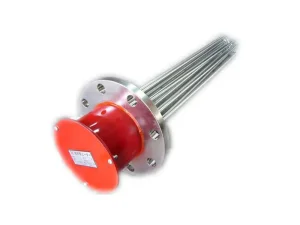

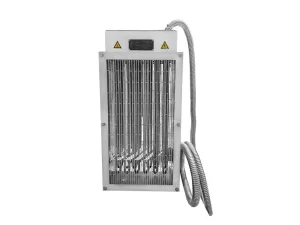
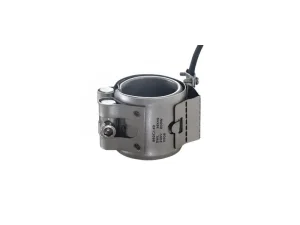


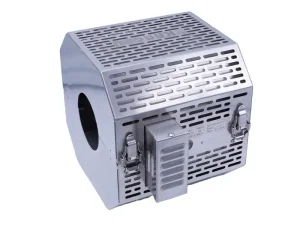
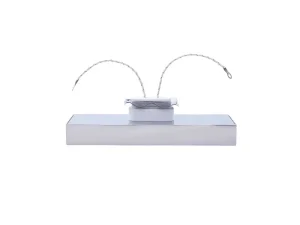
In modern industrial process lines, the requirement for high-density, air-forced, and surface-conductive thermal transfer has driven a structural shift toward ceramic insulated finned strip heaters. Unlike standard mica strips, premium ceramic configurations support higher operating watt densities up to 65 W/in² and continuous temperatures exceeding 750°C (1382°F).
Featuring aluminized steel or 304/316 stainless fins mechanically locked to the strip body. This increases the active heat-dissipating surface area by more than 400%, preventing thermal stacking and premature element burn-out in air handling systems.
High-grade refractory steatite and alumina cores guarantee zero dielectric breakdown at severe operating temperatures, maintaining leakage current below 0.5 mA under full duty-cycle electrical loading.
Precision helically wound NiCr 80/20 resistance coils run through high-tolerance ceramic channels. This arrangement eliminates localized hot spots, prolonging service life past 25,000 continuous operating hours.
| Performance Parameter | Standard Mica Finned Strip | High-Density Ceramic Finned Strip | Kangpu Patented Ceramic Finned Design |
|---|---|---|---|
| Max Sheath Temperature | 450°C (842°F) | 700°C (1292°F) | 800°C (1472°F) Sustained |
| Dielectric Strength | 1500V / 1 min | 2000V / 1 min | 2500V / 1 min High-Frequency Verified |
| Fin Material Integrity | Staked Galvanized Sheet | Continuous Welded Stainless 304 | High-Emissivity Treated SUS316 / Incoloy |
| Resistance Tolerance | ±10% | ±5% | ±2.5% Balanced Output |
| Warranty Duration | 6–12 Months | 1–2 Years | 5-Year Traceable Factory Warranty |
Ceramic insulated finned strip elements serve as essential thermal engines across heavy manufacturing sectors. Below are field-proven deployments engineered by our technical task forces.
Finned strip heaters mounted in duct arrays generate rapid convective thermal transfer for environmental simulation rooms, continuous industrial baking, and humidity purge airflows. Streamlined fin contours minimize airflow static pressure drop by up to 28%.
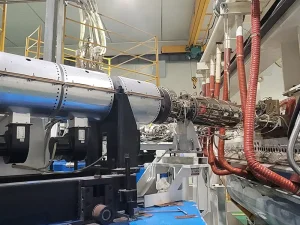
Finned heaters attached to planar transition plates, blown film dies, and crossheads provide uniform radiant and conductive pre-heating. When combined with smart cooling blowers, they maintain melt viscosity within a tight ±1.5°C operating window.
In packaging lines and continuous composites annealing tunnels, finned ceramic strip heaters deliver rapid thermal response during ramp-up cycles, cutting batch startup times by up to 35% compared to non-finned tubular elements.
Operated by Yancheng Laier Heating Technology Co., Ltd. (Kangpu Heater), our ISO 9001:2015 accredited factory floor spans thousands of square meters with complete in-house metallurgy, automated coil winding, high-pressure ceramic assembly, and rigorous thermal testing.
As industrial factories accelerate towards Industry 4.0 and decarbonization goals, Kangpu’s R&D department is pioneering innovations that merge smart sensor telemetry with novel ceramic composites.
Co-sintering calibrated Type K or PT100 elements directly inside the refractory ceramic channels to eliminate thermal inertia and capture core junction readings with ±0.2°C accuracy.
Applying proprietary rare-earth nano-oxide coatings to exterior fin surfaces. This accelerates spectral emissivity to 0.94, cutting power consumption by 15% to 22% during continuous air recirculation.
Laser-fused Incoloy 840/800 alloy coatings over 316L fins provide resistance to reactive VOC exhausts, acidic chemical condensates, and aggressive marine offshore air.
IP67 ceramic terminal connection blocks designed for fast swap-outs without requiring wire unbraiding, slashing maintenance downtime on continuous process lines by over 60%.
International procurement requires transparent compliance documentation, precision sample approvals, and safe overseas transit. Kangpu manages complete international quality validation from drawing confirmation to site integration.
All products meet European CE Low Voltage Directive (LVD 2014/35/EU), RoHS 2.0 chemical restriction compliance, and UL-recognized insulation standards for trouble-free machine exports to North America and the EU.
Vacuum-sealed moisture-barrier wrapping paired with custom shock-absorbing foam inserts and fumigated plywood export crates keeps fin alignments intact through long-haul maritime and intermodal transit.
Dedicated English-speaking thermal application engineers provide CAD drawing verification within 24 hours and pilot sample dispatch within 5–7 business days to streamline development timelines.
Clear engineering answers addressing technical considerations, customization parameters, and export logistics for ceramic insulated finned strip heaters.
Standard ceramic strip heaters are engineered primarily for conductive thermal transfer onto flat metallic platens or surfaces. Finned strip heaters integrate mechanical fins along their exterior length, dramatically expanding the effective convective surface area. This design makes them well suited for duct heating, air recirculation, and ovens where high air velocity moves thermal energy away from the sheath quickly.
Under forced-air conditions (minimum airflow velocity of 2.5 to 3.5 m/s), our ceramic finned strip heaters support watt densities up to 45–65 W/in² (7–10 W/cm²). In natural convection or static air environments, we recommend limiting watt density to 20–25 W/in² to prevent element temperatures from exceeding safe sheath thresholds.
Yes. Every parameter is fully customizable: length (from 150 mm to over 1500 mm), width, fin density, terminal orientations (offset, parallel, or opposite ends), lead wires (high-temperature fiberglass or silicone), ceramic post terminals, and NEMA 4/7 explosion-proof junction housings.
Our 5-year warranty is backed by individual batch tracking. Every heater is etched with a laser serial number linking to resistance wire raw-material certs, megohm dielectric testing logs, and dimensional verification reports. If an element fails within the warranty period, we analyze the root cause and dispatch free air-freight replacements.
Explore additional OEM-certified thermal elements, including high-temperature ovens, thermal insulation covers, and industrial barrel heating equipment.