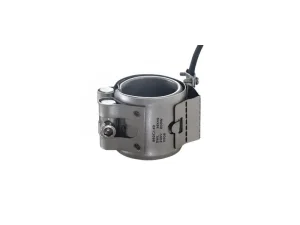
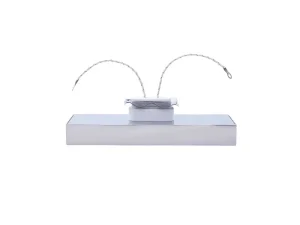
High-Efficiency Circulation & Process Heating Units
Engineered to deliver tight temperature tolerances, high watt density safety margins, and maximum thermal recovery for liquid and gaseous process streams.

China Portable Ceramic Heaters from China Suppliers: Efficient Heating Solutions for Factories and Industries Manufacturer, Exporters
View Specifications
High-Quality Portable Ceramic Heaters for Industry - Efficient Heating Solutions from China Suppliers and Factory Exporter, Exporters
View Specifications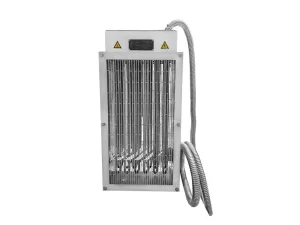
High-Quality Portable Ceramic Heaters for Industry - Reliable Heating Solutions from China Suppliers and Factory Manufacturers, Factory
View Specifications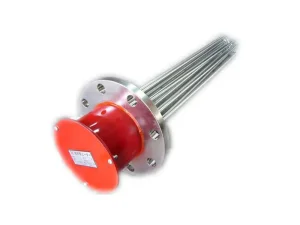
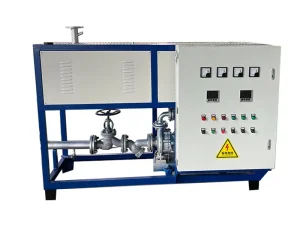
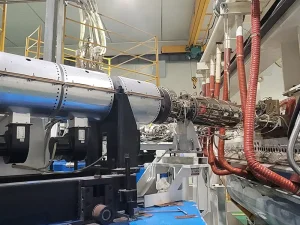
Circulation Heater Engineering: Precision Fluid & Gas Dynamics
Circulation heaters (frequently termed in-line electric heaters) represent one of the most critical thermal assets across modern continuous-processing plants. Consisting of an electric heating element bundle mounted inside an insulated pressure vessel, these systems transfer energy directly into a flowing fluid media—including demineralized water, thermal oils, hydrocarbon fuels, steam, or aggressive chemical mixtures. Unlike passive immersion designs, forced circulation creates high convection heat transfer coefficients, allowing for compact vessel footprints while maintaining element sheath temperatures well beneath critical coking or degradation thresholds.
At Yancheng Laier Heating Technology Co., Ltd. (operating the Kangpu brand), our engineering framework treats heat transfer, fluid drag, and structural metallurgy as a coupled system. When sizing circulation vessels, internal baffle positioning is carefully simulated to optimize cross-flow velocities around the heating elements while limiting hydraulic pressure drops. High surface watt densities can instantly rupture oil thermal boundaries or precipitate mineral scale in water circuits; therefore, our sizing matrix strictly adheres to sheath watt-density limits between 1.0 and 2.5 W/cm² for viscous thermal fluids and up to 10 W/cm² for superheated clean air and process gas loops.
Engineering Core Note: Premature element failure in circulation heaters is 85% attributable to improper watt-density matching against flow velocity and thermal boundary-layer stagnation. Kangpu deploys CFD boundary verification and integrated multi-point RTD / thermocouple sheath sensing to prevent thermal runaway under disrupted flow conditions.
Engineering Comparison: Fluid Media & Sheath Specifications
| Heating Media | Recommended Sheath Material | Watt Density Range | Typical Vessel Pressure | Thermal Boundary Factor |
|---|---|---|---|---|
| Thermal Heat Transfer Oils | Stainless Steel 321 / 316L | 1.2 – 2.5 W/cm² | Up to 2.5 MPa | High risk of film carbonization at >320°C |
| Demineralized / Soft Water | Incoloy 800 / SS304 | 6.0 – 10.0 W/cm² | Up to 4.0 MPa | Prone to scale fouling if velocity <1.5 m/s |
| Fuel Oil & Heavy Hydrocarbons | Carbon Steel / SS304 | 1.0 – 1.8 W/cm² | Up to 1.6 MPa | Viscosity-dependent Reynolds number management |
| High-Pressure Compressed Air / N₂ | Inconel 600 / SS310S | 3.0 – 7.5 W/cm² | Up to 10.0 MPa | Gas heat transfer coefficient requires baffle optimization |
| Superheated Process Steam | Incoloy 825 / SS316Ti | 2.0 – 4.5 W/cm² | Up to 6.4 MPa | Stress-corrosion cracking resistance mandatory |
China Factory Supply Chain & Integrated Manufacturing Advantages
Leveraging deep industrial cluster integration in Jiangsu to balance structural pressure vessel manufacturing, precision alloy drawing, and automated quality verification.
Full Supply Chain Clustering
Located in Yancheng's thermal element manufacturing cluster, our factory maintains zero-tier sourcing for metallurgical tubing (SS316, Incoloy, Inconel), high-purity electrical grade magnesium oxide (MgO), and Nichrome Cr20Ni80 resistance wiring. This vertical supply integration cuts raw material procurement lead time by 45% compared to Western assembly plants.
Dedicated Pressure Vessel Fab
Circulation heater shells are fabricated, bored, welded, and non-destructively tested (NDT) within our certified vessel bays. We offer ASME Section VIII Div. 1, PED 2014/68/EU, and GB150 alignment, executing in-house 100% radiographic weld inspections, hydrostatic testing up to 1.5x design pressure, and ultrasonic thickness validation prior to final coating.
High-Density Swaging Automation
Element bundles rely on advanced multi-station reduction swaging equipment, ensuring core compaction densities exceeding 3.05 g/cm³. This level of compaction eliminates internal micro-voids, maximizes thermal conductance across the dielectric MgO barrier, and ensures superior electrical isolation under severe cycling loads.
Meeting the Demands of Global EPCs & Industrial Integrators
International procurement teams require more than just component fabrication. Kangpu delivers complete regulatory assurance, engineering collaboration, and commissioning protection.
MTR & Traceability Records
Mill Test Certificates (EN 10204 3.1) are supplied for every batch of flange forging, shell steel, and alloy sheath, ensuring strict compliance for downstream auditing.
Hazardous Area Certification
Available with explosion-proof terminal enclosures certified to ATEX, IECEx, and CE Ex d IIC T1-T6 standards for installation in Zone 1 / Zone 2 volatile operating environments.
Custom SCR Control Integration
We provide skid-ready packages complete with zero-cross or phase-angle fired thyristor control panels, safety high-limit contactors, and digital PLC communication gateways.
Export Seaworthy Packaging
Heavy-duty treated timber crating, desiccant vapor barrier wrapping, and nitrogen purged/blanketed element bundle seals eliminate corrosion during marine shipping.
Emerging Technology Trends in Circulation Heating
How decarbonization mandates and industrial digitalization are redefining electric circulation heater design.
Electrification of Heavy Process Heat
As global carbon tax structures accelerate the retirement of natural gas and diesel boilers, industrial facilities are converting thermal fluid systems directly to mega-watt scale electric circulation skids. Megawatt-class modular flanged systems operating up to 350°C are replacing legacy fossil firetubes, reducing Scope 1 emissions to zero when powered by industrial green power grids.
IoT-Enabled Predictive Monitoring
Modern circulation units are shifting from reactive high-limit alarms to embedded predictive diagnostics. Kangpu integrates multi-point distributed fiber-optic or multiplexed RTD sensors inside the bundle core, feeding thermal gradient maps directly to edge gateways. AI-assisted analytics detect early dielectric degradation or local boundary layer scaling before element failure occurs.
High-Entropy Sheaths & Ceramic Barriers
Next-generation chemical processes, green hydrogen electrolysis preheating, and advanced polymer synthesis require operation under higher pressures and corrosive environments. Development of nano-composite ceramic barrier coatings and specialized high-nickel superalloy claddings prevents hydrogen embrittlement and sulfur-induced pitting, significantly extending operational lifetimes.
Localized Applications & In-Field Scenarios
Across five key industries, Kangpu circulation heating systems provide high-efficiency process stability.
Plastic & Extrusion
Thermal oil loops regulating multi-zone extruder cylinder temperatures, sheet mold dies, and calendar roll thermal stability without localized overheating.
Petrochemical & Oil
Preheating heavy crudes and fuel gas feedstreams prior to burner entry, maintaining viscosity index, and keeping pipeline manifolds fluid.
HVAC & Process Drying
Continuous inline air and nitrogen duct heating systems providing rapid, particle-free elevated temperatures for drying tunnels and aerospace testing.
Clean Steam Generation
Electromagnetic and resistance circulation skids supplying flash steam for food sterilizers, pharmaceutical clean rooms, and closed autoclaves.
PVC-O Orientation
Dedicated high-stability heating modules supporting continuous temperature water jackets for advanced biaxial pipe orientation ovens.
Engineering FAQ: Circulation Heater Procurement & Operation
Direct technical answers to common queries raised by plant engineers and procurement officers.
Can Kangpu manufacture heaters to custom drawings and international codes?
Yes. Customization is our core business. You provide your fluid parameters, inlet/outlet sizing, pressure envelope, electrical characteristics, and clearance constraints. Our engineers prepare the thermal layout, 3D mechanical drawings, and pressure vessel stress reports for formal customer approval before tooling or fabrication begins.
What warranty and quality tracing protections are included?
We provide a comprehensive five-year after-sales warranty. Every unit is assigned a permanent serial code referencing its specific raw material mill certs, MgO filling logs, swaging reduction measurements, welding technician ID, and hydro/insulation test certificates, enabling rapid root-cause analysis in the rare event of in-service failure.
How do you determine the safe watt density for unknown thermal fluids?
We analyze the fluid's thermal conductivity, specific heat, viscosity curve, and maximum allowable film temperature under forced convection. By combining fluid velocity across internal vessel baffles with our Reynolds number calculation models, we determine the exact boundary watt density (usually 1.2 to 2.2 W/cm²) to eliminate fluid cracking.
What are the 7 distinct stages of the Kangpu delivery workflow?
Our disciplined workflow spans: (1) Industrial design review & envelope verification, (2) Detailed thermal and electrical parameter customization, (3) Real-mold sample creation, (4) Customer on-site sample validation, (5) Engineering refinements based on feedback, (6) Rigorous electrical & hydrostatic proof testing, and (7) Full-scale mass production and crating.
How do ceramic band, mica band, and circulation systems compare?
Mica heaters offer thin profiles and cost-effective surface contact heating up to 300°C for injection nozzles. Ceramic band heaters provide superior insulation and handle barrel surface operating temperatures up to 600°C. In contrast, circulation heaters are pressure-rated in-line vessel systems transferring heat directly into pressurized internal liquid or gas streams.
What is the standard export turnaround time for customized heater vessels?
Engineered prototypes typically finalize approval within 2 to 3 weeks, including mold setup. Standard production runs for flanged circulation heaters or replacement bundles ship within 3 to 4 weeks, facilitated by our on-hand inventory of certified alloy tube grades and high-capacity automated bending and swaging lines.
High-Density Heating Elements, Furnaces & Ancillaries
Complementary thermal equipment supporting extrusion retrofits, pipeline heating, and industrial furnace operations worldwide.
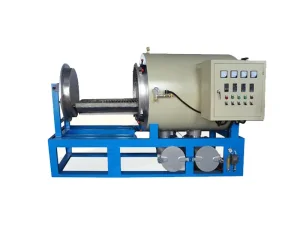
High-Quality Portable Ceramic Heaters for Industry - Reliable Temperature Control from China Suppliers and Factory Exporter, Factory
View Specifications