
High-Efficiency Industrial Heating & Thermal Systems
Engineered to international safety baselines, supporting extreme continuous cycles across injection molding, polymer extrusion, and high-volume process heating.
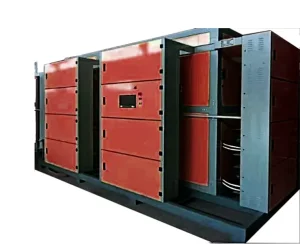
Electromagnetic Steam Boiler
Explore Specifications →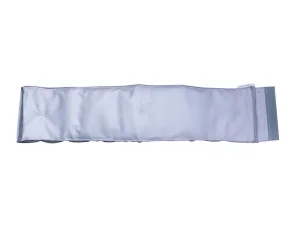
Durable Heat Insulation Covers
Explore Specifications →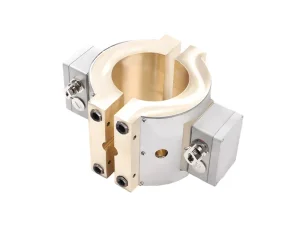
Cast Aluminum / Copper Heater
Explore Specifications →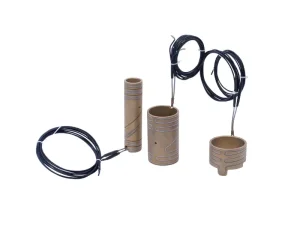
Hot-Runner Spring & Coil Heater
Explore Specifications →
Portable Ceramic Heaters for Industry
Explore Specifications →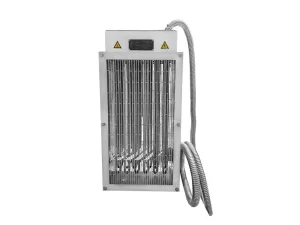
Efficient HVAC Air Duct Heaters
Explore Specifications →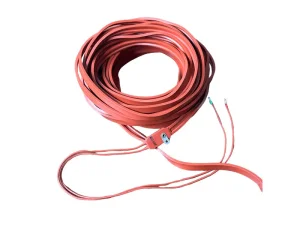
Flexible Heaters for Custom Shapes
Explore Specifications →
Nano Infrared Electric Band Heater
Explore Specifications →Fan Heater (Forced Convection) Vs Radiant Heater (Infrared): The Physics of Industrial Efficiency
Procuring industrial heating equipment demands understanding how heat flux interacts with the physical medium, boundary air layers, and ambient thermal sinks.
Forced Convection Dynamics
Fan heaters function by transferring thermal energy from resistive heating coils or ceramic PTC elements into forced airflow via fans. The rate of heat exchange is governed by Newton's Law of Cooling: q = h × A × (Ts - T∞). While exceptional for volumetric air circulation, forced convection incurs thermal stratification, duct friction losses, and dust disturbance, making it ideal for enclosed, uniform spaces rather than localized spot heating.
Direct Infrared Radiation Flux
Radiant heaters emit electromagnetic energy across short-, medium-, or long-wave infrared spectrums, governed by the Stefan-Boltzmann relationship: E = εσ(T14 - T24). Radiation requires no air medium; it penetrates directly into machinery components, molds, or personnel. This delivers zero convective delay, zero wind draft dissipation, and up to 40% operating energy savings in non-insulated workshops or high-bay plants.
Thermal Boundary Layer Mitigation
In plastics extrusion barrels and continuous manufacturing machinery, air acts as an insulator. Kangpu's specialized ceramic and nano-infrared band heaters eliminate boundary layer resistance by combining direct conduction with dense radiant transfer, preventing heat from dissipating into the surrounding production floor and preserving precise barrel zone stability.
Comprehensive Matrix: Industrial Fan Heater vs. Radiant Heater Exporters
A rigorous specification framework for supply chain directors, facility engineers, and OEM machine manufacturers.
| Evaluation Parameter | Industrial Fan Heating (Convection) | Industrial Radiant Heating (Infrared) | B2B Procurement Impact |
|---|---|---|---|
| Heat Transfer Mechanism | Forced Air Convection Heats ambient air mass first; dependent on cubic-meter air volume. |
Electromagnetic Radiation Direct optical absorption by target surface without warming intermediate air. |
Radiant offers superior efficiency in expansive open-floor facilities; convection excels in climate-sealed enclosures. |
| Pre-Heat Response Latency | 15 – 45 Minutes Slow ramp-up as full air capacity must cycle through the thermal exchanger. |
3 – 30 Seconds Near-instantaneous thermal flux emission upon electrical excitation. |
Radiant drastically reduces cycle start times, saving substantial energy during intermittent shift schedules. |
| Thermal Stratification | Severe (Up to 1.5°C/meter rise) Super-heated air naturally rises to high ceilings, wasting bottom-tier energy. |
Negligible (Targeted Focal Area) Energy concentrates where directed via parabolic or directional reflectors. |
Industrial warehouses with ceiling heights >6m achieve massive carbon reductions using radiant arrays. |
| Airflow & Dust Contamination | Moderate to High Turbulence Agitates airborne dust, VOCs, and particulates via internal blower motors. |
Zero Turbulence Static emission with zero air disturbance, noise, or fan vibration. |
Cleanrooms, precision spray painting booths, and optics manufacturing strictly require radiant or sealed solutions. |
| Mechanical Wear & Maintenance | High Maintenance Frequency Electric motors, fan blades, bearing lubrication, and intake air filters require regular upkeep. |
Solid-State Simplicity No rotating mechanical assemblies; replacement limited to long-life heating elements. |
Lowers preventative maintenance (PM) labor costs and eliminates catastrophic bearing seizure risks. |
| Zonal Control Precision | Low to Moderate Cross-drafts dilute zone isolation across adjacent machine areas. |
Ultra-High Precision Line-of-sight energy targeting allows exact zonal heating without boundary bleed. |
Crucial for polymer extrusion dies, blow molding barrels, and localized workstation heating. |
| Initial Capex vs. Lifetime Opex | Lower initial purchase price; higher lifetime operating power costs. | Moderate initial capital investment; up to 30–50% reduction in lifetime kWh consumption. | Radiant delivers a rapid payback period (ROI) within 6 to 14 months under continuous multi-shift production. |
Global Enterprise Procurement Demands: Total Cost of Ownership (TCO) & Reliability
In high-throughput manufacturing, an unexpected heater failure causes downtime costs far exceeding the unit purchase price. Enterprise buyers prioritize structural robustness over bottom-tier pricing.
Continuous S1 Duty Rating
Export-grade industrial heaters are engineered for round-the-clock 24/7 continuous operation. Kangpu utilizes ultra-pure nickel-chromium (NiCr 80/20) resistance alloy wire embedded in high-grade sintered steatite or compressed magnesium oxide (MgO), ensuring prolonged resistance to thermal cyclic fatigue.
True Batch-Traceable Warranty
Unlike common commercial trading entities, Yancheng Laier Heating Technology supports its production with an authentic 5-year after-sales warranty. Each unit is stamped with laser-etched serial tracking, linking raw material metallurgical heat numbers directly to our quality assurance archive.
Batch Defect Guarantee
By implementing 100% full-load dielectric withstand tests (Hi-pot test up to 2000V/1min) and insulation resistance verifications (>500MΩ) prior to crating, Kangpu heaters protect plant facilities against breaker tripping, internal arc flash, and unexpected machine downtime.
Macro-Industry Thermal Solutions: Where Fan & Radiant Heaters Deploy
Strategic deployment frameworks mapped to modern high-precision engineering environments.
Plastics, Polymers & Extrusion
Extrusion barrels and injection molding nozzles cannot tolerate thermal turbulence. Radiant nano-infrared bands and cast-in aluminum/copper heating-cooling jackets deliver uniform melt temperatures, eliminating polymer thermal degradation while cutting barrel exterior surface temperatures down to a safe 40–50°C.
Logistics Warehousing & High-Bays
Heating millions of cubic meters of ambient air in automated logistics facilities is economically unviable. Long-wave radiant panel grids warm loading dock crews and automated picking machinery directly, eliminating stack-effect losses when overhead bay doors open and close.
PVC-O Pipe Orientation Ovens
Biaxially oriented polyvinyl chloride (PVC-O) production requires ultra-precise, non-contact heating within narrow temperature tolerances (±1°C). Kangpu's custom-engineered PVC-O tunnel ovens combine balanced infrared radiant emitters with closed-loop air equalization to yield superior wall-thickness tensile integrity.
Hazardous & Explosion-Proof Sites
Refineries, chemical processing skids, and paint facilities require ATEX and IECEx-compliant explosion-proof pipeline and duct heaters. Heavy cast-in enclosures prevent any spark or internal arc from contacting volatile atmospheric vapors, guaranteeing factory-wide occupational safety.
Cleanroom Curing & Electronics
Semiconductor drying and PCB resin curing cannot accept dust turbulence caused by high-RPM fans. Ceramic infrared emitters emit uniform radiant wavelengths across micro-thin substrates, allowing moisture to evacuate without surface blistering or particulate contamination.
Industrial HVAC Process Air Heating
For paper pulp drying, food dehydration, and large-scale textile finishing tunnels, high-capacity finned tubular air duct heaters deliver massive thermal energy to moving air streams, sized precisely to CFM velocity and required Celsius delta rise.
Kangpu's 7-Stage Controlled Customization Workflow
How an authentic R&D factory with four decades of manufacturing heritage executes zero-defect OEM/ODM custom heater orders.
Industrial Design & FEA Modeling
Our thermal engineering team converts your mechanical drawing, 3D CAD, or physical sample into an optimized production blueprint, reviewing clamping geometry, lead orientations, and expansion gaps.
Electrical & Material Calibration
Operating voltage, total wattage, watt density (W/cm²), sheath alloy (Incoloy, SS304/316, copper), and lead termination (fiberglass, armored braid, ceramic post) are matched to your duty environment.
Real-Mold Precision Tooling
Unlike prototype workshops that rely on hand-hammered tooling, Kangpu constructs production-grade stamping dies and casting molds to guarantee that initial samples match mass-production tolerances.
Client Fit & Bench Confirmation
The client receives physical evaluation samples to install directly on machinery, confirming precise barrel wrap, bolt-hole alignment, clearance around thermocouples, and lead flexibility.
Iterative Engineering Revision
If field trials require modified terminal boxes, repositioned cutouts, or altered watt distribution to resolve cold spots, revisions are implemented immediately in CAD tooling.
Thermal & Dielectric Validation
Prototypes undergo thermal imaging under full load, cryogenic cycling, insulation resistance tests under humidity, and vibration endurance tests before production sign-off.
Full Mass Production & QA Crating
Automated winding, vacuum sealing, and ISO9001 assembly line production, followed by individualized serialized tracking, anti-corrosive vacuum packaging, and reinforced export crating.
Regulatory Compliance & Multi-Jurisdiction Export Security
Eliminating regulatory border delays and electrical non-compliance for multinational machine manufacturers.
International Electrical Codes
All Kangpu heating systems and components are engineered to satisfy European CE directives (Low Voltage Directive 2014/35/EU, EMC Directive 2014/30/EU), UL/cUL guidelines for North American electrical assemblies, and RoHS environmental requirements.
Customs & DDP Logistics
Exporting to over 100 countries requires deep familiarity with international Harmonized System (HS) classifications, preferential tariff schemes, Certificate of Origin (CO) documentation, and DDP (Delivered Duty Paid) door-to-factory freight corridors.
Localized Engineering Support
Our multilingual technical sales engineers communicate fluently in English, interpreting complex DIN, ISO, and ANSI machine drawings to ensure custom replacements match original European or American specifications without translation error.
Industrial Heating Technology Roadmap (2025–2035)
The transformation from passive resistive heating to intelligent, decarbonized, closed-loop thermal platforms.
IoT & Predictive Maintenance
Embedding micro-thermocouple arrays and current signature analysis chips directly into heater bodies enables edge devices to detect resistance drift, alerting maintenance teams weeks before an element open-circuits.
Nano-Ceramic Aerogel Insulation
Next-generation radiant band heaters utilize ultra-thin aerogel reflective blankets, achieving thermal conductivity ratings below 0.018 W/(m·K). Over 98% of generated electromagnetic radiant heat is focused inward toward the barrel.
Direct Decarbonization Boilers
Replacing fossil fuel steam generation with industrial electromagnetic induction steam boilers delivers instantaneous steam without combustion stack losses, eliminating local NOx/SOx emissions and supporting corporate Net-Zero mandates.
Frequently Asked Questions on Fan Heaters vs. Radiant Heaters
Authoritative insights prepared by Kangpu's senior applications engineering team.
Which provides greater energy savings: fan or radiant heaters?
In spot heating, tall warehouses, uninsulated workshops, and targeted industrial machinery (like extruders), radiant heaters consistently achieve 30% to 50% energy reductions. They avoid heating the immense overhead volume of air and direct thermal flux straight to surfaces. Conversely, in small, fully insulated, airtight chambers, fan heaters equalize room temperature evenly.
Can Kangpu manufacture custom heaters strictly from engineering drawings?
Yes. Custom manufacturing accounts for more than 85% of our global export output. We manufacture to exact outer/inner diameters, cutouts, hole patterns, voltages (from 12V to 480V three-phase), watt densities, thermocouple ports, and termination junction styles.
What differentiates ceramic band heaters from mica band heaters?
Mica band heaters have a thin profile, rapid response, and lower unit cost, designed for temperatures up to 280–320°C (standard injection molding nozzles). Ceramic band heaters feature built-in interlocking steatite ceramic blocks that operate up to 650–700°C with integrated insulation blankets, delivering higher durability on large extruder cylinders.
How is the five-year warranty implemented for overseas buyers?
Every shipment is backed by batch-retained metallurgical test coupons and QA logs. In the unlikely event of an in-service failure, clients submit operational logs and photos. We analyze failure modes (over-wattage, chemical infiltration, mechanical shear), dispatch immediate air replacements, and modify production recipes to resolve root causes.
How do radiant heaters handle windy or ventilated environments?
Radiant heaters emit electromagnetic infrared waves that pass unimpeded through air and ambient drafts without convective cooling dissipation. They deliver 100% of their thermal rating directly onto targeted surfaces, making them the only viable choice for open loading docks and drafty shop floors.
What is the typical lead time for custom sample fabrication?
Standard custom samples are completed within 5 to 7 working days following CAD drawing sign-off. Full mass-production runs typically dispatch within 15 to 20 working days, backed by priority shipping via air or express sea freight corridors.
Specialized Industrial Heaters & Thermal Processing Systems
Engineered by Yancheng Laier Heating Technology Co., Ltd. (Kangpu Heater) — Exported to over 100 countries worldwide.
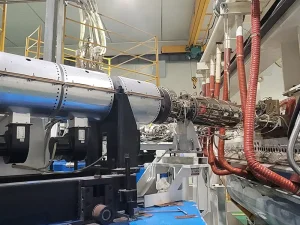
Electromagnetic Induction Heater
Explore Specifications →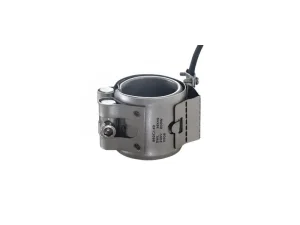
Safe & Durable Mica Heaters
Explore Specifications →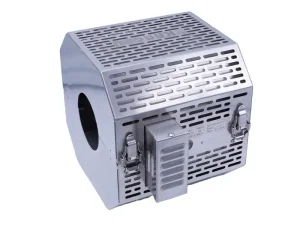
Heating / Cooling Integrated System
Explore Specifications →
Industrial Heavy Pipeline Heater
Explore Specifications →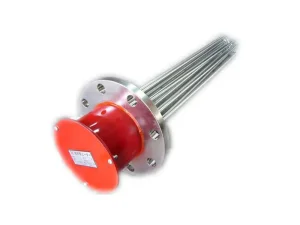
Explosion-Proof Electric Heater
Explore Specifications →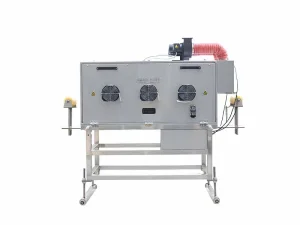
PVC-O Precision Heating Ovens
Explore Specifications →
Industrial Factory Ceramic Heaters
Explore Specifications →
Portable Ceramic Industrial System
Explore Specifications →Request Custom Engineering Drawings & Factory Price Quotes
Collaborate with Yancheng Laier Heating Technology Co., Ltd. (Kangpu Heater). Since 1986, we have supplied more than 5,000 industrial clients across 100+ nations with custom electric heating elements, advanced thermal oil furnaces, and heating-cooling integrated systems.