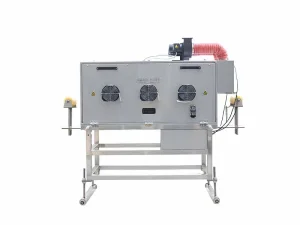
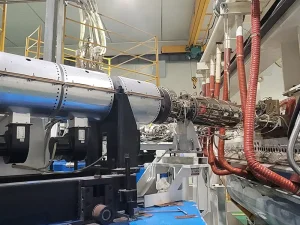
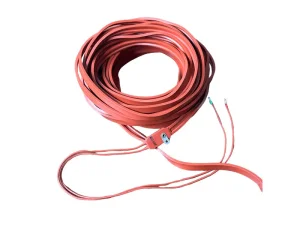
Featured Industrial Thermal Systems
High-durability direct immersion and high-density process heating configurations precision-machined for petrochemical, polymer processing, and thermal fluid engineering.


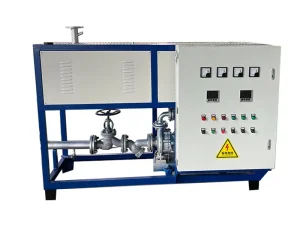
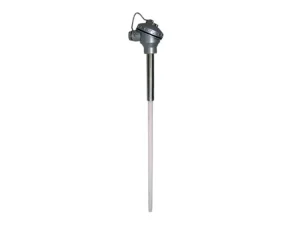

Global Commercial & Industrial Landscape
Navigating the transition toward decarbonized electric process heating, fluid sheath chemistry, and optimized watt-density architecture.
Thermodynamic Transition from Combustion to Direct Joule Heating
Across the international chemical manufacturing, plastic polymer processing, oil refining, and pharmaceutical sectors, the mandate for Scope 1 carbon emission reductions has catalyzed an aggressive transition from legacy fossil fuel burner furnaces toward industrial-grade electric immersion heaters, circulating oil boilers, and pipeline flanged elements. Industrial immersion heaters—which directly transfer 100% of generated Joule energy into viscous thermal media, gases, or liquids—represent the pinnacle of thermodynamic efficiency, eliminating draft losses, stack exhaust dispersion, and unburnt hydrocarbon waste.
However, modern industrial demands require far more than basic resistive coils. In heavy commercial processes, issues such as localized boundary-layer overheating, fluid thermal cracking, sheath coking, and galvanic chemical corrosion can cause catastrophic plant downtime. Leading tier-one exporters must now deliver precise finite-element thermal boundary calculations, corrosion-resistant metallurgical alloys (such as Incoloy 800/840, SS316L, and titanium), and hermetic explosion-proof enclosure ratings (ATEX/IECEx standard alignment) to satisfy modern engineering specifications.
Localized Industrial Application Scenarios
Configured to withstand harsh cyclic pressures, aggressive chemicals, and precise viscosity-control demands across mission-critical systems.
Thermal Fluid & Hot Oil Circulation
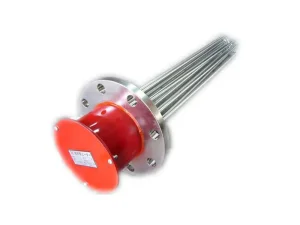
Closed-loop mineral oil and synthetic heat transfer systems require low watt densities (≤ 2.5 W/cm²) to prevent fluid degradation and carbon buildup on heater sheaths. Kangpu flanged immersion bundles and heat-conducting furnaces maintain fluid integrity at operational temperatures reaching 350°C, providing continuous thermal supply to chemical reactors and calender rolls.
Extrusion & Injection Polymer Processing
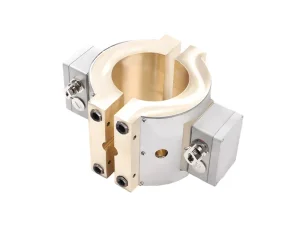
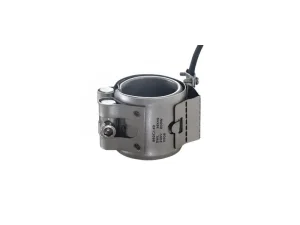
Precision polymer melts require uniform barrel temperature profiles to avoid localized shear stress and melt degradation. Integrating cast-in aluminum/copper elements, ceramic bands, and patented air-cooled barrel enclosures ensures tight thermal boundaries (±1°C) across PVC-O orientation lines, blown film dies, and high-speed injection nozzles.
Electrochemical & Plating Solution Tanks
Acidic, alkaline, and passivation rinse tanks demand aggressive corrosion protection. Over-the-side and screw-plug immersion designs using high-grade electropolished stainless steel, Incoloy, or pure titanium sheathings prevent pinhole pitting and thermal oxidation, guaranteeing uninterrupted operation in automated galvanic plating lines.
China Factory Supply Chain Resilience & Efficiency
Combining localized industrial clustering in Yancheng with end-to-end metallurgical quality assurance and rapid scale-up capability.
Direct Cluster Sourcing
Located in Yancheng, Jiangsu—the premier manufacturing base for industrial electric heating in China—our factory has immediate access to certified fused MgO powder, precision Ni80Cr20 resistance wire, and aerospace-grade seamless tubing, eliminating material delivery bottlenecks.
Full In-House Tooling
Rather than relying on outsourced job shops, Kangpu manages precision CNC machining, hydrostatic pressure testing up to 5.0 MPa, automated coil winding, and high-temperature annealing furnaces internally to maintain strict dimensional and dielectric tolerances.
Rapid Prototype Turnaround
From client CAD design and CFD thermal flux validation to real-mold physical sample production, our streamlined customization workflow averages only 7-10 business days, drastically cutting project lead times for international plant contractors and OEMs.
Five-Year Warranty System
Each heating bundle is laser-engraved with an internal traceability QR matrix. In the rare event of element failure, our automated quality system tracks the specific wire draw batch, MgO compaction density, and weld radiograph to identify root causes and deliver immediate warranty remedies.
Engineering Roadmap & Thermal Innovation
Pioneering the convergence of IoT telemetry, ultra-dense composite insulation, and advanced electromagnetic induction heating.
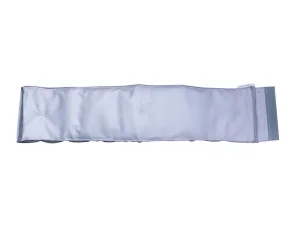
Deployment of nano-ceramic radiant coatings and silicon aerogel blankets, cutting external radiant casing temperatures to < 50°C and delivering up to 30% electrical energy savings on extrusion barrels.
Replacing resistive immersion heating in high-throughput liquid lines with zero-contact high-frequency induction steam boilers, eliminating thermal resistance barriers and achieving near-instantaneous thermal ramps.
Embedding micro-thermocouple matrix arrays and dielectric leakage current sensors directly into internal terminal boxes, delivering real-time predictive failure analytics via standard Modbus and Industrial Ethernet.
Scaling high-capacity immersion configurations for multi-megawatt molten salt thermal energy storage (TES) and direct renewable grid balancing for heavy industrial steam generation.
Localized Compliance & Engineering Assurance
Full adherence to global pressure vessel codes, explosive atmosphere certifications, and cross-border logistical standards.
Harmonized Global Standards
Kangpu thermal systems and immersion elements hold full CE certification and are engineered to satisfy UL 499, ASME Boiler & Pressure Vessel Code (Section VIII Div 1), and IECEx/ATEX explosion-proof requirements for hazardous Zone 1 and Zone 2 operations.
Global Field Engineering Support
Exporting to more than 100 countries, our technical engineering team provides bilingual commissioning guidance, terminal wiring schematics, CAD/SolidWorks mounting models, and digital diagnostic assistance to streamline factory acceptance tests (FAT) worldwide.
Export-Grade Packaging & Logistics
Heavy flanged immersion heaters and fragile ceramic band assemblies are treated with moisture-proof desiccant sealing, vacuum VCI anti-corrosion wrap, and custom heavy-duty shock-mounted plywood crates certified for ISPM-15 ocean and air freight.
Frequently Asked Technical Questions (FAQ)
Clear, authoritative guidance addressing watt density calculation, corrosion prevention, custom manufacturing, and warranty support.
How do you calculate safe watt densities for thermal oil immersion heaters?
Safe watt density depends directly on the fluid's kinematic viscosity, forced circulation velocity, and maximum bulk film temperature. For stagnant or low-velocity heavy oil, watt densities must not exceed 1.5 to 2.2 W/cm² to prevent cracking and carbon coking. For circulating mineral heat transfer oils (>1.5 m/s), densities can safely range from 2.5 to 3.5 W/cm². Our technical engineers calculate exact film boundary temperatures using proprietary CFD models prior to final manufacturing.
Can Kangpu manufacture replacement immersion heaters to custom drawings?
Yes. Custom engineering is our core specialty. Whether you provide a legacy European drawing, standard imperial flange specifications, or a physically worn equipment sample, we replicate exact insertion lengths, cold zones, bolt hole circles, termination boxes, and voltage/wattage ratings while frequently upgrading internal metallurgy to extend service life.
What specific sheath materials are recommended for corrosive fluid heating?
For standard water heating, SS304 or SS316L provides cost-effective performance. For demineralized or mildly acidic solutions, Incoloy 800/840 ensures superior resistance to stress-corrosion cracking. For aggressive chemical processing, pickling baths, and electroplating lines containing sulfuric or nitric compounds, we engineer pure grade-2 titanium, Hastelloy C276, or thick-wall PTFE (Teflon) coated immersion assemblies.
How does the 7-stage quality and approval workflow operate?
Our ISO-certified manufacturing follows seven discrete stages: 1) Initial application ID and thermal load design; 2) Electrical and mechanical parameter confirmation; 3) Production tooling and real-mold sampling; 4) Customer dimensional and fit testing; 5) Design modifications (terminal/clearance); 6) Dielectric breakdown and helium leak testing; 7) Controlled mass production with certified serialization.
What coverage is included under Kangpu's 5-Year After-Sales Warranty?
Our five-year warranty covers internal element integrity, insulation resistance (>1000 MΩ at 500VDC), weld joint hermetic seals, and sheath structural durability under specified operating conditions. Every element contains an engraved laser code linking directly to its initial raw material test reports and QA records, ensuring root causes are diagnosed and resolved with zero ambiguity.
Ceramic band heater vs. Mica band heater: Which is right for my barrel?
Mica heaters feature lower profile dimensions and faster initial response, making them suitable for injection nozzles and moderate processing temperatures (≤ 300°C). Ceramic band heaters incorporate grooved steatite ceramic blocks surrounded by high-temperature insulation, supporting higher temperatures (≤ 650°C) with significant radiant heat retention, making them the superior choice for continuous extrusion barrels.
Specialized Industrial Systems & Heavy Process Equipment
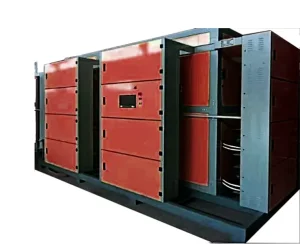
Engineered for severe-service environments, pipeline fluid heating, induction boilers, and precision high-temperature processing.