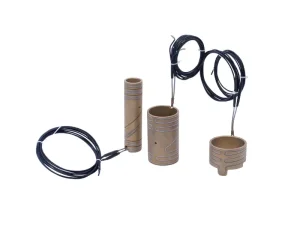
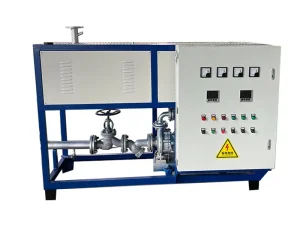
Direct-From-Factory Industrial Heating Units
High-efficiency thermal units manufactured to tight tolerances for industrial machinery, extrusion pipelines, and rapid process cycles.

Best Efficient Portable Ceramic Heaters from China Suppliers - Ideal for Industrial Heating in Factories Manufacturers, Exporters
Explore Specifications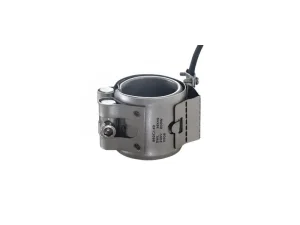
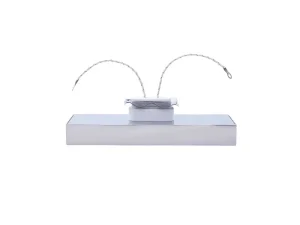
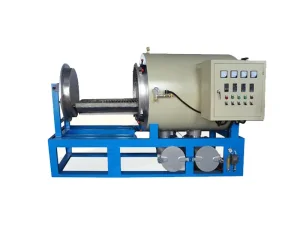
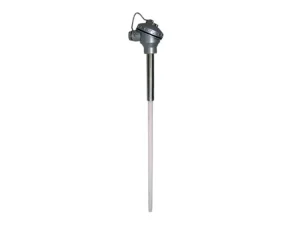
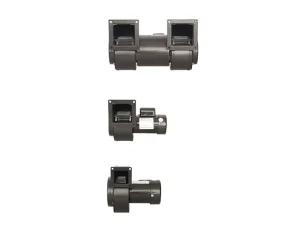

Industry Flexible Heater Evolution & Material Breakthroughs
Modern industrial thermal systems have shifted fundamentally from rigid, bulky cast iron and tubular immersion assemblies toward lightweight, high-conformability flexible heating elements. As advanced processing equipment shrinks in envelope footprint while requiring higher watt densities and micro-scale temperature uniformity, flexible heaters—spanning fiberglass-reinforced silicone rubber, etched-foil polyimide (Kapton®), and fluoropolymer substrates—have transitioned from specialized aerospace novelties into critical linchpins of global manufacturing.
Etched-Foil Precision Geometry
Unlike traditional hand-wound resistance wire, precision chemical-etched foil circuits allow computer-optimized trace routing. This enables zoned heat generation, where edge-loss compensation is integrated directly into the foil geometry, yielding thermal balance across curved boundaries within ±1°C.
Advanced Dielectric Elastomers
Fiberglass-reinforced silicone rubber compounds formulated at Kangpu Heater tolerate sustained continuous operating temperatures up to 235°C (455°F), resisting moisture, industrial hydrocarbons, hydraulic oils, and ozone degradation without dielectric breakdown.
Thermal Efficiency Gains
By conforming seamlessly to cylindrical barrels, conical hoppers, and asymmetric pipe profiles, flexible heaters eliminate thermal insulating air gaps. Direct-contact conduction reaches thermal transfer efficiencies exceeding 93%, drastically outperforming uninsulated mica bands.
Global Enterprise Procurement: Critical Sourcing Factors
When tier-1 procurement executives, system integrators, and OEM mechanical engineers vet industrial flexible heater factories, decisions rarely hinge on piece-part unit cost alone. Total Cost of Ownership (TCO), continuous uptime guarantees, and defect-free integration form the core evaluation metrics.
Tolerance & Watt Density Validation
Procurement teams require tight resistance tolerances (±5% to ±10%) and precise watt density ratings up to 60 W/in² (9.3 W/cm²) for polyimide films and up to 30 W/in² for silicone rubber elements. Uncontrolled watt density creates localized hot-spots that lead to premature dielectric carbonization.
Batch Traceability & Provenance
Factory audits require barcoded batch traceability from raw alloy foil ingots (Nichrome 80/20 or Cu-Ni alloys) through vulcanization autoclave cycles. Kangpu Heater tracks every production run back to raw lot numbers, ensuring flawless recall containment.
Comprehensive Safety Compliance
European and North American markets mandate strict adherence to CE (Low Voltage Directive 2014/35/EU, EMC Directive 2014/30/EU), UL 499 heating appliances compliance, RoHS 3 substance restriction, and REACH chemical safety declarations.
Mechanical Fastening Versatility
Flexible elements must fit real-world geometries via diverse factory-applied options: 3M pressure-sensitive adhesive (PSA) backings, vulcanized silicone bonds, Velcro straps, spring-and-eyelet closures, or stainless-steel clamping bands engineered for rapid field service.
Cross-Sector Engineering Applications
Flexible heaters, ceramic band heaters, and integrated cooling-heating systems engineered at Yancheng Laier Heating Technology resolve severe thermal gradient challenges across high-stakes industries.
Plastics Extrusion & Injection Tooling
Extrusion barrels and injection molding nozzles demand instantaneous response and tight melt viscosity management. Kangpu's custom ceramic band heaters and patented cooling-heating assemblies maintain exact thermal profiles along multizone screws, eliminating thermal degradation of engineering resins (PEEK, PTFE, PVC-O).
Medical Diagnostics & Laboratory Devices
In-vitro diagnostic analyzers, blood warming cassettes, hemodialysis circuits, and surgical gas humidification units require zero-degassing, bio-inert, non-magnetic flexible heating. Thin polyimide heating films integrate seamlessly into confined microfluidic analytical manifolds.
Semiconductor & Vacuum Process Lines
In sub-atmospheric wafer deposition and etching, process exhaust lines face condensation and sublimation of precursor gases. Custom wrap-around silicone jackets and bake-out heating blankets maintain lines at 150°C+ to prevent clogging and vacuum breakdown.
Electric Vehicle (EV) Battery Conditioning
Lithium-ion cells experience rapid capacity degradation and dendritic plating when charged in sub-zero environments. Thin, flexible heating mats vulcanized between battery modules provide uniform pre-heating, optimizing battery state-of-health and ultra-fast charging capabilities.
Aerospace De-Icing & Defense Avionics
High-altitude radar radomes, optoelectronic sensor enclosures, and aircraft wing surfaces leverage etched-foil heaters adhering to compound aerodynamic curvatures, operating reliably in temperatures down to -65°C with lightning-fast response times.
Industrial Heating Elements: Comparative Engineering Matrix
Direct technical comparison helping plant engineers and OEMs select the optimum thermal geometry based on dielectric properties, watt density, and physical constraints.
| Heater Technology | Dielectric / Substrate | Max Operating Temp | Peak Watt Density | Min Bend Radius | Moisture / Chemical Shield | Primary Industrial Use |
|---|---|---|---|---|---|---|
| Flexible Silicone Rubber | Fiberglass Reinforced Silicone | 235°C (455°F) | 30 W/in² (4.65 W/cm²) | 0.050" (1.27 mm) | Excellent (IP65 - IP67 Rated) | Tanks, curved barrels, batteries, piping |
| Flexible Polyimide (Kapton®) | Polyimide Film / Acrylic / FEP | 200°C (392°F) | 60 W/in² (9.3 W/cm²) | 0.010" (0.25 mm) | Exceptional (Vacuum-tight, zero outgassing) | Medical diagnostics, avionics, sensors |
| Industrial Ceramic Band | Steatite Ceramic Interlocking Bricks | 700°C (1292°F) | 45 W/in² (7.0 W/cm²) | Rigid (Pre-curved > 2" Dia.) | Moderate (Porous without outer steel casing) | Plastics extruders, blow molding barrels |
| Precision Mica Band | Phlogopite / Muscovite Mica Plates | 350°C (662°F) | 35 W/in² (5.4 W/cm²) | Rigid (Formed to nozzle diameter) | Low (Sensitive to liquid polymer ingress) | Injection nozzles, small cylindrical dies |
| Cast-in Aluminum / Copper | Al-Si Alloy / Bronze Matrix | Al: 400°C / Cu: 650°C | Al: 35 W/in² / Cu: 60 W/in² | Solid Cast (Machined to fit) | Total (Hermetic metal encapsulation) | High-shear extruders, cooling/heating zones |
| Nano Infrared Band | Infrared Radiative Element + Aerogel | 500°C (932°F) | 40 W/in² (6.2 W/cm²) | Fixed Cylindrical Housing | High (Sealed outer shell) | Energy-retrofit extruders (30%+ energy drop) |
The Kangpu Manufacturing Protocol: 7 Controlled Stages
Unlike trading companies that broker heating products, Yancheng Laier Heating Technology Co., Ltd. (Kangpu Heater) is a genuine Chinese manufacturing facility established in 1986. Every heater follows a rigorous 7-stage custom engineering workflow to eliminate catastrophic plant downtime.
Industrial Design (ID) Analysis
Our thermal engineering team conducts FEA thermal flux simulations based on your machine cadastre, verifying sheath clearance, fixing brackets, lead-wire strain reliefs, and terminal box clearances.
Electrical & Wattage Matching
Resistance trace calculation, cold-junction optimization, line voltage (110V to 480V, 1-phase or 3-phase), and total wattage sizing are locked down based on targeted ramp rate and steady-state heat loss.
Real Production Tooling Molds
We do not fabricate unverified hand-made prototypes. Real CNC steel dies and vulcanization compression molds are cut for initial samples, ensuring prototypes replicate exact mass-production characteristics.
On-Machine Client Validation
The sample is shipped directly to your production site for mounting validation, lead-wire flex testing, and baseline thermal ramp measurements under realistic production loads.
Engineering Optimization Loop
Feedback regarding clamping spring tension, lead exit angles, or thermocouple well locations is immediately incorporated into updated tooling geometries before sign-off.
Rigorous Stress Bench Testing
100% of pre-series units undergo dielectric Hi-Pot testing (1500V - 2500V AC), insulation resistance verification (>100 MΩ at 500V DC), and full-power thermal imaging to guarantee uniform heat flux.
Automated Volume Production
Mass manufacture proceeds under ISO 9001 quality supervision, with export-grade vacuum packaging, complete mill test certificates, and full 5-year warranty tracking numbers laser-marked on casings.
Regulatory Compliance & Next-Gen Technology Roadmap
Delivering industrial thermal assemblies to over 100 countries necessitates comprehensive localized engineering documentation, harmonized customs clearances, and an ambitious R&D trajectory addressing Industry 4.0.
Direct-Printed Sensors
Embedding RTD (PT100/PT1000) and Type-K thermocouple thin-film traces directly inside flexible heater laminations to measure true element temperature without external probes.
Graphene / CNT Matrices
Developing conductive carbon nanotube ink systems for ultra-fast warmup times (<3 seconds to 100°C) and virtually infinite flex-fatigue life under dynamic robotic arm routing.
AI Runaway Dampening
Integrating positive temperature coefficient (PTC) self-limiting trace compounds that automatically reduce power output locally as the heater approaches peak limit, making thermal runaway physically impossible.
Decarbonized Steam Boilers
Expanding Kangpu's electromagnetic induction steam boilers and high-temperature thermal oil systems to eliminate direct-combustion gas boilers in food, textile, and polymer manufacturing plants.
Frequently Asked Engineering Questions
Direct technical answers addressing procurement specifications, lead times, materials engineering, and field maintenance.
Can Kangpu manufacture flexible and band heaters to custom drawings and legacy machine models?
What is the standard warranty and after-sales failure resolution process?
When should an engineer specify a ceramic band heater versus a mica band heater?
How do flexible silicone heaters handle moisture, industrial chemicals, and mechanical vibration?
What international export certifications and material declarations do Kangpu heaters carry?
Complete Plant Solutions & Specialized Thermal Assemblies
Heavy industrial heating furnaces, cooling-integrated extruder systems, and coil elements engineered for relentless duty cycles.
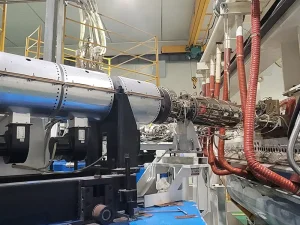
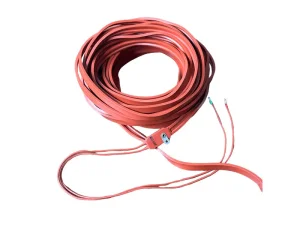
CE Certification Flexible Heaters for Custom Applications Manufacturer, Exporter
Explore Specifications
High-Quality Portable Ceramic Heaters for Industry - Efficient Heating Solutions from China Suppliers and Factory Exporter, Exporters
Explore Specifications