High-Performance Heating & Thermal Processing Systems
Engineered for rigorous industrial standards, high thermal conductivity, and custom OEM configurations.




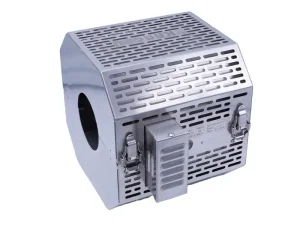

The Global Commercial & Industrial Landscape of Mica Heaters
A comprehensive examination of operational footprints, thermal efficiencies, and macro-industrial transitions.
Thermal Thermodynamics
Mica heaters represent the critical nexus between economic scale and high thermal responsiveness. Utilizing high-grade muscovite or phlogopite mica laminates layered with etched foil or nickel-chromium (NiCr) resistance wire, these heaters achieve operational sheath temperatures up to 500°C. Their minimal mass allows near-instantaneous thermal conduction, radically reducing ramp-up delays in continuous manufacturing cycles.
Global Energy Transition Mandates
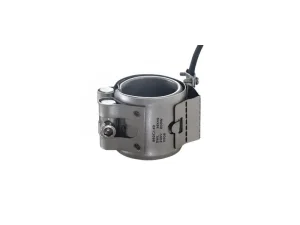
Modern international manufacturing standards (ISO 50001, CE, and RoHS directives) demand reduced parasitic heat loss. Factory retrofits globally are shifting away from inefficient, bulky heating elements toward customized mica bands and plate assemblies with custom clamping and insulating blankets, mitigating radiant dissipation into machine operator environments.
Supply Chain Evolution
The consolidation of raw material sourcing—particularly high-dielectric mica substrates, specialized stainless steel (SUS304/SUS316), and precision NiCr alloys—has focused production authority inside technologically mature manufacturing clusters. This ecosystem minimizes component variance and supports tight batch-to-batch repeatability.
Technical Insight: Mica's dielectric breakdown voltage surpasses 20 kV/mm, providing supreme electrical isolation even under tight geometric profiles (<4mm thickness). This makes mica heaters irreplaceable for high-density, dimension-constrained process applications such as plasticizing nozzle tips and laboratory diagnostic instrumentation.
China Factory Efficiency & Supply Chain Resilience
Why leading global enterprises partner with tier-1 Chinese manufacturers for custom thermal assemblies.
Vertical Supply Chain Integration
Operating from hubs like Yancheng, Jiangsu, tier-1 Chinese factories leverage unified geographical industrial parks. From native metal drawing, stamping, and automated laser micro-welding to on-site CNC tooling of clamping bands and mica sheath dies, this localization eliminates cross-border sub-supplier lead times.
Cost-to-Performance Optimization
Advanced Chinese manufacturing facilities combine extensive automation with rigorous material controls. Automated winding guarantees exact resistance pitch, preventing hot spots and cold zones. This precision drastically decreases infant mortality of elements, achieving the lowest Total Cost of Ownership (TCO) across continuous production cycles.
Rapid OEM Customization & Tooling
Rather than relying on outsourced third-party tooling, modern Chinese producers feature in-house tooling workshops. Custom barrel cutouts for thermocouples, specialized clamping mechanisms (barrel-nut, spring-loaded latch, or flange-lock), and unique terminal junction boxes are engineered and sampled in as little as 3 to 5 business days.
Mission-Critical Applications & Deployment Scenarios
Engineered for extreme performance across plastics machinery, packaging lines, and industrial thermal plant infrastructure.
Injection Molding Nozzles
Sealed mica band heaters prevent plastic resin ingress in nozzle tip operations. Fast cycle recovery ensures uniform melt viscosity without cold slugs, preventing gate freeze or mold cavity short shots.
Extrusion Barrel Zones
Installed along twin-screw and single-screw polymer extruders, mica heating bands work in tight sync with air-cooled shrouds to maintain precise zone profiling for PVC, HDPE, PP, and engineering resins.
Packaging & Sealing Jaw Dies
Flat mica plate heaters deliver uniform heat across continuous sealing bars, form-fill-seal machines, and blister pack thermal dies where edge-to-edge heat uniformity prevents seal integrity failures.
Laboratory & Medical Devices
Featuring low-profile geometry and precise low-wattage density, customized mica heaters drive sample warmers, autoclave secondary chambers, and chemical distillation testing apparatuses.
Industrial Heating Technology Selection Matrix
A technical baseline comparing mica heating systems with alternative thermal technologies.
| Heating Element Type | Max Operating Temp | Max Watt Density | Thermal Response | Primary Industrial Use Case |
|---|---|---|---|---|
| Mica Band / Plate Heaters | 350°C – 500°C | 3.5 – 5.0 W/cm² | Ultra-Rapid (Low Mass) | Injection nozzles, small/mid barrels, sealing platens |
| Ceramic Band Heaters | 650°C – 800°C | 6.0 – 8.0 W/cm² | Moderate (High Heat Retention) | Heavy plastic extrusion, high-temp resins (PEEK, PTFE) |
| Cast-in (Al / Cu) Heaters | 400°C (Al) / 650°C (Cu) | 4.0 – 7.0 W/cm² | High Thermal Inertia | Severe operating conditions, combined liquid-cooling barrels |
| Nano Infrared Band Heaters | 300°C – 450°C | 3.0 – 5.5 W/cm² | Rapid Direct Radiation | Energy retrofits prioritizing exterior heat loss reduction |
| Mineral Insulated (MI) Bands | 750°C – 1000°C | 8.0 – 15.0 W/cm² | Rapid Heat Transfer | Extreme temperature processing, ultra-high-density nozzles |
Emerging Industry Trends & Procurement Demands
How automation, material sciences, and digital quality monitoring are reshaping thermal component procurement.
Smart Predictive Heating & IoT Sensing
Global equipment builders increasingly specify integrated multi-junction J or K-type thermocouples and RTD sensors directly into the mica assembly. This allows real-time thermal mapping and predictive maintenance, stopping element burn-outs before plant downtime occurs.
Hermetic Anti-Leakage Sealing
Contamination by molten polymer remains the number one root cause of band heater dielectric failure. Procurement teams are moving toward 100% laser-welded, fully encapsulated brass or stainless-steel sheathing that guarantees IP65 protection against plastic drool and chemical degreasers.
Supply Chain Traceability & Extended Warranty
Industrial sourcing directors are bypassing generic brokers in favor of direct manufacturer contracts that provide 5-year guarantees backed by batch-level material certificates, mill test reports for nickel alloys, and dielectric withstand tests for each unit.
Frequently Asked Questions for Engineering Buyers
Essential guidance on thermal calculations, clamping configurations, and manufacturing protocols.
What is the maximum practical watt density for industrial mica heaters?
Standard mica band heaters operate reliably between 3.0 and 4.5 W/cm² (20 to 30 W/in²). Exceeding 5.0 W/cm² risks premature oxidation of the resistance ribbon and accelerated breakdown of the mica substrate binder. For higher watt densities, ceramic band or mineral insulated heaters are recommended.
How does proper clamping prevent thermal element failure?
Mica heaters rely primarily on conduction to move heat into the machine barrel. Any air gap between the sheath and the cylinder acts as a thermal barrier, causing localized hotspots where internal wire temperatures can exceed 700°C. High-tensile clamping straps and thermal re-tightening during commissioning are essential.
Muscovite vs. Phlogopite Mica: What is the difference?
Muscovite mica is typically rated up to 400°C–500°C and provides superior electrical dielectric resistance. Phlogopite (amber mica) withstands higher continuous temperatures up to 600°C, making it the preferred insulating core for demanding process heating zones.
What quality testing standards are applied prior to export shipment?
Every industrial heater batch undergoes strict Quality Assurance protocols: cold resistance testing (tolerance within ±5%), high-voltage AC dielectric withstand testing (typically 1500V to 2000V for 1 minute), and insulation resistance testing (>50 Megohms at 500V DC) prior to moisture barrier packaging.
Precision Thermal Assemblies & Specialized Systems
Explore our certified industrial heating elements, steam generators, and process pipeline systems.