
Featured Precision Heating Systems (Catalog Part I)

High-Quality Thermocouple Exporter, Factory
View Product Specs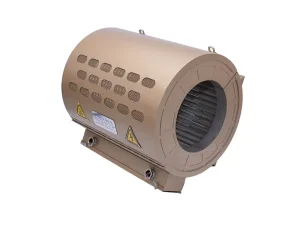
CE Certification Nano infrared electric band heater Manufacturer, Manufacturers
View Product Specs
High-Quality Portable Ceramic Heaters for Industry - Efficient Heating Solutions
View Product Specs
High-Quality Portable Ceramic Heaters for Industry - Reliable Heating Solutions
View Product Specs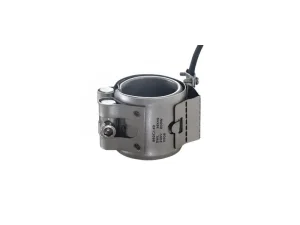
China Safe and Durable Mica Heaters Factory, Factories
View Product Specs
Best Efficient Portable Ceramic Heaters from China Suppliers - Factory Direct
View Product Specs
High-Quality Electromagnetic steam boiler Manufacturers, Factories
View Product Specs
Best Durable Heat Insulation Covers Manufacturer, Exporters
View Product SpecsExecutive Technical Treatise: Mightyband Coil Heaters with Integrated Thermocouples
In ultra-precision thermoplastic injection molding, hot runner manifolds, medical micro-extrusion, and high-cavity packaging systems, heat transfer uniformity is not merely an operational variable—it directly governs resin polymer crystallization, gate shear stress, and overall injection cycle efficiency. Modern high-output processing demands an integrated, heavy-duty solution: the Mightyband Coil Heater with Built-in Thermocouple. Sourced directly from premier engineering plants such as Kangpu (Yancheng Laier Heating Technology Co., Ltd.), this specialized heating element eliminates external thermocouple detachment, slashes thermal response latency to sub-second thresholds, and prevents premature heater burnout caused by air-gap insulation faults.
Sub-Second Junction Latency
Conventional external thermocouple clips introduce boundary layer thermal impedance, lagging true melt temperature by up to 14°C. An integrated Mightyband places a grounded (or ungrounded) Type J or Type K thermocouple directly into the compacted mineral insulation, measuring nozzle sheath temperature instantaneously.
Swaged High-Density Compaction
Employing electro-fused crystalline magnesium oxide (MgO) compacted through multi-axis rotary swaging machines, our Mightyband elements achieve a core density above 3.2 g/cm³. This guarantees maximum thermal conductivity while maintaining dielectric breakdown thresholds exceeding 1500V AC.
Corrosion & Melt Leak Protection
Nozzle drool and corrosive engineering polymers (such as fluoropolymers and flame-retardant additives) attack ordinary mica or loose-sheath heaters. Kangpu Mightyband coils utilize continuous laser-welded Incoloy 800 or 304/316 stainless steel enclosures with hermetic silicone or ceramic moisture seals.
Engineering Specifications & Cross-Sectional Geometry
Mightyband coil heaters differ significantly from standard coiled tubular heaters. By transforming round mineral-insulated cables into engineered rectangular, square, or flat cross-sections, the surface contact area against cylindrical nozzles rises from 28% to over 74%. This massive improvement in conductive contact drastically reduces the internal core resistance wire temperature, extending operating life even at surface watt densities reaching 8 W/cm² (50 W/in²).
| Profile Specification | Standard Dimensions (mm) | Maximum Sheath Temp | Built-in Thermocouple Types | Recommended Industrial Applications |
|---|---|---|---|---|
| Flat Rectangular Profile | 1.8 × 3.2 / 2.2 × 4.2 / 2.5 × 4.0 | 750°C (1382°F) | Type J (Iron-Constantan) / Type K | Hot runner torpedoes, drop nozzles, PET preform gates |
| Square Profile (Even Heat) | 3.0 × 3.0 / 3.2 × 3.2 / 4.0 × 4.0 | 700°C (1292°F) | Grounded Type J / Ungrounded Type K | Manifold heating plates, medical micro-molding tooling |
| Mini Round Profile | Ø 1.5 mm / Ø 1.8 mm / Ø 2.2 mm | 650°C (1202°F) | Type J Micro-sensor embedded | Ultra-compact multi-cavity cosmetic caps, pipette tips |
| Heavy D-Shape Profile | 3.0 × 4.2 mm (Flat face inward) | 800°C (1472°F) | Dual Type J / Type K redundant sensors | Extrusion die lip heating, high-temperature PEEK/PEI nozzles |
| Axial Clamped / Tangential | Custom engineered with locking collar | 750°C (1382°F) | J/K isolated ceramic insulated | Corrosive PVC processing, high-vibration automotive molding |
Nickel-Chromium 80/20 Core
Precision helical winding of NiCr 80/20 resistance wire delivers balanced linear resistance with negligible thermal drift. Cold pin joints are TIG-micro-welded under inert argon gas shielding to eliminate interfacial resistance spike anomalies.
Graded Pitch & Distributed Wattage
To counteract extreme conductive heat losses at nozzle tips and base flanges, Kangpu engineers custom-wound coils with graded pitch. Watt density is strategically concentrated at both ends (distributed wattage) to achieve absolute thermal flatness across the barrel zone.
Grounded vs Ungrounded Junction
Clients can specify either grounded thermocouple junctions (for lightning-quick thermal feedback, essential in high-speed cycle times) or isolated ungrounded junctions (mandatory for plants operating sensitive multi-channel PLC controllers prone to ground-loop interference).
Global Procurement Dynamics & Reliability Engineering
Procurement directors and tool designers at tier-1 manufacturing facilities evaluate heating elements through the lens of Total Cost of Ownership (TCO) rather than initial purchase price. In a 64-cavity injection mold producing medical syringes or beverage closures, an unexpected heater failure triggers thousands of dollars in unscheduled downtime, scrap material, and labor. Below is an engineering comparison between factory-grade Mightyband units and market-generic alternatives.
Defect: Moisture Ingress
Generic Failure Mode: Porous terminal sealing allows ambient humidity absorption into the hygroscopic MgO powder during transit or shutdown, causing immediate dead shorts upon startup.
Defect: TC Calibration Drift
Generic Failure Mode: Impure thermocouple alloys oxidize at sustained 400°C temperatures, skewing reading accuracy by 10–25°C and causing hidden gate crystallization flaws.
Defect: Sheath Delamination
Generic Failure Mode: Uneven bending and low-grade seam-welded tubes split along internal radii when coiled over tight nozzle spigots (Ø 10 mm to 25 mm).
Defect: Cold Pin Burnout
Generic Failure Mode: Abrupt transition between heated core wire and solid terminal lead creates localized hot spot, melting lead insulation jackets.
The 7-Stage Precision Manufacturing Protocol at Kangpu Heater
Established in 1986 in Yancheng, Jiangsu, China, Yancheng Laier Heating Technology Co., Ltd. (Kangpu Heater) brings four decades of pure electric thermal specialization. Unlike assembly trading intermediaries, our factory follows a rigorous seven-stage manufacturing cycle that transforms raw metallurgical ingots into ISO9001/CE-certified Mightyband coil heaters with built-in sensors.
ID & Finite Element Design
We analyze customer mold CAD files, specifying thermal clearance, lead exit angle (radial, tangential, or axial 45°), wattage profile, and mechanical clamping rings.
Custom Engineering Calculation
Ohmic calculation, core wire diameter matching, and thermocouple junction location (tip-end, center, or dual sensor redundant configuration) frozen for production.
Real-Mold Sample Fabrication
Kangpu opens hard steel tooling for prototype samples rather than manual hand-bending, ensuring the sample mirrors true mass-production dimensions and tolerance.
Customer Fitment Approval
The client mounts the real-mold sample into the target injection nozzle or manifold assembly, confirming clamping tension, cable clearance, and physical envelope.
Sample Refinement & Tuning
Engineering tweaks such as clamping screw pitch adjustments, armored braid length extensions, or revised watt distributions are integrated into the final revision.
Electrical & Thermal Testing
Full hipot dielectric test (1500V / 0.5mA / 1 min), insulation resistance audit, thermal imaging infrared inspection, and thermocouple millivolt calibration verification.
High-Volume Batch Production
Mass manufacturing under automated swaging and CNC coiling rigs, followed by vacuum bagging, shockproof packaging, export documentation, and dispatch to 100+ countries.
Macro Industry Applications & Turnkey System Solutions
Mightyband coil heaters are deployed wherever thermal margins determine production viability. By pairing integrated thermocouples directly with intelligent PID temperature controllers, processing facilities minimize reject scrap, accelerate mold warmup, and extend production intervals across severe environments.
Automotive Injection & Light-Weighting
For glass-fiber-reinforced polyamides (PA66-GF30) and POM exterior trims, precise melt temperature is essential to avoid gate blush and fiber segregation. Kangpu Mightyband coils maintain nozzle gate fluidity through tight thermal profiling, resisting mechanical mold clamping shock.
Medical Diagnostic & Cleanroom Molding
Disposable micro-fluidic chips, syringe barrels, and blood transfusion ports require zero contamination. Our fully encapsulated coil heaters prevent particulate shedding, while the integrated Type J sensor avoids thermal degradation of sensitive medical-grade polypropylene and COP.
High-Cavitation PET Preforms & Packaging
In 72-to-144 cavity beverage preform molds, gate balance determines cycle consistency. The built-in thermocouple provides real-time gate thermal tracking, preventing acetaldehyde (AA) spikes caused by localized resin overheating, maintaining clarity and structural compliance.
Technology Roadmap: Next-Generation Industrial Coil Heating
As injection molding transitions toward Industry 4.0 smart tool architectures, Kangpu's R&D engineering center is pioneering three major advancements in coil heater design to deliver unprecedented longevity, edge-computing integration, and thermal precision:
1. Multi-Point Fiber & Thin-Film Sensing
While single-point thermocouples measure a localized zone, upcoming Kangpu coil prototypes incorporate dual distributed thin-film platinum micro-RTDs along the coil perimeter. This allows the host controller to detect circumferential temperature gradients across non-symmetric mold cavities in real time.
2. Additive 3D Slotted Thermal Sleeves
Integrating Mightyband coil heaters into 3D laser powder-bed fused (LPBF) beryllium-copper or bronze alloy sleeves eliminates clamping gaps entirely. The resultant heat-sleeve assembly exhibits near-zero thermal resistance, slashing mold warm-up times by over 42%.
3. AI Predictive Life-Cycle Diagnostics
By analyzing micro-fluctuations in electrical resistance (ΔR/Δt) and insulation leakage current during operating cycles, smart Kangpu controllers can forecast heater element end-of-life weeks in advance, enabling maintenance teams to schedule planned replacements during routine tool overhauls.
Localized Support, Global Compliance & OEM Guarantee
Exporting to more than 100 nations across North America, Europe, Southeast Asia, and the Middle East, Kangpu (Yancheng Laier Heating Technology Co., Ltd.) pairs Chinese manufacturing scale with international quality certification and responsive logistics.
CE & RoHS Certified
Fully verified under European Low Voltage Directive (LVD) and RoHS heavy metal safety requirements for international customs clearance.
UL 499 Compliance
Engineered in compliance with UL 499 electric heating safety standards for seamless adoption by North American plastics machine builders.
Rapid Air & Sea Logistics
Close proximity to Shanghai port and dedicated air freight forwarding channels guarantees emergency replacement samples dispatched in as fast as 72 hours.
5-Year Traceability
Every batch is laser-marked with a distinct identification code linked to raw material chemical assay records and insulation hipot quality logs.
Frequently Asked Questions: Technical Engineering & Procurement
Authoritative guidance directly from Kangpu's thermal applications engineering department.
Why choose a built-in thermocouple over a separate external probe?
How does Kangpu ensure exact fitment on custom hot runner nozzles?
What is the difference between Grounded and Ungrounded thermocouple junctions?
What leads and termination options are available for harsh injection environments?
What does the Kangpu 5-year warranty cover?
Specialized Industrial Heating Range (Catalog Part II)
China Efficient Portable Ceramic Heaters for Industry | China Suppliers & Factory Exporters
View Product Specs
CE Certification Fan Manufacturer, Factory
View Product Specs
CE Certification Electromagnetic induction heater Manufacturer, Exporter
View Product Specs
Best Infrared Ceramic Heaters for Efficient Heating Manufacturers, Exporters
View Product Specs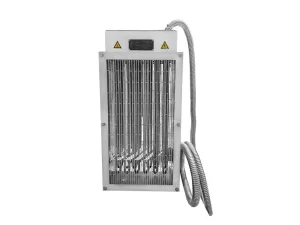
CE Certification Efficient Air Duct Heaters for HVAC Manufacturer, Factory
View Product Specs
China Portable Ceramic Heaters from China Suppliers: Efficient Heating Solutions
View Product Specs
High-Quality (Hot-runner) Spring Heater / Coil Heater Manufacturers, Factory
View Product Specs
High-Quality Cleaning furnace Manufacturer, Exporter
View Product SpecsPartner with an Established Heating Element Factory Since 1986
Send your tooling CAD drawings, electrical requirements, or machine model specifications directly to our engineering desk. From fast prototype sampling to high-volume multi-cavity supply, Kangpu ensures dependable thermal precision, backed by our industry-leading 5-year warranty.