
High-Performance Heating & Sensor Solutions
Engineered for mission-critical plastics extrusion, injection barrels, chemical processing, and clean industrial environments.

High-Quality Thermocouple Exporter, Factory
Configure Product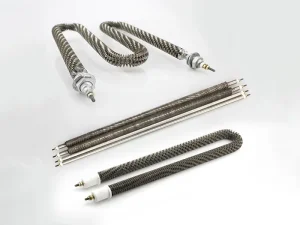
China High Density Heating Element Manufacturers, Factories
Configure Product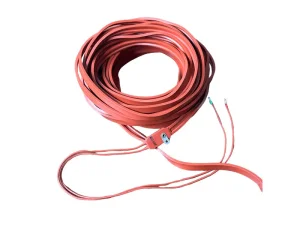
CE Certification Flexible Heaters for Custom Applications Manufacturer, Exporter
Configure Product
High-Quality Portable Ceramic Heaters for Industry - Reliable Heating Solutions from China Suppliers and Factory Manufacturers, Factory
Configure Product
High-Quality Portable Ceramic Heaters for Industry - Reliable Temperature Control from China Suppliers and Factory Exporter, Factory
Configure Product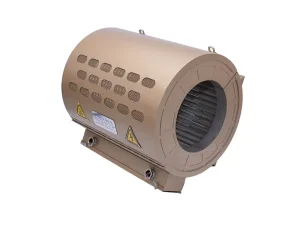
CE Certification Nano Infrared Electric Band Heater Manufacturer, Manufacturers
Configure Product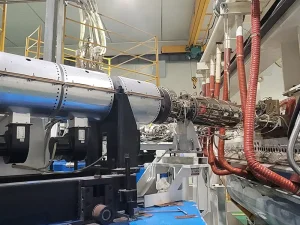
CE Certification Electromagnetic Induction Heater Manufacturer, Exporter
Configure Product
China Safe and Durable Mica Heaters Factory, Factories
Configure ProductThe Physics of Nano-Infrared Radiation & China Factory Superiority
Why modern global tier-one OEMs and high-throughput extrusion operations are replacing conventional resistive bands with nano-infrared heating systems.
In modern high-capacity plastics extrusion, thermoforming, and precision coating lines, heat transfer efficiency dictates both final product quality and operational profitability. Traditional band heaters rely on conduction, where thermal energy must migrate through physical interfaces, leading to contact resistance, severe heat dissipation into the surrounding ambient air, and elevated surface temperatures that exceed 200°C. Infrared radiative heating bypasses physical contact bottlenecks by transferring electromagnetic energy directly to the processing cylinder or target polymer substrate in accordance with the Stefan-Boltzmann law ($j^* = \varepsilon \sigma T^4$) and Wien's displacement theorem.
At Kangpu Heater (Yancheng Laier Heating Technology Co., Ltd.), founded in 1986, our engineering teams have integrated rare-earth nano-composite ceramic emitters with high-purity aerogel multi-layer insulation jackets. By tuning the peak infrared emission wavelength specifically between 2.0 μm and 10.0 μm, the radiant energy harmonizes with the absorption band of thermoplastic macromolecular chains and alloyed barrel steel. The outcome is direct thermal absorption with an electro-thermal radiation conversion coefficient surpassing 95%, a 30%–45% drop in total kilowatt-hour consumption, and an outer shell temperature maintained below 50°C—safeguarding workshop personnel and shrinking auxiliary HVAC cooling loads.
Continuous specialization in industrial electric heating elements, patent portfolios, and custom engineering.
Supplying extrusion plants, machinery manufacturers, and pipe producers across Europe, the Americas, and Asia-Pacific.
Full batch genealogy tracking from resistance alloy melt chemistry to CNC laser assembly testing.
Average operational power savings verified against standard mica and cast-in resistance heaters on extruder retrofits.
Technological Frontiers in Industrial Infrared Heating
Exploring the engineering shifts redefining thermal dynamics across high-precision global manufacturing hubs.
Nano-Ceramic Directional Emitters
Next-generation infrared heaters utilize vacuum-sputtered silicon carbide (SiC) and specialized zirconium-titanium coatings. Unlike omnidirectional radiant sources, integrated micro-reflectors project up to 98% of the infrared photons directly onto the working core, eradicating radial thermal escape.
Microsecond Modulation & Low Thermal Inertia
Conventional cast-iron or thick-walled cast aluminum units suffer from heavy thermal lag, causing temperature overshoots that degrade shear-sensitive polymers like PVC-O, EVOH, and fluoropolymers. Nano-infrared emitters achieve operating equilibrium within 60 seconds, allowing precise PID tuning with negligible overshoot.
IoT-Enabled Predictive Health Monitoring
By pairing embedded micro-thermocouple probes with resistance drift telemetry, smart heating zones detect trace oxidation in heating wires long before physical burnout occurs. This changes preventative maintenance schedules from reactionary shutdowns into scheduled turnarounds.
Enterprise Solutions & Localized Applications
Field-proven thermal installations driving efficiency in plastics processing, automotive coating, and municipal infrastructure.
Twin-Screw Polymer Compounding
Extrusion plants compounding engineering polymers (PEEK, PPS, nylon with high glass-fiber loadings) require rapid zonal heat adjustments. Kangpu's hybrid nano-infrared heater assemblies integrate localized high-CFM vortex cooling channels, maintaining barrel stability within ±1.0°C during high shear heating states.
Molecularly Oriented PVC-O Pipe Lines
PVC-O pipe manufacturing relies on exact biaxial orientation temperatures. Our specialized PVC-O radiant ovens deliver uniform air circulation and infrared energy across entire pipe profiles, preventing wall-thickness irregularities and ensuring maximum hoop tensile strength without localized polymer degradation.
Zero-Emission Clean Industrial Steam
For chemical reactors, textile finishes, and pharmaceutical sanitization, our high-density electromagnetic induction steam boilers replace fossil fuel boilers. With instantaneous steam generation and zero on-site flue gases, companies eliminate local emissions penalties and comply with European CBAM regulations.
Industrial Electric Heater Technology Matrix
A reference guide comparing watt density, operating temperatures, energy efficiency, and optimal operating applications.
| Heating Technology | Operating Temp | Max Watt Density | Heat Transfer Mode | Energy Efficiency | Best Suited Application |
|---|---|---|---|---|---|
| Nano-Infrared Band Heater | Up to 550°C | Up to 8.0 W/cm² | Infrared Radiation (>90%) | Exceptional (95%+) | Energy-saving extruder retrofits, masterbatch lines, thermoforming ovens |
| Ceramic Band Heater | Up to 700°C | Up to 6.5 W/cm² | Conduction & Radiation | Moderate to High | High-temperature extrusion barrels, blown film dies, compounding |
| Cast Aluminum / Copper Heater | Aluminum: 350°C / Copper: 650°C | Al: 4.5 W/cm² / Cu: 7.0 W/cm² | Direct Thermal Conduction | Standard | Extruders requiring heavy-duty liquid/air integrated cooling zones |
| Mica Band Heater | Up to 350°C | Up to 4.0 W/cm² | Pure Conduction | Baseline | Injection molding nozzles, packaging machinery, narrow barrel spaces |
| Electromagnetic Induction Heater | Up to 600°C | Variable (High) | Eddy Current Magnetic Flux | High (93%–97%) | High-tonnage extruders, induction steam generation, rapid liquid heating |
7-Stage Controlled Customization Workflow
From initial blueprint design to automated production, every unit meets strict dimensional and dielectric tolerances.
Industrial Design (ID)
Engineers evaluate mechanical drawings, machine clearance, terminal junction positions, and clamp arrangements.
Thermal & Electrical Spec
Watt density calculation, voltage selection, multi-zone terminal spacing, and lead wire insulation pairing.
Production Tooling
We open real steel molds and stamping dies rather than producing rough hand-made prototypes, ensuring repeatable production quality.
Client Fit Verification
You verify physical fitment, clamping torque, and mechanical clearances directly on your operational machine barrels.
Engineering Iteration
Refining leads, thermocouple cut-outs, split-shell hinges, or clamping bolts based on client feedback.
Bench Testing
Dielectric hipot breakdown test (>2000V), insulation resistance testing (>500MΩ), and full-power thermal imaging.
Scaled Mass Production & Batch Traceability
Continuous automated winding, laser shell marking, export-grade packaging, and 5-year warranty tracking numbers assigned per batch.
Global Enterprise Procurement Criteria
Key technical benchmarks procurement managers use to qualify industrial electric heater suppliers.
Procuring heating elements for multinational processing facilities requires looking beyond unit pricing. An unexpected heater burnout can stall an extrusion line that costs thousands of dollars per hour in down time, scrape raw polymer batches, and create safety risks. Global purchasing executives evaluate four critical technical criteria when selecting an OEM heating manufacturer:
Alloy Purity & Cold Resistance
Insist on certified Ni80Cr20 (Nickel-Chromium) resistance alloys with low trace iron impurities. Pure alloys prevent oxidation-induced hot spots and resistance drift, ensuring balanced power draw across three-phase electrical panels over years of continuous operation.
Dielectric Strength & Leakage Limits
Industrial safety regulations demand leakage currents below 0.5 mA under wet and ambient thermal conditions. Factory-tested insulation materials (synthetic high-grade mica, compressed fused MgO, high-density steatite) must reliably pass 2,500V hipot testing.
Mean Time Between Failures (MTBF)
Assess supplier life-cycle testing data under thermal cycling stresses. Kangpu's nano-infrared elements are rated for over 30,000 continuous working hours, backed by a five-year factory warranty that covers repair, root-cause teardown, and replacement.
Engineering Questions & Expert Solutions
Comprehensive answers addressing installation parameters, custom machining, energy audits, and warranty logistics.
How do nano-infrared heaters cut electricity usage by 30% to 45% compared to conventional bands?
Conventional ceramic or mica heaters rely on mechanical conduction, transferring heat only through physical contact points. Because barrel surfaces have microscopic roughness, air gaps form that resist heat transfer. Heat builds up within the band itself, radiating outward and driving surface temperatures up to 200°C–300°C. Nano-infrared heaters solve this by using radiative heat transfer: high-emissivity ceramic materials emit infrared waves matched to the steel barrel's absorption wavelength. Simultaneously, an outer layer of vacuum-insulated aerogel keeps the exterior skin temperature under 50°C, directing over 95% of the electric power straight into your processing cylinder.
Can Kangpu fabricate heaters to our proprietary engineering drawings and irregular geometries?
Yes. Custom OEM and replacement heater fabrication is our primary manufacturing focus. Operating from Yancheng, Jiangsu, our engineering department reviews your 2D and 3D CAD models (STEP, DWG, DXF). We adapt inner diameters, axial widths, wattage, voltage splits, clamping systems, and lead terminations. Custom thermocouple clearance holes, cutouts for pressure transducers, and integrated mounting brackets are precisely positioned using CNC laser cutters before forming.
What specific terms and tracking support Kangpu's 5-year warranty?
Our five-year industrial warranty covers dielectric breakdowns, open circuits, and abnormal element resistance changes that happen under normal operating parameters. Every heater features a laser-etched serial number detailing alloy wire spool data, insulation batches, tooling dies, and bench test sign-offs. If a unit shows performance issues, our quality control team runs an alloy degradation analysis on the batch code to pinpoint the root cause and ships an expedited replacement.
Ceramic band, mica band, or nano-infrared: Which heater best fits my extrusion line?
The ideal heating technology depends on your operating temperatures, physical space, and energy goals. For tight mechanical clearances, small injection nozzles, and budgets below 350°C, choose Mica Band Heaters. For demanding processes requiring up to 650°C–700°C with moderate thermal mass, select Ceramic Band Heaters. For operations focused on reducing electrical consumption, improving worker safety, and holding tight ±1°C tolerances without overheating, choose Nano-Infrared Band Heaters.
How does infrared radiation affect barrel metallurgical integrity and resin viscosity?
Infrared radiation doesn't harm nitrided or bimetallic alloy barrels. Rather, it delivers more uniform circumferential heating than contact bands, preventing the localized hot spots that cause thermal expansion stress and uneven bore wear. For polymers, balanced radiant energy penetrates into the barrel wall evenly, reducing melt temperature differences across your screw flights and eliminating un-melted resin gels or degraded polymer streaks.
What international export and safety certifications do your heaters hold?
Our manufacturing facility operates under an ISO 9001:2015 certified quality system. Our core heating lines—including nano-infrared elements, ceramic bands, flexible silicone heaters, cast-in heaters, and electromagnetic steam boilers—hold full CE Certification, comply with the RoHS Directive, and pass IEC/EN electrical safety standards for dielectric strength and earth ground continuity.
Specialized Thermal & Process Heating Catalog
Explore heavy-duty cast-in heating units, explosion-proof pipeline heaters, induction boilers, and PVC-O ovens.
Best Efficient Portable Ceramic Heaters from China Suppliers - Ideal for Industrial Heating in Factories Manufacturers, Exporters
Configure Product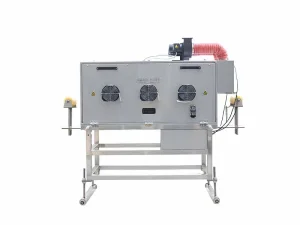
CE Certification PVC-O Ovens for Precision Heating Manufacturer, Manufacturers
Configure Product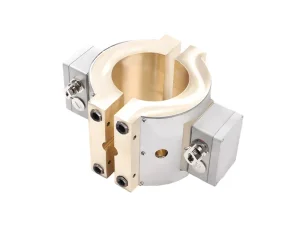
CE Certification Cast Aluminum/Copper Heater Manufacturer, Exporter
Configure Product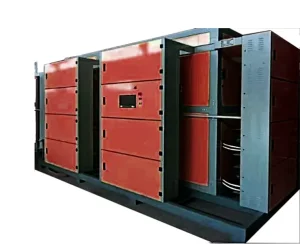
High-Quality Electromagnetic Steam Boiler Manufacturers, Factories
Configure Product
CE Certification Explosion Proof Electric Heater Exporter, Factory
Configure Product
China Efficient Portable Ceramic Heaters for Industry | China Suppliers & Factory Exporters, Factories
Configure Product
High-Quality Portable Ceramic Heaters for Industry - Efficient Heating Solutions from China Suppliers and Factory Exporter, Exporters
Configure Product