
Precision Engineered Thermal Systems & Process Heaters
Direct from factory: high-durability electric heaters and advanced heating-cooling modules built to international safety codes, pre-tested for seamless line integration.
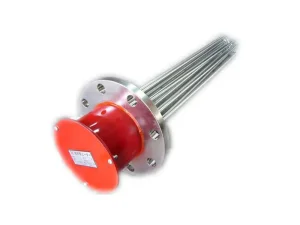
CE Certification Explosion Proof Electric Heater Exporter, Factory
Configure & Inquire
CE Certification Ovens Manufacturer, Exporter
Configure & Inquire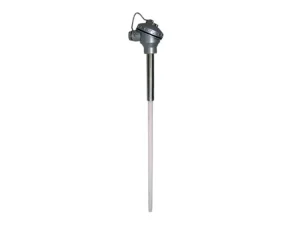
High-Quality Thermocouple Exporter, Factory
Configure & Inquire
China Portable Ceramic Heaters for Industry Manufacturers, Exporter
Configure & Inquire
CE Certification Precise Cooling and Heating System Manufacturers, Exporters
Configure & Inquire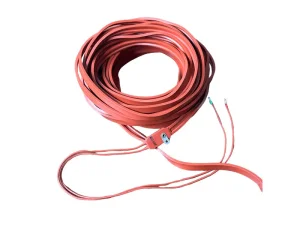
CE Certification Flexible Heaters for Custom Applications Manufacturer, Exporter
Configure & Inquire
China Portable Ceramic Heaters from China Suppliers: Efficient Heating Solutions
Configure & Inquire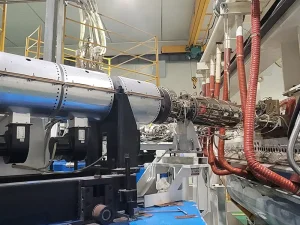
CE Certification Electromagnetic induction heater Manufacturer, Exporter
Configure & InquireAir Process Heating Evolution: Electrification, Precision & CE Governance
Navigating the global shift from fossil-fuel combustion to high-density clean convective thermal processing in modern industrial automation.
In modern manufacturing, forced-convection air process heaters have transitioned from basic thermal air blast units to ultra-precise, digitally monitored thermal transfer machines. As global environmental mandates target Scope 1 direct greenhouse gas emissions, industrial facility directors and original equipment manufacturers (OEMs) are systematically decommissioning fossil-fired burners in favor of high-kilowatt, high-temperature electric process gas heaters. These units deliver outlet air temperatures up to 900°C (1652°F) with instantaneous responsiveness, zero local carbon combustion emissions, and thermal efficiency exceeding 98.5%.
The core design principle of an industrial air process heater revolves around minimizing internal aerodynamic pressure drop while simultaneously maximizing convective surface area and boundary-layer heat transfer. Conventional tubular elements often cause turbulent recirculation eddies, leading to localized element overheating, premature sheath oxidation, and dielectric degradation of magnesium oxide (MgO) insulation. Contemporary CE-marked air process heaters incorporate aerodynamic finned tubular geometry, coiled open-wound Nichrome/Kanthal topologies, or staggered ceramic-matrix air channels calculated via Computational Fluid Dynamics (CFD) to ensure uniform air flow distribution across element surfaces.
Achieving authentic CE Certification for air process heaters involves comprehensive compliance across multiple European Union directives. Equipment must adhere strictly to the Low Voltage Directive (LVD 2014/35/EU) under harmonized standard EN 60335-1 and industrial heating safety standard EN 60519-1/-2, alongside the Electromagnetic Compatibility Directive (EMC 2014/30/EU). When integrated into pressurized loops, compliance with the Pressure Equipment Directive (PED 2014/68/EU) becomes mandatory. Exporting to European, Scandinavian, and British markets requires rigorous factory acceptance auditing, dielectric breakdown testing under operating temperature, clear creepage distance validation, and comprehensive technical documentation.
Engineering Verification: Material Science, Sheath Metallurgy & Safety
How Tier-1 industrial buyers evaluate element construction, thermal boundary layers, and long-term dielectric reliability.
Alloy Sheath Metallurgy
Industrial process air can carry corrosive vapors, condensates, or extreme thermal gradients. High-tier air process heaters specify Incoloy 800 / 840 (UNS N08800) or AISI 316L / 310S Stainless Steel to resist intergranular carbide precipitation, stress corrosion cracking, and oxidation at continuous operating sheaths above 800°C.
Dielectric MgO Compaction
High watt-density heating elements require high-purity electrical grade fused magnesium oxide (MgO) compacted to theoretical densities exceeding 3.05 g/cm³. This provides immediate thermal conduction from internal resistance wire to the outer sheath while maintaining electrical insulation impedance above 100 MΩ at 1500V DC flash test.
Aerodynamic Baffle Configuration
To eliminate static boundary layers, custom CNC laser-cut segmented flow baffles force incoming pressurized gas into helical swirling patterns. This elevates the local Nusselt number, accelerates forced convective coefficient (h), and stops localized stagnant hot-spots that degrade element lifespan.
| Evaluation Parameter | Electric Air Process Heater (Kangpu CE Spec) | Gas-Fired Convective Burner | Indirect Steam Coil Heat Exchanger |
|---|---|---|---|
| Thermal Efficiency | 98.5% – 99.2% (Direct Joulean convection) | 65% – 80% (Flue heat loss) | 50% – 70% (Boiler & trap condensate loss) |
| Process Temperature Range | Ambient to 900°C (Precision modulated) | 150°C to 650°C (Flame safety limits) | Max 180°C (Limited by steam pressure) |
| Temperature Response Time | Milliseconds with Thyristor / SCR modulation | Sluggish (Fuel valve actuation delays) | Slow (Thermal mass of condensate/pipes) |
| On-Site Emissions & Flue | Zero emissions; no flue or venting required | Produces CO, CO2, NOx; requires exhaust stack | Secondary boiler emissions offsite |
| CE & International Standards | EN 60335-1, EN 60519-1, 2014/35/EU, 2014/30/EU | EN 746-2, Gas Appliance Regulation (GAR) | PED 2014/68/EU, ASME Section VIII Boiler Code |
| Cleanroom Compatibility | Class 100 / ISO 5 compatible (Zero particulate) | Not permissible (Combustion by-products) | Permissible but bulky & moisture-prone |
China Smart Factory 4.0: Vertical Integration & Export Agility
How Yancheng Laier Heating Technology leverages 40 years of engineering pedigree, automated robotic production, and deep supply clusters to deliver unmatched cost efficiency.
In global industrial procurement, heater failure triggers expensive line shutdowns. Global OEMs in Germany, the United States, Japan, and Italy turn to Yancheng Laier Heating Technology (Kangpu Heater) not merely for competitive pricing, but for engineering precision and complete supply chain verticality. Operating continuously from Yancheng, Jiangsu since 1986, the factory integrates every tier of the production cycle: internal tube drawing, multi-axis automated resistance wire winding, high-pressure semi-automated MgO loading, multi-stage rotary swaging, vacuum annealing, and computerized automated TIG weld capping.
Under China's Industry 4.0 manufacturing framework, our manufacturing plant deploys real-time statistical process control (SPC) at every station. Each element is tracked with an individual laser-etched serial code, mapping back to specific raw material heats, MgO dielectric insulation batches, and specific calibration logs. This end-to-end transparency enables our industry-exclusive 5-Year After-Sales Warranty, providing international buyers with total operational security.
Rapid Tooling & Real-Mold Prototyping
Unlike small machine shops using manual prototypes, Kangpu builds tooling-grade production molds during the sampling stage. Custom flanged air heaters, terminal junction boxes (IP65/IP67, ATEX-rated), and complex mounting baffles undergo direct prototyping within 7 to 10 working days.
Global Supply Cluster Advantage
Located in the heart of Jiangsu's advanced industrial corridor, our manufacturing complex maintains direct mill relationships with certified suppliers of raw nickel-chromium wire (Ni80Cr20), specialized cold-drawn seamless tubing, and pure electro-fused dielectric insulation, insulating clients from global supply shocks.
Complete Factory Acceptance Testing
Every exported heater undergoes automated multi-point inspection prior to crating: Room-temperature & Elevated-temperature Insulation Resistance (Megger > 100MΩ at 1000V), High-Potential Dielectric Withstand (Hi-Pot 2000V AC / 1s), Helium Mass Spectrometer leak checking, and X-ray element concentricity verification.
Mission-Critical Deployment Scenarios Across Global Heavy Industry
From semiconductor lithography bake-out to gigafactory battery cathode drying tunnels, Kangpu air process heaters provide stabilized thermal transfer.
Wafer Substrate Desiccation
Cleanroom environments prohibit any dusting or particulate shed. Kangpu's passivated 316L electropolished air process heaters deliver clean, contaminant-free nitrogen or argon gas up to 450°C for wafer dehydration and photoresist stripping ovens.
Electrode Coating Drying Tunnels
Continuous roll-to-roll lithium-ion electrode foil coating demands laminar convective airflow with strict transverse thermal uniformity within ±1.5°C. Our modular high-kW air duct heaters prevent solvent blistering and eliminate foil warping during evaporation.
Composite Autoclave Curing
High-pressure circulating autoclaves for carbon-fiber aerospace parts demand rapid ramp rates up to 15°C/min and absolute pressure vessel integrity under 30 bar. Kangpu custom-engineers flanged air process heaters rated to ASME and PED codes.
Hot-Air Sealing & Orientation
High-speed blown film lines, shrink tunnels, and PVC-O molecular orientation ovens rely on high-velocity forced air nozzles. Our cast-in and ceramic-embedded convective modules sustain uninterrupted 24/7 continuous duty cycles without thermal fatigue.
From Spec Sheet to Container: 7-Stage Controlled Manufacturing
Structured milestone gates guarantee exact dimensional matching, electrical insulation stability, and zero field recalls.
Fluidic & CAD Design
Review of customer operating pressure (bar), volumetric flow rate (CFM/Nm³/h), delta-T targets, gas medium composition, and duct footprint. SolidWorks 3D CAD modeling with CFD boundary simulation.
Watt-Density Sizing
Calculation of sheath watt density (W/cm² or W/in²) matched specifically to the thermal transfer properties of process air, nitrogen, or argon. Prevents element coking and surface oxidation.
Hard Mold Tooling
Production-grade CNC tooling and bending jigs are cut for precision forming. Heating element centerlines, terminal stud weld positions, and internal baffling geometry are locked into master CNC programs.
Sample Line Sign-Off
The client receives a complete first-article prototype with mill test certificates, electrical insulation test logs, and dimensional CMM scan reports for on-machine test mounting and thermal loop verification.
Frequently Asked Questions: Air Process Heaters
Direct answers to the most common technical, compliance, and logistical inquiries from global procurement teams.
What specific CE directives apply to industrial air process heaters?
CE compliance requires adherence to the Low Voltage Directive (LVD 2014/35/EU) under EN 60335-1 and EN 60519-1 (industrial electro-heating installations). If thyristor power controllers or internal sensors are integrated, the Electromagnetic Compatibility Directive (EMC 2014/30/EU) applies under EN 61000-6-2/4. For pressurized gas systems operating above 0.5 bar, compliance with the Pressure Equipment Directive (PED 2014/68/EU) is legally required in the EU single market.
How do you calculate the correct watt density to prevent air heater burnout?
Watt density (W/cm²) is dictated by the velocity and density of the incoming gas stream. For static or low-velocity air (<2 m/s), watt density must be restricted between 1.5 to 3.0 W/cm² to prevent sheath overheating. In high-velocity pressurized forced-air lines (>10 m/s), watt density can safely reach 6.0 to 9.0 W/cm² using Incoloy 800/840 sheaths, provided an integrated interlock shuts power down instantly upon airflow loss.
Can Kangpu custom-build air heaters to replace existing European or American brands?
Yes. A primary pillar of Kangpu's export operations is drop-in replacement engineering for aging or cost-prohibitive OEM heaters. By providing existing physical dimensions, flange patterns (DIN/ANSI), voltage/wattage, and operating temperatures, our engineering department delivers direct form-fit-function replacements with upgraded sheath materials and a 5-year warranty.
What temperature sensor configurations are integrated into your air process heaters?
We offer dual-level temperature monitoring: an internal Type K or Type J thermocouple welded directly to the active element sheath for over-temperature protection, combined with an ungrounded thermocouple positioned in the exit airstream for precise PID loop control. Resistance Temperature Detectors (Pt100 RTDs) are also available for low-temperature, ultra-high accuracy applications.
How does your factory prevent moisture ingress during overseas sea shipment?
Magnesium oxide is naturally hygroscopic. To maintain infinity insulation resistance during multi-week ocean transport through humid maritime zones, terminal ends are hermetically sealed with industrial RTV silicone, high-temperature epoxy, or ceramic glass seals. Furthermore, heaters are sealed in heavy vacuum-barrier moisture bags with desiccant packs before wooden crating.
What is the standard production lead time for customized industrial air heaters?
Engineering drawings are generated and submitted within 24 to 48 hours. Rapid sample production typically ships within 7 to 10 working days. Full container production orders (FCL) or custom industrial runs typically ship within 3 to 4 weeks, with expedited air-freight options available for emergency replacement scenarios.
Specialized Industrial Elements, Steam Boilers & Heating Units
Explore the extended lineup of high-density heaters, mica modules, induction boilers, and ceramic systems exported globally.
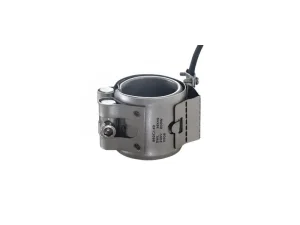
China Safe and Durable Mica Heaters Factory, Factories
Configure & Inquire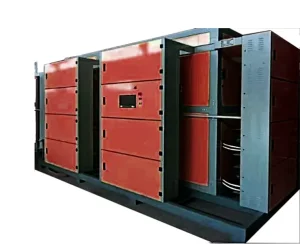
High-Quality Electromagnetic steam boiler Manufacturers, Factories
Configure & Inquire
China High density heating element Manufacturers, Factories
Configure & Inquire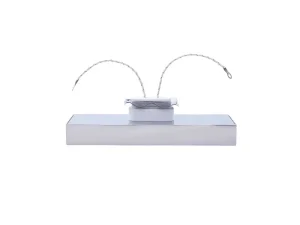
Best Infrared Ceramic Heaters for Efficient Heating Manufacturers, Exporters
Configure & Inquire
High-Quality Portable Ceramic Heaters for Industry - Reliable Solutions
Configure & Inquire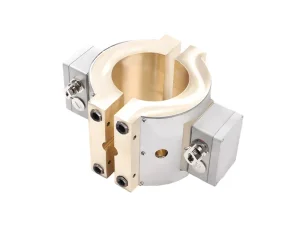
CE Certification Cast Aluminum/Copper Heater Manufacturer, Exporter
Configure & Inquire
High-Quality Portable Ceramic Heaters - Reliable Temperature Control
Configure & Inquire