
High-Efficiency Industrial Heating Systems & Components
Explore our export-certified thermal systems engineered for extrusion lines, air handling ductwork, and specialized precision manufacturing processes.

High-Quality Cleaning furnace Manufacturer, Exporter
View Specifications
High-Quality (Hot-runner)Spring heater/Coil heater Manufacturers, Factory
View Specifications
China Efficient Portable Ceramic Heaters for Industry | China Suppliers & Factory Exporters
View Specifications
High-Quality Portable Ceramic Heaters for Industry - Efficient Heating Solutions
View Specifications
Best Pipeline Heater Manufacturers, Factory
View Specifications
CE Certification Electromagnetic induction heater Manufacturer, Exporter
View Specifications
Best Infrared Ceramic Heaters for Efficient Heating Manufacturers, Exporters
View Specifications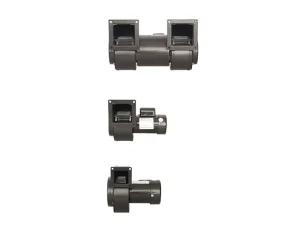
CE Certification Fan Manufacturer, Factory
View SpecificationsGlobal Landscape of Electric Duct Heating & Clean Energy Transition
Decarbonization targets, rigorous EU safety directives, and the phaseout of fossil combustion are accelerating the global adoption of CE-certified air duct thermal systems.
Industrial Clean Electrification
Global net-zero regulations are urging plants across Europe and North America to replace direct gas-fired heaters with closed-loop electric duct heating assemblies. This transition eliminates on-site carbon emissions while unlocking precise digital temperature regulation.
Strict CE Directive Compliance
To safely integrate into modern mechanical ventilation setups, duct heaters must conform to both the Low Voltage Directive (LVD 2014/35/EU) and Electromagnetic Compatibility Directive (EMC 2014/30/EU). Our verified thermal protection chains and insulation resistance comply fully with international standards.
Modular HVAC Integration
Air Handling Unit (AHU) builders and MEP engineering contractors demand modular duct heater assemblies with configurable watt densities, slip-in or flanged casings, and integrated SCR thyristor control panels to match unpredictable aerodynamic loads.
Thermal Fluid Dynamics, Sheath Metallurgy & Safety Control Engineering
A comprehensive engineering review of airflow kinetics, watt density calculation, and safety limiters essential for high-performance electric duct heater deployment.
Electric duct heaters operate under forced-convection heat transfer dynamics. Designing a dependable heating element involves maintaining a precise balance between internal core resistance wire temperatures (typically high-grade 80/20 Nickel-Chromium), compacted dielectric magnesium oxide (MgO) insulation purity, and sheath dissipation velocity. When industrial processing airflow slows down or ceases abruptly, immediate thermal accumulation can destroy standard elements unless multi-layered overtemperature safety devices are integrated directly into the system architecture.
1. Calculating Critical Watt Density & Airflow Kinetics
In standard HVAC air handling applications, watt density must be calibrated to the volumetric flow rate (CFM or m³/h) and static pressure across the bundle. Running sheath watt densities between 2.5 to 5.0 W/cm² prevents radiant breakdown and carbonization of dust particulates in cleanroom or commercial duct runs. For elevated process drying applications reaching discharge temperatures above 400°C, high-alloy materials such as Incoloy 800/840 or 310S stainless steel sheaths are required to prevent oxidation embrittlement.
2. Dual-Level Thermal Protection Architecture (CE Mandate)
Under CE safety guidelines, every electric duct heater requires at least two independent levels of thermal protection wired in series with the safety interlock circuit:
Primary Protection (Automatic Reset): A thermal cut-out situated in the direct discharge path calibrated to trip if airflow drops below 1.5 m/s, resetting automatically once ambient circulation cools down the casing.
Secondary Protection (Manual Reset): A redundant capillary limiter calibrated near the sheath material's thermal threshold. In the event of a primary switch failure, this device trips and permanently disables the power contactor until an authorized technician inspects the ductwork and manually depresses the reset pin.
Why Global OEMs Source from the Yancheng Heating Element Cluster
Decades of industrial concentration in Jiangsu deliver high supply chain resilience, end-to-end tooling capability, and rapid custom turnaround times.
Complete Vertical Integration
From precision CNC tube bending, automated filling of 99.5% high-purity crystalline MgO powder, and annealing furnaces to laser seam welding—every production step is performed in-house at our Yancheng facility to maintain tight QA tolerances.
Rapid Prototype to Mass Rollout
Our localized cluster provides same-day access to certified nickel alloys, custom stainless flanges, and ceramic insulators. We shorten customized engineering drawings and real-mold sampling cycles from several weeks to as fast as 7 working days.
Traceable 5-Year Warranty Protection
Unlike export traders, our factory retains batch production serials, raw heat logs, and insulation megohm logs. This allows us to offer an enterprise 5-year after-sales warranty backed by permanent root-cause tracing.
Localized Engineering Use Cases Around the World
See where our electric duct heaters and thermal accessories are operating reliably across demanding sectors.
Cleanroom Air Handling Units (AHU)
Installed in pharmaceutical laboratories and semiconductor fabrication plants across Northern Europe to deliver clean reheat without carbon deposits or open flame hazards.
Plastic Extrusion & PVC-O Orientation Ovens
Directly coupled with high-flow circulating fans to deliver uniform, high-temperature airflow throughout biaxial PVC pipe stretch tunnels, ensuring balanced wall thickness and strength.
Commercial HVAC Terminal Reheat
Equipped across multi-zone VAV systems in modern commercial developments, utilizing slip-in duct frame designs for simple installation, lower static drop, and quiet acoustic profiles.
Industrial Drying & Curing Tunnels
Delivers high watt-density forced convection inside continuous paint curing, textile drying, and battery electrode processing lines requiring rapid thermal response and uniform heating.
International Procurement Criteria & Technical Trend Forecast
Key parameters engineering and procurement teams should specify when submitting RFQs for electric duct heater assemblies.
1. Aerodynamic Flow Profile
Always specify your duct dimensions (width x height mm), minimum airflow velocity (m/s or CFM), and inlet operating temperature. This ensures elements stay below critical sheath thresholds.
2. Power Staging vs. SCR Modulation
Large duct loads (>30 kW) should incorporate staged switching contacts or 4-20mA proportional SCR power controller links to prevent voltage flicker and optimize energy consumption.
3. Ingress & Ambient Environment
Select appropriate terminal housings: NEMA 1/IP40 for clean HVAC ducts, IP55/IP65 for outdoor air handling or high-humidity food plants, and explosion-proof for volatile environments.
Frequently Asked Questions on CE Electric Duct Heaters
Practical answers to common design, compliance, and custom ordering questions from engineering procurement teams.
What specific CE directives do your electric duct heaters comply with?
Our industrial electric duct heaters comply fully with the European Union Low Voltage Directive (LVD) 2014/35/EU and the Electromagnetic Compatibility (EMC) Directive 2014/30/EU. Elements undergo mandatory dielectric strength tests (Hi-Pot 1500V-2000V), insulation resistance testing exceeding 100MΩ cold, and include dual-stage thermal cutouts.
Can you manufacture electric duct heaters based directly on client drawings or samples?
Yes. Customization is our primary operational model. Whether you supply detailed mechanical CAD drawings, OEM part numbers, or specific ductwork opening dimensions with airflow parameters, our engineering department designs the complete internal layout, element watt density, terminal enclosure, and mounting flange to your requirements.
What is the minimum airflow velocity required across electric duct heating elements?
As a rule of thumb for standard open-coil or tubular sheath duct heaters, airflow should maintain a minimum velocity of 1.5 to 2.0 m/s (approx. 300 to 400 FPM) across the entire cross-section. Lower velocities cause heat stagnation around element coils, shortening lifespan and tripping thermal limiters.
What warranty protection is offered on export orders?
Yancheng Laier Heating Technology provides a 5-year warranty on our industrial electric heating products. Because every component is manufactured in-house and tracked through serialized batch logging, any performance issue can be traced directly back to raw material lots and production test certificates.
How do tubular finned elements compare with open-coil duct elements?
Finned tubular elements feature stainless steel or carbon steel helically wound fins that expand heat transfer surface area up to 8 times. This lowers operating sheath temperatures and reduces dust ignition risks. Open-coil elements provide lower pressure drop and faster response times, but require cleaner air streams.
What is your typical lead time for custom OEM samples and volume orders?
Drawing sign-off and physical real-mold prototype delivery usually takes 7 to 10 working days due to our centralized industrial supply chain in Yancheng. Standard container-level export orders are completed within 3 to 4 weeks depending on raw material metallurgy.
Precision Temperature Systems & Industrial Assemblies
Explore our specialized industrial heaters, temperature management systems, and high-density elements trusted across global manufacturing plants.

CE Certification Precise Cooling and Heating System Manufacturers, Exporters
View Specifications
CE Certification Ovens Manufacturer, Exporter
View Specifications
China Safe and Durable Mica Heaters Factory, Factories
View Specifications
High-Quality Portable Ceramic Heaters for Industry - Reliable Heating Solutions
View Specifications
Best Efficient Portable Ceramic Heaters from China Suppliers - Ideal for Industrial Heating
View Specifications
Best Heating/Cooling Integrated System Exporter, Exporters
View Specifications
China High density heating element Manufacturers, Factories
View Specifications