
High-Efficiency Industrial Heating Systems
Direct supply from China's premier heating apparatus factory. Custom-fabricated configurations compliant with CE Low Voltage Directive (LVD) and Electromagnetic Compatibility (EMC) regulations.
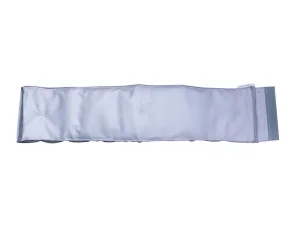
Heat Insulation Covers
Best Durable Heat Insulation Covers Manufacturer, Exporters

Nano Infrared Band Heater
CE Certification Nano infrared electric band heater Manufacturer, Manufacturers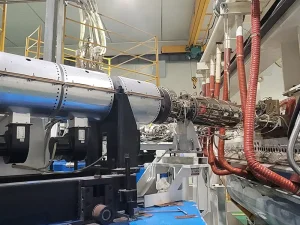
Induction Heater Element
CE Certification Electromagnetic induction heater Manufacturer, Exporter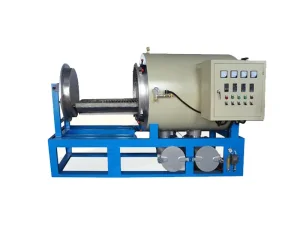
Industrial Cleaning Furnace
High-Quality Cleaning furnace Manufacturer, Exporter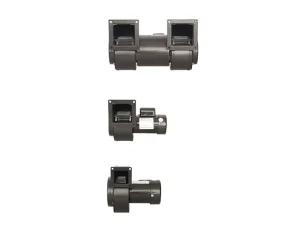
Forced Air Cooling Fans
CE Certification Fan Manufacturer, Factory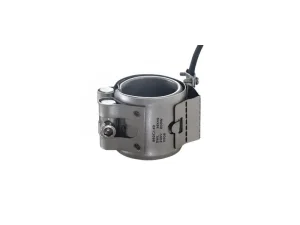
Industrial Mica Heaters
China Safe and Durable Mica Heaters Factory, Factories
Heavy Duty Ceramic Units
China Portable Ceramic Heaters for Industry Manufacturers, ExporterNext-Generation Industrial Electric Heat Boxes
Analyzing thermal dissipation dynamics, zero-emission mandates, and CE engineering compliances driving global procurement changes in 2026 and beyond.
Thermal Decarbonization
Global production ecosystems are accelerating their transition away from hydrocarbon and steam heating to direct electric heating boxes. Electric heat boxes offer up to 98.5% thermal efficiency, eradicating direct on-site Scope 1 greenhouse emissions while maintaining exact temperature ramp profiles.
Micro-Zone Temperature Stability
Modern extrusion, curing, and composite drying operations demand tight margins. Advanced electric heat boxes utilize multi-loop PID microprocessors to restrict thermal drift within ±1°C, safeguarding polymers, aerospace prepregs, and sensitive electronics against thermal shock.
Stringent CE Compliance
To qualify for unhindered export across EU and global territories, electric heat enclosures must adhere to EN 60519-1 (safety in electroheat installations) and EN 60204-1 (electrical equipment of machines). Certified insulation, earth grounding networks, and reinforced creepage clearances are mission-critical.
Edge AI & Thermal Telemetry
By housing embedded RTD sensors and IoT thermocouples, next-gen electric heating boxes transmit continuous thermographic analytics to cloud control networks. This diagnostic connectivity triggers proactive maintenance protocols long before heating coil fatigue causes line shutdowns.
China's Manufacturing Resilience & Export Supremacy
How four decades of thermal technology research from Yancheng, Jiangsu, translates into unrivaled delivery reliability, raw material purity, and modular engineering scalability.
Fully Integrated Supply Chains
Operating out of China's core manufacturing corridor gives direct access to high-purity electrical-grade magnesium oxide (MgO), cold-drawn AISI 304/316/Incoloy alloys, and high-temp steatite ceramics. This tight vertical integration reduces lead times from the typical 12-week overseas cycle to just 15 to 20 business days.
7-Stage Precision Engineering
From 3D industrial enclosure design and real-mold tool creation to cryogenic insulation sealing, mass production is never initiated on raw assumptions. Pre-series prototypes undergo 2,500V dielectric breakdown testing, insulation resistance validation (>500MΩ), and accelerated thermal fatigue cycling before sign-off.
Complete Quality Traceability
Every single electric heat box produced bears laser-etched matrix tracking codes referencing its raw heating element batches, coil winding metrics, and operator calibration records. Backed by an industry-leading 5-year factory after-sales warranty, systemic failure rates remain well below 0.02%.
Global Industrial Deployment & Localization Scenarios
Custom-engineered thermal heat boxes deployed in over 100 industrial territories worldwide.
| Sector & Segment | Deployment Configuration | Operating Envelope | Key Engineering Advantages |
|---|---|---|---|
| Plastics Extrusion & Blow Molding | Modular Segmented Heat Enclosures with Forced-Air Cooling | 150°C to 450°C continuous | Eliminates polymer degradation via rapid cooling blowers; tight radial thermal band distribution prevents resin cold spots. |
| Aerospace Prepreg & Composites | Hermetically Sealed Vacuum Thermal Heat Boxes | Ambient to 350°C (ramp rate 5°C/min) | Atmospheric vacuum resilience, zero-outgassing insulation blankets, and certified uniform curing fields. |
| Semiconductor & Cleanroom Drying | Mirror-Polished SS316 Nano Infrared Heating Boxes | 80°C to 280°C particulate-free | Zero fiber shedding, electropolished interior hulls, certified Class 100 cleanroom compatibility. |
| Heavy Chemical & Viscous Fluid Transfer | Flanged Cast-in / Tubular Jacket Electric Heat Boxes | Up to 600°C extreme load | High mechanical resistance against pipe vibration, explosive atmosphere junction options, and weather-sealed ingress protection (IP66). |
Precision Heaters, Furnaces & Process Elements
Engineered for high watt densities, rigorous duty cycles, and extended operational lifespans across heavy industrial environments.

Dual Heat & Cool Module
CE Certification Precise Cooling and Heating System Manufacturers, Exporters
Industrial Curing Ovens
CE Certification Ovens Manufacturer, Exporter
High-Density Cartridge Coils
China High density heating element Manufacturers, Factories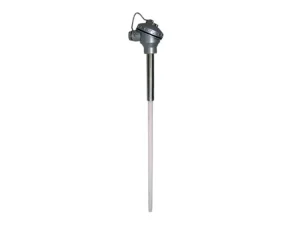
Sensors & Thermocouples
High-Quality Thermocouple Exporter, Factory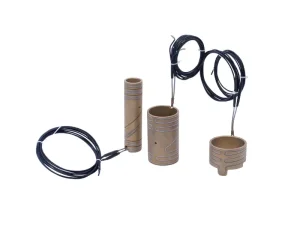
Hot-Runner Spring Heaters
High-Quality (Hot-runner)Spring heater/Coil heater Manufacturers, Factory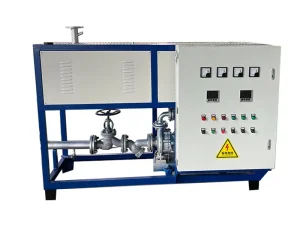
Thermal Oil Boilers
High-Quality Heat-conducting oil furnace Manufacturer, ExporterTotal Cost of Ownership (TCO) vs. Initial Capital Expense
Strategic purchasing guidelines for global plant managers, project engineers, and international equipment OEMs.
Life-Cycle Energy Auditing
Over a continuous 5-year production cycle, the electrical consumption of a heating apparatus represents over 88% of its total lifecycle cost, with capital acquisition accounting for under 8%. Integrating nano infrared elements or high-density ceramic insulation cuts electrical consumption by 20% to 35%, delivering rapid capital payback within 4 to 8 months.
Corrosion & Thermal Expansion
Standard heat boxes fail predominantly at weld seams and terminal interfaces due to repeated expansion and contraction. Kangpu constructs stress-relieved expansion joints, high-grade nickel alloy power studs, and laser-welded outer jackets to prevent air ingress and element oxidation under 24/7 industrial loads.
Custom Mechanical Footprints
Procuring standardized off-the-shelf heat boxes often introduces fitment issues that increase heat loss. Our engineering team customizes the dimensional geometry, terminal enclosure ratings (NEMA 4X / IP65), wiring leads, and thermocouple placement around your exact production space.
Frequently Asked Questions (FAQ)
Essential technical and procurement insights regarding our CE Certified Electric Heat Box manufacturing processes.
Every shipment includes an official EU Declaration of Conformity (DoC), comprehensive test logs covering dielectric high-potential withstand voltage (up to 2,500V), insulation resistance test data sheets, and comprehensive schematics compliant with EN 60204-1 safety standards.
We combine finite element thermal fluid analysis (CFD) with zoned resistance coil winding. By stepping up watt densities along enclosure boundaries where thermal dissipation is highest, we counterbalance edge losses and secure uniform continuous temperature gradients.
Yes. We build electric heating boxes matched to all regional supplies, including 110V, 220V, 380V, 415V, 480V, and 690V across single-phase or three-phase delta/wye networks, pairing them with the correct terminal hardware to handle high amp loads safely.
We achieve this reliability through strict material selection: cold-drawn resistance alloy wire (Cr20Ni80), high-purity electrical MgO, and vacuum brazing techniques. Every batch is traceable down to its base alloys, keeping operational failure rates below 0.02%.
CAD and industrial designs are completed in 24 to 48 hours. Real-mold physical prototypes are delivered for on-site client fitting within 7 business days. Upon final approval, standard container-scale orders are produced and shipped within 15 to 20 days.