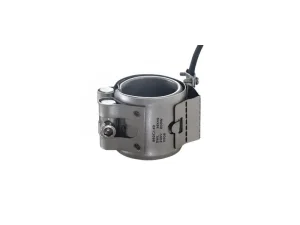
China Portable Ceramic Heaters for Industry Manufacturers, Exporter
Request Technical Data
Direct OEM/ODM industrial heating systems engineered to CE Low Voltage (LVD) and Electromagnetic Compatibility (EMC) standards.

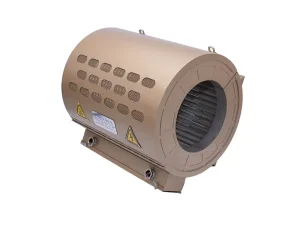




Understanding the statutory harmonized directives necessary for non-interfering, high-wattage industrial electromagnetic heat generators.
Inductive heaters operate utilizing intense high-frequency electromagnetic fields. Certification requires rigorous testing under EN 61000-6-4 (industrial emissions) and EN 61000-6-2 (immunity) to prevent disruptive parasitic harmonics back into industrial power grids.
Ensures operator protection across electrical subsystems from 50 to 1,000V AC. Compliance mandates dielectric strength confirmation, clearance distances, creepage barriers, and continuous insulation resistance at peak operating thermal boundaries.
For fully integrated continuous barrel or pipeline heaters, systems fulfill Annex I safety imperatives. This incorporates fail-safe thermal runaway sensors, redundant thermocouple fail-overs, and interlock isolation switches under EN ISO 12100 protocols.
| Harmonized CE Standard | Technical Verification Scope | Impact on Industrial Plant Operations | Kangpu Manufacturing Benchmark |
|---|---|---|---|
| EN 60519-1 / EN 60519-3 | Safety in electroheating installations (Induction) | Guarantees operator safety from high-frequency electromagnetic radiation leakage. | Zero-flux leakage enclosure design with Faraday shielding. |
| EN 55011 (CISPR 11) | Conducted & Radiated Radio-Frequency Disturbance | Eliminates factory PLC resets, sensor flickering, and network crosstalk. | Equipped with integrated dual-stage LC line filtering. |
| EN 60204-1 | Safety of machinery - Electrical equipment of machines | Prevents arching, phase-to-ground faults, and accidental touch hazards. | Standardized copper busbar grounding & IP54/IP65 junction enclosures. |
Combining complete vertical supply chain integration in Yancheng with 40 years of continuous thermodynamic research.
Yancheng's specialized metallurgical and electronic component clusters provide direct access to premium nano-grade thermal insulation, oxygen-free copper coils, and aerospace silicon controllers.
Rather than manual prototyping, our factory initiates customized development with dedicated toolings and real production molds, ensuring batch-to-batch structural integrity and tighter clamping tolerances.
Automation in precision coil winding, robotized aluminum casting, and computer-controlled sintering enables us to deliver systems with 30-45% thermal efficiency improvements at unmatched total acquisition costs.
A benchmark warranty backed by individual batch tracking. Every heating band and electromagnetic controller has a serialized pedigree cataloging wire lot, insulation grade, and final load test values.
Addressing real-world thermodynamic transfer bottlenecks across automated extrusion, injection molding, and heavy-process thermal loops.
Eliminate thermal latency on twin-screw and high-torque extruder barrels. Induction coils drive eddy currents directly within the barrel wall, offering instantaneous thermal control without external resistance lag, slashing start-up times by up to 50%.
Biaxially oriented PVC pipe production demands microscopic thermal windows across stretching ovens. Kangpu induction and air-assist thermal tunnels deliver isothermal heat blankets, minimizing cross-section wall-thickness variance.
For chemical and food processing plants transitioning away from hydrocarbon boilers, our electromagnetic steam boilers generate rapid pressurized saturated steam without stacks, local NOx emissions, or high combustion-zone insurance premiums.
Mitigating cross-border procurement vulnerabilities with end-to-end electrical, physical, and logistics lifecycle backing.
Every inductive power supply is specifically engineered for destination-specific grid architectures: 380V-480V, 50Hz/60Hz, three-phase three-wire or four-wire setups, preventing high-voltage saturation and phase imbalance faults in European and North American facilities.
We supply modular spare packages—including IGBT driver cards, high-temperature resonant capacitors, and pre-formed mica/ceramic assemblies—to local distributor hubs, reducing line-down risk to under 24 operating hours.
Procurement is protected by an explicit stage-gate protocol: ID design → product specification → real mold fabrication → customer on-machine verification → iterative tuning → dielectric burn-in → volume delivery.
Three critical transformations driving conversion from legacy conductive bands to smart electromagnetic heating.
Corporate ESG imperatives are accelerating the phaseout of gas-fired immersion tubes and oil burners. Electromagnetic inductive systems convert over 95% of incoming electrical power into usable process heat, radically cutting factory carbon intensity.
The industry is migrating from standard silicon IGBT switches to wide-bandgap SiC semiconductors. This enables higher switching frequencies (up to 80kHz), smaller coil footprints, less parasitic cooling loss, and whisper-quiet resonance.
Next-generation induction modules continuously monitor coil impedance, real-time sheath temperatures, and harmonic drift. Microprocessors forecast dielectric breakdown or thermocouple degradation weeks before an unscheduled line outage.
Clear answers to engineering, certification, and warranty queries regarding CE-marked inductive heaters from China.
Resistive band heaters (such as mica or standard ceramic bands) are primarily assessed under the Low Voltage Directive (LVD 2014/35/EU) for electrical breakdown, grounding, and high-voltage flashover. Inductive heaters generate dynamic, high-frequency electromagnetic fields via resonant circuits, requiring full validation under the Electromagnetic Compatibility (EMC Directive 2014/30/EU). This includes radiated emission limits (EN 55011) and immunity against industrial line transients (EN 61000-6-2) to ensure nearby sensitive automation gear remains completely unaffected.
Yes. Custom industrial design is our primary competency since 1986. By combining customized internal coil winding configurations, CNC-machined insulation cores, and tailored clamshell enclosures, we build drop-in inductive heating assemblies matched precisely to barrel cut-outs, thermocouple access points, injection nozzle transitions, and extruder vent blocks.
Traditional mica and cast-in resistance bands heat the barrel by conduction from an external element through the shell, losing 30% to 50% of generated energy into ambient plant air. Induction heating excites eddy currents directly inside the steel barrel shell, while the coil exterior remains insulated and cool to the touch (typically under 50°C). Facilities typically realize 30% to 45% reductions in kilowatt-hour consumption for barrel thermal management.
Each unit has a unique engraved batch code mapping back to the factory QC record, dielectric test sheet, and raw material bill of materials. Should an operational anomaly occur, our engineers review operating telemetry and cross-section samples. Replacement modules or corrective sub-assemblies are dispatched by air freight, and technical adjustments are fed back directly to preventing recurring risks on future orders.
Please share: (1) Target barrel or pipe outer diameter and zone length, (2) Desired operating temperature and melt polymer type, (3) Available line voltage and phase frequency, (4) Mechanical dimensional drawings indicating sensor ports, and (5) Expected hourly processing throughput.
Engineered for high-temperature plasticizing, duct air handling, pipeline heating, and precision process loops.