

Direct OEM Supply · 8 Featured Solutions
Precision Pipeline & Industrial Process Heating Equipment
Directly factory-tested electric circulation elements, flanged immersion bundles, and heat transmission systems compliant with EU Machinery and Low Voltage Directives.

CE Certification Efficient Air Duct Heaters for HVAC Manufacturer, Factory
Configure Spec
CE Certification Ovens Manufacturer, Exporter
Configure Spec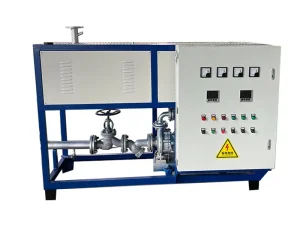
High-Quality Heat-conducting oil furnace Manufacturer, Exporter
Configure Spec
Best Efficient Portable Ceramic Heaters from China Suppliers - Ideal for Industrial Heating
Configure Spec
High-Quality Portable Ceramic Heaters for Industry - Reliable Temperature Control
Configure Spec
High-Quality Thermocouple Exporter, Factory
Configure Spec
China Efficient Portable Ceramic Heaters for Industry | China Suppliers & Factory Exporters
Configure Spec
Industry Whitepaper · Executive Brief
Thermodynamic Integrity in Industrial Circulation & Pipeline Heating
Solving critical boundary layer degradation, thermal fluid coking, and high-pressure fluid expansion through certified Chinese precision manufacturing.
In modern process industries—spanning petrochemical refining, continuous polymer extrusion, industrial gas conditioning, and thermal power generation—an industrial electric pipeline heater (commonly classified as an inline circulation heater or thermal fluid vessel heater) acts as a high-criticality thermodynamic actuator. Operating under pressurized forced-convection flow regimes, these systems must transform raw electrical energy into uniform heat flux without exceeding localized fluid film breakdown limits, triggering fluid cracking, or provoking thermal shock across the containment vessel.
Founded in 1986, Yancheng Laier Heating Technology Co., Ltd. (Kangpu Heater) has operated as an essential Tier-1 OEM developer and exporter of high-integrity industrial thermal equipment. Over 40 years of continuous manufacturing research, encompassing more than 100 proprietary innovations, have enabled us to deliver bespoke thermal loop systems exported to over 100 industrialized nations. Under the CE compliance framework, every pipeline heater assembly conforms to rigorous thermodynamic modeling, ensuring total compliance with PED 2014/68/EU (Pressure Equipment Directive), LVD 2014/35/EU, and EMC 2014/30/EU directives.
Industrial pipeline heaters comprise a bundle of hairpin-formed, compacted metal-sheathed tubular heating elements (utilizing Incoloy 800/840, Hastelloy C-276, or Austenitic 316L/321 Stainless Steel) enclosed within an insulated pressure containment vessel. Fluid enters the vessel through an engineered inlet nozzle, passes across strategically spaced segmental baffles that generate controlled Reynolds numbers ($Re > 10,000$) to disrupt laminar boundary layers, absorbs continuous thermal energy, and exits at the required target process temperature. Achieving steady-state temperature control without element failure requires deep expertise in watt density management, metallurgy, and thyristor-driven proportional power control.
1986
Founded In Yancheng
100+
Core Technologies & Patents
100+
Export Nations Reached
5 YRS
Factory Warranty Backing
Future-Ready Engineering
Technology Roadmap: Next-Gen Industrial Pipeline Heating
Navigating decarbonization, hydrogen-fueled power generation, ultra-high temperature ceramics, and AI-driven thermal telemetry through 2030.
Decarbonization & Direct Steam/Gas Electrification
As global petrochemical and chemical processing complexes phase out natural-gas-fired furnaces to satisfy Scope 1 net-zero mandates, multi-megawatt electric circulation pipeline heaters have become the primary replacement technology. High-voltage (up to 690V and 10kV direct-coupling architectures) inline circulation systems eliminate thermal emissions, reduce footprint by 65%, and boast thermodynamic conversion efficiencies exceeding 99.2% directly into the fluid medium.
Hydrogen-Enriched & Supercritical Fluid Metallurgy
Next-generation process loops handle highly aggressive media, including pure hydrogen gas preheating (up to 900°C), supercritical CO₂ extraction, and concentrated molten salts. Kangpu's metallurgy roadmap incorporates atomic hydrogen embrittlement-resistant alloy sheaths (Incoloy 825, Hastelloy C-276, and titanium Grade 2) paired with non-destructive X-ray-inspected robotic orbital orbital welds to withstand pressures up to 350 bar.
Digital Twins & Real-Time AI Coking Telemetry
Integrating multi-point internal sheath thermocouples with IoT-enabled SCR (Silicon Controlled Rectifier) firing control panels allows predictive boundary layer diagnostics. By analyzing delta-T vs. Reynolds number variances in real-time, the algorithm detects mineral scaling or hydrocarbon coking buildup well before sheath perforation occurs, dynamically adjusting local watt density to safeguard plant operations.
Macro Industrial Solutions
Specialized Circulation Heating Architectures by Application
Engineering boundary conditions, Reynolds numbers, and watt densities customized to target medium characteristics.
| Industrial Application | Typical Medium & Temperature | Recommended Sheath Alloy | Max Watt Density ($W/cm^2$) | Critical Engineering Safeguards |
|---|---|---|---|---|
| Thermal Oil & HTF Loops | Synthetic Aromatic Heat Transfer Oils (up to 350°C) | AISI 321 / Incoloy 800 | 1.8 - 2.5 $W/cm^2$ | Low watt density prevents cracking; flow interlock switches prevent stagnant burnouts. |
| Plastics Extrusion & PVC-O | Process air, barrel heat transfer fluids, polymer melt | AISI 304 / Cast Copper / Aluminum | 3.0 - 5.5 $W/cm^2$ | Patented dual heating-cooling zone integration ensures sub-millimeter barrel dimension stability. |
| Natural Gas & Hydrogen Preheating | Methane, syngas, pure H₂ (100 bar, up to 600°C) | Incoloy 825 / Hastelloy C-276 | 2.0 - 4.0 $W/cm^2$ | ATEX/IECEx Zone 1 Ex d explosion-proof junction box, stand-off terminal housings, leak-free NPT/flanges. |
| Clean Steam & Pure Water Supply | Demineralized DI Water, Superheated Steam (180°C - 450°C) | AISI 316L (Electropolished) | 6.0 - 9.0 $W/cm^2$ | Passivated surfaces prevent bio-film accumulation; ASME Section VIII sanitary design nozzles. |
| Heavy Fuel Oil (HFO) & Bitumen | Heavy Bunker Fuel, Viscous Asphalt (120°C - 220°C) | Carbon Steel / AISI 304 | 1.0 - 1.5 $W/cm^2$ | Ultra-low heat flux ensures zero carbon coking across tubular element outer surfaces. |
The mathematical foundation of fluid circulation heating hinges upon balancing the fluid convective heat transfer coefficient ($h$) against the element surface area ($A$) and fluid temperature differential ($\Delta T$):
Q = \dot{m} \cdot C_p \cdot (T_{out} - T_{in}) = h \cdot A \cdot (T_{sheath} - T_{bulk})
If fluid flow rate drops or the local watt density is incorrectly calculated above the fluid's boundary critical heat flux, fluid coking occurs instantaneously on the element sheath. Kangpu's in-house engineering team conducts full Computational Fluid Dynamics (CFD) profiling for every custom pipeline project, guaranteeing optimal baffle clearance, uniform velocity vectors, and eliminated stagnant eddies inside the pressure chamber.
Manufacturing Precision
China Factory 4.0: Supply Chain Resilience & Quality Architecture
Inside Kangpu's Yancheng manufacturing center: end-to-end metallurgical traceability, real-mold testing, and fully automated CNC lines.
Automated CNC Compacting & Multi-Stage Swaging
Heating element life is dictated by internal dielectric density. Our factory utilizes multi-stage automated rotary swaging machines that compress high-purity electrical grade magnesium oxide (MgO) powder to a minimum compacted density of 3.2 g/cm³, preventing air voids, moisture ingress, and localized dielectric breakdown even under continuous 480V/690V industrial line surges.
Robotic Orbital TIG Welding & Hydrostatic Testing
Vessel shells, flanges, and element-to-tubesheet joints are joined using pulsed orbital TIG robotic welding systems under inert argon backing gas. Each completed pressure vessel pipeline heater undergoes 100% helium mass-spectrometer leak checks followed by mandatory hydrostatic pressure verification up to 1.5× design operating pressure (up to 350 bar) in accordance with PED and ASME Section VIII criteria.
7-Stage Sampling & 5-Year Factory Warranty Mechanics
We reject generic 'catalog' approximations. Our 7-stage quality protocol spans ID industrial design, 3D parameterization, real-mold sample construction, customer machine validation, iterative parameter adjustment, exhaustive dielectric endurance stress tests, and final scalable manufacturing. This rigorous procedure enables us to provide a comprehensive 5-year after-sales warranty backed by batch raw material heat tracking.
Regulatory & Engineering Standards
Comprehensive CE Certification & Global Compliance Matrix
Eliminating customs risks, tariff ambiguities, and regulatory delays with certified documentation for European, American, and global destinations.
PED 2014/68/EU Pressure Equipment Directive
Vessels are engineered and classified under Categories I through IV according to fluid hazard group, volume, and PS·V energy thresholds. We provide complete CE Module H/H1 conformity documentation, including EN 10204 3.1 material certificates for all pressure-containing shells, forged flanges, and radiographic weld inspection dossiers.
ATEX / IECEx Explosion-Proof Certification
For hazardous zone operating environments, terminal enclosures are certified to ATEX Directive 2014/34/EU and IECEx international standards (Ex db, Ex eb, Ex tb protection concepts for Gas Group IIA, IIB, IIC, and Dust Group IIIC). Flameproof standoff chambers protect the terminal block from internal fluid temperature migration.
LVD (2014/35/EU) & EMC (2014/30/EU) Directives
Full electrical safety conformity adhering to EN 60519-1/-2 (Safety in electroheat installations) and EN 60204-1 (Safety of machinery). Each control integration module features zero-crossing thyristor firing to suppress electromagnetic harmonic interference on surrounding automation and SCADA systems.
Procurement & EPC Sizing Guide
Engineering RFQ Checklist: What Global EPC Teams Must Specify
A structured engineering framework to accelerate quotation, custom mechanical drafting, and thermal FEA modeling turnaround.
Procuring an industrial electric circulation or pipeline heater from a premier Chinese OEM exporter requires clear, comprehensive engineering parameter exchange. Submitting incomplete specifications can cause sizing miscalculations, premature element burnout, or excessive pressure drop across your circulation pump. When issuing an RFQ to Kangpu Heater, providing the following baseline variables guarantees that our thermodynamic team delivers an optimized thermal design proposal within 24 hours:
1. Fluid & Thermodynamic Data
• Chemical composition & fluid phase (liquid, vapor, 2-phase mixture)
• Mass or volumetric flow rate ($kg/h$ or $m^3/h$)
• Inlet and outlet design temperatures ($T_{in}$ / $T_{out}$ in °C)
• Specific heat capacity ($C_p$), thermal conductivity ($k$), and dynamic viscosity ($\mu$) across temperature range
• Maximum permissible pressure drop ($\Delta P_{max}$ in bar/kPa)
2. Mechanical & Vessel Specs
• Design and maximum operating pressure (bar / PSI)
• Pressure vessel construction code (PED 2014/68/EU Module H, ASME Section VIII Div 1, or GB150)
• Vessel metallurgy (304, 316L, Hastelloy, Carbon Steel)
• Inlet/Outlet nozzle sizing & flange rating (ANSI B16.5, EN 1092-1 Type 11 PN16-PN100)
• Vessel orientation (Horizontal or Vertical mounting with drain port)
3. Electrical & Controls Architecture
• Power supply voltage, phase & frequency (e.g., 380V / 400V / 480V / 690V, 3-Phase, 50/60Hz)
• Total heating capacity (kW or MW) and number of controlled heating steps
• Hazardous area classification (Safe area, ATEX Zone 1 / Zone 2, Ex d / Ex e)
• Terminal enclosure ingress protection (IP55, IP65, IP66, NEMA 4X / 7)
• Control panel preference (Direct SCR thyristor panel, PID controller, Modbus/Profibus output)
Technical Clarifications
Frequently Asked Questions: Industrial Pipeline Heaters
Detailed answers addressing engineering design, CE compliance, fluid coking prevention, and custom production timelines.
What distinguishes an electric pipeline heater from a standard flanged immersion heater?
A standard flanged immersion heater is designed for static immersion in an open tank or stagnant reservoir (free convection). In contrast, an electric pipeline heater (circulation heater) places the flanged element bundle inside an engineered, pressure-retaining pipe vessel with precise inlet and outlet nozzles, internal flow baffles, and pressure containment certification. Circulation heaters operate under forced-convection flow, requiring meticulous fluid dynamics design to match fluid velocities, prevent localized boundary layer stagnation, and control delta-P (pressure drop) across the system.
How does Kangpu prevent thermal fluid degradation and carbon coking in oil heaters?
Fluid coking occurs when the localized element sheath temperature exceeds the fluid's maximum film temperature (typically 320°C–340°C for synthetic heat transfer oils). Kangpu prevents this through three critical design rules: (1) We cap surface watt densities strictly between 1.5 and 2.5 W/cm² depending on fluid viscosity; (2) Segmental flow baffles are spaced to maintain turbulent fluid velocity ($v > 2.0$ m/s), reducing boundary layer thermal resistance; (3) We incorporate multi-point Type K sheath over-temperature thermocouples connected to an instant-cutoff safety contactor, eliminating hot-spot risks during pump interruptions.
What documentation is provided to satisfy European customs and CE/PED audits?
Every shipment for European destinations includes a comprehensive CE Technical Dossier consisting of: (1) Official Declaration of Conformity referencing the Pressure Equipment Directive (2014/68/EU), Low Voltage Directive (2014/35/EU), and Machinery Directive (2006/42/EC); (2) EN 10204 3.1 Material Test Reports (MTR) for all pressure-boundary pipes, flanges, and heating tube sheaths; (3) Hydrostatic and non-destructive weld testing (NDT/RT) inspection certificates; (4) Electrical insulation dielectric high-potential (Hi-Pot) test records; and (5) Comprehensive multi-language operating, maintenance, and safety manuals.
Can Kangpu fabricate circulation heaters to custom dimensions, retrofits, and drawings?
Yes. Custom design and legacy retrofit replacement represent our core engineering strength. If you have an existing European, American, or Japanese circulation heater requiring replacement or re-engineering, simply provide your vessel outline drawing, nozzle center-to-center distances, electrical rating (voltage, wattage, phase), and target process operating conditions. Our engineers construct a verified 3D CAD model and thermal sizing balance sheet before producing a real-mold sample for validation.
What is the typical production and delivery lead time for customized pipeline heaters?
Thanks to our integrated supply chain located in the Yancheng thermal manufacturing industrial hub, standard custom sample builds are completed within 7 to 12 business days. Mass production orders (ranging from 10 to 500 units) typically ship within 3 to 4 weeks. For emergency shutdown or planned plant turnarounds, accelerated fast-track engineering tracks are available upon request.
What control system architecture is recommended for precise ±1°C pipeline temperature regulation?
To achieve ±1°C precision without thermal cycling fatigue, we recommend Silicon Controlled Rectifier (SCR) power controllers operating with fast zero-cross or phase-angle firing algorithms. Unlike mechanical magnetic contactors that cause cyclic thermal shock and electrical line noise, an SCR dynamically modulates power output across 0–100% proportionally in response to a 4–20mA feedback loop from a downstream RTD Pt100 sensor. This extends element life significantly and prevents fluid overshooting.
Specialized Thermal Series · Products 9-16
Comprehensive Heating & Thermal Processing Systems
Explore our full line of cast-in elements, induction steam boilers, precision ovens, and flexible surface heaters engineered for global OEM clients.

CE Certification Cast Aluminum/Copper Heater Manufacturer, Exporter
Configure Spec
China Portable Ceramic Heaters for Industry Manufacturers, Exporter
Configure Spec
Best Heating/Cooling Integrated System Exporter, Exporters
Configure Spec
CE Certification Flexible Heaters for Custom Applications Manufacturer, Exporter
Configure Spec
CE Certification Electromagnetic induction heater Manufacturer, Exporter
Configure Spec
CE Certification PVC-O Ovens for Precision Heating Manufacturer, Manufacturers
Configure Spec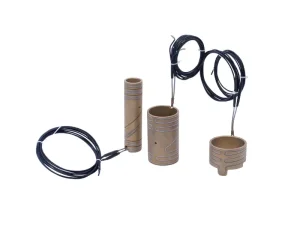
High-Quality (Hot-runner)Spring heater/Coil heater Manufacturers, Factory
Configure Spec