
High-Efficiency Heating Elements & Certified Thermal Systems
Explore our export-grade line of industrial heaters, ceramic emitters, and custom insulation jackets designed for maximum energy conservation and strict European compliance.


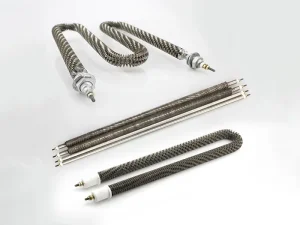


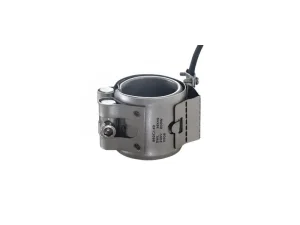

The Physics of Industrial Infrared Ray Heating: Wavelengths, Emissivity, & Efficiency
Moving beyond conventional convective and conductive thermal bottlenecks through non-contact electromagnetic spectral heating engineered for high-throughput manufacturing.
Stefan-Boltzmann Radiation Yield
Thermal infrared transfer follows the Stefan-Boltzmann law where radiant heat flux is proportional to absolute temperature to the fourth power: q = εσ(T14 - T24). By pairing embedded high-resistance FeCrAl/NiCr8020 alloys with specialized ceramic and nano-composite substrates, our CE-certified infra ray heaters maintain radiant surface emissivity ratings exceeding ε ≥ 0.92, ensuring rapid heat saturation directly into target polymers, composites, or metals without heating ambient air.
Tri-Band Spectral Tuning
Industrial thermal processes demand precise wavelength matching to the molecular absorption spectrum of target materials. Kangpu engineers custom infra ray configurations across Short-Wave (0.78 to 1.4 μm) for fast-penetrating core heating, Medium-Wave (1.4 to 3.0 μm) optimal for plastics drying and sheet thermoforming, and Long-Wave/Far-Infrared (3.0 to 10.0 μm) which aligns with the resonant C-H and O-H vibrational bands of polymers, achieving 30% to 55% electrical power savings over traditional mica resistance bands.
Low Thermal Inertia & Response
Traditional heavy cast-iron or thick mica elements suffer from immense thermal hysteresis, causing continuous temperature overshoot and degradation of sensitive resins. Our nano-infrared and advanced ceramic infrared modules utilize micro-engineered ceramic fiber insulation layers and reflective ceramic backing. This restricts shell surface temperatures to under 65°C while driving 95% of radiant energy inward toward the barrel or web, slashing warm-up times from 45 minutes down to less than 12 minutes.
| Thermal Technology | Primary Heat Transfer | Spectral Wavelength | Radiative Emissivity (ε) | Warm-up Time to 300°C | Energy Savings vs Baseline | CE Certification Feasibility |
|---|---|---|---|---|---|---|
| Nano-Infrared Band Heaters | Directional Radiant + Conductive | 2.5 – 6.5 μm (Far-IR) | 0.94 – 0.98 | 8 – 12 minutes | 35% – 52% Reduction | Full LVD & EMC Directives |
| Ceramic Infrared Emitters | Radiant Far-Infrared | 2.0 – 10.0 μm (Medium/Far) | 0.90 – 0.95 | 12 – 18 minutes | 25% – 40% Reduction | Full LVD (EN 60335-2-96) |
| Cast-in Aluminum/Copper | Direct Solid Conduction | N/A (Pure Conductive) | < 0.35 (Unpolished) | 25 – 35 minutes | Baseline Reference (0%) | Full LVD Directive |
| Standard Mica Band Heaters | Conduction + Surface Convection | N/A (Lossy Convective) | 0.40 – 0.60 | 20 – 30 minutes | -5% to +5% (High Loss) | Full LVD Directive |
Factory Founded (40 Years Heritage)
Export Destination Countries
Comprehensive Warranty Coverage
Global Enterprise Clients
Global Enterprise Procurement Dynamics: Decarbonization & TCO Analysis
How Tier-1 plastics processors, equipment OEMs, and multinational manufacturing conglomerates evaluate CAPEX vs. OPEX, carbon border adjustments, and equipment uptime.
Total Cost of Ownership (TCO) vs. Initial Unit CAPEX
For modern manufacturing executives, procurement decision-making has permanently migrated away from basic bill-of-materials piece-part pricing. In continuous 24/7 extrusion lines or multi-cavity injection molding setups, electricity consumption constitutes over 88% of an electric heater's lifecycle cost. A standard factory operating twenty 75 kW extruders consumes hundreds of megawatt-hours annually. Integrating CE-certified nano-infrared heaters typically offsets 100% of initial equipment procurement costs within 4 to 8 months solely via kilowatt-hour reductions, while drastically curbing factory ambient HVAC load and worker thermal fatigue.
Carbon Border Adjustment Mechanism (CBAM) Compliance
Under the European Union's CBAM framework and tightened Scope 1 & Scope 2 emissions criteria, global exporters into the EU face intense fiscal penalties on embedded manufacturing carbon intensity. Industrial infra ray heating provides immediate electrification of operations that historically relied on gas-fired drying ovens or fossil oil boilers. Our electromagnetic steam boilers and infrared tunnel ovens operate on zero on-site combustion emissions, providing auditable energy usage telemetry essential for ESG filings, corporate sustainability disclosures, and European customs clearance.
Elimination of Unscheduled Downtime & Thermal Drift
Thermal element failure represents catastrophic risk: when a single band fails mid-production, cold slugs can seize twin-screw extruders, shatter hot-runner manifolds, or generate off-spec polymer crystallite structures. Kangpu's manufacturing methodology eliminates hot spots through automated spiral wire winding, micro-inspected ceramic refractory blocks, and vacuum-sealed termination junctions. Backed by a full five-year warranty and complete batch traceability, procurement directors secure operational predictability across global supply chains.
Custom OEM Integration & Mechanical Interchangeability
Global machinery rebuilders and equipment manufacturers face immense geometric variation in barrel diameters, clamping cutouts, thermocouple probe penetrations, and wiring orientations. Rather than forcing plants to modify machine chassis, Kangpu engineers custom dimensional designs with quick-release spring toggle latches, terminal boxes with IP65 ingress protection, and ceramic terminal blocks designed to drop cleanly into machines from Battenfeld-cincinnati, KraussMaffei, Engel, Haitian, and Davis-Standard.
Turnkey Macro-Industry Engineering Solutions
Deploying targeted radiant thermal architectures across core global industries: from precision polymer extrusion to aerospace tooling and high-purity steam generation.
Plastic Extrusion & Blow Molding
Our integrated heating and air-cooling system pairs high-emissivity nano-infrared ceramic bands with engineered finned blowers. This handles intense screw shear heat generation, preventing polymer degradation in rigid PVC, CPVC, HDPE, and engineering fluoropolymers while maintaining barrel temperatures within ±1.0°C of setpoint.
PVC-O Molecular Orientation Ovens
Producing biaxially oriented PVC-O pipe demands absolute circumferential temperature uniformity across thick pipe walls. Kangpu's CE-certified multi-zone radiant orientation ovens leverage medium-wave infrared emitter banks to uniformly elevate PVC pipe preforms to the precise viscoelastic orientation temperature window without surface burning.
Clean Industrial Steam Generation
Replacing traditional gas and coal boilers, our electromagnetic induction steam boilers generate rapid high-pressure process steam with 98%+ electrothermal efficiency. Deployed across pharmaceutical processing, textile autoclaves, food packaging, and chemical reactors, induction steam heating yields zero localized carbon emissions.
Injection Molding Nozzle & Runner Heating
For high-cycle injection molding, our tight-tolerance brass, mica, and ceramic coiled heaters ensure instantaneous heat transfer to melt sprue bushings and machine nozzles. High-density nickel-chrome windings resist cyclic mechanical shocks from mold clamp cycles and continuous high-pressure injection strokes.
Thermal Fluid Systems & Cleaning Furnaces
Beyond surface bands, Kangpu engineers heavy-duty electric thermal oil circulation furnaces up to 500 kW and vacuum pyrolysis cleaning furnaces. These systems cleanly incinerate residual polymer melt from extruder screws, breaker plates, and melt-blown spinnerets without mechanical abrasion or hazardous chemical solvents.
Custom Flexible Surface Heating
Directly descended from aerospace and cryogenic heating research, our custom silicone rubber, polyimide (Kapton), and mica-laminated flexible heating jackets conform around non-standard valve manifolds, storage tanks, and composite layup curing tools, delivering uniform watt densities up to 1.5 W/cm².
CE Certification Rigor: Standards, Testing Protocols & Conformity
A granular look at the European safety directives, insulation resistance criteria, dielectric puncture testing, and material declarations governing every Kangpu export.
Low Voltage Directive (LVD) 2014/35/EU Harmonization
Compliance with LVD 2014/35/EU is mandatory for all electrical equipment operating between 50 to 1,000 V AC or 75 to 1,500 V DC. Kangpu infra ray heaters are manufactured in full conformity with harmonized standards EN 60335-1 (General Safety for Electrical Appliances) and EN 60519-1 / EN 60519-2 (Safety in Electroheat Installations). Every batch undergoes strict Hi-Pot dielectric breakdown testing up to 2,500V AC for 60 seconds without arcing or insulation breakdown, guaranteeing safe operation in damp, high-vibration industrial settings.
Electromagnetic Compatibility (EMC) Directive 2014/30/EU
Industrial heating units integrating electronic temperature controllers, high-frequency electromagnetic induction drivers, or solid-state switching (SSR) must meet stringent emissions and immunity thresholds under EN 61000-6-2 (Immunity for Industrial Environments) and EN 61000-6-4 (Emission Standard). Our electromagnetic steam boilers and induction controllers feature integrated copper mesh RF shielding and line-filter suppression, preventing high-frequency interference with sensitive machine PLCs, HMI touchscreens, or shop-floor sensor networks.
Cold & Hot Insulation Leakage Current Limits
Under CE verification protocols, thermal shock and environmental moisture can cause micro-cracking in low-grade refractory ceramics, leading to fatal ground leakage currents. Kangpu employs high-purity electro-fused magnesium oxide (MgO) crystals and steatite ceramic blocks subjected to 1,200°C kiln sintering. Cold insulation resistance exceeds 100 MΩ at 500V DC, while operating leakage current at 450°C remains well below 0.5 mA, exceeding European electrical safety requirements.
RoHS Directive 2011/65/EU & REACH Regulation Compliance
Environmental compliance across European supply chains requires complete traceability of raw material inputs. Our infra ray emitters, ceramic glaze formulations, nickel-chromium resistance ribbons, terminal pins, and high-temperature mica substrates are 100% free of hazardous heavy metals, hexavalent chromium (Cr6+), lead, mercury, polybrominated biphenyls (PBB), and SVHC candidates under REACH Regulation (EC) No 1907/2006, ensuring seamless environmental audit clearance.
Kangpu's 7-Stage Customization Protocol: From Drawing to Mass Production
Eliminating field integration errors through our structured pre-production workflow: real hard-tooled physical sampling, electrical stress testing, and batch-traceable manufacturing.
Stage 1: Industrial ID Design & Thermal FEA Modeling
Our engineering team reviews your CAD drawing, machine specification, and resin processing parameters. We translate your thermal requirements into full industrial designs, mapping surface watt densities (2.5 to 8.5 W/cm²), terminal exit clearances, thermocouple access bores, clamping force calculations, and finite element heat dissipation profiles.
Stage 2: Parametric Customization & Material Selection
Precise electrical and mechanical variables are established: supply voltage (110V to 480V, 1-phase or 3-phase star/delta), target wattage, sheath alloy (AISI 304, AISI 316L, Incoloy 800, or anodized aluminum), terminal styles (threaded studs, ceramic junction blocks, Euro-style plugs, or high-temperature fiber-braided silicone leads).
Stage 3: Hard-Tooled Real Mold Sample Fabrication
Unlike factories that rely on fragile handmade prototypes, Kangpu opens hardened production stamping and bending tooling for every custom sample. This guarantees that your evaluation prototype delivers the exact mechanical dimensions, clamping spring tension, and structural tolerances that will be replicated in multi-thousand-piece mass production runs.
Stage 4: Client On-Machine Fit & Functional Confirmation
The sample is shipped to your manufacturing plant for immediate physical dry-fitting and live process testing. Your production engineers verify barrel contact intimate fit, thermal transfer speed, lead wire clearance around safety guards, and mechanical clearance during screw-pulling maintenance routines.
Stage 5: Engineering Feedback Loop & Design Refinement
Any real-world modifications identified during initial line trials—such as shifting terminal box positions by 15mm, tightening clamp bolt angles, or modifying localized watt densities to compensate for feed-throat heat sinks—are updated in our CAD/CAM master drawings within 48 hours.
Stage 6: Accelerated Severe-Duty Electrical & Thermal Stress Testing
Before batch release, the finalized revision undergoes 100 thermal shock cycles (ambient to 500°C rapid cycling), 2,500V AC dielectric puncture testing, infrared camera emissivity scanning, and ground continuity validation. All test parameters are logged against the sample's unique digital identifier.
Stage 7: Full-Scale Automated Mass Production & Traceable Dispatch
Mass manufacturing commences under certified ISO 9001:2015 controls. Products receive permanent laser-etched CE certification markings, rated voltage/wattage stamps, and batch tracking codes. Heaters are packaged in custom-formed shockproof export cartons and moisture-barrier vapor packaging for secure worldwide container transit.
Technical Roadmap: Smart IoT Thermal Elements & Metamaterial Radiant Substrates
Exploring the next frontier of industrial radiant heating: integrated edge-AI controllers, carbon-nanotube emitters, and selective molecular-band emission surfaces.
IoT-Enabled Edge Diagnostic Bands
Tomorrow's industrial heating bands will no longer operate as passive electrical resistors. Kangpu R&D is currently piloting next-generation nano-infrared heating elements embedded with micro thin-film platinum RTD sensors and IoT edge-transmission modules. These smart bands continuously stream real-time impedance, power factor, and thermal dissipation metrics directly to factory SCADA systems via IO-Link or Modbus TCP, enabling predictive failure alerts weeks before an element fails.
Graphene & Carbon Nanotube (CNT) Emitters
While traditional Nichrome ribbons remain an industrial workhorse, advanced research into aligned carbon nanotube webs and multilayer graphene thin films offers virtually instantaneous thermal response. With thermal expansion coefficients close to zero and electrothermal conversion efficiencies reaching 99.2%, CNT-based radiant emitters will drastically downsize heater physical thickness while eliminating coil breakage from repetitive cyclic expansion.
Metamaterial Spectral Wavelength Filtering
Future energy conservation will hinge on selective spectral filtering. By depositing photonic crystal thin-film coatings onto ceramic infrared emitter faces, radiant output can be tuned to emit solely within narrow spectral windows (e.g., exactly 3.4 μm for polyethylene C-H stretching) while reflecting unabsorbable wavelengths back into the heater body. This selective emission architecture promises an additional 25% energy consumption reduction across polymer lines.
Frequently Asked Questions: Technical Specs, CE Compliance & OEM Sourcing
Comprehensive engineering and commercial answers to direct questions submitted by international purchasing managers, project engineers, and machinery distributors.
Every custom heater model engineered by Kangpu is verified under the European Low Voltage Directive (LVD) 2014/35/EU and EN 60335-1 / EN 60519-1 harmonized safety standards. Our laboratory performs full dielectric withstand testing (2,500V AC / 60 seconds), leakage current monitoring under maximum operating temperature, insulation resistance checks exceeding 100 MΩ, and thermal cut-off validation. Complete CE Technical Construction Files (TCF) and Declarations of Conformity (DoC) are provided alongside export documentation.
Under verified third-party plant audits across plastic extrusion and blow molding operations, converting standard ceramic or mica bands to Kangpu nano-infrared electric band heaters delivers between 32% and 52% direct kilowatt-hour energy savings. The savings stem from two thermodynamic advantages: first, the nano-infrared material converts electrical resistance into high-intensity directional far-infrared radiation (ε ≥ 0.95); second, our aerogel and ceramic fiber insulation blankets keep external surface temperatures under 65°C (compared to 250°C+ on traditional bands), virtually eliminating radiant heat loss to the ambient factory floor.
Yes. Custom manufacturing represents the majority of our export volume. Clients simply send their mechanical 2D/3D drawings, OEM part numbers, or physically worn samples. Our engineers verify barrel diameter, axial width, wattage, voltage, clamping styles (e.g., barrel nut, wedge latch, spring clamp), cutout dimensions for thermocouples, and lead wire requirements. We manufacture a true-mold sample for client line testing prior to full mass production.
Kangpu provides an industry-leading 5-year after-sales warranty on our core industrial heating elements and systems. Every production batch is digitally logged with material heat numbers, winding resistance values, and test telemetry. In the rare event of element failure within warranty limits, we conduct Root Cause Analysis (RCA) and supply expedited replacement elements free of charge to prevent production downtime.
The choice hinges on process temperature, cooling requirements, and physical shock environment. Ceramic band heaters operate efficiently up to 650°C to 700°C, offer superior energy-saving insulation, and are easy to replace without heavy crane rigging. Cast-in aluminum heaters are limited to 350°C (cast copper reaches 650°C) but offer extreme mechanical durability, direct conductive mass, and can integrate internal stainless steel cooling liquid tubes for aggressive closed-loop exothermic heat removal.
Standard prototype sample lead times range from 5 to 8 working days following CAD sign-off. High-volume container production runs typically ship within 15 to 22 business days. As an established direct exporter shipping to over 100 countries, Kangpu supports EXW, FOB (Shanghai/Ningbo), CIF, and DDP terms with complete export customs documentation, marine insurance, and custom palletizing.
Specialized Thermal Systems, Boilers & Heating Assemblies
Browse our advanced electromagnetic boilers, cast-in metal units, explosion-proof systems, and industrial cleaning furnaces built for mission-critical reliability.



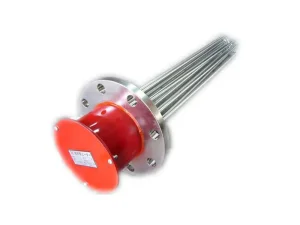

Request Your Custom Thermal System Prototype & Quotation
Connect directly with Kangpu's technical engineering department. Submit your 2D/3D machinery drawings, barrel specifications, or thermal upgrade goals to receive an optimized proposal within 24 hours.