
Specialized Electric Heating Systems & Band Solutions
Engineered for extrusion lines, chemical processing, blow molding, and heavy industrial duct operations with rigorous European CE electrical conformity.


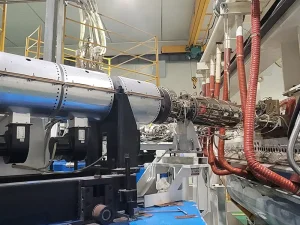

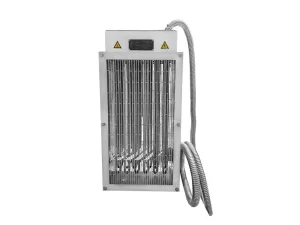


Industrial Infrared Heating Evolution: Electromagnetic Physics & Efficiency
A rigorous engineering analysis of radiative thermal transfer, wavelength absorption bands, and next-generation nano-composite refractory emitters.
Planck's Law & Spectral Tuning
Thermal infrared energy transfers via electromagnetic waves without requiring a conductive medium. Based on Wien's Displacement Law, the peak spectral radiant wavelength is precisely governed by emitter surface temperature:
- Short-wave IR (0.78 - 1.4 µm): Penetrating radiation up to 2200°C for deep core substrate activation.
- Medium-wave IR (1.4 - 3.0 µm): Resonates optimally with polymer molecular bond vibrations (C-H, O-H).
- Long-wave IR (3.0 - 1000 µm): Surface absorption ideal for thin film curing and bulk water evaporation.
Nano-Infrared Aerogel Insulation
Conventional resistive bands lose 35% to 50% of generated thermal energy to workshop ambient air. Our nano infrared band assemblies integrate high-purity ceramic fiber backing with silicon dioxide (SiO2) aerogel insulation matrices.
- Surface Skin Temperature: Exterior shell maintains under 45°C–65°C under 350°C barrel loads.
- Electrothermal Conversion: Over 99.2% electrothermal radiation conversion efficiency.
- Thermal Response Inertia: Instantaneous 3-second startup compared to 20-minute cast heating blocks.
Direct Radiative Energy Coupling
By eliminating interfacial conductive contact resistance, infrared heating modules irradiate the workpiece or extrusion cylinder directly, providing extreme precision in temperature uniformity across high-shear polymer processing zones.
- Eliminates thermal lag and barrel temperature overshoot.
- Reduces electrical draw across high-duty extrusion cycle by 30% to 45%.
- Direct retrofit compatibility with standard IEC and NEMA extruder geometry.
Global Procurement Architecture & CE Regulatory Mandates
A rigorous audit of electrothermal compliance, dielectric insulation resilience, and European Union harmonized standards for cross-border industrial equipment buyers.
European Union CE Harmonization Framework
Procuring heating modules for integration into European machinery demands comprehensive conformity with statutory EU directives. Kangpu Heater (Yancheng Laier Heating Technology Co., Ltd.) structures every thermal system to meet the following benchmarks:
- Low Voltage Directive (LVD) 2014/35/EU: Validated compliance via EN 60335-1 (Safety of electrical appliances) and EN 60519-1 / EN 60519-2 (Safety in electroheat installations). Tested for insulation resistance under hot operational states (> 5 MΩ at 500V DC) and high-voltage dielectric breakdown withstand (> 1500V AC for 60 seconds without arcing).
- Electromagnetic Compatibility (EMC) 2014/30/EU: Mandatory suppression of line harmonics and RF emission disturbances under EN 61000-6-2 (Immunity for industrial environments) and EN 61000-6-4 (Emission standard for industrial environments). Crucial for SCR-driven and induction-coupled heating networks.
- RoHS Directive 2011/65/EU & (EU) 2015/863: Absolute screening against lead (Pb), mercury (Hg), cadmium (Cd), hexavalent chromium (Cr VI), and restricted phthalates in mica binders, lead wire sheaths, and brazing alloys.
International Procurement Quality Verification Metrics
Global procurement teams in automotive, chemical processing, and plastic extrusion face severe line downtime risks if an auxiliary band or infrared quartz cassette fails prematurely. Our factory deploys automated inline verification:
- Cold & Hot Resistance Tolerancing: Precise laser and digital bridge resistance metering maintaining internal nickel-chromium (Ni80Cr20) and FeCrAl resistance ribbons within ±5% of design resistance rating.
- Leakage Current Testing under High Humidity: Dynamic verification ensuring leakage currents remain strictly below 0.5 mA under severe environmental thermal cycling.
- Creepage Distances & Air Clearances: Engineering high-temperature steatite and alumina terminal insulating blocks to ensure air clearances exceed 8.0 mm and creepage clearances exceed 10.0 mm for 480V and 690V industrial power grids.
- Thermal Shock Endurance: Ceramic and quartz tubes cycle repeatedly from maximum operating temperatures (up to 800°C) directly into ambient quenching without structural micro-fissuring or degradation.
China Industry 4.0: Automated Production & Scale Economy
How four decades of deep specialization in Yancheng delivers uncompromised component traceability, precision CAD-CAM tooling, and global cost leadership.
Automated Winding & Filling Lines
Variable pitch resistance coil winding machines ensure uniform linear watt density across custom widths, preventing localized thermal hot spots that degrade conventional heater coils.
- High-speed automated CNC wire winding for ultra-tight ohmic tolerances.
- High-frequency hydraulic MgO powder compaction guaranteeing >3.05 g/cm³ core density.
- Laser micro-welding for zero-resistance terminal lug junctions.
Upstream Raw Material Integration
Direct supply agreements with Tier-1 raw material producers insulate buyers from global market volatility and ensure material integrity:
- High-grade SUS304, SUS316L, and Incoloy 800/840 seamless tubing.
- Fused electrical grade crystalline Magnesium Oxide (MgO) with 99.4% purity.
- Synthetic phlogopite and muscovite mica platelets resistant to 750°C.
Batch Traceability & 5-Year Assurance
Every industrial heating system is laser-engraved with an immutable manufacturing lot identification number. This traceability tracks raw material coils, winding operators, testing records, and shipping pallets.
- Full traceability to individual melt batches and testing reports.
- Root-cause failure mode analysis (FMEA) protocol on any field return.
- Five-year comprehensive structural warranty backing industrial band lines.
Global Industrial Decarbonization: The Electrification Imperative
Analyzing corporate Scope 1 emission mitigation, rising natural gas tariffs, and the strategic pivot toward high-efficiency electric infrared thermal processes.
Transition from Gas-Fired Furnaces to Radiative IR Systems
Industrial processing plants across North America, Europe, and East Asia are aggressively replacing fossil-fueled convection heating tunnels and steam boilers with electric infrared radiation arrays. The driving force behind this macroeconomic transition includes the European Union Carbon Border Adjustment Mechanism (CBAM), escalating carbon taxation, and corporate ESG mandates aiming for net-zero carbon operations by 2030–2050.
Gas ovens suffer from substantial thermodynamic inefficiency: huge thermal mass requires continuous preheating, exhaust flues vent up to 40% of combustion energy directly into the atmosphere, and VOC emissions require expensive regenerative thermal oxidizers (RTO). In sharp contrast, precision electric infrared heating converts electrical grid energy into usable thermal radiation with instantaneous on/off response, eliminating idle energy draw and reducing factory footprint by up to 60%.
Comparative Energy Matrix: Gas Convection vs. Electric Infrared
- Thermal Transfer Efficiency: Convection tunnels operate at 30%–45% wall-plug thermal efficiency, whereas tuned infrared emitter arrays deliver 85%–95% direct radiative absorption.
- Line Speed & Cycle Acceleration: Direct radiation cuts polymer melt and paint crosslinking times by 40% to 70%, doubling production line throughput.
- Cleanroom & Food-Grade Compliance: Zero combustion byproducts (NOx, SOx, CO2, particulates), enabling seamless integration into ISO Class 5 cleanrooms and medical packaging extrusion facilities.
- Digital Grid Interfacing: Instant modulation with solid-state relays (SSR) and thyristor power controllers allows automated line synchronisation with renewable energy solar/wind peaks.
Engineering Case Studies Across Global Manufacturing Lines
Specific field configurations where specialized infrared, band, cast-in, and heating/cooling systems optimize manufacturing metrics.
Twin-Screw Extrusion & Compounding
Modern engineering plastics (PEEK, PPS, PTFE, and glass-filled Polyamides) demand tightly bounded melt temperatures within ±1.5°C across all barrel zones.
- Thermal Shock Elimination: Patented Heating/Cooling integrated systems prevent polymer scorching during shear spikes.
- Nano Infrared Retrofit: Replaces standard mica bands to slash electrical consumption by 32% on a 90mm co-rotating extruder.
Automotive Thermoforming & Composites
Carbon fiber and prepreg sheet heating requires deep infrared penetration to soften the core resin without blister-burning the top cosmetic surface.
- Medium-Wave Quartz Arrays: Tuned precisely to the 2.5–3.2 µm absorption band of polypropylene and epoxy matrices.
- Independent Zone Matrix: 36-zone modular control arrays provide balanced heating for complex 3D deep-draw components.
PVC-O Molecular Pipe Orientation Ovens
Bi-axial orientation of PVC pipe requires exceptional circumferential temperature uniformity to achieve Class 500 tensile properties and wall-thinning benefits.
- Custom PVC-O Conditioning Ovens: Forced convection and infrared combination to maintain uniform pipe temperature within ±0.5°C.
- Enhanced Burst Pressure: High-precision thermal processing enables up to 50% material savings for municipal water infrastructures.
7 Controlled Engineering Stages: From CAD Drawing to Mass Rollout
A transparent, risk-free custom manufacturing methodology eliminating dimensional mismatch and thermal calculation discrepancies.
ID & Mechanical Design
Parametric 3D modeling of heater housings, clamping bands, lead orientation, and thermal expansion relief clearances based on customer barrel prints.
Electrochemical Tailoring
Watt density calculation (W/cm²), operating voltage adaptation (110V to 690V, single/three phase), and insulation substrate specification (mica, steatite, aerogel).
Real-Mold Tooling
Hard tooling and production-grade dies are opened for prototypes instead of rough hand-fabrication, ensuring the sample reflects authentic production tolerances.
Client Fitment Audit
Customer installs sample on real production machinery to verify physical envelope fit, terminal lead clearances, and clamp clamping force.
Iterative Optimization
Refining watt distribution, lead wire flex-resistance, or thermocouple pocket position based on customer feedback and pilot line telemetry.
Rigorous Lab Validation
Endurance testing under 1.2x rated voltage, dielectric withstand (hipot) testing, thermal imaging for cold spots, and vibration testing prior to batch sign-off.
Automated Mass Production
Full-scale production run governed by automated winding and CNC stamping, packed in custom export-grade crating with full 5-year warranty documentation.
Industrial Heating Technology Comparative Matrix
A reference guide comparing operational envelopes, thermal response times, energy efficiency benchmarks, and target machinery applications.
| Heating Technology | Max Operating Temp | Watt Density Range | Heat Transfer Mode | Energy Savings vs. Standard | Primary Industrial Applications |
|---|---|---|---|---|---|
| Nano Infrared Band | 500°C (Barrel: 400°C) | 4.0 – 8.0 W/cm² | Direct Infrared Radiation | 30% – 45% High | Plastic extrusion, blow molding, chemical reactors, high-temperature compounding |
| Ceramic Band Heater | 700°C | 5.0 – 9.0 W/cm² | Radiation & Conduction | 15% – 20% Moderate | Extruder barrels, high-temp polymer processing, compounding lines |
| Mica Band Heater | 350°C | 2.5 – 4.5 W/cm² | Direct Conduction | Baseline | Injection molding nozzles, packaging machinery, blow molding dies |
| Cast-in Aluminum / Copper | Al: 400°C / Cu: 650°C | Al: 3.5–5 W/cm² / Cu: 8 W/cm² | High-Mass Conduction | Process Uniformity | Cast film lines, pipe extrusion head dies, rubber vulcanizing presses |
| Electromagnetic Induction | 600°C | 8.0 – 15.0 W/cm² | Eddy Current Excitation | 35% – 50% High | Heavy-duty extrusion barrels, clean steam generators, smelting crucibles |
| Industrial Air Duct Heater | 650°C | Application Tailored | Forced Air Convection | Optimized Airflow | HVAC drying tunnels, web curing, drying ovens, heat recovery systems |
Precision Thermal Solutions & Process Equipment
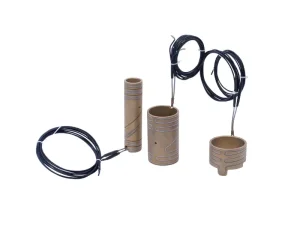
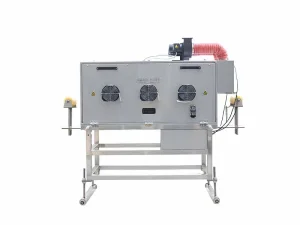
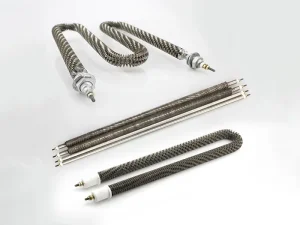
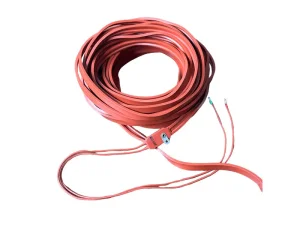
Explore our complete export range including high-density cartridge elements, PVC-O orientation ovens, hot runner coil heaters, and pipeline inline fluid heaters.


Frequently Asked Engineering & Procurement Questions
In-depth responses covering custom manufacturing, CE validation, energy audits, material selection, and warranty governance.
CE marking is not a cosmetic label; it represents rigorous legal conformity with the EU Low Voltage Directive (LVD) 2014/35/EU and EMC Directive 2014/30/EU. For an industrial heater manufacturer, this requires testing of dielectric insulation strength (often exceeding 1,500V to 2,000V high-pot test), creepage and clearance distances across ceramic terminal blocks, non-combustibility of mica and silicone binders, and strict limits on toxic substances under RoHS. Machinery builders integrating CE-certified heaters from Kangpu avoid regulatory import rejections, ensure plant safety, and reduce liability against fire or electrical hazard.
In field retrofit audits on single and twin-screw extrusion machinery, nano infrared band heaters consistently achieve 30% to 45% reduction in electrical power consumption. This efficiency stems from two engineering factors: first, the micro-crystalline silica aerogel insulation layer reduces exterior surface skin temperature from approximately 200°C–300°C down to 45°C–65°C, virtually eliminating parasitic radiant heat loss into the ambient plant air. Second, radiant electromagnetic transfer delivers heat directly into the metallic barrel without interfacial thermal resistance, resulting in faster heat-up times and reduced duty cycles on temperature controllers.
Yes, custom engineering represents over 85% of our daily production volume. Whether you operate European machinery running on 400V/230V 50Hz, North American systems utilizing 480V/240V 60Hz, or specialized Japanese lines running 200V, our engineering team custom-winds the internal resistance ribbons to achieve the exact target watt density. We accommodate custom inside diameters, clamping flange profiles (quick-acting barrel clamps, wedge latches, or screw-down tabs), thermocouple cutouts (Type J, K, or PT100 pockets), and armored cable or terminal box orientations based directly on your CAD 2D/3D drawings or field samples.
Every heater produced by Yancheng Laier Heating Technology Co., Ltd. bears a permanent laser-marked serial and batch code. In the unlikely event of an in-service failure during the 5-year warranty period, our quality assurance engineering department conducts a root-cause review using operating logs, thermal imaging, and photos of the installation. If the failure results from dielectric breakdown, internal ribbon degradation, or fabrication defects, replacement units are manufactured on priority and dispatched via express air freight at factory expense to ensure minimal client downtime.
For standard customized band heaters (mica, ceramic, or nano infrared), engineering CAD drawings are completed within 24 hours. Physical tooling and real-mold sample fabrication require 5 to 7 business days. Once the sample is verified by the client on their machine, full container-load or volume production typically ships within 15 to 20 working days. For urgent plant breakdown maintenance, we offer express prototyping lines to deliver urgent replacements rapidly.