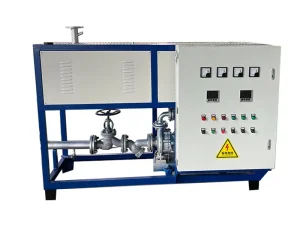
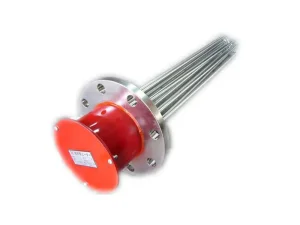
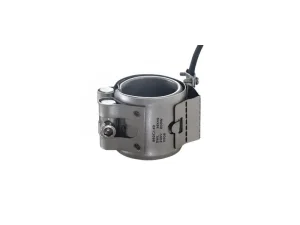
Featured Industrial Heating & Process Systems
Engineered for mission-critical industrial integration: highly uniform thermal transfers, robust sheath metallurgies, and certified explosion-proof compliance.
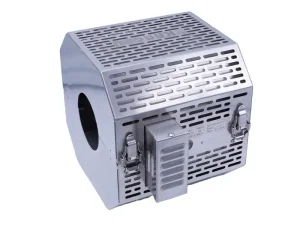



Industrial Evolution: The Modern Over-The-Side Immersion Heater
Technological advancement from basic passive heating elements to dynamically controlled, high-watt-density metallurgical units engineered under strict CE Directives.
In modern process industries, over-the-side immersion heaters represent the pinnacle of flexible thermal fluid engineering. Unlike standard through-the-side or welded flange immersion heaters that necessitate complex vessel penetrations, permanent weld seams, and extensive fluid evacuation during routine maintenance, over-the-side immersion designs install directly through the vessel opening or tank manway. Designed primarily for open vessels, metal finishing vats, plating tanks, pickling lines, degreasers, and caustic reservoirs, these heaters eliminate the continuous threat of seam-leakage risks, delivering operational flexibility and reduced systemic downtime.
As global manufacturing pushes aggressively toward carbon abatement and comprehensive process electrification, the demand for high-efficiency electric thermal solutions has surged. Modern engineering mandates that over-the-side immersion heaters adhere to strict low watt-density parameters (W/cm² or W/in²) to prevent coking, scale calcification, and thermal degradation of complex fluids. Contemporary iterations employ advanced internal elements compacted within high-purity magnesium oxide (MgO) dielectric insulation and encapsulated inside corrosion-resistant sheath superalloys like Titanium, Incoloy 800/840, PTFE/Fluoropolymer sleeving, and High-Grade 316L Stainless Steel.
Zero Vessel Penetration
Mounts cleanly over vessel rims, preserving containment walls. Ideal for non-drillable tanks such as glass-lined vessels, polymeric storage, and underground storage tanks.
Severe Chemical Resistance
Fabricated with specialized sheath materials ranging from Titanium Grade 2 for high chloride solutions to PTFE Teflon coatings that withstand hydrochloric, sulfuric, and hydrofluoric bath chemistry.
Rapid Maintenance Clearance
Inspect, descale, or replace units seamlessly without draining costly solutions, avoiding hazardous environmental spill vectors and ensuring uptime for continuous automated finishing lines.
Engineering Sheath Metallurgy & Application Standards
Precision calibration of sheath materials, watt densities, and mechanical configurations to operating chemistries.
| Sheath Metallurgy | Watt Density Range (W/cm²) | Operating Chemistry & Fluids | Max Sheath Temp (°C) | Typical Industrial Application |
|---|---|---|---|---|
| PTFE / Fluoropolymer | 1.5 – 2.5 W/cm² | Sulfuric, Hydrochloric, Nitric, Electroless Nickel | 105°C | Semiconductor, Anodizing, PCB Etching Baths |
| Titanium Grade 2 | 3.0 – 5.0 W/cm² | Brine, Sea Water, Chlorine Bleaches, Chromic Acid | 315°C | Aerospace Plating, Marine Storage, Chemical Tanks |
| Incoloy 800 / 840 | 6.0 – 9.0 W/cm² | Deionized Water, Heavy Caustic Rinses, Cyanide Plating | 815°C | Heavy Mechanical Cleaning, Oil Quench Tanks |
| Stainless Steel 316L | 4.5 – 7.5 W/cm² | Food Additives, Mild Acids, Phosphatizing, Vegetable Oils | 650°C | Pharma Formulations, Food Sanitization, Bio-Vats |
| Pure Quartz Sheath | 2.0 – 3.5 W/cm² | Ultra-Pure Aggressive Acids (Aqua Regia, HF Solutions) | 1000°C | High-Purity Silicon Wafer Production, Laboratory Baths |
Solving Enterprise Challenges in High-Volume Sourcing
Addressing supply chain risks, total life-cycle costs (TCO), and hazardous deployment conditions through engineered reliability.
Total Cost of Ownership
Prevent premature burnout caused by sediment accumulation via bottom-clearance risers, precision unheated cold zones, and sludge-avoidance geometries.
Hazardous Duty (ATEX/IECEx)
Flameproof, explosion-proof terminal enclosures (IP66, IP67, NEMA 4/7/9 rated) engineered for environments rich in volatile organic vapors and explosive gases.
Custom Mechanical Geometries
Configurations matching specialized tank profiles: L-Shaped bottom-settling formats, Deep-V vertical configurations, and over-the-curb compact units.
Full CE & Regulatory Compliance
Compliance across CE Low Voltage Directive (LVD 2014/35/EU), EMC (2014/30/EU), RoHS, and certified third-party testing with full EN 60335 electrical safety audits.
Integrated Macro-Industry Application Solutions
Deploying specialized over-the-side immersion technologies into mission-critical global processing environments.
Electroplating & Surface Anodizing
Immersion heating in chrome, zinc, and hard anodizing tanks demands resilient chemistries. By utilizing heavy-wall non-porous fluoropolymer (PTFE) sheaths with unheated riser portions, chemical stratification is eliminated while mitigating destructive chemical attacks at the air-liquid interface.
Heavy Petrochemical & Bulk Asphalt Storage
Viscous hydrocarbons require careful low watt-density heating (below 1.2 W/cm²) to prevent destructive charring and fluid decomposition. Bottom-hugging L-shaped over-the-side units promote uniform thermal convection, keeping bitumen and heavy fuel oils pumpable without boiling risks.
Semiconductor Wet Benches & High Purity
Trace metal extraction requires pristine, inert heating surfaces. High-purity quartz and cleanroom-passivated fluoropolymer immersion heaters integrate seamlessly with self-resetting, dual-redundant Type J/K thermocouples, ensuring sub-degree temperature regulation with zero ionic leeching.
Industrial Parts Cleaning & Degreasing
Automated manufacturing utilizes alkaline wash tanks and high-pressure ultrasonic degreasers. Our stainless steel 316 and Incoloy elements with IP67-sealed terminal boxes withstand constant water vapor, corrosive mists, and cleaning salts, keeping cycle times reliable.
Food Processing & Edible Oil Refineries
Designed with sanitary, electro-polished finishes and food-safe seals. These heaters support gentle, uniform heating for syrup stabilization, vegetable oil fractionation, and CIP (Clean-In-Place) alkaline wash cycles, avoiding scorching and volatile organic compound (VOC) generation.
Wastewater Neutralization & Zero-Liquid Discharge
Corrosive industrial effluents subject traditional heating coils to catastrophic pitting corrosion. Our corrosion-resistant titanium and high-nickel alloy immersion heaters operate in neutralization pits, sludge dryers, and flash evaporation vessels, resisting abrasion and acidic mixtures.
Localized Support, Traceability & Quality Assurance
Built upon 40 years of precision production, every unit is backed by testing, rigorous batch certification, and an industry-leading 5-year warranty.
Navigating global supply chain logistics demands full regulatory alignment and dependable field support. Yancheng Laier Heating Technology Co., Ltd. (Kangpu Heater) has operated continuous manufacturing facilities since 1986, establishing full-spectrum material traceability across every production lot. From metallurgical mill certifications of 316L, Titanium, and Incoloy raw tubing to spectrographic verification of magnesium oxide purity, our supply chains adhere strictly to ISO 9001 standards.
Every single over-the-side immersion heater produced for European and global export undergoes comprehensive testing prior to dispatch: megohm insulation resistance testing at 1000V DC, high-potential (Hi-Pot) dielectric testing up to 2500V AC, and helium mass spectrometry leak detection on hermetic seals. Our engineering documentation package includes full CE Declaration of Conformity (DoC), comprehensive operation and installation manuals, thermal calculation datasheets, and mill test reports (MTR) according to EN 10204 3.1 standards.
Technology Roadmap: The Future of Industrial Immersion Heating
Pioneering solid-state telemetry, AI-driven predictive health models, and ultra-high efficiency thermal architectures.
IoT-Enabled Smart Terminal Enclosures
Integrated edge computing microcontrollers embedded directly inside terminal enclosures collect vibration, moisture ingress, resistance drift, and high-frequency thermal cycling metrics in real-time.
AI Predictive Calcification Diagnostics
Machine learning models cross-reference heat flux output against localized fluid temperature rises to detect sediment scaling or coking layer buildup weeks before element failure, triggering automated maintenance warnings.
Graphene & Nano-Composite Conductive Matrices
Next-generation R&D incorporates advanced non-inductive ceramic cores and nano-composite refractory dielectrics, driving heat-transfer efficiencies to 98.7% and cutting startup ramp times by 40%.
Frequently Asked Questions (Technical & Procurement)
Essential guidance for design engineers, plant operators, and corporate procurement directors.
Why choose an Over-the-Side heater rather than a Flanged Immersion Heater?
Over-the-side immersion heaters mount directly over the lip of tanks without requiring drilled penetrations, nozzles, or welded companion flanges. They are ideal when draining the tank is prohibitively expensive, in tanks with fragile liners (rubber, glass, fiberglass), or where mobile heating across multiple vessels is necessary.
What parameters determine sheath selection and watt density?
Sheath selection depends directly on fluid chemistry, pH levels, operational temperatures, and contaminant presence. Watt density (W/cm²) must be chosen carefully: water can absorb up to 8-10 W/cm², heavy lubricating oils require lower densities (1.5-2.5 W/cm²) to avoid carbonization, and caustic plating solutions require low watt densities (2-4 W/cm²) to prevent destructive localized film boiling.
How do you prevent failure caused by sludge buildup at the tank base?
Our heaters are engineered with custom cold zones (non-heating risers) that keep heating elements safely above the anticipated sludge/sediment precipitation line. Additionally, custom bracket stands or L-shaped configurations position the active heat bundle 50mm to 150mm above the vessel floor, ensuring clean fluid convection.
What safety standards are met under your CE Certifications?
Our heaters are fully certified under the European Low Voltage Directive (LVD 2014/35/EU) and Electromagnetic Compatibility Directive (EMC 2014/30/EU), adhering strictly to harmonized industrial standards EN 60335-1 and EN 60335-2-73. Explosion-proof designs further comply with ATEX directives (2014/34/EU) for hazardous zones.
What is the minimum instrumentation required for dry-fire protection?
Every industrial immersion heater requires robust process and over-temperature safety controls. We incorporate dual protection loops: internal element-mounted thermocouples (Type J/K or RTD Pt100) tied to digital high-limit latching controllers, coupled with redundant liquid-level floats, radar sensors, or conductivity probes to cut power immediately if liquid levels drop.
Can Kangpu engineer heaters for highly bespoke tank configurations?
Yes. Customization is our core engineering competence. We analyze your tank drawings, process viscosity, available 3-phase voltages (208V to 690V), chemical concentrations, and environmental constraints to manufacture custom-contoured L-shape, circular, or multi-element vertical configurations with full custom prototyping and sample validation.
Advanced Manufacturing & Replacement Heating Catalog
Browse our verified portfolio of industrial thermal equipment, band heaters, and integrated solutions available for worldwide dispatch.