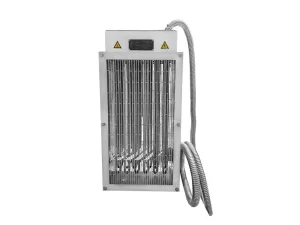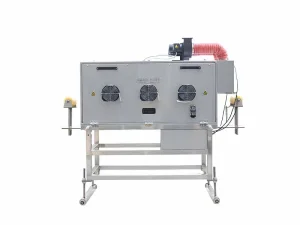
CE Certification PVC-O Ovens for Precision Heating
View Technical Spec
Engineered to operate synchronously within accurate thermocouple temperature ranges across severe industrial environments.


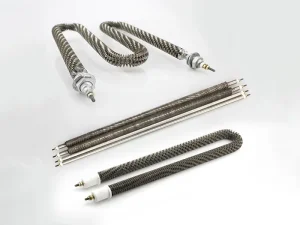

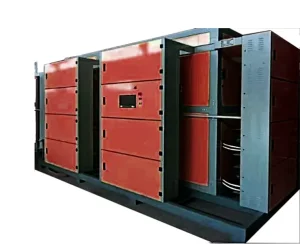
In high-precision industrial processing, temperature control stability is fundamentally bounded by the thermocouple calibration span and sheath material tolerance. As a CE-certified manufacturer and exporter established in 1986 (Yancheng Laier Heating Technology Co., Ltd. / Kangpu Heater), we bridge thermal sensing accuracy with robust high-density heating architectures.
Thermocouple performance relies on microvolt generation across dissimilar metallic junctions. Industrial accuracy depends on eliminating thermal shunt errors, cold-junction drift, and capacitive EMI coupling along the barrel or oven zone.
Compliance under the European Pressure Equipment Directive (PED), Low Voltage Directive (LVD 2014/35/EU), and Electromagnetic Compatibility (EMC 2014/30/EU) requires verified thermocouple response time, insulation resistance, and dielectric integrity.
Combining high-grade magnesium oxide (MgO) compaction with precision Inconel or ceramic protective sheaths safeguards sensor junction continuity even during rapid thermal cycling from -200°C up to +1800°C.
Procurement engineers must balance operational limits, atmospheric sensitivity, and EMF output linearity to eliminate thermal runaway in plastic extrusion, chemical reactors, and continuous metallurgical ovens.
| Type | Alloy Junction (Positive / Negative) | Standard Temp Range (°C) | Max Extended Limits (°C) | Atmospheric Suitability & Application Field |
|---|---|---|---|---|
| Type K | Chromel (Ni-Cr) / Alumel (Ni-Al) | -200°C to +1260°C | -270°C to +1372°C | Oxidizing / Inert. Universal standard in extrusion barrels, ceramic bands, and general process heating. |
| Type J | Iron / Constantan (Cu-Ni) | -40°C to +750°C | -210°C to +1200°C | Reducing / Vacuum. Widely specified in injection molding nozzles and lower-temperature die toolings. |
| Type N | Nicrosil (Ni-Cr-Si) / Nisil (Ni-Si) | -270°C to +1300°C | Continuous to +1280°C | Superior oxidation resistance, resists Green Rot drift. Preferred for aerospace and high-temp furnaces. |
| Type E | Chromel (Ni-Cr) / Constantan (Cu-Ni) | -200°C to +900°C | -270°C to +1000°C | Highest Seebeck coefficient (68 µV/°C). Excellent for cryogenic measurement and sub-zero processes. |
| Type T | Copper / Constantan (Cu-Ni) | -200°C to +350°C | -270°C to +400°C | Moisture-resistant, ultra-stable for low temperature pharmaceutical chilling and food processing ovens. |
| Type R/S | Pt-Rh (13%/10%) / Pure Platinum | 0°C to +1450°C | Intermittent up to +1768°C | Noble metal couples for high-temperature semiconductor diffusion, glass melting, and refractory monitoring. |
| Type B | Pt-30% Rh / Pt-6% Rh | +200°C to +1700°C | Intermittent up to +1820°C | Ultra-high-temperature sintering and pyrometallurgy; minimal thermal EMF output at ambient temperatures. |
Across Europe, North America, Southeast Asia, and the Middle East, process engineers require harmonized sensor-heater integration that withstands extreme mechanical stress, continuous duty cycles, and volatile utility environments.
Molecular orientation in bi-axially oriented PVC-O pipe manufacturing requires tight thermal gradients within ±1°C across multi-zone radiant heating ovens. Our integrated heating and cooling setups prevent localized melt variations, eliminating structural pipe wall failures.
Global net-zero transitions are replacing fossil-fired boilers with electromagnetic induction steam generators and closed-loop thermal oil furnaces. Precise thermocouple feedback enables millisecond-level power regulation, drastically slashing energy consumption.
Unplanned production stoppages can cost thousands of dollars per hour. Kangpu Heater mitigates downtime risks by using real-mold sampling, premium Ni80Cr20 resistance wires, high-density mica, and high-purity ceramic formers backed by an industry-leading 5-year warranty.
Kangpu Heater is actively developing hybrid thermal architectures designed to satisfy Industry 4.0 automation and high-efficiency manufacturing standards.
Integrating wireless micro-transmitters directly into thermocouple terminal heads allows edge computing modules to monitor real-time thermal drift and predict sensor degradation before burnout occurs.
Developing advanced multi-layer alloy sheathing combinations that resist carburization and molten aluminum corrosion at continuous temperatures up to 1150°C without sensor embrittlement.
Pairing precision thermocouple feedback loops with high-emissivity nano-composite radiant coatings to achieve over 30% electrical energy savings compared to conventional bare-band heating setups.
Further refining our proprietary extruder barrel cooling channels to execute high-speed, anti-overshoot thermal dumping, preventing resin degradation during exothermic polymer processing.
Serving OEM machinery builders and processing facilities across 100+ countries with complete batch traceability and rigorous multi-stage quality gates.
Every industrial heating system and thermocouple assembly is built to conform with EN 60519 safety standards for electroheating installations, ensuring direct customs clearance and compliance across the European Single Market.
Thermally sealed, moisture-barrier packaging and shock-absorbing wooden export crates protect sensitive element sheaths, terminal ceramics, and thermocouple junctions throughout long maritime or air freight transit.
From initial ID design and real-mold sampling to client test fitment and frozen mass production, our controlled engineering pathway eliminates sizing errors before commercial-scale runs.
Direct technical answers addressing critical installation parameters, thermocouple calibration limits, and heater selection.
Plastics extrusion typically utilizes Type J (up to 750°C) or Type K (up to 1260°C) thermocouples. For standard polyolefin processing running between 180°C and 280°C, Type J or K provides sub-degree precision, high EMF output, and exceptional mechanical durability against barrel vibration.
CE marking confirms that temperature sensors, controllers, and heating elements satisfy EU directives for Low Voltage (LVD) and Electromagnetic Compatibility (EMC). Uncertified sensors risk severe measurement distortion from nearby motor drives, creating severe safety and equipment failure risks.
While the internal wire pair might withstand extreme heat, the outer sheath dictates chemical survivability. Stainless steel 304/316 caps operating temperatures at ~800°C, Inconel 600 safely reaches 1150°C in oxidizing atmospheres, and alumina ceramic sheaths are necessary for ranges exceeding 1400°C.
Yes. We custom machine immersion thermowells, spring-loaded bayonet adapters, and internal cast-in thermocouple conduits directly into our cast aluminum and cast copper band heaters to guarantee true barrel interface temperature readings.
Heavy-duty, custom-configured thermal equipment built to integrate with CE-certified sensor loops and industrial temperature controls.